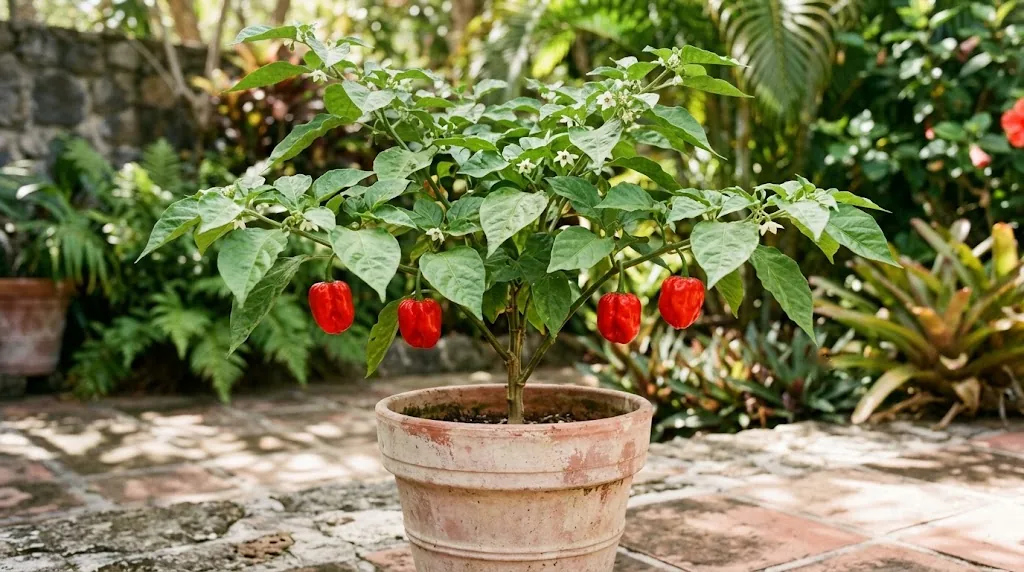
Caribbean Red Habanero is sold as a bright red selection of Capsicum chinense, but published guides differ on its heat, shape, and origin. Treat the name as a commercial label, check the supplier’s description, and expect a fruity, very hot pepper when the pods ripen. This profile covers what sources support and where they leave room for variation.
What is this variety?
This selection belongs to Capsicum chinense, the species that includes the Scotch bonnet and related pepper types. The name appears in cultivar catalogs: a North Carolina State University list records it as a habanero type with red fruit. That record supports using the name for a commercial selection, but it does not establish one documented island of origin or a single universally standardized line.
This pepper group is associated with the Caribbean and Mexico, but Rutgers Extension traces the species’ deeper origin to the Amazon Basin and describes its movement through the Americas. The name alone is not proof that this line began on a specific island. For the broader family and related varieties, see our guide to chili pepper types.
How hot is this red habanero?
Expect intense heat. Suppliers publish different figures: Sandia Seed lists about 400,000 Scoville heat units, while Pepper Joe’s gives a range of 350,000 to 450,000 SHU. Those are seller claims, not a controlled, variety-wide test. For context, UF/IFAS gives a general range of 100,000 to 350,000 units for habaneros. Growing conditions and the market line can affect the result, so do not treat one number as a promise.
Rutgers describes the pepper’s aroma as fruity, often likened to apricot or citrus. Taste a very small amount before adding more, since individual pods and seller-reported heat ranges vary. Some seed catalogs list Red Savina separately, but sellers do not give a consistent account of how the commercial lines relate. Compare the source and packet instead of identifying a pepper by color alone.
For another high-heat C. chinense profile, compare it with Death Spiral peppers. The comparison is useful for choosing a different variety, not for assuming the two have the same flavor or heat.
How to identify the fruit
Young fruit starts green, then ripens bright red. The NC State list describes red, wrinkled fruit about 38 by 25 millimeters that taper to a blunt point, while Pepper Joe’s describes wrinkled, lantern-shaped fruit about 2 inches long. The descriptions differ on the exact silhouette, and size and maturity time also vary. If the exact shape matters, compare the supplier’s photo and description before buying.
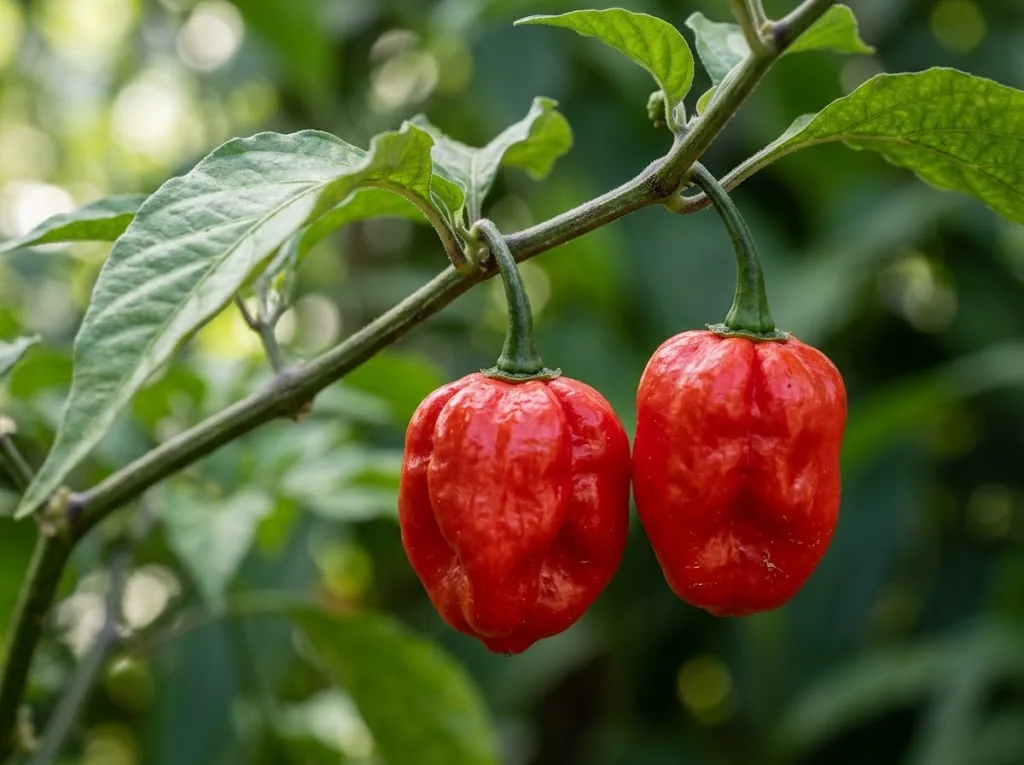
Look for “Caribbean Red” by name on the packet. A packet with only a generic color label may be a different line, and red color alone is not proof of identity.
Growing this habanero from seed
Sow indoors about 8 to 10 weeks before your area’s last frost date. Use a warm, moist starting mix and give the seedling strong light after it emerges. This species needs a long, warm season: University of Maryland Extension recommends waiting until soil temperature reaches 65°F and says habanero types can take 90 to 120 days from transplant to ripen. That broader range is a more useful planning estimate than treating one vendor’s number as exact.
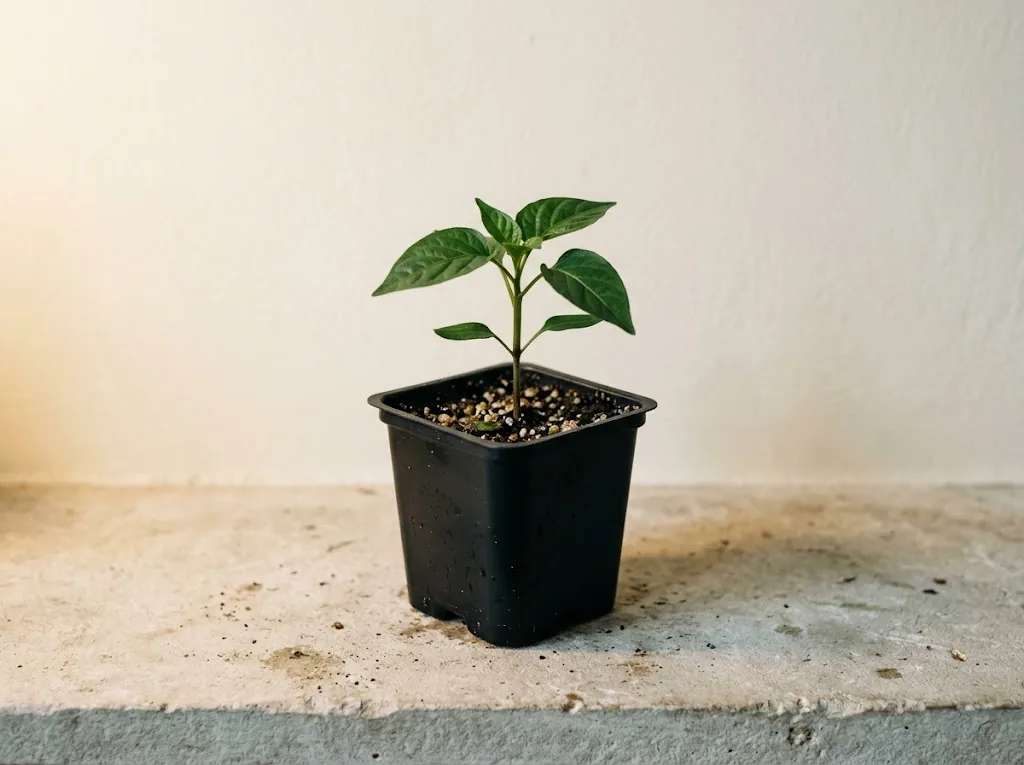
Move sturdy young plants outside only after nights and soil have warmed. Choose a sunny garden bed with well-drained soil, or a roomy container with drainage. Keep the soil evenly moist without leaving the roots waterlogged. Cool weather slows growth, so in a short-season climate grow it in a container that can move under cover before freezing nights.
Pick fully mature, red pods with clean snips. The National Center for Home Food Preservation recommends gloves and washing with soap before touching your face or eyes when handling hot peppers.

Using and storing the ripe fruit
Use a small amount of this selection in pepper sauces, salsa, marinades, or a mango relish where fruit sweetness can balance the heat. Its aroma pairs well with citrus and other tropical fruit, but the intensity can overwhelm a dish if you add it all at once. Add the pepper gradually and taste as you go.

For longer storage, freeze washed whole pods or dry red chilies until brittle, then keep them in an airtight container away from heat and light. (Utah State University Extension: preserving chiles) If you want shelf-stable sauce, use a tested canning recipe such as the National Center for Home Food Preservation’s Easy Hot Sauce and follow it exactly. Do not improvise amounts or processing times.
For a contrasting dark-fruited C. chinense, see our profile of Chocolate Reaper peppers. Keep the varieties separate when saving seed or labeling a harvest.
Quick answers
Is Caribbean Red hotter than other peppers of its type?
Some sellers say it is nearly twice as hot as standard types, but those are seller claims, not a controlled comparison. Individual peppers and market lines vary, so taste a tiny amount first.
Can it grow in a container?
Yes. Give the plant a sunny position, a roomy container, warm conditions, and a long season. Bring the container under cover before cold nights arrive.
