
When gardeners and hot sauce makers compare extreme chilies, the conversation inevitably centers on the Carolina Reaper vs ghost pepper. Both belong primarily to the species Capsicum chinense, and both have held the title of hottest pepper in the world. Yet beneath their fiery reputations lie two distinctly different plants. Understanding how their heat builds, how their flavors differ, and how they behave in the garden will help you decide which chili pepper deserves space in your garden bed or kitchen.
For home growers exploring the wide world of types of chili peppers, stepping up to super-hots requires realistic expectations. While an ordinary jalapeno pepper sits comfortably between 2,500 and 8,000 Scoville heat units, these two contenders operate in an entirely different league. The ghost pepper was the first cultivated chili tested to breach 1 million Scoville units, while the Carolina Reaper pushed that boundary past 2 million.
Scoville Scale and Heat Comparison: How the Burns Differ
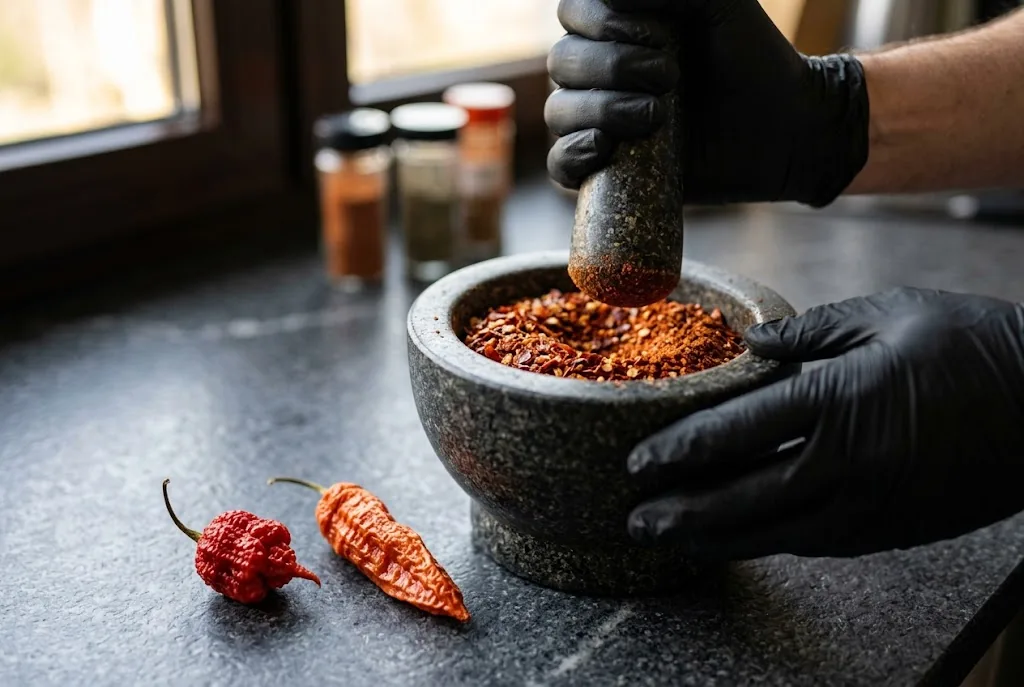
On paper, the mathematical contest of carolina reaper vs ghost pepper is straightforward. The ghost pepper, scientifically known as Bhut Jolokia, measures between 855,000 and 1,041,427 Scoville heat units (SHU). In contrast, the Carolina Reaper averages around 1,641,183 SHU, with individual peak pods tested at up to 2.2 million Scoville units. That means the reaper averages nearly double the raw capsaicin concentration of an average ghost pepper.
Scoville numbers describe measured pungency, not exactly how a bite will feel. Some cooks describe ghost pepper heat as slow building, with earthy notes noticeable before the burn grows. Your experience will depend on the pod, the amount used, and the food around it.
The Carolina Reaper is often described as fruity before its intense heat takes over. Neither variety has a fixed onset or duration of burn, and tasting a whole pod is unnecessary for judging its cooking value.
Flavor Profile and Culinary Uses: Sweet Fruitiness vs Earthy Smoke
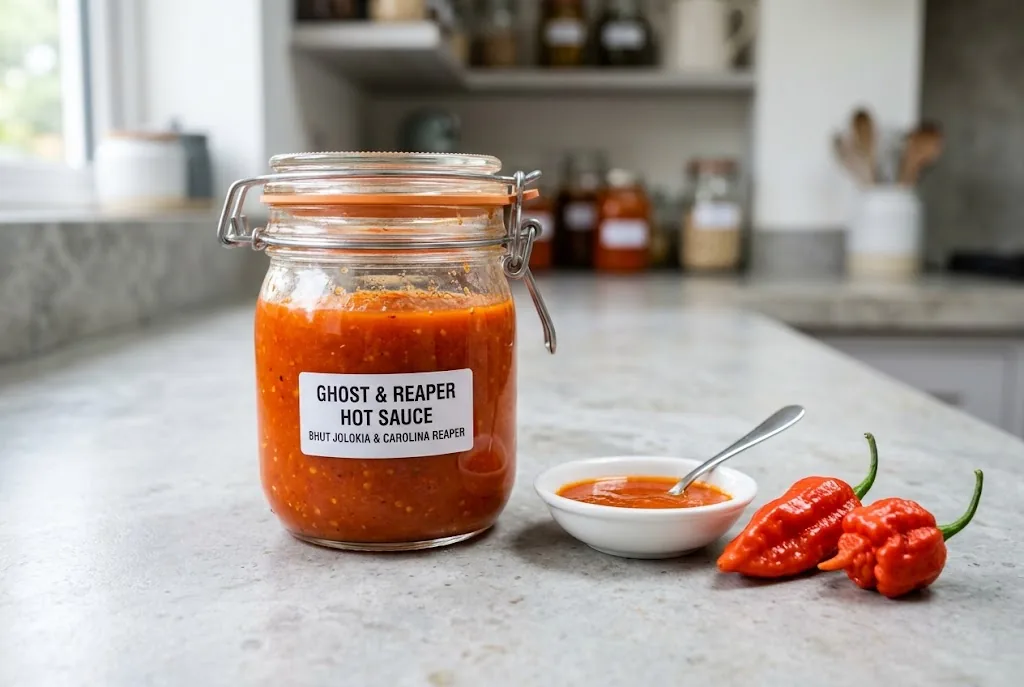
Despite their extreme heat, neither pepper is purely about pain. Each cultivar brings distinct flavor characteristics that shine when used with restraint. The Carolina Reaper offers an initial sweet flavor accompanied by bright citrus and tropical undertones. This vibrant fruitiness makes it an exceptional companion for fruit-forward hot sauces, mango marinades, and bold pepper mashes.
The Bhut Jolokia, by comparison, carries a deep, smoky undertone with minimal upfront sweetness. Traditional cuisines in Northeast India pair its rich, savory profile with slow-cooked meats, robust stews, and fermented chutneys. It also lends itself well to wood-smoked barbecue sauces and dry seasoning rubs, where its earthy character complements charred meats without clashing.
When cooking with either variety, start with a tiny piece in a full batch of chili, stew, or sauce. Stir thoroughly, taste a small serving, and add more only if needed. Heat varies between pods, so a measured approach is more useful than a fixed amount for every dish.
Pod Appearance: Recognizing Shape, Texture and Stinger Tails
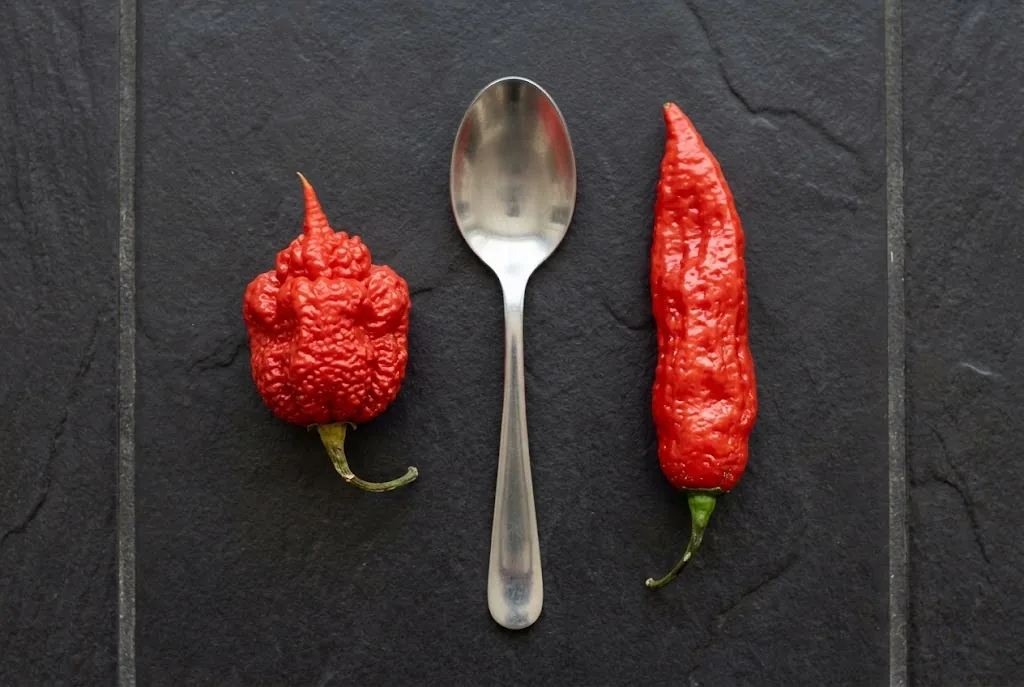
You can readily distinguish these two super-hots by looking closely at mature fruit. The Carolina Reaper pepper produces a squat, gnarled pod measuring about 1.5 to 2 inches in length. Its skin is deeply wrinkled, bumpy, and pebbled, often described as resembling molten lava. Most famously, a genuine Reaper pod terminates in a distinct, narrow scorpion stinger tail that curls downward from the base.
The ghost pepper exhibits an elongated, pendant shape typically reaching 2.5 to 3.5 inches long. Its exterior is rough and slightly dented or puckered, but it lacks the pronounced stinger tail of the Reaper. Ghost pods taper to a blunt or slightly pointed tip. Both varieties ripen from pale lime green to brilliant scarlet, although specialty growers also cultivate chocolate, yellow, and peach color strains of each plant.
Plant Origins and Breeding History
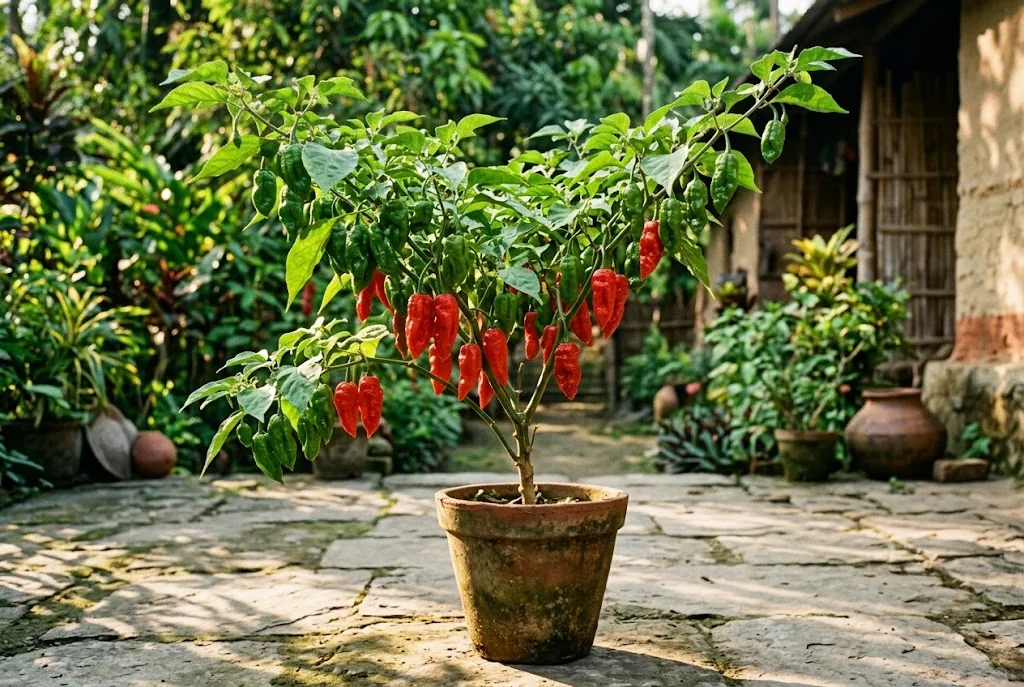
The history behind these cultivars reflects two different paths of botanical development. The ghost pepper is an ancient landrace native to Assam and neighboring regions of northeastern India, where it developed naturally as an interspecific hybrid between Capsicum chinense and Capsicum frutescens. In 2007, Guinness World Records officially recognized Bhut Jolokia as the world champion of heat, introducing super-hot chilies to global popular culture.
The Carolina Reaper represents targeted selective breeding. Horticulturalist Ed Currie developed the strain at the PuckerButt Pepper Company in Fort Mill, South Carolina, by crossing a Pakistani Naga Morich with a fiery Red Habanero. In 2013, Guinness confirmed the Reaper as the new record-holder, a throne it retained for a full decade until Pepper X took the top spot in 2023. While habaneros were once considered the pinnacle of culinary spice, breeders successfully combined their genetics to create an entirely new tier of capsaicin density.
Growing Comparison: Germination, Habit and Pod Yields
Gardeners planning to cultivate either variety at home should prepare for a long, warm season. Both chilies require patience from the very start. Their seeds demand consistent soil warmth between 80 and 85 degrees Fahrenheit (27 to 29 degrees Celsius) to sprout reliably. While common vegetables sprout in days, these varieties frequently take two to four weeks to break through the soil surface.
In the garden, Bhut Jolokia plants tend to develop into large, vigorous bushes that can reach 4 to 5 feet tall when grown in ground or large containers. They branch generously and, once established in warm weather, often deliver abundant harvests of hanging pods. They tolerate fluctuating summer temperatures slightly better than many newer super-hot hybrids.
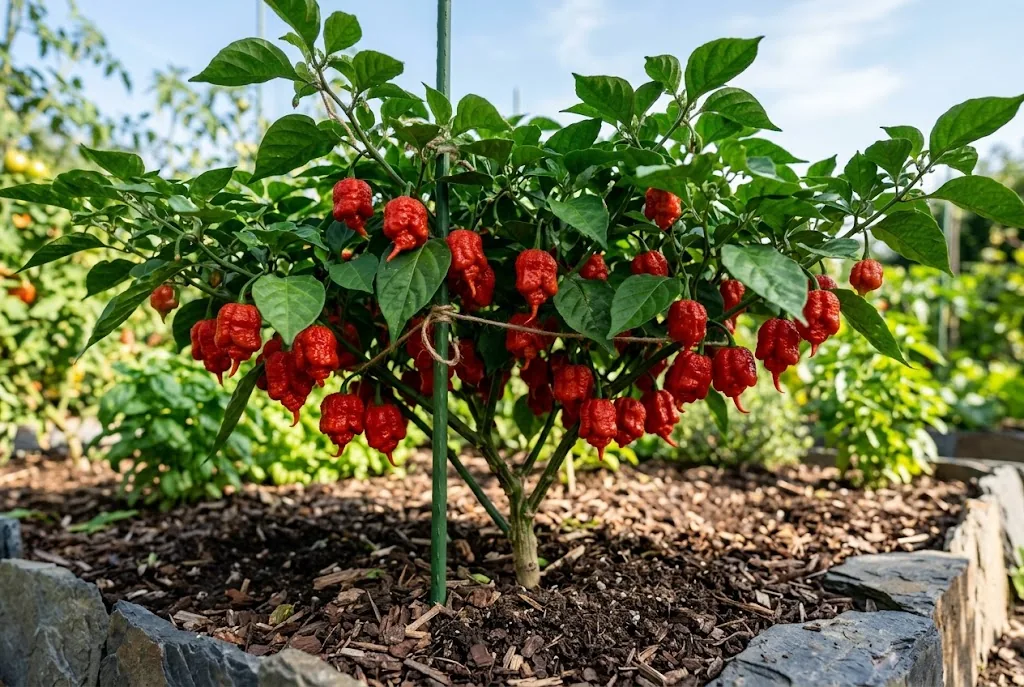
The Carolina Reaper grows as a slightly more compact, sturdy bush, usually topping out between 3 and 4 feet in height. Because of the heavy metabolic energy required to generate extreme capsaicin levels, Reaper plants can be sensitive to environmental stress. Midsummer heat waves above 90 degrees Fahrenheit (32 degrees Celsius) may cause temporary blossom drop, meaning the heaviest fruit set typically occurs as summer temperatures ease into early autumn.
Which Pepper Should You Grow or Cook With?
Choosing between these two varieties depends on your personal palate, culinary goals, and gardening conditions:
- Choose the Ghost Pepper if: You prefer a slow-building, smoky heat profile, want higher pod production per plant, and enjoy making savory barbecue glazes, dry powders, and fermented hot sauces.
- Choose the Carolina Reaper if: You want bragging rights for growing a legendary super-hot, love bright tropical sweetness in your chili mashes, and want extreme potency where a tiny speck provides maximum punch.
Both plants thrive in full sun, well-draining soil with a pH near 6.5, and steady, moderate watering. Avoid heavy nitrogen fertilization once flowers emerge, as excess nitrogen promotes lush foliage at the expense of blossom and fruit development.
Safe Handling and Kitchen Precautions
A practical disclaimer is essential whenever harvesting or preparing super-hot chilies. The high concentration of capsaicin in the inner placenta and oils can cause painful, lasting irritation on bare skin and severe distress if brought near the eyes or mucous membranes.
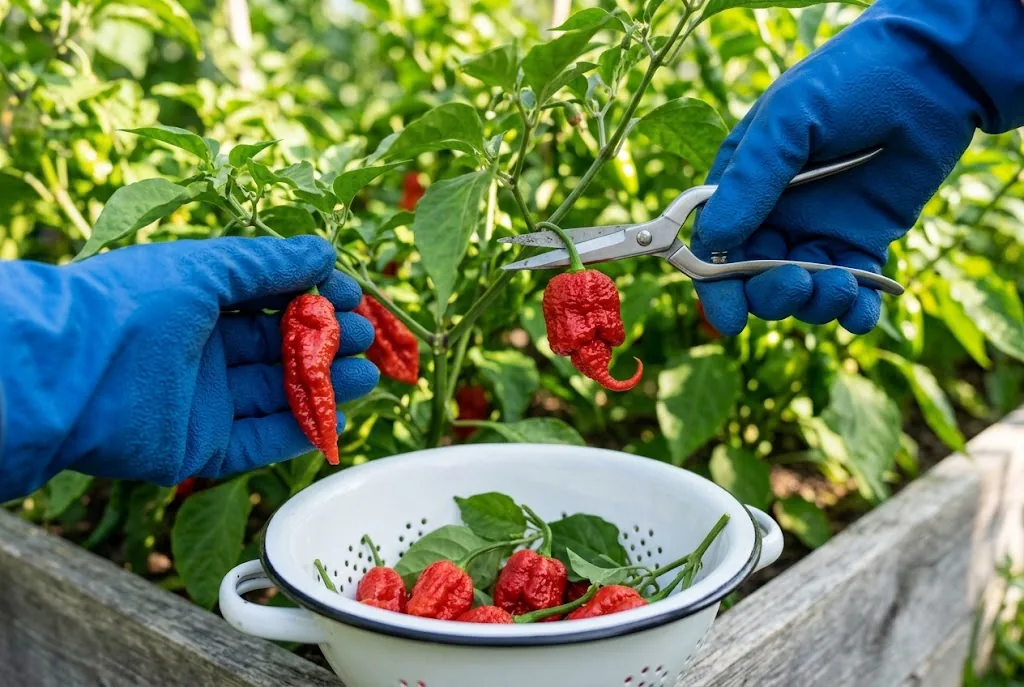
Always wear thick nitrile gloves when harvesting, cutting, or seeding these pods. If you plan to blend fresh chilies for hot sauces or dehydrate them for flakes, work in a well-ventilated area or outdoors. Inhaling aerosolized capsaicin can scorch airways and trigger coughing fits. Keep cutting boards and utensils dedicated to spicy food preparation, and wash all surfaces thoroughly with warm soapy water after handling.
Frequently Asked Questions
Can I substitute ghost pepper for Carolina Reaper in a recipe?
Yes, but do not substitute by a fixed ratio. Start with less ghost pepper than the listed amount, mix it through the dish, taste a small serving, and adjust. Individual pods vary in heat.
How much hotter is a Carolina Reaper than a ghost pepper?
On the Scoville scale, the Carolina Reaper averages approximately 1.64 million SHU compared to the ghost pepper at roughly 1 million SHU. In lab testing, the hottest Carolina Reaper pods reach up to 2.2 million SHU, making them more than twice as hot as typical Bhut Jolokia pods.
Does a ghost pepper taste better than a Carolina Reaper?
Flavor is subjective. Home cooks who prefer savory, smoky, and earthy notes tend to favor the ghost pepper in stews and barbecue. Those who appreciate sweet, tropical, and fruity flavor profiles often prefer the Carolina Reaper in fresh fruit salsas and vinegar hot sauces.
