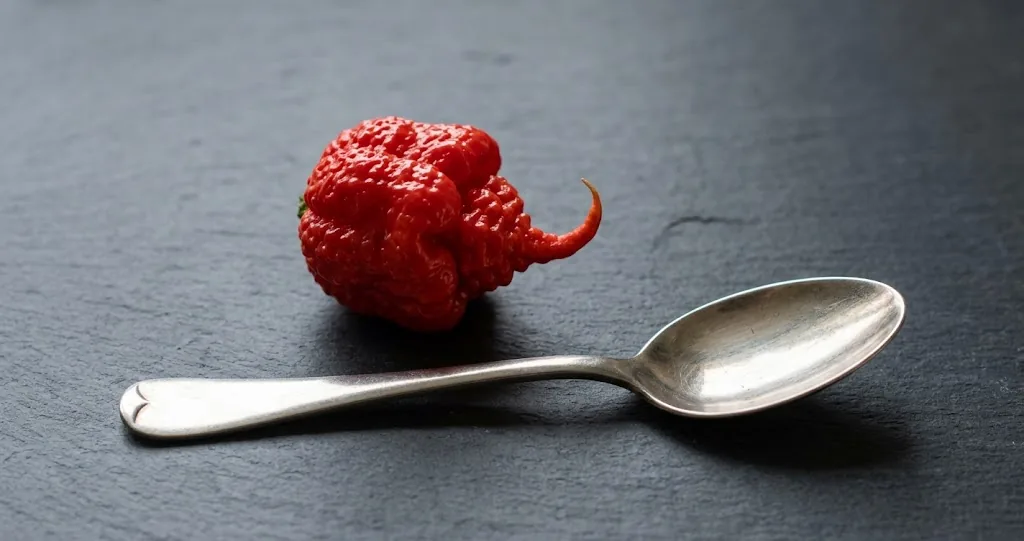
It held Guinness World Records’ hottest-chili title from 2013 until Pepper X replaced it in 2023. It remains a serious home-garden and kitchen pepper, not a novelty to bite on a dare. Its fruit is intensely pungent, so the useful question is how it earned the record and how to handle it without turning a small meal into an unpleasant experience.
This Capsicum chinense cultivar was bred in South Carolina by Ed Currie of PuckerButt Pepper Company. Its squat red pods are deeply wrinkled and usually end in a pointed tail. If you are comparing this variety with milder fruit or other superhots, this guide to types of chili peppers gives the wider context.
What record did the variety hold?
Guinness World Records confirmed Smokin’ Ed’s cultivar as the world’s hottest chili in November 2013, with an average of 1,569,300 Scoville Heat Units, or SHU. In October 2023, Guinness announced Pepper X as the new titleholder at an average of 2,693,000 SHU. Guinness also described the older cultivar as averaging about 1.64 million SHU in that announcement, so treat figures as tested averages rather than a promise for every pod.
For scale, Guinness places a jalapeño at roughly 2,500 to 8,000 SHU. That contrast explains why a casual comparison with ordinary fresh chilies is misleading. A tiny amount can dominate a dish, and one person’s tolerance says little about another’s response.
The eating records are separate
The variety’s former title is not the same as a speed-eating record. Guinness lists the fastest time to eat 100 chillies as 36 minutes 38.81 seconds, achieved by Mike Jack in Canada on September 9, 2023. That record challenge is a specialized feat, not a safe test of tolerance. Do not try to break it after seeing a YouTube video.
Where did it come from?
Currie developed the cultivar in Fort Mill, South Carolina, after years of selection. Published accounts agree that the cross combined a Naga-type pepper and a Caribbean red habanero, but they do not use the same parent names. Guinness’s 2013 report calls the parents Sweet Habanero and Naga Viper. It is more accurate to describe the lineage at that level than to present one disputed pair of names as settled fact.
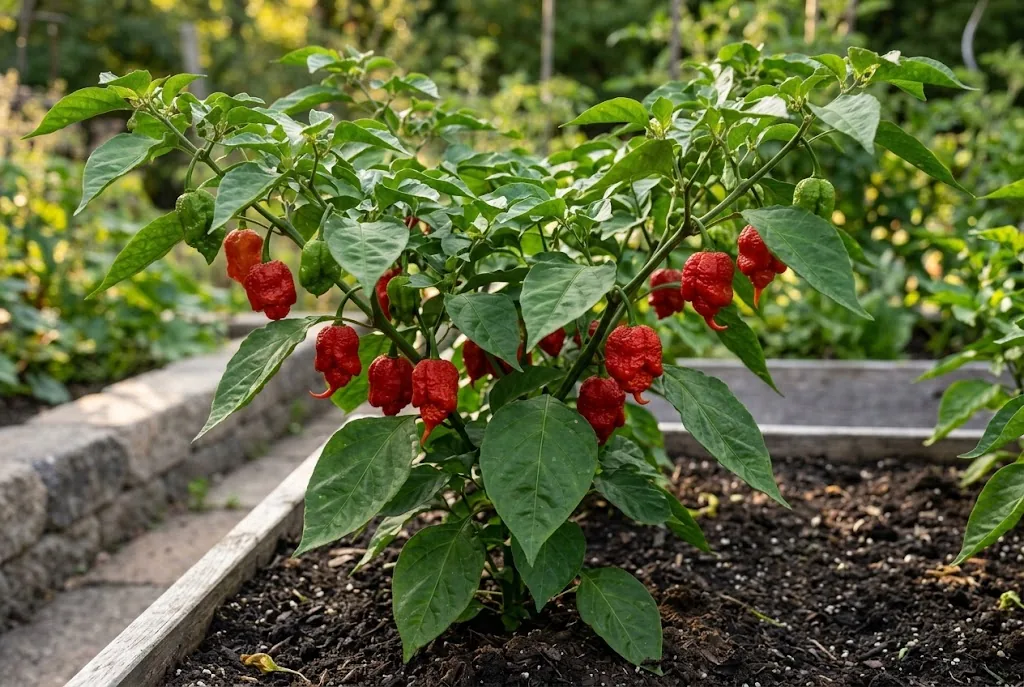
The working name HP22B is often explained as Higher Power, pot 22, plant B. The finished variety is a Capsicum chinense cultivar, the same species group that includes habaneros and many other very pungent peppers. Like related varieties, it needs warmth, sun, and a long frost-free season. North Carolina State Extension recommends full sun and well-drained soil for C. chinense and advises waiting until night temperatures are at least 55°F before planting outside.

How to recognize the pods
Ripe fruit usually turns red and has a rough, crinkled surface with a small pointed tail. Shape varies with seed source and growing conditions, so the tail alone is not a reliable identification test. Buy seed from a reputable supplier and label plants carefully if you grow several superhot varieties together.
The burning compound is capsaicin. In peppers, it concentrates in the placenta, the pale tissue that holds the seeds in place, rather than in the seeds themselves. A cut pod can spread capsaicin to a knife, board, towel, and fingertips, so kitchen habits matter as much as the recipe.

Flavor and practical culinary use
People often describe the fruit as sweet or fruity before the pungency builds, but flavor is secondary to intensity here. Start with a pinhead-sized amount of dried flake or powder in a full pot of chili, beans, or sauce. Taste after it disperses, then add more only if everyone eating the dish wants the extra bite.
Drying is a more manageable way to preserve a harvest. Wear gloves, cut the pods in a ventilated area, dry them thoroughly in a dehydrator, and grind only a small batch at a time. Store the finished flakes or powder in a labeled airtight jar away from children and pets. Avoid improvising shelf-stable fresh-pepper oils unless you are following a tested preservation recipe.

Safe handling matters
Use disposable nitrile gloves when cutting fresh pods, and consider eye protection when grinding dried material. Keep your hands away from your face. Wash hands, utensils, and work surfaces well with soap after preparation. Cleveland Clinic specifically recommends gloves for cutting very high-SHU peppers and thorough washing afterward.
If spicy food burns your mouth, water offers little relief because capsaicin does not dissolve in it. Cleveland Clinic notes that milk contains casein, which can help break down capsaicin. Milk or yogurt may be more useful than water for oral discomfort. Severe symptoms, eye exposure that does not improve after rinsing, breathing trouble, or persistent vomiting deserve medical advice rather than a home remedy.
Is it still worth growing?
Yes, if you enjoy growing unusual peppers and are prepared to use the harvest sparingly. This variety’s value is its history, distinctive appearance, and extreme intensity, not a contest.
For a current comparison of the titleholders, see the hottest chili peppers in the world. That overview helps separate former record holders from the current Guinness titleholder.
Choose seed from a known source, label the plants, and keep the harvest separate from ordinary chilies. Those simple habits prevent a mix-up in the garden or kitchen.
Growing conditions can alter pungency. See the evidence on how to make peppers hotter before treating stress as a reliable growing method.
Grow it for a carefully labeled jar of flakes, a small-batch sauce, or the satisfaction of raising a remarkable cultivar. Respect the pod, work in tiny amounts, and let the rest of the dish remain edible.
Sources
- Guinness World Records, 2013 certification
- Guinness World Records, Pepper X announcement
- North Carolina State Extension, Capsicum chinense
- Cleveland Clinic, capsaicin relief and pepper-handling precautions
