
When summer tomatoes start ripening, cherry tomatoes make it easy to turn a handful into a snack, salad or quick pan sauce. These small tomatoes come in more than red, and the right tomato can suit a garden bed, raised bed or patio pot. Here is how to tell cherry tomatoes from grape tomatoes, choose cultivars, grow them well and use the crop.
They are one part of the larger tomato family. For a broader look at tomato shapes and uses, see our guide to the main types of tomatoes.
What counts as a cherry tomato?
Cherry tomatoes are the small, usually round fruits of the cultivated tomato, Solanum lycopersicum. They can be a little larger than a cherry and often have a soft, juicy bite and a sweet flavor, though flavor varies with cultivar, ripeness and growing conditions. Tomatoes may be red, yellow or orange, and catalogs offer other colors too.
A grape tomato is close in size to a cherry tomato but is usually longer and more oval. Firmer flesh and thicker skin can make grape types easier to pack and transport, while round cherry tomatoes tend to have more juice. The names are not always used consistently in stores, so look at shape as well as the label. The Illinois Extension comparison of cherry and grape tomatoes describes the usual differences and notes that they can often substitute for each other in salads and pasta.
Cherry tomato cultivars to try
A home gardener can compare each type by color, flavor, sweetness, growth habit and the space available. Labels can also show whether a cultivar is open-pollinated or hybrid and whether it has listed disease resistance.
- Sun Gold (sometimes written as Sungold): A well-known orange cultivar. It brings color to a mixed bowl and is often grown for its sweet, fruity flavor. Its growth habit is indeterminate, so plan on support and a long picking season.
- Sweet 100: A red cherry cultivar listed as indeterminate by UNH Extension. Like other vining tomatoes, it needs room to grow upward and a sturdy cage, stake or trellis.
- Yellow Pear: A yellow, pear-shaped small tomato. Its unusual shape adds contrast to salads and snack plates. Choose it if you want yellow tomatoes alongside red ones.
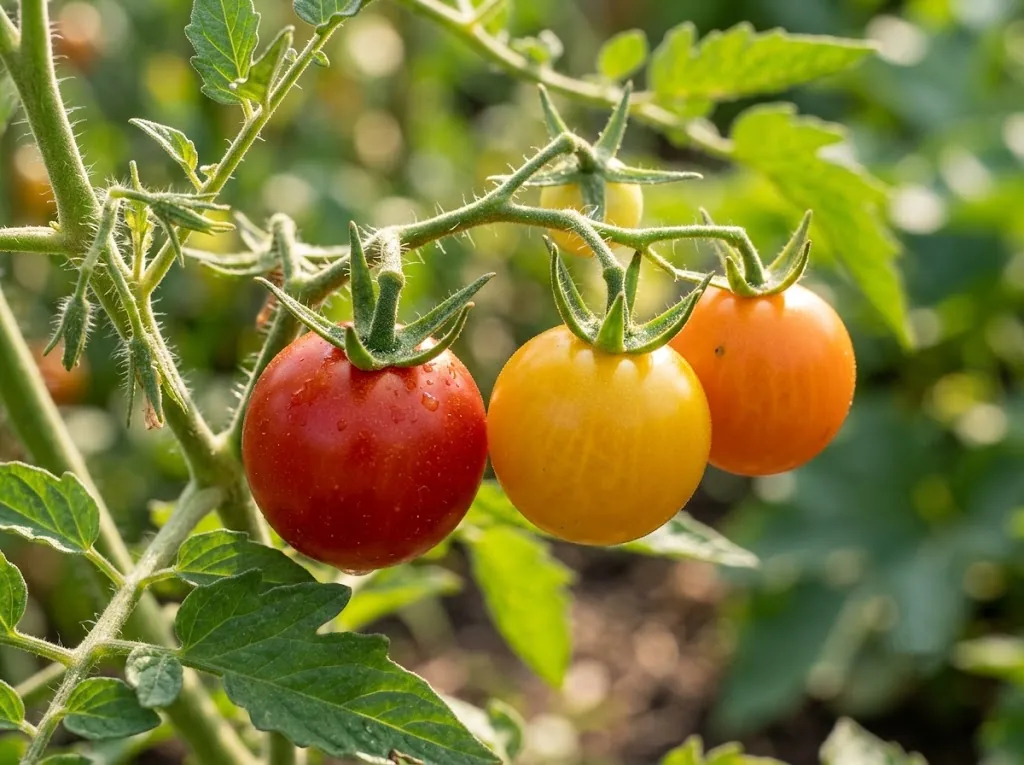
“Cherry” describes a tomato type, not one fixed growth habit. Check the specific packet before buying. If disease has affected your beds, compare the resistance codes on labels and choose one that matches the problem. The University of Minnesota Extension guide explains these codes; resistance can lower risk, but it does not make a tomato immune. A compact determinate cultivar can fit a smaller space, while an indeterminate vine keeps extending and setting tomatoes through much of the season when conditions allow. If you want a larger tomato for thick slices and sandwiches, compare the options in our guide to beefsteak tomatoes.
How to grow cherry tomatoes
Give tomatoes a sunny site, fertile soil that drains well and enough air space around the leaves. Wait until frost danger has passed and the soil has warmed before setting transplants outdoors. Read the variety label for spacing and mature size. Vining types need more room than compact bush types. The University of Minnesota Extension tomato guide recommends installing stakes, cages or trellises as you set out transplants, which avoids disturbing roots later.
Use a large container with drainage holes if you are growing on a patio. A patio pot dries faster than in-ground soil, especially in warm weather, so check it often and irrigate thoroughly when the mix begins to dry. In a bed, water at the base rather than repeatedly wetting the leaves. Consistent moisture supports steady growth; sharp shifts from dry soil to heavy irrigation can contribute to tomato cracking, especially when ripening coincides with heavy rain and warm weather.
If you are deciding between small tomato types, plum tomatoes have a longer, meatier shape and suit sauces well. Cherry tomatoes are the better fit when you want a round tomato to eat whole or cook quickly.
Support a vining cherry type early. Tie the main stem loosely to a stake or guide it into a sturdy cage as it grows. Compact determinate varieties may need less support, but tomato-laden branches can still benefit from a cage. Avoid stripping away lots of leaves: foliage shades the tomatoes and helps protect them from harsh sun. Remove damaged leaves and keep the area around the plant clear of fallen tomatoes.

Start seeds or buy a transplant
Starting from seed indoors gives you more cultivar choices. Sow tomato seeds indoors about five to six weeks before your local planting-out date, then give seedlings strong overhead light so the stems stay sturdy. The time to the first ripe tomatoes depends on the cultivar and local conditions. Use the packet’s days-to-maturity estimate to compare cultivars, and remember that tomato estimates are generally counted from transplanting, not from the first day you sow indoors. Harden them off gradually before they move outside. The University of Maryland Extension lists 65 to 90 days from transplant for tomato varieties overall, a reminder that the packet range and your season matter more than a single calendar promise. If you buy a transplant, choose a compact, healthy plant without leaf spots and check whether its label says determinate or indeterminate. For a simpler start, buy a transplant after your area’s frost danger has passed.
When to harvest and how to handle the crop
Pick cherry tomatoes when they begin to show their cultivar’s mature color; ripe fruit usually comes away easily with a gentle lift or twist. Ripe tomatoes can soften or split, so check clusters often and pick promptly. Some cultivars drop easily, so harvest before fruit falls.
UMN Extension notes that growth cracks can follow rapid growth, heavy rain and warm weather.
Ways to use cherry tomatoes in the kitchen
Eat ripe cherry tomatoes whole as a snack, halve them for salads, or thread them onto skewers for grilling. Their small size and tender flesh also work well in quick cooking:
- Make a fast pasta topping: Warm halved tomatoes with olive oil and garlic until their skins wrinkle and the juices begin to run. Toss with pasta and fresh basil.
- Roast a tray: Spread the tomatoes in one layer, add olive oil and salt, and roast until soft and lightly browned. Spoon them over toast, grains or roasted vegetables.
- Build a simple appetizer: Pair whole tomatoes with mozzarella and basil, or cut them in half and add them to a warm skillet with eggs or beans.
- Preserve a glut: Freeze whole washed tomatoes for later cooking, or dry small tomatoes for use in sauces and grain dishes. For home canning, use a research-tested recipe and follow its acidification and processing directions exactly. The National Center for Home Food Preservation tomato guidance explains why tomatoes need added acid even when pressure canned.

Illinois Extension recommends keeping fresh ripe tomatoes at room temperature, out of direct sun, and using them within a few days. Refrigerate only very ripe tomatoes when you need to slow further softening, then bring them back toward room temperature before serving raw.
Questions about cherry tomatoes
Are cherry tomato plants determinate or indeterminate?
Either. “Cherry” describes the tomato type, while determinate and indeterminate describe how the plant grows. Check the label for the cultivar you are buying. Vining varieties such as Sun Gold and Sweet 100 need a tall, sturdy support; compact types are often easier to manage in a small space.
Can I grow cherry tomatoes in a container?
Yes, if you choose a pot large enough for the variety and provide drainage, sun and support. A tomato plant in a pot can dry out quickly, so check the soil often in hot or windy weather. A compact plant can simplify care, but a vigorous vine can also grow in a container when the pot and support match its size.
Can I use grape tomatoes instead?
Usually. Grape tomatoes are more oval and often firmer, while cherry tomatoes are rounder and softer-fleshed. Either works in many salads and noodle dishes; choose the texture you prefer.
Choose a type that fits your space and cooking
Cherry tomatoes are a practical choice when you want small, flavorful tomatoes for snacking and quick meals. Pick a compact cultivar for a container or a vining cultivar if you can provide a strong support and frequent picking. Grow one red type and one yellow or orange type, then note which colors and growth habits work best in your beds.
