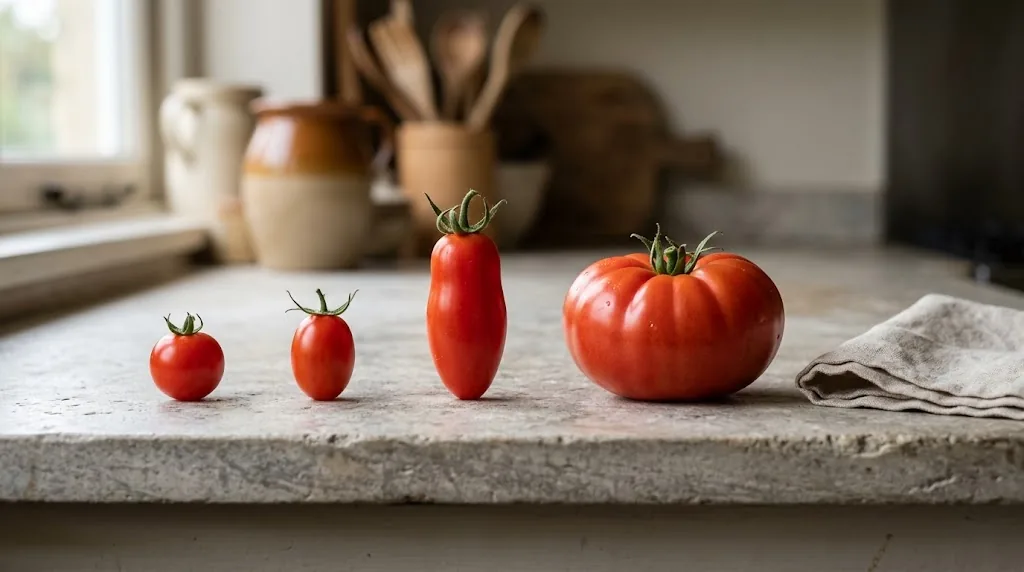
One tomato plant can produce fruit for a salad, a sandwich, or a cooked meal, but the seed packet will not always call it by the same kind of name. Most garden tomatoes are cultivars of Solanum lycopersicum, as Nebraska Extension’s home-garden guide explains. Their labels describe several different things: fruit size and shape, kitchen use, color, and how the plant grows. Once you separate those labels, it is easier to choose among the many types of tomatoes without treating every name as a separate species.
For a broader growing overview, start with the Tomato Plants hub. This guide focuses on the fruit types you are likely to see in a garden catalog or produce section. The groups overlap, and a cultivar can fit more than one.
How tomato varieties are grouped
Garden guides often sort tomatoes by fruit form or intended use. Cherry, grape, plum, slicer, and beefsteak describe the fruit. Red, yellow, green, or purple describe its color. Heirloom and hybrid describe how a cultivar was bred or maintained. Determinate and indeterminate describe plant growth habits. These are separate labels, so one tomato can be a yellow cherry, an heirloom beefsteak, or a determinate paste type.
That distinction matters when you compare seed packets. A tomato’s fruit category suggests how people commonly use it, but it does not tell you everything about flavor, ripening date, plant size, or performance in your climate. Check the cultivar description for those details. Oregon State University Extension also groups cultivars by fruit characteristics, intended use, and growth habit, and recommends matching a choice to growing conditions and goals. When you grow tomatoes, check whether a plant is a compact bush or a sprawling vine as well as what fruit it produces.
At a glance: common tomato varieties
| Type | What to expect | Common use |
|---|---|---|
| Cherry | Small, usually round fruit; cultivars range from tart to very sweet | Snacks, salads, and roasting |
| Grape | Small, usually elongated fruit | Whole in salads or packed as a snack |
| Plum or paste | Often elongated, with dense flesh and small seed cavities | Cooking into sauce or paste |
| Slicer or beefsteak | Medium to large fruit, from round to irregular | Sandwiches, burgers, and fresh slices |
| Oxheart | Large fruit with a tapered, heart-like shape | Slicing or cooking, depending on the cultivar |
These categories are practical shorthand, not a scorecard. There is no single best tomato for every gardener: choose for the meal, growing space, season length, and the flavors you enjoy. If you are deciding between several tomato varieties, compare the packet details before you compare the photographs.
Small tomato types: cherry and grape
Cherry tomatoes are small, bite-sized fruits, most often round. Grape tomatoes are usually more elongated, like a grape. Both are small-fruited tomatoes, and catalogs sometimes place them together. Their size and shape make them easy to serve whole, toss into salads, or eat as a snack. Some varieties are sweet and juicy; others have a more balanced or tangy flavor, so the label is only a starting point. The University of Florida IFAS Extension describes both round and elongated cherry forms, while Oregon State University Extension notes that small-fruited types suit snacks.

Examples include ‘Sungold’ and ‘Gold Nugget’ in the cherry group and ‘Sweet Mojo’ among grape types in Oregon State University Extension’s cultivar tables. These are examples, not a ranking. A best tomato type depends on how you plan to use it, local growing conditions, and the cultivar’s own description.
Plum and paste tomatoes for sauce
Plum tomatoes are generally oval or elongated. Paste tomatoes often have thick, meaty flesh and small seed cavities, which suits them to cooking down into sauce or paste. Roma and San Marzano are familiar examples. “Plum” describes a shape, while “paste” points to a common use, so the labels can overlap without meaning quite the same thing. Nebraska Extension describes paste types as elongated fruits with dense flesh and small seed cavities.
If you want a closer look at the paste group, continue to paste tomatoes and their best uses.

Slicing tomatoes: round, beefsteak, and heart-shaped
Slicing tomatoes are the familiar medium to large fruits people cut for sandwiches, burgers, and plates. “Beefsteak” usually signals a large, broad fruit with dense flesh and small seed cavities. Some cultivars weigh a pound or more; others are smaller, and their shape may be round, flattened, or irregular. A large fruit often gives you a wide slice, but size and shape vary by cultivar. Iowa State University Extension notes that beefsteaks can be large and irregular as well as round. Brandywine and Cherokee Purple are two familiar examples.
Oxheart tomatoes have a tapered, heart-like outline. The name describes a shape, not one cultivar or a single color. Use the seed packet’s description for fruit size and plant habit instead of relying on the category name alone.
Tomato colors: red, yellow, green, and purple
Red is common, but tomatoes can also ripen yellow, orange, pink, green, purple, or with stripes and mixed colors. Color may help you recognize a cultivar, yet it does not define its shape or kitchen use: a yellow tomato might be a cherry, slicer, or paste type.
Some newer cultivars develop blue or purple pigment on skin exposed to sunlight. In those types, the blue area alone does not tell you whether a fruit is ripe. Check the cultivar’s ripeness cues, such as its background color and feel, rather than picking by the darkest patch. A green-when-ripe cultivar is also different from an ordinary unripe green tomato, so confirm the label before picking. Illinois Extension’s blue tomato notes describe how sun exposure affects blue coloring and why that color alone is not a ripeness signal.
Color can make a mixed harvest more interesting, but it is not a reliable shortcut to taste. Read descriptions from the seed company or a local extension service, then try one plant before committing a large part of the garden. Nebraska Extension lists ripe tomatoes in colors from red and pink to white and green, while Oregon State University Extension describes anthocyanin-rich cultivars with purple or blue tones.

Heirloom versus hybrid tomatoes
Heirloom is not a fruit shape. Heirloom tomatoes come in many sizes, colors, and forms, from small fruits to large slicers. The word usually refers to traditional cultivars maintained through open pollination over generations, though definitions vary. Nebraska Extension describes this variation and the traditional use of the label. Open-pollinated seeds can generally produce plants resembling the parent when cross-pollination is controlled.
Hybrid tomatoes are made by crossing selected parent lines to combine traits. A hybrid may offer useful qualities such as vigor, uniformity, or disease resistance, while seeds saved from its fruit may not reproduce the same combination in the next generation. Nebraska Extension explains that saved seed from hybrids will not grow true to type. Neither label guarantees better flavor or easier growing. If seed saving matters to you, look for an open-pollinated cultivar and follow good isolation practices. For more on the heirloom category, see what makes a tomato an heirloom.
How to choose a tomato type for your garden
Start with the way you plan to use the fruit, then check whether the cultivar suits your space and season. A short list can narrow the search for a gardener:
- For quick snacks and salads, compare cherry and grape types.
- For cooking into sauce, look at plum and paste descriptions.
- For broad sandwich slices, compare slicer and beefsteak fruit.
- For a varied basket, mix colors or try a heart-shaped cultivar alongside round fruit.
- If you want to save seed, choose an open-pollinated type rather than a hybrid.
Then check the fine print: days to maturity, plant size, disease-resistance codes, and whether the plant is determinate or indeterminate. Those traits do not follow automatically from fruit type, and the type name alone does not promise a high yield. A variety that sounds ideal on paper may still struggle in a short season or a humid garden, so use local extension recommendations when they are available. Try one or two cultivars, note how they grow and taste in your own garden, and use that experience to guide next year’s choices.
Sources
- Oregon State University Extension, Grow Your Own Tomatoes and Tomatillos
- Iowa State University Extension, Recommended Cultivars and Types of Tomatoes for the Home Garden
- University of Florida IFAS Extension, Cherry Tomatoes
- Oregon State University Extension, Tomatoes
- University of Nebraska-Lincoln Extension, Selecting Tomatoes for the Home Garden
- University of Illinois Extension, The First Harvest of Blue Tomatoes
