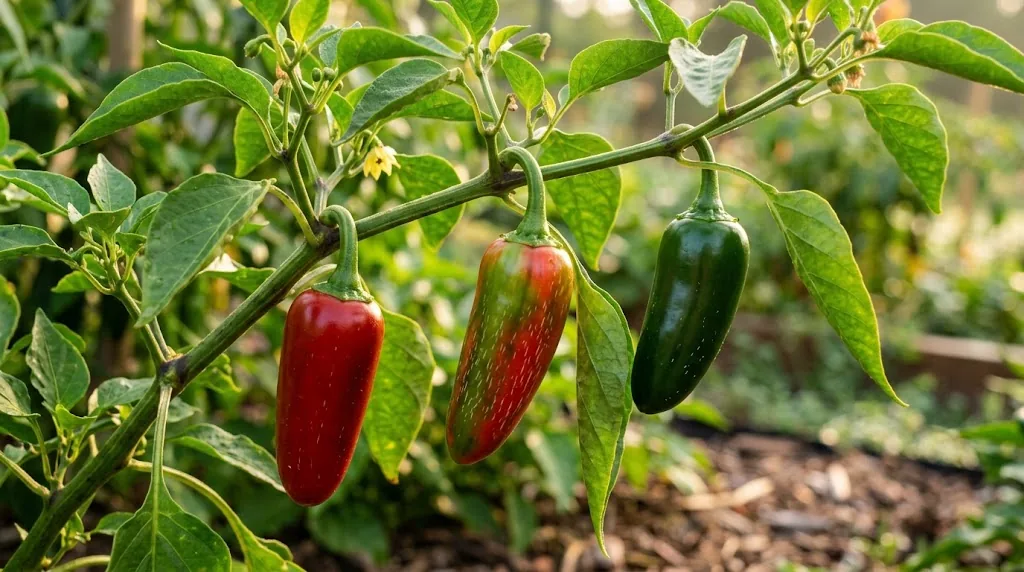
A green chili can turn red, yellow, orange, or even brown while it is still attached to the plant. That change is usually ripening, not a sign that the pepper is going bad. The final color depends on the variety, and the path to that color can include several shades.
Chili pepper colors come from pigments in the fruit. As the pepper matures, green chlorophyll fades and other pigments become easier to see or build up. The change can tell you about ripeness within one variety, but color alone cannot tell you how hot a pepper will be.
What changes inside a ripening pepper?
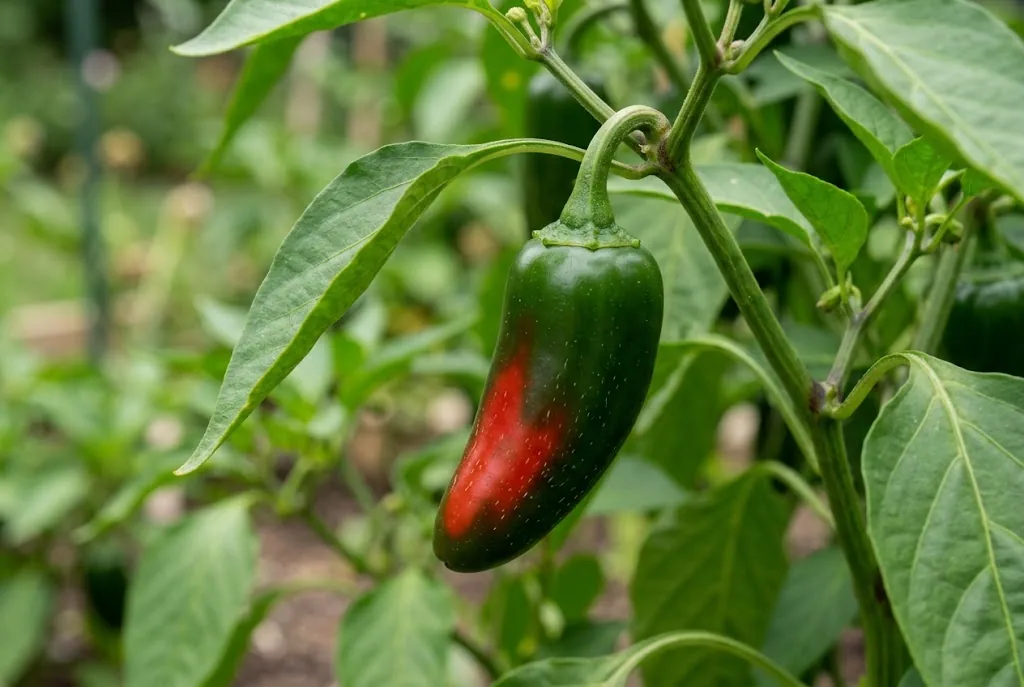
An immature green pepper contains chlorophyll, the pigment that also colors leaves. During ripening, the fruit’s pigment-making structures change. Chlorophyll often breaks down while carotenoids accumulate. Red types build carotenoids that include capsanthin and capsorubin. Yellow and orange types accumulate different mixes. The genes of each variety shape its mature hue.
A pod may first look pale green, then show streaks or patches of its final color. That uneven stage is often called color break. It does not mean the fruit has spoiled. Follow the whole fruit over time, and compare it with the expected ripe color for the variety. For more on how fruit develops on the plant, see our guide to chili pepper plant anatomy and life cycle.
Why do some peppers look purple or almost black?
Purple color can come from anthocyanins, pigments that may appear in the skin of some varieties. Dark purple can look black in shade. Some fruits hold that color as they mature; others pass through it before reaching red or another final shade. A dark patch alone is therefore a poor way to judge ripeness. Check the variety description and look for firm, healthy skin.
Color can also be a warning when the tissue is soft, sunken, moldy, or leaking. Those changes call for a closer inspection; they are different from a firm fruit changing pigment across its skin. Do not eat a fruit with visible decay.
Do green, yellow, and red peppers taste different?
Often, yes, within the same variety. A green pepper is commonly picked before its mature color develops. It can taste more grassy or sharp; a fully ripe fruit may taste sweeter or fruitier. The exact change varies by cultivar. A red jalapeño may taste different from its green stage, but a yellow habanero is not simply a younger red jalapeño. They are different peppers.
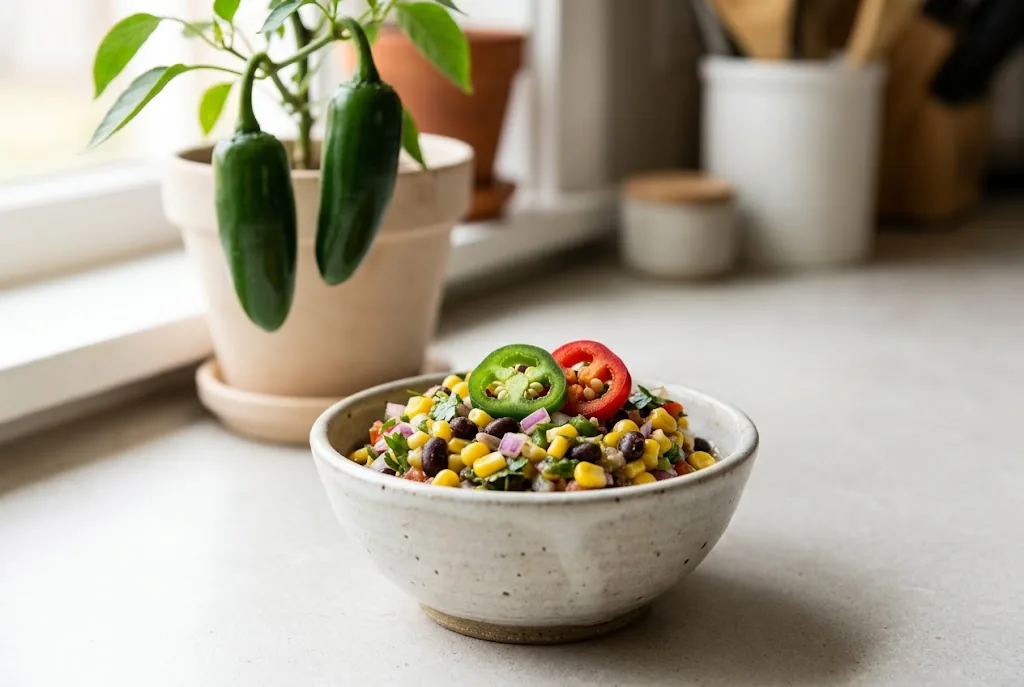
Use the stage that suits the dish. Green peppers can bring a fresh edge to salsas or a stew. Ripe ones may add a rounder flavor and brighter color to a hot sauce. Taste a small piece before changing a recipe, especially if you are working with an unfamiliar hot pepper. For a wider introduction to types, flavor, and uses, explore our complete chili pepper guide.
Does a red pepper have more heat than a green one?
Within one variety, often a little. Heat comes from capsaicinoids, not from red pigment. In one study of Capsicum peppers, those compounds were generally higher at the fully ripe stage than at the green stage. Variety mattered more than ripening stage, though. A ripe pod of a mild variety stays mild, and a green pod of a hot variety can be hotter than a ripe pod of a mild one. Color is a poor way to compare different peppers, and a yellow pepper is not automatically mild.
Compare peppers by variety first, then by a sourced Scoville range if heat matters. Scoville heat units describe pungency, but a color chart is not a Scoville scale. Even fruits from one plant can differ. When tasting a very hot type, start with a small amount and handle cut fruit carefully.
Which chili pepper colors should you expect?
Common mature colors include red, orange, and yellow. Some varieties finish brown, purple, or cream colored. Others display several colors at once because fruits on one plant are at different stages. The label or seed description is more useful than a generic color rule: a poblano is often used green, while many cayenne peppers are harvested red. A sweet bell pepper can follow a similar green-to-color change, even though it has no chili heat.
Do not assume every fruit passes through the same rainbow. Some move from green straight toward red. Others shift through yellow or orange, and purple ornamental peppers can follow another sequence. Weather and light can affect the pace and appearance, while the variety sets the main destination.
When is a pepper ready to pick?
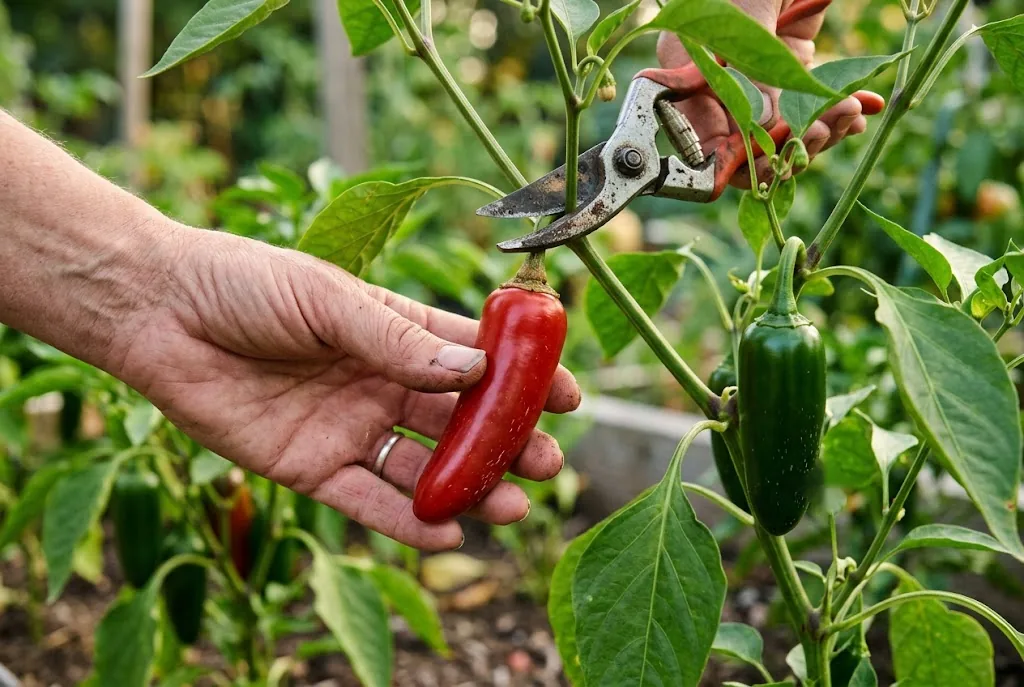
First decide which stage you want. Many varieties can be eaten at the firm green stage; others are grown for their mature color and flavor. If you want the final shade, let a healthy fruit color on the plant. Most peppers do not develop their full mature color and flavor reliably after being picked green.
Use the variety’s expected color along with firm skin and the purpose of your recipe. A fruit with mixed colors may still be on its way. If you need the practical harvest steps for red fruit, see how to harvest red chili peppers.
The simple way to read color
Color is a useful clue when you know which pepper you planted. Watch one firm fruit change on the plant, check its expected final shade, and taste at the stage you plan to cook with. Treat color as a ripeness signal within that variety, not as a universal heat rating.
Sources
- Pigment Biosynthesis and Molecular Genetics of Fruit Color in Pepper, for chlorophyll, carotenoids, and anthocyanins.
- Carotenoids of Capsicum Fruits, for pigment changes during ripening.
- The Effect of Varietal Type, Ripening Stage, and Growing Conditions, for how sugars and capsaicinoids change with variety and ripening stage.
- University of Maryland Extension: Normal Plant Characteristics of Vegetables, for normal pepper color changes.
