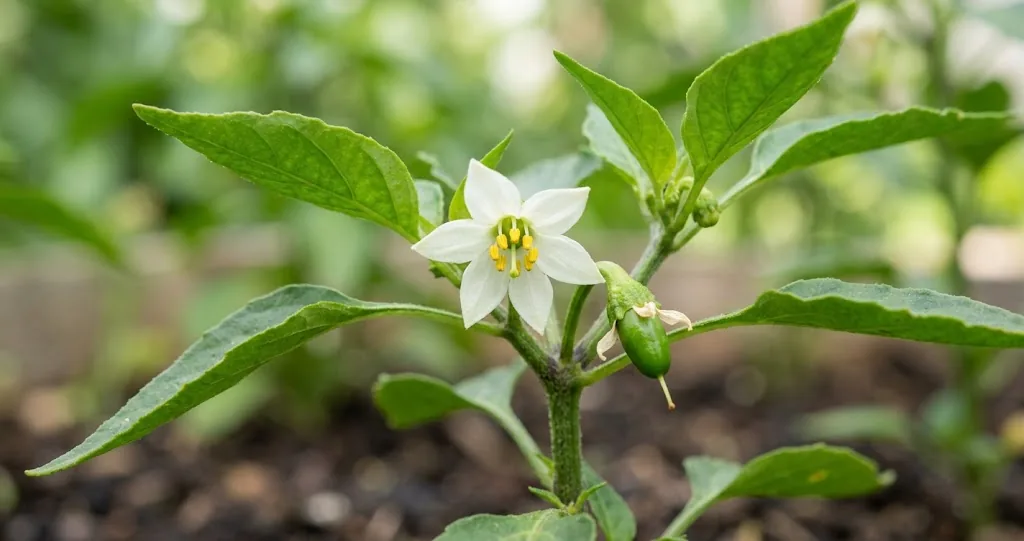
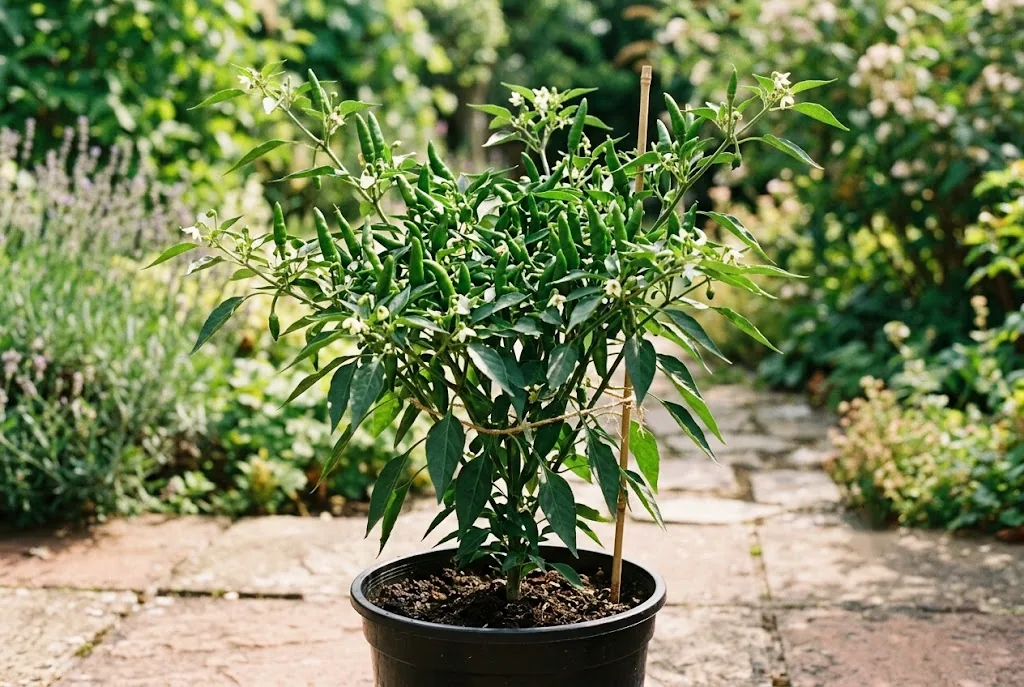
You watch a healthy-looking chili pepper plant load up with buds, then the open flower petals drop to the soil without setting fruit. Nothing changes on the leaves, the weather has been fine, and the plant seems otherwise content. This kind of flower loss is one of the most common problems home growers run into, and it almost always traces back to a small handful of stress triggers that stop the plant from carrying a flower all the way to a pod.
This guide walks through the real causes of flower drop on a chili plant, what each one looks like in the garden or on a windowsill, and the fixes that support pod set. You will also find a quick reference for temperature ranges, watering habits and practical flower-setting help, plus a short FAQ at the end. Most growers will see at least one flush of flowers fall off before they get the watering and feeding balance right, so the goal is to learn what each symptom means, not to panic at the first dropped pepper flower.
Is it normal for some chili flowers to fall off?
Some flower loss can happen as a plant adjusts to weather and current pods. It becomes worth investigating when blooms keep falling and no small pods form, especially if the pattern begins suddenly.
Drop becomes a problem when flowers keep falling before they open, or when the plant drops nearly every bloom and sets no fruit at all. That pattern usually points to stress rather than normal adjustment.
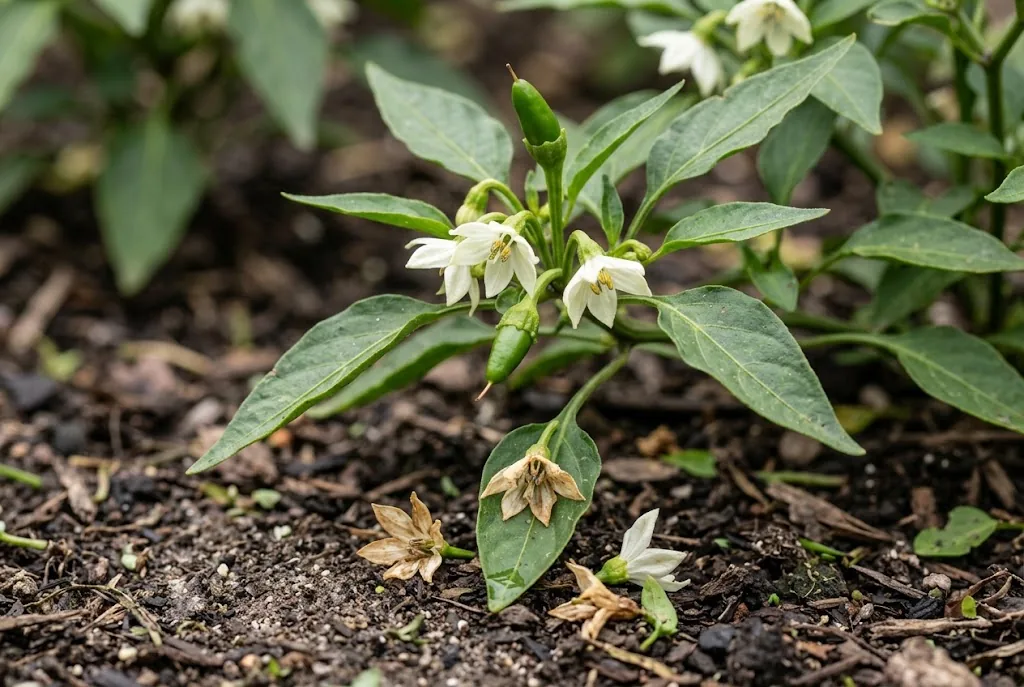
The most common causes of chili flower loss
This problem tends to come from one or more of these triggers: temperature swings, watering mistakes, poor pod set, nutrient imbalance, light issues, or pest and disease pressure. Reading the rest of the article, it is worth checking the simplest causes first, because two or three of them often stack up on the same pepper plant.
Heat stress and cold nights
Chili peppers are warm-season plants, but flower set is sensitive to temperature. New Mexico State University Extension notes that blossoms may not set below 60 F or above 90 F. A heat wave near hot glass or a sudden cold night can therefore cause a flush of blooms to fall even when the leaves still look healthy.
Aim for steady conditions rather than chasing a perfect reading. NMSU lists about 65 to 85 F by day and 60 to 70 F at night as favorable conditions for growth and pod set. Move pots away from intense hot glass, provide afternoon shade during a heat wave, and protect containers when cold nights are forecast.
Water stress from overwatering or underwatering
Both extremes can interfere with pod set. Repeatedly dry soil followed by a heavy soak is stressful, while constantly wet soil limits root oxygen. The leaves may stay green at first, so check the soil rather than judging only by foliage. University of Maryland Extension identifies prolonged dry or wet soil as a cause of poor blossom and pod set in peppers.
Water deeply, then let the top 2 to 3 cm (about an inch) of soil dry before the next soak. Even watering throughout the flowering stage is more important than any feeding trick, because a chili plant in steady soil moisture has the reserves to set peppers through minor weather swings.
Poor pollination
Chili flowers can set fruit from their own pollen, but the grains still have to reach the stigma inside the flower. A still indoor space, heat, or other stress can reduce fruit set. Use gentle movement while also checking temperature and watering, because several stresses can overlap.
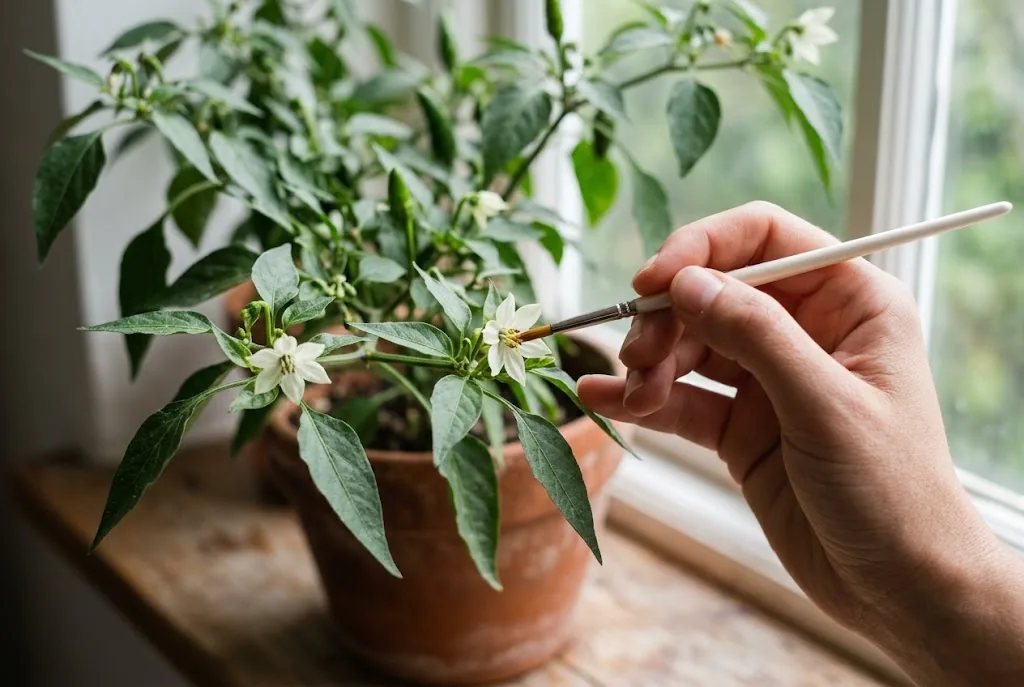
Gently shake the plant, brush open blooms lightly with a small paint brush, or use mild air movement nearby. In a greenhouse, open a door or vent during suitable weather so pollinators can reach the plants.
Too much N or an off-balance feed
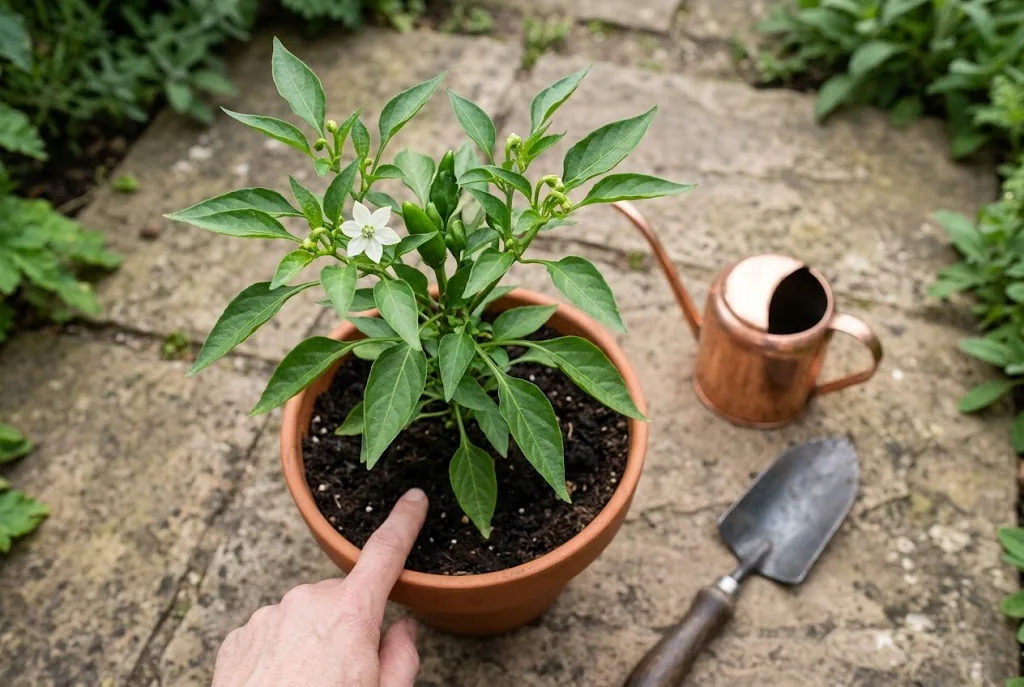
Excess N can push soft leafy growth at the expense of flowers and pods. University of Maryland Extension lists excessive nitrogen fertilization among the causes of poor pepper flower and pod set. A plant with very lush growth but few pods is a reason to review the fertilizer label and avoid adding more high-N feed.
Follow the label rate for a fertilizer suited to fruiting vegetables, and avoid increasing the N level simply because flowers are falling. The article on feeding chili pepper plants explains how to choose a feed and adjust it through the season.
Light problems
Too little light can limit the energy available for flowering and pod set, while intense afternoon sun can add heat stress during a heat wave. Give container plants the brightest practical position, then use temporary afternoon shade if the pot and flowers are overheating.
Indoors, supplement a dim window with a suitable grow light and follow the light maker’s safe hanging-distance guidance. Outdoors, use temporary afternoon shade when direct sun is driving heat stress, then remove it when conditions moderate.
Humidity that is too low or too high
Humidity and still air can also affect flower set. High relative humidity is one of the stress factors associated with chile flower drop in NMSU Extension guidance. In a still indoor space, gentle air movement can help flowers release their grains, but it will not overcome temperature or watering stress.
In a greenhouse, vent during the warmest hours to reduce stagnant humidity. Indoors, use gentle air movement and correct the main stress first, whether that is heat, water, light, or fertilizer.
Pests and disease that stress the plant
Aphids, thrips, spider mites and broad mites all feed on sap and stress the plant during flowering, and fungal root problems from wet soil can cause similar flower loss. These are separate problems with their own articles, so the simplest next step is to rule them in or out before chasing the other causes.
The companion guide on common chili plant pests walks through what each pest looks like and the low-toxicity treatments that work in home gardens.
How to stop chili flowers from falling off
The fixes that work share a pattern: stabilize the conditions, then support flower set. Flowers that have already dropped cannot form a pod, but the next flush may set once the underlying stress improves.
Stabilize temperature and light
Pick a stable spot. A windowsill that bakes at noon and freezes at midnight is a flower-dropping machine. Move the plant to a place with even light and even temperature, or use shade cloth and a small fan outdoors. A grow light on a timer indoors gives the most predictable conditions of all.
Get the watering rhythm right
Stick a finger into the soil before each watering. If the top 2 to 3 cm feels dry, water deeply until it runs from the drainage holes. If it still feels cool and damp, wait a day. A simple moisture meter takes the guesswork out for new growers.
Hand pollinate for a few days
Hand pollination only takes a minute. Tap the main stem or each branch lightly when flowers are open, or sweep a small paint brush from bloom to bloom. Watch the next flowers for a small pod at the base after a flower is successfully fertilized rather than expecting an exact timetable.
Adjust feeding for the flowering stage
Avoid heavy, high-N feeding once flowers appear. Use a fertilizer suitable for fruiting vegetables at its label rate, and adjust only after checking the plant’s growth, watering, and light conditions.
Protect plants from weather swings
Heat waves and cold snaps can both interrupt pod set. Watch the forecast during flowering and act early: provide temporary afternoon shade in severe heat, and use frost protection or move containers indoors before a cold night. Remove temporary protection once conditions moderate.
Frequently asked questions about chili flower drop
Why are my chili flowers falling off before they open?
Buds that drop before opening can point to temperature stress or pests. Pepper blossoms may not set below 60 F or above 90 F, and insect damage is also associated with flower drop. Check the thermometer and inspect buds closely for damage.
Should I cut the first flowers off my chili plant?
Many growers pinch off the first flush of flowers on a young plant to push energy into root and branch growth, especially on small-fruited pepper varieties that flower heavily early. The trade-off is a later but larger harvest. If the plant is already a good size and flowering strongly, leave the flowers alone.
How long after a chili flower opens does the fruit form?
After successful pollination, the petals fall and a tiny green pod begins to form at the base. Under ideal conditions, mature green chile fruit may be ready about 45 to 55 days after fertilization, according to New Mexico State University Extension; variety and weather can change that timing.
Can I save chili flowers that have already dropped?
If a flower falls before a pod has started to form, it cannot be rescued. The useful next step is to correct the likely stress so the plant can support its next flush of blooms.
Do chili plants drop flowers in hot weather even if I water them well?
Yes. Water alone cannot offset heat stress during flowering. Pepper blossoms may fail to set below 60 F or above 90 F, according to NMSU Extension. Reduce direct afternoon heat where practical, keep soil moisture steady, and wait for more favorable weather before judging the next flush of flowers.
Will a grow light help stop chili flowers from falling off indoors?
A grow light solves the light half of the problem and keeps day length steady, but it does not cool a hot room. Pair the light with a small fan for airflow, monitor temperature, and hand pollinate to cover the pieces the indoor environment misses.
Bringing it together
A chili plant that drops its flowers is telling you one or two of its basic needs are off. The usual suspects are temperature swings, uneven watering, a quiet still corner, and a feed that pushes leaves instead of fruit. Run through the list above and fix the clearest stress first, then watch the next flush of blooms for improving pod set.
For the broader picture, the complete guide to growing chili peppers covers the full season from sowing to harvest, including feeding, watering, pruning and overwintering. It is the natural next stop once you have your watering rhythm sorted and your feeding in balance.
Hot summers and warm indoor rooms cause a surprising share of flower drop, so it is worth a quick look at how steady heat changes the rules for setting pods.
If your plant is indoors in a warm room or you are growing through a hot summer, the guide to growing chili peppers in hot climates covers the same problems in steady heat and high humidity.
