
A pepper plant that grows into a tall, leafy bush but drops flowers or sets few pods may need a feeding adjustment, but nutrition is not the only possible cause. Temperature stress, uneven moisture, light, root health and fertilizer all affect fruit set. A soil test and a close read of the fertilizer label give you a safer starting point than chasing one magic formula.
For most home gardeners, the best approach is simple: build healthy soil, avoid excess nitrogen, keep moisture steady and use a vegetable fertilizer according to its label. This guide explains how to make those choices from transplant through the final pick.
What pepper plants need from fertilizer
Peppers need nitrogen, phosphorus and potassium, along with secondary nutrients and micronutrients. Nitrogen supports leafy growth. Too much can leave a plant bushy and slow to bear fruit. Phosphorus and potassium needs depend on what is already in the soil, so use a soil test or local extension recommendation before adding either nutrient.
University of Minnesota Extension advises applying phosphorus and potassium according to soil-test recommendations and warns that excess nitrogen can produce bushy, leafy plants that are slow to fruit. Its pepper-growing guide is a useful starting point for home gardens. Penn State Extension likewise bases pepper phosphorus and potassium rates on annual soil tests. Read its pepper-production guidance if you want the details behind that approach.
Read the three numbers on a fertilizer label as N-P-K. Choose a product made for vegetables or peppers, then follow its dilution rate and timing. A soil test is especially worthwhile if you garden in the same bed year after year, have very alkaline soil, or have already added compost and other amendments.
The best fertilizer for chili plants is not one fixed formula. A balanced fertilizer, a liquid fertilizer or a slow-release product can each work when the soil, container size and label directions support that choice.
Granular, liquid or slow-release: which form works best
Each form can be useful. The right one depends on the product label, your soil and whether the plant grows in a bed or container.
- Slow-release granular fertilizer can provide a baseline feed. Mix or scratch it in only at the label rate and water it in.
- Water-soluble liquid fertilizer is easy to adjust for containers and active growth. Apply it at the label dilution, never by guessing a stronger dose.
- Compost improves soil structure and can add nutrients, but it is not a predictable complete fertilizer on its own.
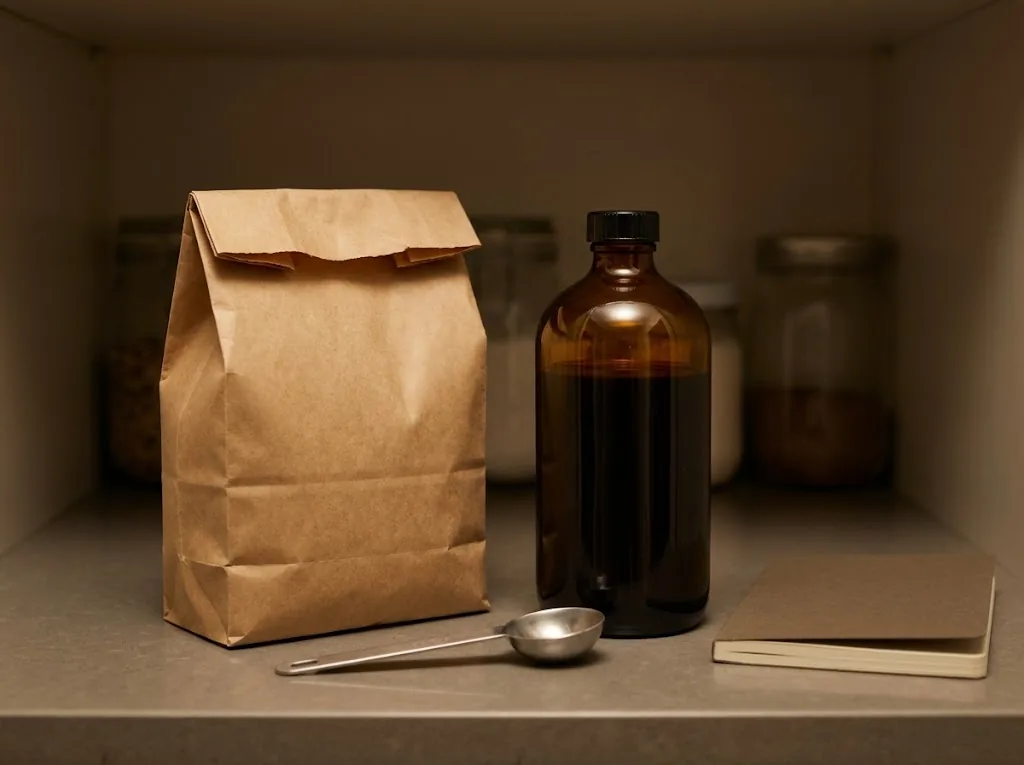
Container plants can lose soluble nutrients through repeated watering. Check the potting mix, watch the plant’s growth, and use the product label rather than assuming that every pot needs a weekly feed. If you are repotting or starting from scratch, build the foundation with the right soil and pH first. See our guide to soil mix and pH for chili plants.
A practical feeding framework by growth stage
- Seedlings: Fresh seed-starting mix often supplies enough nutrition for the earliest stage. When seedlings need feeding, use a diluted product only as its label directs.
- Vegetative growth: Aim for steady, not excessive, growth. Very dark foliage, soft growth and delayed flowering can signal that nitrogen is too high.
- Flowering and fruit set: Keep watering even and continue a suitable labeled feed if the plant and product instructions call for it. Do not make a large late-season P or potassium addition without a soil-test reason.
- Fruiting: Continue regular watering and monitor the plant. Reduce or stop feeding when the label, your season or the plant’s growth pattern indicates it is appropriate.
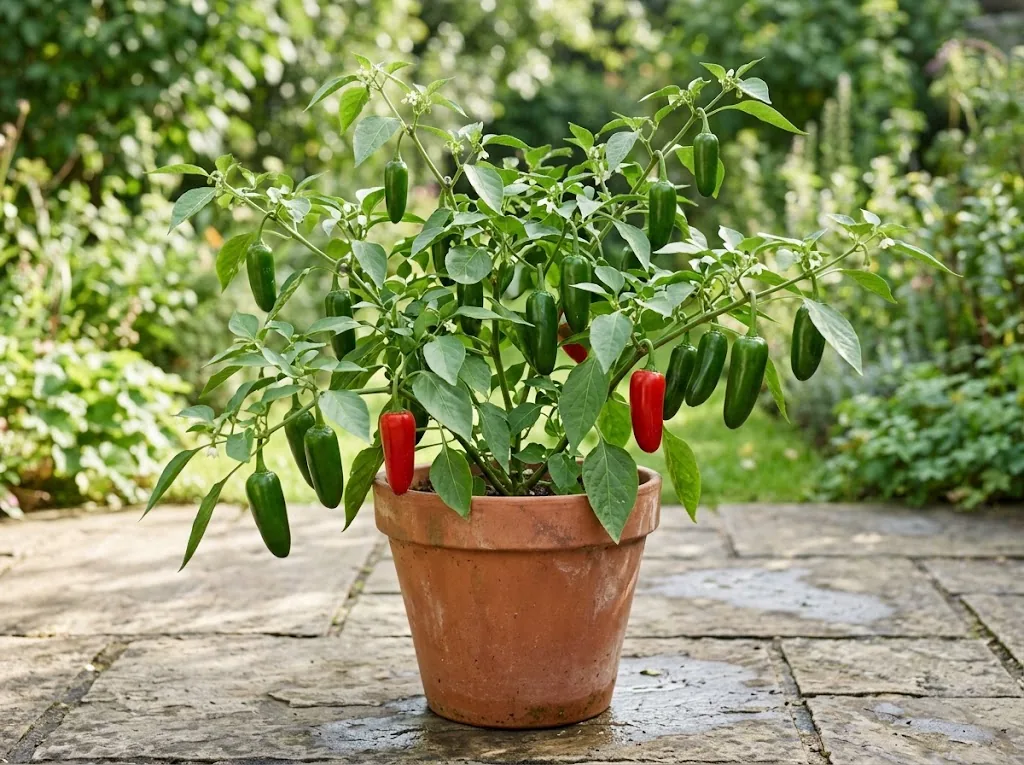
High temperatures can cause flower and fruit abortion, and irregular watering can also weaken flowers and small fruit. Fertilizer cannot solve those problems on its own. Utah State University Extension’s pepper guide explains both risks.
Common feeding mistakes that cost you the harvest
- Adding nutrients without a soil test. More fertilizer is not automatically better, especially for P and K.
- Overdoing nitrogen. Excess N can favor leaves over fruiting.
- Applying fertilizer to stressed, dry roots. Water first when the label directs it, and do not apply a stronger dose to rescue a struggling plant.
- Ignoring moisture. Peppers need consistent soil moisture for good fruit quality and reliable calcium uptake.
- Treating every yellow leaf as a fertilizer problem. Water stress, disease, root damage, soil pH and natural aging can all cause yellowing.
Reading leaves and fruit problems carefully
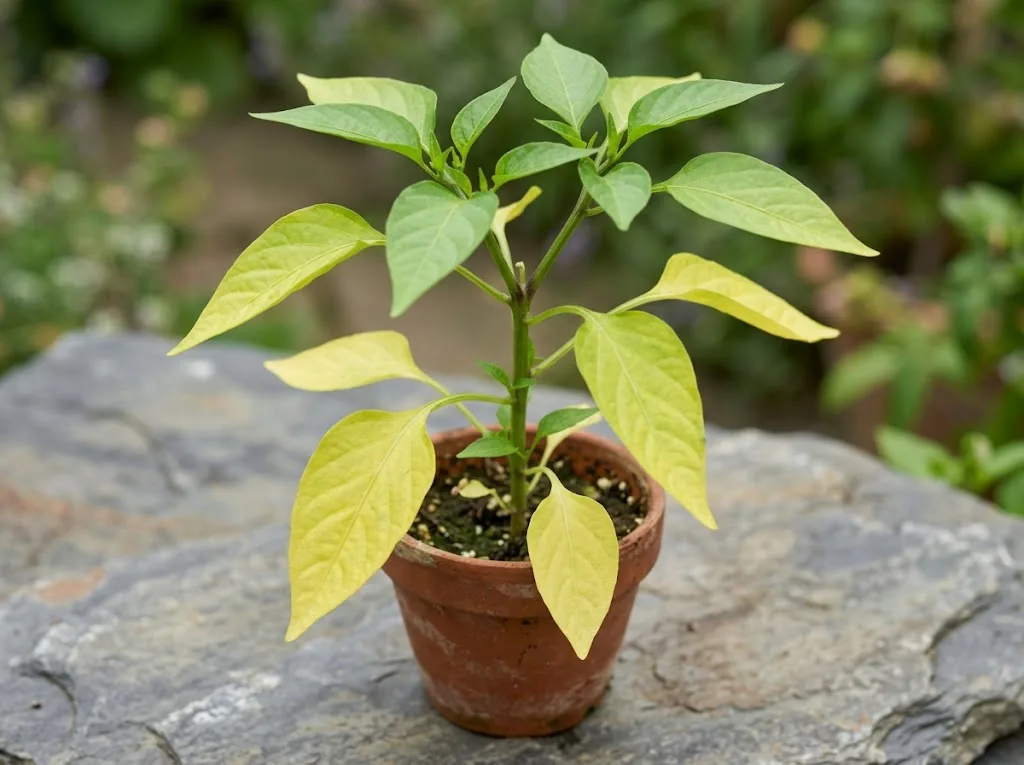
Symptoms can overlap, so use them as clues rather than a diagnosis. General pale green or yellow older leaves can occur when N is low. Yellow tissue with green veins is interveinal chlorosis, often associated with iron availability and high soil pH, not a safe reason to add N. University of Maryland Extension’s nutrient-deficiency guide explains why leaf color needs context.
- General yellowing on older leaves: check watering, root health and soil fertility before making a modest label-directed adjustment.
- Purple tints and slow growth: cool soil can limit nutrient uptake. Test the soil before adding P.
- Brown leaf edges or weak growth: check moisture, salt buildup and soil-test results before assuming a K shortage.
- Yellow young leaves with green veins: investigate pH and iron availability rather than adding a general fertilizer.
- Blossom end rot: dark, sunken patches at the blossom end reflect a localized calcium-uptake problem. Uneven watering, drought stress, excess N, root disturbance and high salts can contribute. Start by keeping moisture even and use a soil test before adding calcium.
If flowers form and then drop without setting pods, temperature swings and moisture stress are common causes. Our guide to why pepper flowers drop walks through the full checklist.
Organic options that fit a soil-first plan
Organic inputs can be useful, but they still need to match the soil and the label.
- Well-rotted compost or manure: use it to build organic matter. Avoid fresh manure around edible crops.
- Fish emulsion and seaweed products: use only at the product label rate. Their nutrient analysis varies widely.
- Bone meal, rock phosphate and wood ash: do not treat these as automatic fixes. They can be inappropriate when soil levels or pH are already high.
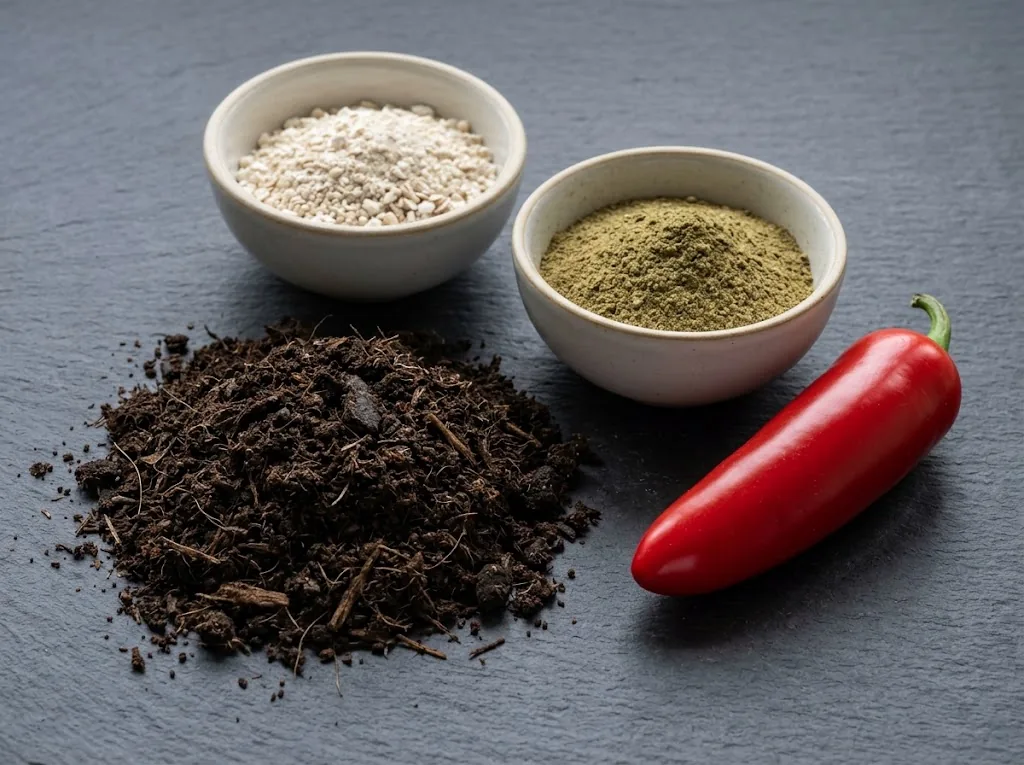
- Coffee grounds: compost them or use them sparingly as an amendment, not as a complete fertilizer.
Frequently asked questions
When should I start fertilizing pepper plants?
Start with the seed-starting mix and product label. Once a transplant establishes, use a suitable vegetable fertilizer only as the label and your soil conditions support.
How often should I feed plants in pots?
Container plants often need closer attention because frequent watering can leach soluble nutrients. Check the product label, the size of the pot and the plant’s growth instead of following a universal weekly schedule.
Are coffee grounds good for chili plants?
Coffee grounds can contribute natural matter when composted, but they are not a complete fertilizer for peppers.
Can I use tomato fertilizer on chili plants?
A tomato or vegetable fertilizer can suit chili plants when its label permits that use. Follow its dilution and timing directions, and use a soil test to guide major nutrient additions.
Should I feed during a heatwave or cold snap?
Avoid trying to force growth during severe stress. Protect the plant’s moisture and roots first, then resume normal label-directed care when conditions improve.
The bottom line on feeding pepper plants
Healthy chili plants respond best to soil-informed nutrition, sensible label rates and even watering. Avoid excess N, do not guess at P or K needs, and investigate symptoms before adding another product.
For the broader picture, our guide to growing chili peppers from seed to harvest covers the rest of the season in one place.
