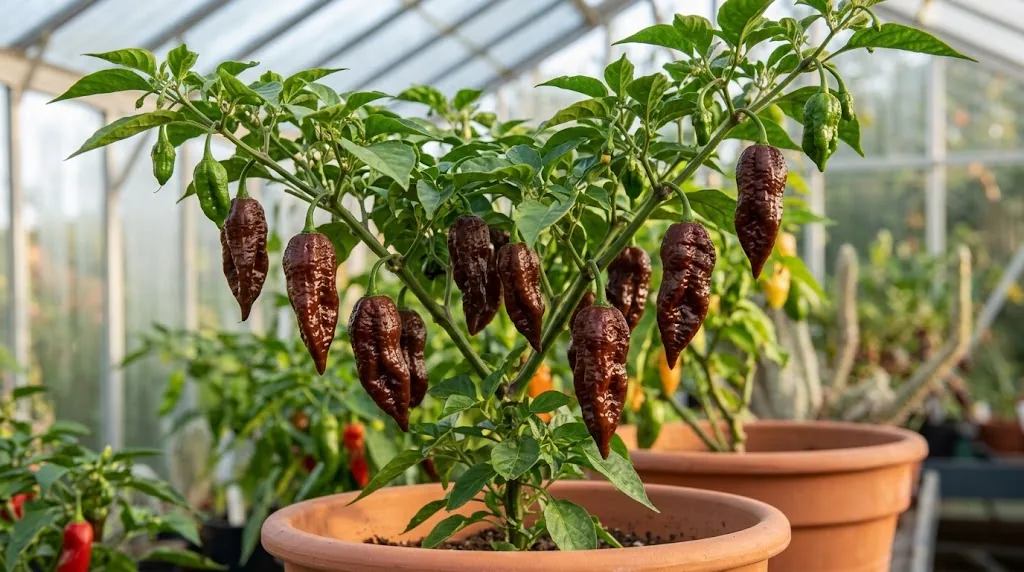
The chocolate Bhut Jolokia pepper is the brown-ripening form of the ghost pepper, also sold as the brown ghost form. It is a super-hot chili pepper classified as Capsicum chinense, with possible C. frutescens ancestry. Its dark brown skin can seem gentle, but it masks extreme heat. Here is what is known about its background, heat estimates, growing needs and safe handling.
What is Chocolate Bhut Jolokia chili?
The underlying ghost pepper comes from Assam in northeastern India. A 2007 study by New Mexico State University researchers classified it as a C. chinense cultivar and found possible genetic introgression from C. frutescens. The authors called the result a putative naturally occurring interspecific hybrid, so the concise description is a C. chinense cultivar with evidence of ancestry from another species.
The study’s title called Bhut Jolokia the “world’s hottest known chile pepper” in its 2007 context. That wording reflects the period, not a current record: it does not place this form on a modern list of the world’s hottest peppers or claim it is today’s hottest chili.
“Chocolate” describes the mature brown-fruited form sold as the brown ghost pepper. Product names and fruit descriptions can differ between suppliers. Some reverse the name to “Bhut Jolokia Chocolate,” so check the expected ripe color and shape before buying. For a wider guide to different pepper types and how their profiles compare, see our chili variety guide.
What does Bhut Jolokia Chocolate look like?
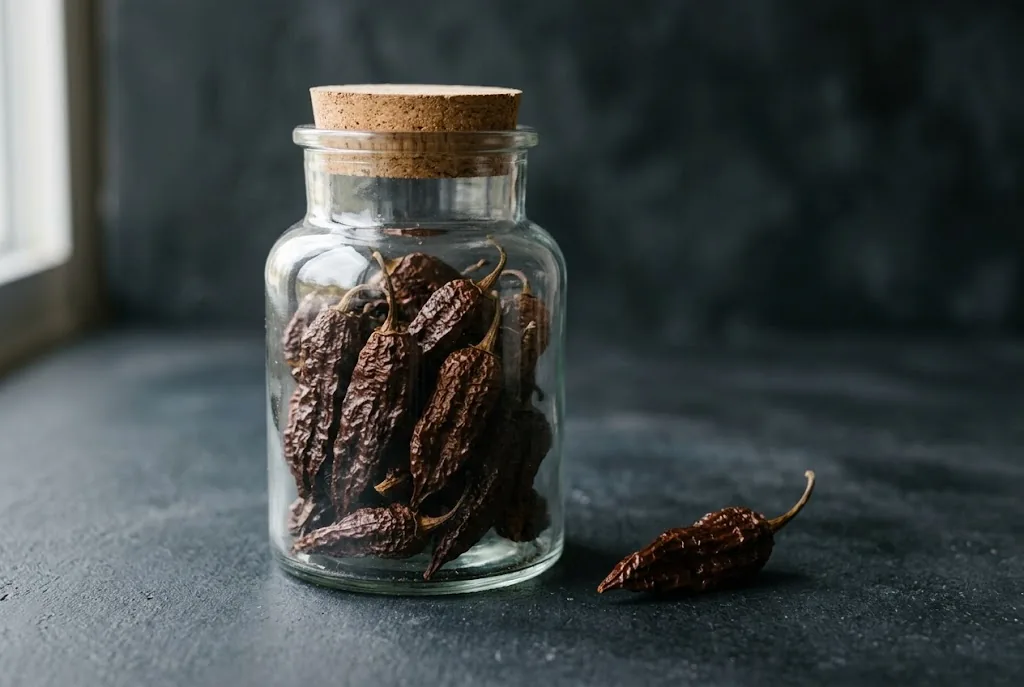
A mature fruit, or pod, is usually described as about 2 to 3 inches long, narrow and tapered to a point, with wrinkled or dimpled skin. It changes from green to deep brown as it ripens. Its chocolate color is a deep brown at maturity, the main visual difference from the red form; the pointed shape and uneven surface are typical of a ghost pepper. PepperScale’s published profile gives the same size and appearance range.
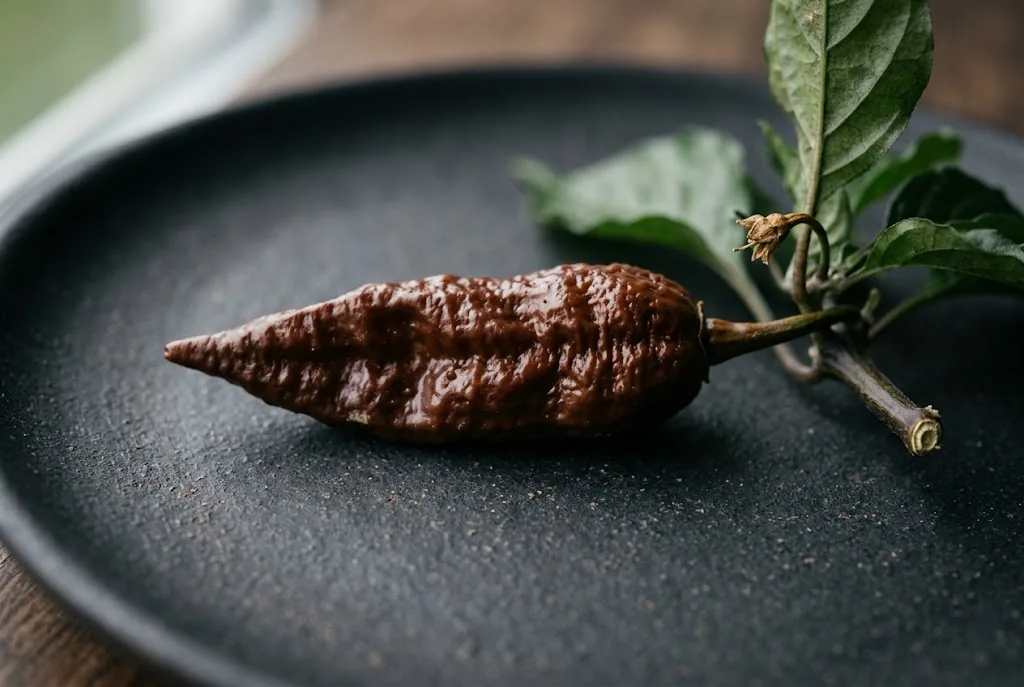
Brown fruit can be confused with other dark peppers. The brown Bhut Jolokia is not another name for Chocolate Bhutlah, which PepperScale describes as a separate cross involving Bhut Jolokia and 7 Pot Douglah, placed in the same top heat tier as the Trinidad Scorpion. If dark-fruited varieties interest you, compare its profile with Black Hungarian pepper, a different species with its own growing and culinary profile.
How hot is Chocolate Bhut Jolokia on the Scoville scale?
PepperScale reports 800,000 to 1,001,304 Scoville heat units (SHU) for this brown form. A Magic Plant Farms product page lists a wider range, from 375,000 to 2,000,000 units, without stating a measurement method. Treat these as seller estimates, not comparable lab results for every plant or fruit. In a replicated trial, the 2007 study measured Bhut Jolokia at up to one million units, but it did not test this brown form specifically.
PepperScale reports a similar 855,000 to 1,041,427 range for red ghost peppers; the ranges overlap, so they do not show that chocolate fruit is consistently hotter or milder. For a broader comparison, Guinness World Records reported an average of 1,569,300 units for the Carolina Reaper in 2013. That certified average is a different kind of figure from the brown form’s published range, so it is only a rough reference. Local growing conditions and plant strain affect heat, so use the estimates as guides rather than promises.
Its exceptional heat can build after the first taste, so use caution and do not add more just because the first bite seems manageable. Its color is not a cue to use a larger portion. Start with a very small amount, remove it with a utensil rather than tasting a raw piece, and store it away from children and pets.
What does the chocolate ghost pepper taste like?
Descriptions of the brown form often mention fruity notes and earthiness. PepperScale describes its flavor as slightly sweet, with a hint of smoke, though this description varies between plants and palates. The same profile compares its notes with separate chocolate scorpion varieties. Fruit and smoke may come through before the heat takes over, so use a thin slice or a little chopped pepper in a full pot of food.
It suits hot sauce, BBQ sauces, marinades, spicy bean dishes and long-simmered stews, where a small amount can season a larger batch. A little fresh fruit can bring pronounced flavor. Dried flakes or finely ground spice are concentrated, so begin with a pinch and add cautiously. Remove the stem and wear gloves while preparing the ghost pepper. If you want another cultivar profile for your garden or kitchen, see Diavolicchio pepper.
Growing conditions for the brown ghost pepper
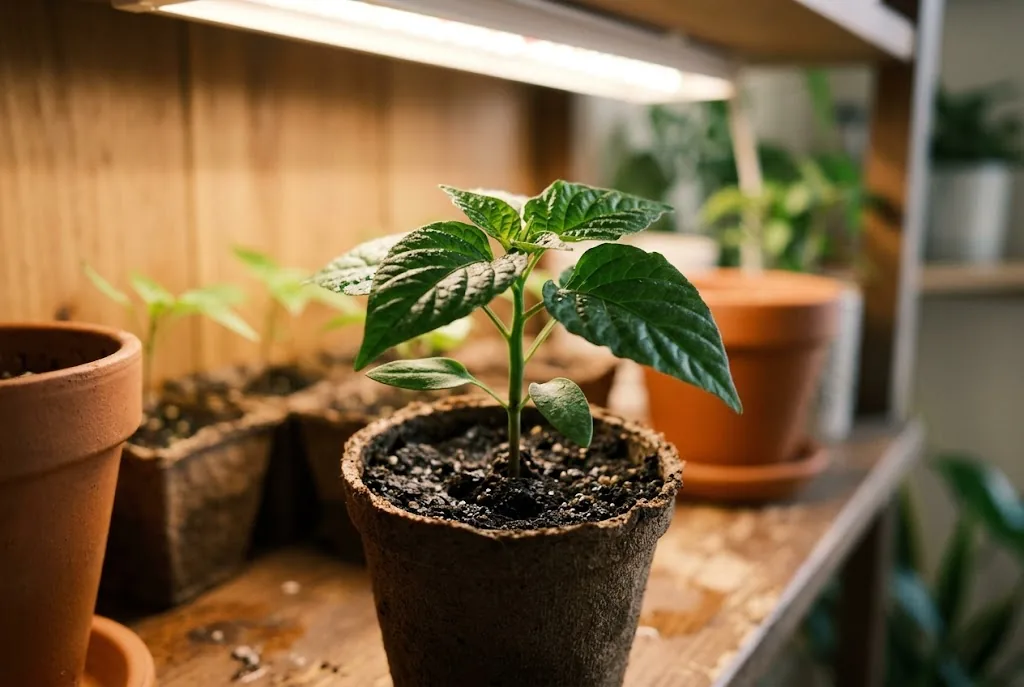
Cultivation calls for a long, warm season. Start seeds indoors about eight weeks before outdoor planting. Sow them about one-fourth inch deep in sterile seed-starting mix, keep the mix warm, and provide bright overhead light. University of Minnesota Extension recommends 80 to 90°F until seedlings emerge; Utah State University Extension recommends germinating pepper seed near 80°F. Warmth helps, but do not let the mix dry out or sit waterlogged.
Germination can be slow or uneven, so be patient and keep the mix warm and evenly moist. Once seedlings have true leaves, pot them up as needed and keep them in strong light. Harden them gradually outdoors before planting.
Move plants outside after frost danger has passed and nights are reliably warm. Choose a sunny, sheltered spot with fertile, well-drained soil, or use a container with drainage holes. University of Minnesota Extension spaces plants about 18 inches apart in a bed. In a short-season climate, a large pot that can move to a protected space may help you extend the season, but the plant still needs strong light and careful watering.
Days-to-maturity figures vary by seller and by how the season is counted. Use the number on your own packet as a planning estimate, not a guaranteed maturity date. If growth is slow, check warmth, light and drainage before changing fertilizer. Avoid heavy feeding that produces leafy growth at the expense of fruit, as Utah State University Extension explains in its pepper guide.
In cooler regions, the season may be too short for a late pepper to ripen outdoors without help. Oregon State University Extension notes that some peppers need a 120-day frost-free season and recommends checking the packet’s maturity estimate or using season-extension methods such as row covers or a greenhouse. Its general timing is not a maturity promise for this particular line, but it is a useful warning for short summers.
If flowers form but fruit set is poor, check weather and irrigation before changing fertilizer. Utah State University Extension notes that blooms may drop when nights fall below 55°F or days rise above 90°F. Too much or too little water may also lead to flower drop or blossom-end rot. These are general warm-season growing issues, not a trial of this brown form.
Harvest, handling and storage
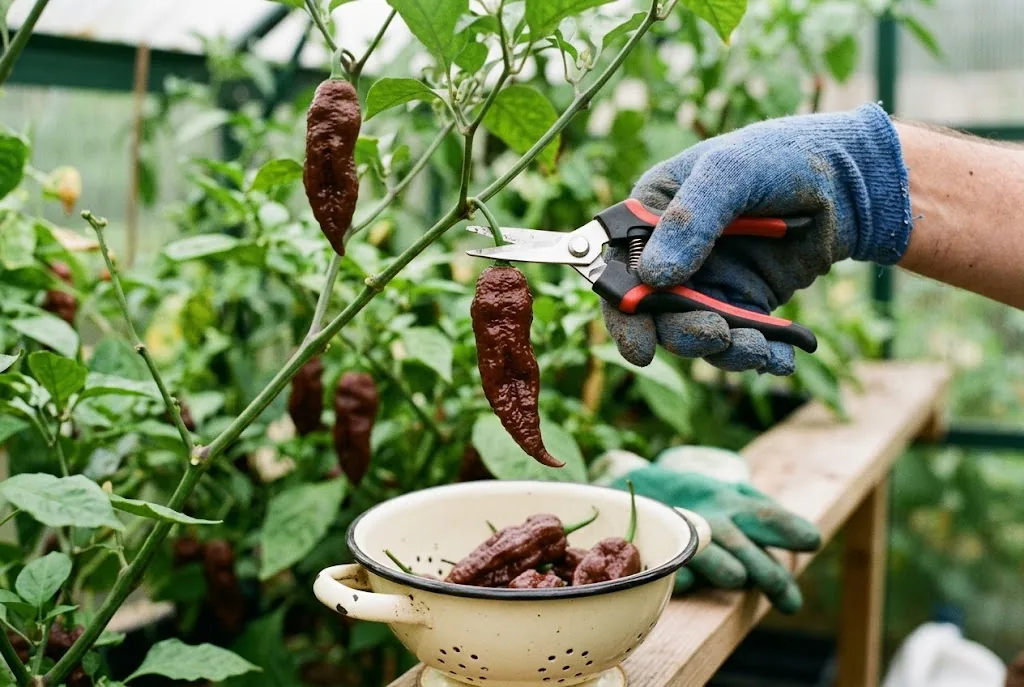
Let the fruit reach its mature brown color before harvesting if you want the form’s characteristic appearance. Cut the stem with clean snips rather than pulling hard on the branch. Wear nitrile or similar kitchen gloves, as with any hot pepper, work in a ventilated area, and do not touch your face or eyes. Poison Control notes that capsaicin can irritate skin and eyes; wash hands with soap and water after handling, even if you wore gloves.
Refrigerate fresh fruit until you are ready to use it. For longer keeping, dry the peppers until brittle in a dehydrator or another suitable setup, then store them in a sealed container in a cool, dry, dark place. Utah State University Extension’s chile-preservation guide describes drying ripe peppers until brittle and storing them airtight. Once fully dry, you can crumble a little into a jar as a hot seasoning or grind it into powder. If you cannot dry the fruit fully, freeze clean, dry peppers promptly in freezer-safe packaging. The same guide recommends storing frozen chiles at 0°F or below. Do not store partly dried peppers as if they were shelf-stable.
Where can you buy Bhut Jolokia Chocolate pepper seeds and powder?
PepperScale notes that fresh peppers and plants are less common in regular supermarkets, while specialty sellers more often list seed packets, dried fruit, flakes, or hot sauces. One ingredient supplier lists whole dried peppers, crushed flakes, powder, and mash or puree. These are product formats to look for, though availability changes by seller and region.
Compare the expected ripe color, fruit shape, and lineage notes in each seed company listing, and keep the seed packet with the plant label as a record of the line you grew.
For home preservation, do not treat a commercial mash or sauce as a recipe for a shelf-stable homemade product. Utah State University Extension’s chile-preservation guidance says plain canned chiles must be processed in a pressure canner, while pickled and marinated peppers can be safely canned in a boiling water bath using a tested recipe. The National Center for Home Food Preservation also provides a tested Cayenne Pepper Sauce recipe and canning process. If you make a custom sauce, mash or ferment, refrigerate it unless you are following an applicable tested process.
Is this pepper right for your garden?
Choose this ghost pepper plant if you have room for a warm-season crop, want the visual interest of brown ripe fruit, and will use an exceptionally hot variety carefully. It is not a good fit if you want a mild pepper or a quick crop in a cool summer. Keep the packet’s maturity notes alongside local extension guidance, and use a tiny amount first when seasoning food.
