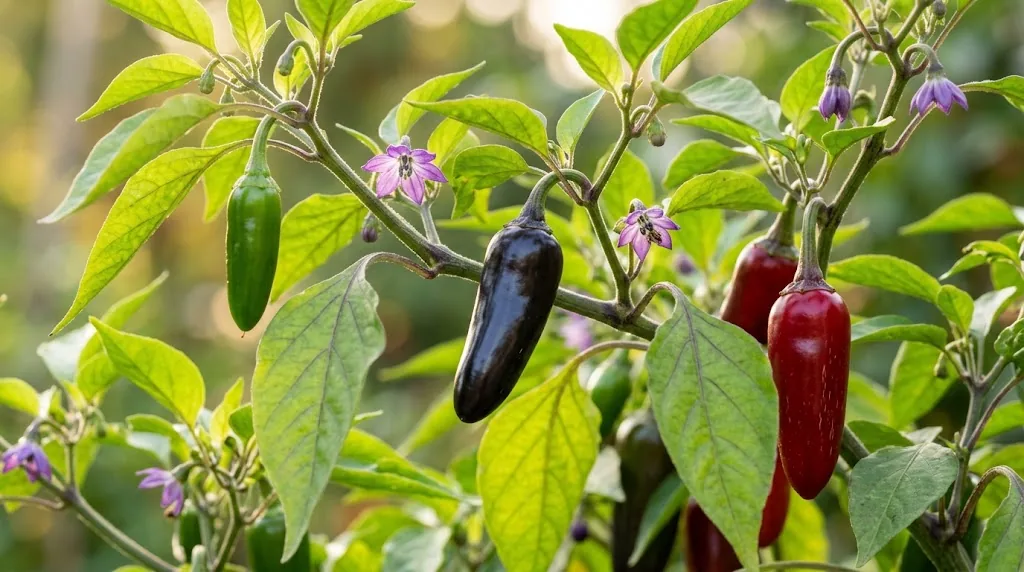
Black Hungarian pepper makes a garden look dressed up before the first fruit is ready: its foliage is veined purple, its flowers are violet, and its jalapeno-shaped peppers pass through a glossy near-black stage before turning red. The variety is also edible, with mild-to-moderate heat that makes it easier to use generously than a superhot. Here is what growers and cooks can expect, and where seed listings leave room for variation.
What is this pepper?
It is a named hot pepper variety. Seed sellers describe it as a Hungarian heirloom, including Summertime Seed Co.’s listing. The name links it to Hungary, but I could not verify a reliable account of when or by whom it was first selected.
The fruits are usually described as 3 to 4 inches long and jalapeño-like in shape. They begin green, ripen through glossy purple-black, then turn deep red. Violet blossoms and dark-veined green leaves make the plant ornamental as well as useful in the kitchen. Baker Creek’s listing describes the black fruit, purple flowers, and dark-veined foliage; its plant-height estimate is 24 to 36 inches.

For seeds, compare the cultivar name, species, packet instructions, and the seller’s days-to-maturity estimate. Baker Creek’s seed page lists the variety, and Summertime Seed Co. does too; availability changes, so check each seller’s current listing. Maturity figures describe that seller’s offering and are not a guaranteed harvest date for every garden.
Heat and flavor
Published seed listings put the pepper in a broad neighborhood of about 2,500 to 10,000 Scoville heat units (SHU). Baker Creek gives 5,000 to 10,000 SHU, while Pepper Joe’s lists 2,500 to 10,000. These are seller-reported ranges, not a single lab result for every plant. The difference between listings shows why the figures are a ballpark, not a measurement of your own crop.
Growers and seed sellers commonly describe the flavor as jalapeno-like, mildly hot, and sweeter once the fruit turns red. Some listings mention a smoky or savory note, but flavor varies by harvest stage and palate. If the heat scale is unfamiliar, our broader guide to chili varieties explains how to compare peppers without treating every catalog number as exact.
Growing this variety
Start seeds indoors about eight weeks before your expected last frost. Baker Creek lists germination in 7 to 10 days at 70 to 95 degrees F, while the University of Minnesota Extension recommends warm starting conditions of 80 to 90 degrees F for peppers generally. Keep the mix moist, not waterlogged, and give seedlings bright overhead light as soon as they emerge. These are general pepper-starting conditions; seed lots and room temperatures can shift the timing.
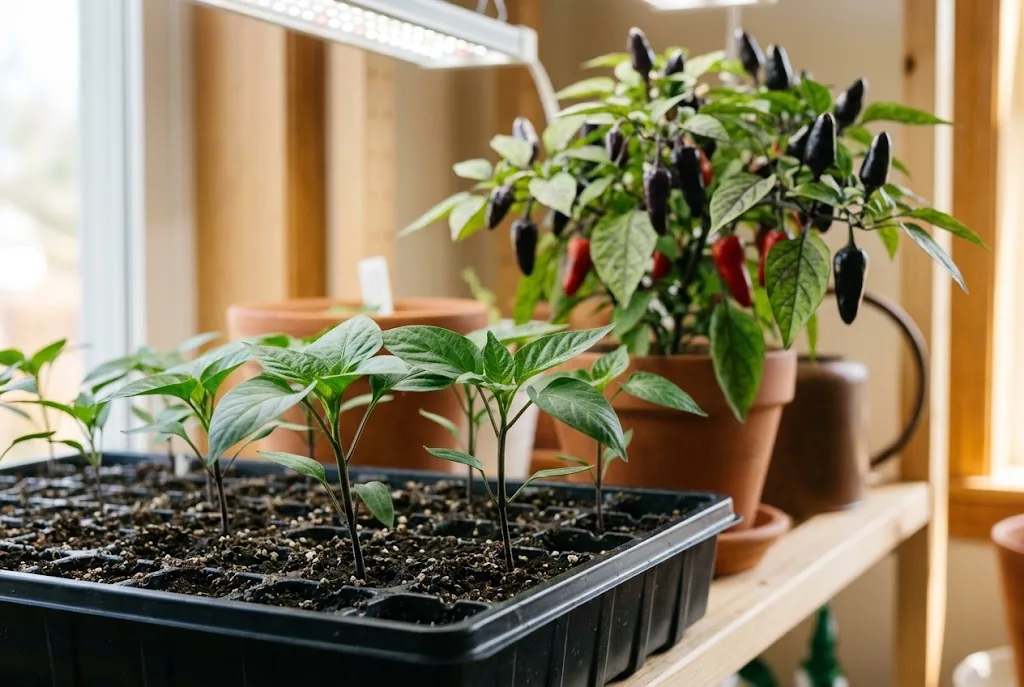
Wait until frost danger has passed and nighttime lows stay above 50 degrees F before planting outdoors. Harden seedlings off gradually, then set them at the same soil depth they grew indoors. Choose a sunny site with fertile, well-drained soil. Baker Creek recommends 8 to 12 hours of full sun for this variety and notes that a little afternoon shade can help during the hottest weather. It suggests 14 to 18 inches between plants; Minnesota Extension uses 18 inches as a general spacing. In a container, select a pot at least 12 inches deep, as the seller advises, with drainage holes and enough volume to keep the root zone from drying too quickly.
Keep soil moisture steady and water the root zone thoroughly, not with repeated shallow splashes. Minnesota Extension recommends consistent moisture for fruit quality and notes that mulch helps retain it. Use fertilizer according to a soil test or product directions; too much nitrogen can make pepper plants leafy and slow fruiting. The plant’s rich dark foliage also makes it worth considering for an ornamental container. A gardener weighing different compact forms may enjoy the distinct blue fruit of our Filius Blue pepper profile.
Catalogs report maturity estimates rather than a guaranteed harvest date. Baker Creek lists 75 days to maturity for this variety; Summertime Seed Co. also lists 75 days. Read the seed packet to see whether its count begins at transplanting, then allow for cooler weather, container size, and available light to shift the calendar.
When to harvest and how to handle them
You can pick firm, full-size fruit while it is still dark purple-black or leave it on the plant until it turns red. Red indicates a later ripening stage, and several seed sellers describe it as sweeter. Use clean snips to avoid pulling branches, and wear gloves if you are sensitive to pepper oils. Wash your hands with soap after handling fruit, especially before touching your eyes or face. The University of Minnesota Extension advises wearing gloves when picking hot peppers and washing hands afterward.
If you want to save seed, leave one fruit on the plant until it is fully red. Baker Creek advises removing seeds from fully mature fruit, drying them for a week, and storing them in a jar; its listing says pepper seed can remain viable for up to five years. Treat that duration as the seller’s general guidance, since storage conditions and seed quality matter.
Storing and preserving the harvest
Use fresh fruit soon after picking for the crispest texture. Minnesota Extension says peppers keep for a week or more in the refrigerator, though prolonged cold storage can pit their skins. For a larger harvest, NCHFP gives a method for freezing hot peppers. If you dry a batch, the center recommends drying vegetables until brittle or crisp, not leathery. For pickles or canned peppers, follow a tested recipe such as NCHFP’s pickled hot peppers exactly; do not assume a homemade vinegar mixture is shelf-stable.
Cooking with the pods
The jalapeno-like shape makes these peppers easy to slice into salsa, salads, sandwiches, or a pot of beans. Their dark skins also give a platter or fresh relish an unusual color contrast. Baker Creek suggests salsa, salads, pickling, roasting, and grilling; these are practical options, though pickling for pantry storage requires a tested canning recipe. A fresh refrigerator pickle or a spoonful in homemade hot sauce uses the fruit without implying shelf stability. Try one first, since your harvest may be milder or hotter than the catalog range suggests.

To substitute them for a jalapeno, begin with a little less, taste, then adjust. Roast a whole pepper to soften its flesh and add char, or slice it fresh for crisp texture. For another colorful cultivar from the same species, read our 7 Pot Bubblegum pepper profile.
