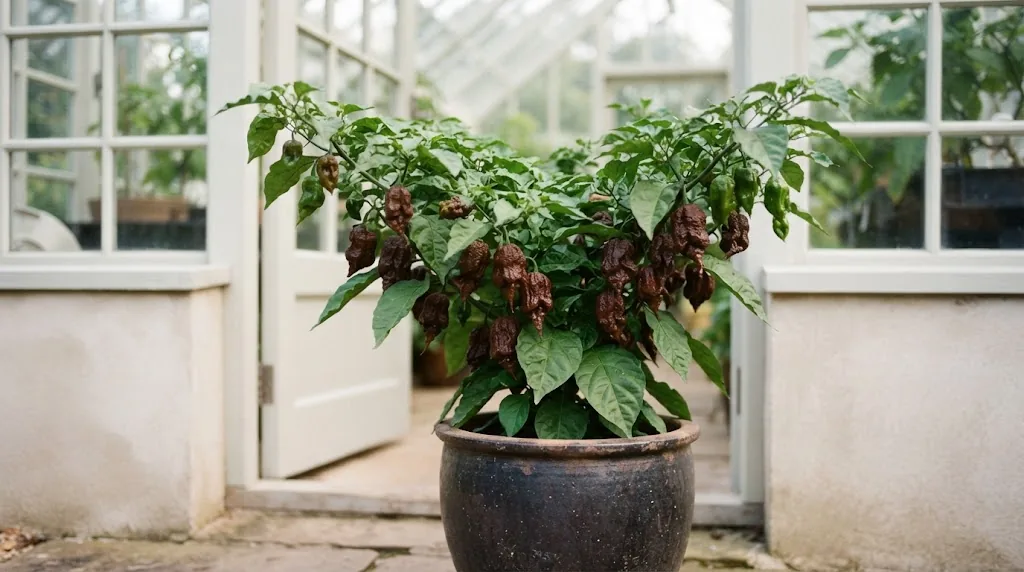
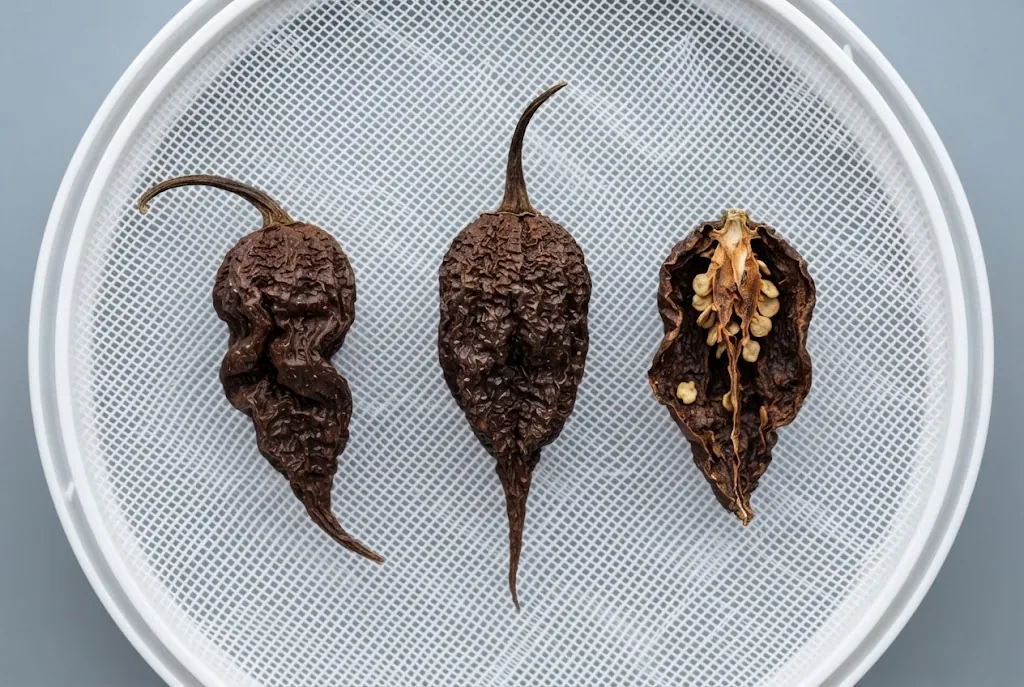
A chocolate primotalii is a brown, deeply folded superhot that narrows into a pointed tail. The name describes a brown-fruited form of this Capsicum chinense variety.
This is a specialist strain rather than a standardized grocery pepper. Seed lines and individual fruits can differ, so treat published heat figures and color descriptions as estimates. Here is what growers and home cooks should know before handling it.
What is a chocolate primotalii?
Pepper Geek reports that UK grower Chris Saunders crossed 7 Pot Primo with Fatalii in 2012. It says the long tails appeared in the F2 generation and plants with that feature were selected (Pepper Geek’s profile).
The species is Capsicum chinense. The color name refers to brown ripe fruit, not to cocoa flavoring. Kew accepts Capsicum chinense as a botanical name (Plants of the World Online). The seed seller cautions that this variety is not fully stable and may produce off-type fruit (ChilliChump Seeds).
How hot is a chocolate primotalii?
Seller reports place this cultivar in the superhot range, but do not present an independent test for every strain. One specialist seller lists 1.6 million to 2.2 million Scoville heat units; another lists the Chocolate Primotalii form at 2 million to 2.2 million SHU, with its general Primotalii range at 1.5 million to 2.2 million (Ignition Seeds; Pedigree Peppers). These are seller estimates, not a certified reading of your fruit. Check a seller’s strain description and growing notes before buying.
Heat varies with maturity, growing conditions, and the seed line. Taste a tiny amount only if you already tolerate superhot food; never use a dare or a whole fruit to judge the flavor.
Flavor and pod appearance
Chocolate Primotalii pods are usually described as irregular, wrinkled, and tapered, often with a narrow stinger-like point. Immature fruit is green; ripe forms turn brown. Pepper Geek measured its red Primotalii sample at about 2 to 3 inches long and 0.5 to 0.75 inch wide, with thin walls; those figures are not a size guarantee for the brown line (Pepper Geek). Shape, shade, and tail can vary, especially in seed lines still being selected. Check the supplier’s photos and description rather than assuming every fruit will match one photograph.

Growers often describe ripe fruit as fruity, but tasting notes are subjective and the heat can dominate. Use a very small piece in a large dish, then adjust only after tasting the food. The dark color can add visual depth to sauces and powders, while its intense pungency makes it a poor choice for recipes that rely on generous handfuls.
It is sometimes compared with its parents, 7 Pot Primo and Fatalii, or with the Carolina Reaper and Trinidad Moruga Scorpion. Seller estimates overlap, and no like-for-like independent test establishes which is hotter. These comparisons are rough references, not a ranking.
For a profile of another C. chinense cultivar with its own growing and flavor traits, see Naga Morich.
How to grow this long-season chili
This long-season C. chinense plant needs an early indoor start so it has time to ripen fruit before frost. Ignition Seeds describes germination as slow and erratic, often three to six weeks or longer, and estimates 100 to 130 days from transplant to ripe fruit. Treat both as planning ranges because warmth, climate, and strain affect timing (Ignition Seeds).
- Start warm: Sow in a clean seed-starting mix and keep it consistently warm. The University of Minnesota Extension recommends 80°F to 90°F for trays until seedlings emerge, with bright overhead light and steady moisture (UMN Extension).
- Give seedlings light: Once they emerge, provide strong light close above the plants. Pot them on when they have true leaves and keep them growing in a warm, bright place.
- Harden off gradually: Acclimate seedlings outdoors over a week or more. Move them to the garden once night lows stay above 50°F, as UMN Extension advises for peppers. Set each transplant at its original soil line (UMN Extension).
- Choose a warm site: Give plants full sun, fertile well-drained soil, and enough room for airflow. A large container can work where the outdoor season is short, as long as it drains freely and the plant gets strong light.
- Water by soil condition: Keep the root zone evenly moist, not waterlogged. Check the soil and adjust for heat, container size, and rainfall instead of following a fixed calendar.
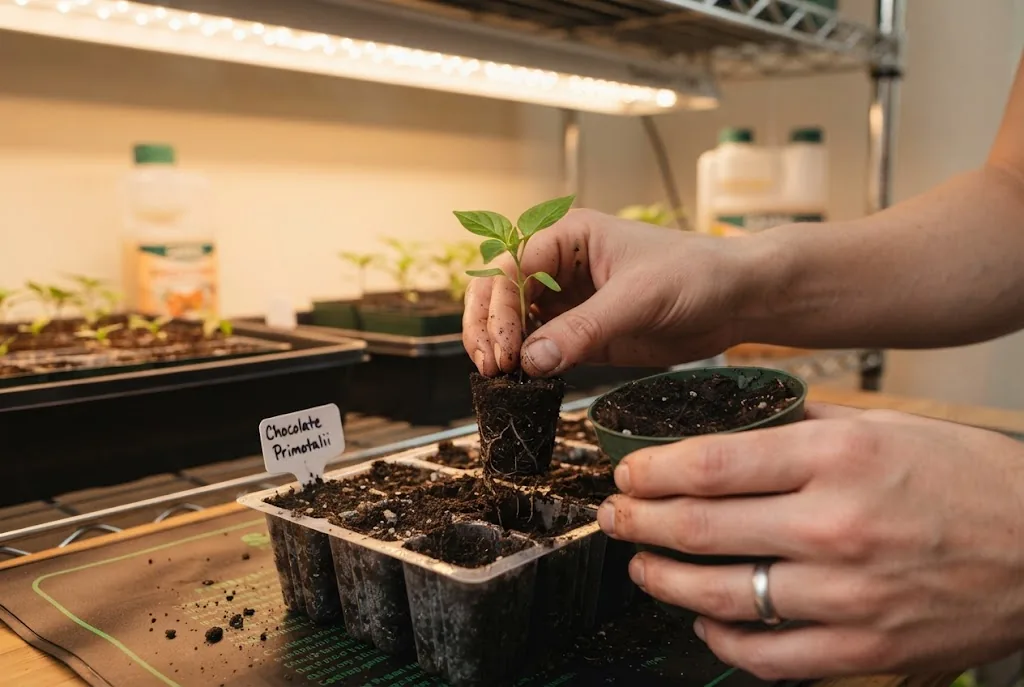
Expect a slower start than with many common garden plants. Keep it warm and growing steadily, and avoid moving it outside during chilly weather. If your season is short, a greenhouse or movable pot can extend the warm growing period. For context on how cultivars differ in shape, heat, and use, see our guide to chili pepper varieties.
Harvest and handle the pods safely
Pick fruit when it has reached the color and firmness expected for the line. Use clean snips rather than pulling on the branch. Wear gloves while harvesting and preparing superhots, keep your hands away from your eyes and face, and wash tools and work surfaces after use. Clearly label the harvest and keep it away from children, pets, and anyone who may mistake it for a mild chili.
When cutting fruit, work in a well-ventilated area and avoid rubbing your eyes. Poison Control recommends gloves and fresh air when preparing hot peppers. If juice gets into an eye, immediately irrigate with clean running water for 15 minutes. For severe or persistent symptoms, contact poison control or seek medical care (Poison Control).
How to store, dry, and preserve the harvest
The University of Minnesota Extension says peppers keep for a week or more in the refrigerator. For longer storage, the National Center for Home Food Preservation advises washing and stemming hot peppers, packing them without headspace, sealing, and freezing. Frozen pieces are easy to shave or grate into cooked food. Wear gloves while handling them, including when frozen or thawing, because capsaicin can irritate skin and eyes (UMN Extension; NCHFP; Poison Control).
To dry a harvest, use a food dehydrator and follow a tested preservation method. The National Center for Home Food Preservation recommends controlled indoor drying for vegetables rather than outdoor sun drying (NCHFP). Dry peppers until brittle. The National Center for Home Food Preservation recommends cooling dried foods completely, packing them in clean, dry containers with tight-fitting lids, and storing them in a cool, dry, dark place. Check them for moisture during storage; foods affected by moisture but not spoiled should be redried and repackaged (NCHFP storage guidance). Grind only small batches, avoid breathing dust, and clean equipment carefully.
For shelf-stable pickled peppers or hot sauce, follow a tested canning recipe without changing its ingredient ratios; the National Center notes that peppers are low-acid and tested proportions matter for safe canning. Homemade chile oil requires refrigeration for food safety, according to University of Minnesota Extension (NCHFP pepper-pickling guidance; UMN Extension chili-oil guidance).
For a very different growing choice, compare this long-season plant with compact Prairie Fire peppers, an ornamental Capsicum annuum.
Ways to use these superhot pods
Use this chili sparingly in stew, salsa, hot sauce, or dried seasoning. Remove the stem and start with a sliver or a pinch of powder mixed thoroughly into the dish. Taste a small portion after cooking and add more only if needed.
Brown ripe fruit can also make a dark seasoning. Label each jar with the cultivar and heat level, and keep it separate from everyday condiments. Enjoy it as food, not as a remedy.
How does its heat compare with the record holder?
It is often promoted as one of the world’s hottest, and some growers report it feels hotter than other superhots they have tried. That is personal experience, not a record. Guinness World Records names Pepper X, averaging 2,693,000 SHU in 2023 lab tests, as the hottest verified chili pepper. Primotalii does not hold that title. Seller-reported heat estimates place it in the superhot range, but actual heat varies between strains and individual fruit (Guinness World Records).
Does this chili suit your growing space?
Choose it if you have a long, warm growing season or a bright protected space, enjoy raising unusual varieties from seed, and can handle a superhot harvest carefully. It is a challenging novelty rather than a dependable high-volume crop. Buy from a supplier that identifies its strain, start early, and expect some variation in pod shape and color. In the kitchen, handle each fruit as extremely hot and measure it in small increments.
