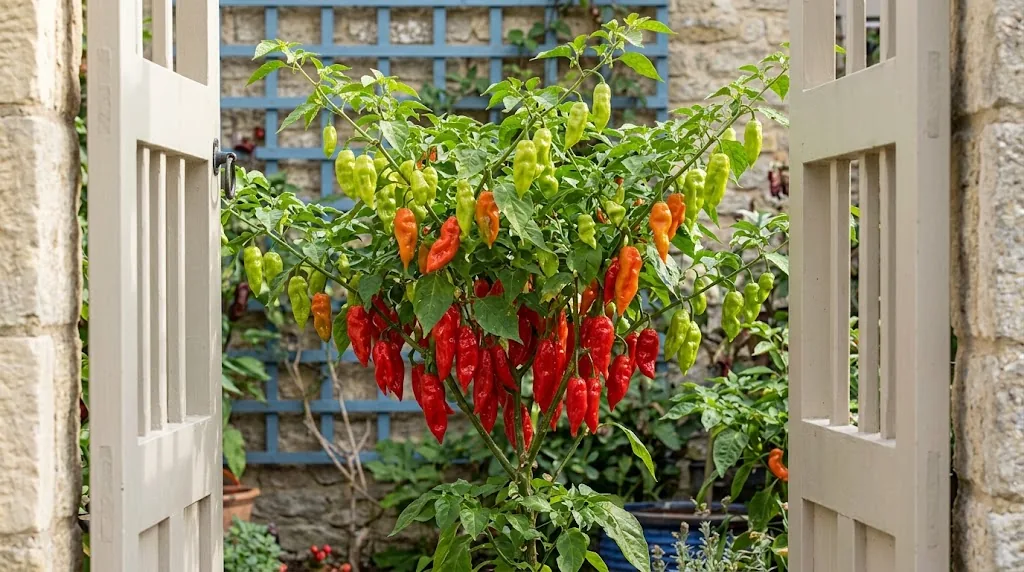
This named cultivar can turn red before many warm-climate peppers, but its lantern-shaped pods still bring a serious burn. As an open-pollinated type, it suits gardeners looking for an early crop for fresh salsa, hot sauce, or drying. Here is what its Scoville range can and cannot tell you, and how to grow and handle it at home.
What is a Hot Paper Lantern pepper?
Hot Paper Lantern is a named lantern-shaped pepper variety with elongated, pendant-shaped pods. Johnny’s Selected Seeds describes the pods as wrinkled, lantern-shaped, and about 3 to 4 inches long. Its listing calls the line open-pollinated and says breeder Janika Eckert developed it. The supplier also marks it as suitable for containers and rates it extremely hot. Those details describe the supplier’s seed line; plants and pods can vary with seed source and growing conditions.
The familiar name makes sense once you see a ripe pod hanging from its stem: it is long, tapered, and lantern-like. It usually starts lime green, then passes through orange shades before turning red or rosy red. That color change gives you a choice of harvest stage. The green pods are ready to pick at full size, while leaving them on the plant lets them finish ripening.
Origin and breeding notes
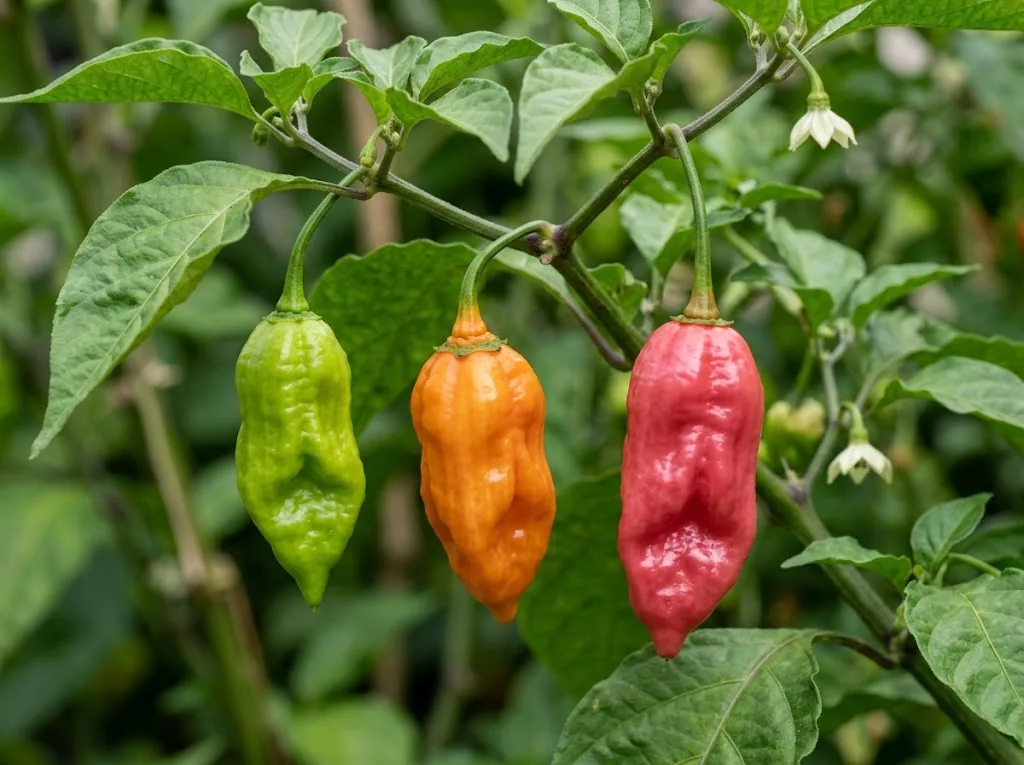
The available records do not tell a complete history of this variety. Pepper Joe’s lists Peru as its origin, while Johnny’s identifies Janika Eckert as the breeder of the open-pollinated line it sells. Treat Peru as a seller-reported origin rather than a documented account of where the variety was first selected. The reliable point for a home gardener is that this is a named pepper selected for earlier maturity and productivity than many established lines, not a wild species or a general name for every lantern-shaped pod.
How hot is it, and what does it taste like?
Published Scoville estimates vary by source and seed line. The University of Wisconsin-Green Bay variety list gives 150,000 to 400,000 Scoville Heat Units (SHU), and Pepper Joe’s gives the same range. These are reference ranges, not a lab result for every pod; growing conditions and the particular seed line can change perceived heat. In practice, treat it as an exceptionally pungent variety and use a small piece to season a dish.
Pepper Joe’s describes a little sweetness before the burn and a light smoky note. Flavor is easier to judge in a cooked dish than by tasting a whole pod. For a first batch, add a thin slice to a pot of beans, tomato sauce, or salsa, then taste before adding more. If you want less fire, remove the pale inner ribs as well as the seeds; the seeds themselves do not make capsaicin, but can carry it after touching the inside of the pod.
Growing the plants
This variety’s shorter season is one of its useful traits. Johnny’s lists about 70 days to lime-green pods and about 90 days to red ripe, so check whether a given packet counts from sowing or from transplant; Cornell’s vegetable database gives a 70-to-90-day range and describes the color changing from lime green through orange to red. Use those figures as supplier and catalog estimates, not a promise: temperature, light, transplant timing, and the seed line affect the calendar. If you are comparing pepper shapes and flavor profiles, our guide to choosing a chili variety explains how the main types differ.
That early-maturing window can help gardeners in northern climates fit a habanero type into a shorter growing season. It does not make the plant cold tolerant: frost and cold soil still slow or damage peppers. Start with a seed packet from a supplier that names this variety, then use that seller’s days-to-maturity and plant-size notes as a planning estimate. Johnny’s calls its line open-pollinated and says it is more productive than regular habaneros, but your yield will still depend on warmth, light, and steady care.
Start seeds indoors roughly eight weeks before your local planting window. University of Minnesota Extension recommends 80 to 90°F for germination and transplanting outdoors after night lows are above 50°F. Harden seedlings off gradually, then plant at the same soil depth they were growing before. Peppers grow best in a warm, sunny site with fertile, well-drained soil and steady moisture. Let the soil guide watering rather than following a rigid calendar.
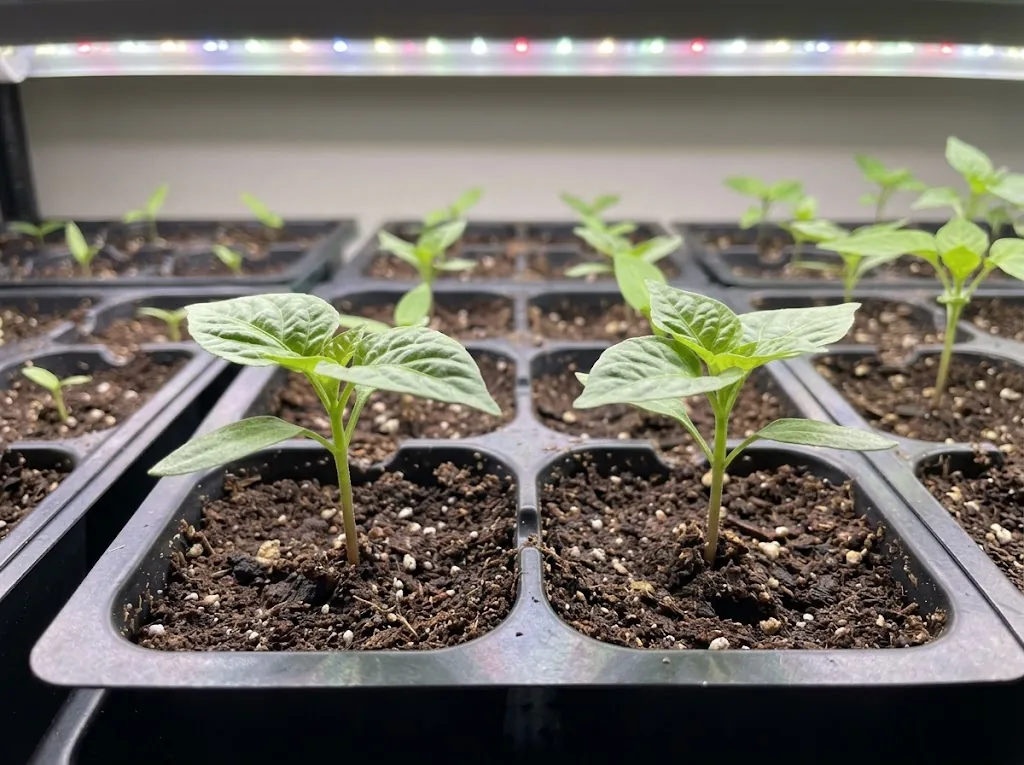
Johnny’s describes tall plants, while Pepper Joe’s lists a compact plant around 2 feet tall. That is a meaningful difference between supplier descriptions, so leave room for the plant to branch and check the height listed by the seed seller you use. Johnny’s marks its line as container-suitable; choose a stable pot with drainage and enough room for roots, and expect to water more often than a garden bed in hot weather. Avoid excessive nitrogen, which can encourage leafy growth at the expense of flowers and pod production.
In a short or cool summer, a sunny, sheltered location and dark mulch can help warm the soil. Do not rush a transplant into cold ground: pepper growth slows in cool conditions. Pick green pods once the fruit reaches full size, or leave them attached longer if you want red ones. The catalog day count is not a guarantee for every climate.
Harvest and handle the pods carefully
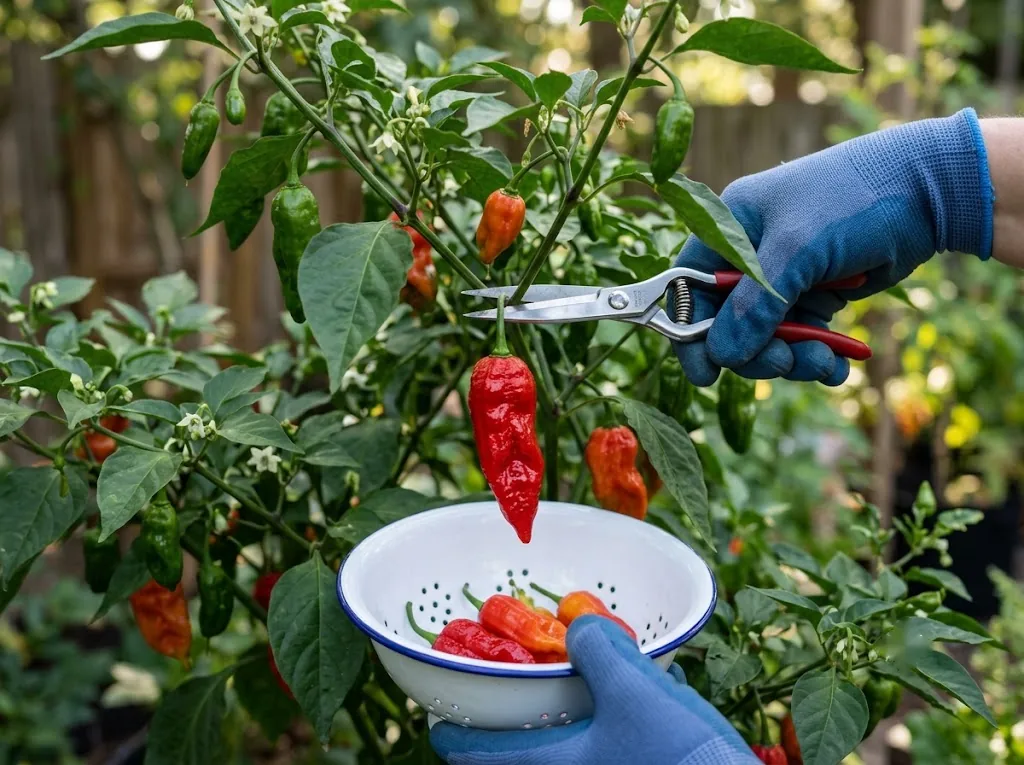
Use clean snips to cut a pod from the branch rather than tugging it. Wear disposable or washable gloves when harvesting or preparing this very hot variety, and keep your hands away from your eyes and face. University of Minnesota Extension recommends gloves and handwashing when picking hot peppers. Poison Control advises gloves, ventilation while cooking, and avoiding face or eye contact; if pepper juice gets in an eye, rinse with plenty of warm water for 15 minutes.
Wash your hands and tools after handling the pods. If you are cooking a large batch, open a window or use an exhaust fan. Add a little at a time to food, especially when the diners’ tolerance is unknown. Spice is easy to add and hard to remove. If you want something milder in the same garden, our Fish pepper profile covers a striped pepper with a very different look.
Store, dry, or preserve a harvest
For short-term use, refrigerate clean, dry pods and use them while they remain firm; Purdue Extension says fresh hot peppers keep for more than a week in the refrigerator crisper. To keep a surplus, freezing is a simple option: wash, dry thoroughly, remove stems if convenient, and freeze in a labeled freezer container. The University of California Master Food Preservers’ guide also recommends washing and stemming hot peppers before freezing. Frozen peppers soften as they thaw, so use them in cooked dishes, sauces, or soups.
Pepper Joe’s notes that the pods have thin skins and are useful for drying. Use a food dehydrator or a tested extension method, and dry pieces until brittle rather than leathery. Cool them completely before sealing in a clean, dry container. Keep them in a cool, dark, dry place; if you see condensation or mold, discard the batch. The University of California guide to drying peppers covers equipment, doneness, and storage.
You can also chop a fresh pod into salsa, roast it for a smoky sauce, or grind fully dried pieces into flakes or powder. For shelf-stable pickled peppers or sauce, follow a tested recipe exactly. Do not improvise the vinegar, water, or processing steps; the National Center for Home Food Preservation provides tested vegetable pickle recipes.
Ways to use this variety
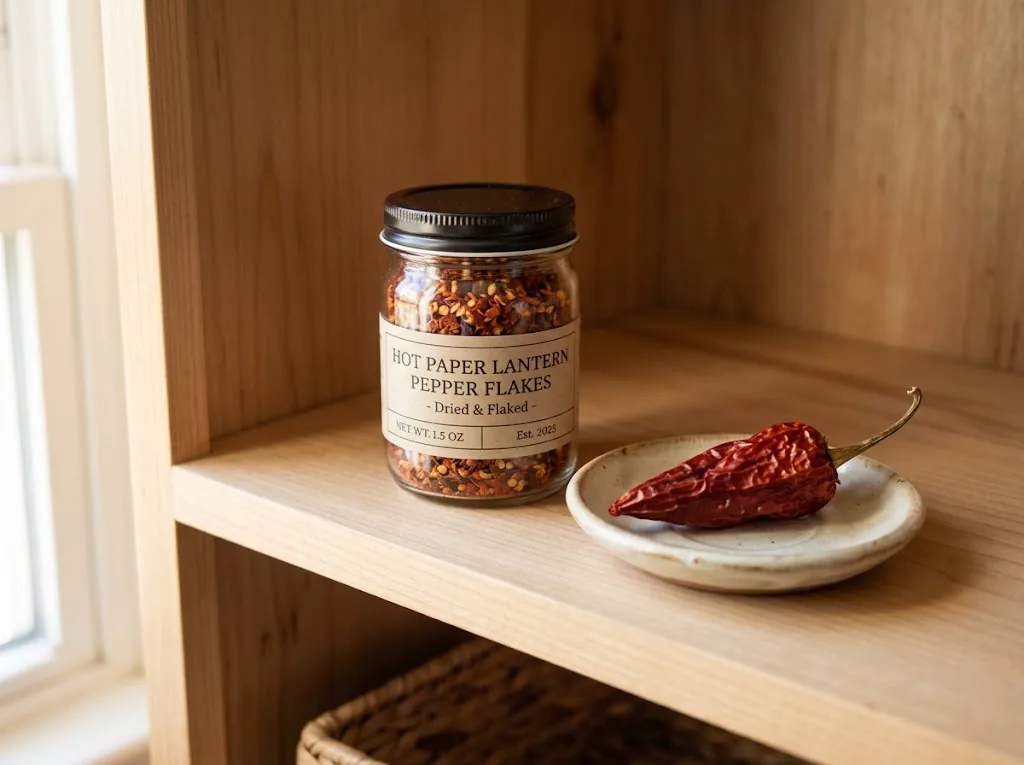
Use this variety where a small amount can add a sharp, fruity kick to a dish. One supplier describes a tropical sweetness and light smokiness, but the balance can vary by harvest and cooking method. Mince a little into a pot of beans, stir a measured amount into a cooked tomato sauce, or blend it into a small batch of hot sauce. Roasting softens the fresh edge and adds char, while dried flakes or powder work as a concentrated seasoning. Label preserved batches clearly and start with less than you think you need.
If you prefer a long, thin pepper for drying and grinding, compare it with Long Slim Cayenne. This cultivar is broader and more wrinkled, and far hotter than a typical cayenne; the two fill different roles in the kitchen.
Quick answers
Can you pick the pods while they are green?
Yes. Johnny’s lists lime-green pods at about 70 days and red-ripe pods at about 90 days. Pick full-size green pods for earlier use or leave them on the plant to change color.
Are the Scoville figures exact?
No. Estimates come from seed sellers and catalogs, and the number is not a guarantee for an individual pod. Treat the variety as very hot and add it to food in small amounts.
Can it grow in a pot?
Johnny’s marks its seed line as suitable for containers. Give the pot drainage, sun, and room for a branching plant, and check the mature size given by your seed supplier because listings differ.
