
Long Slim Cayenne is a classic type for gardeners who want narrow, wrinkled peppers that dry easily and bring a direct, bright heat to the kitchen. The Holmes seed listing identifies its line as open-pollinated and gives the pod size and heat range; the Seedman listing describes a related named selection and gives its own growing details. The slender fruits are commonly described at about 5 to 6 inches long; they start green and mature to red. Seed companies list a typical range of 30,000 to 50,000 Scoville heat units (SHU), though a catalog range is a guide, not a lab result for every fruit. Compare cayenne pepper seeds by the named line and the seller’s description, not by the shared type name alone.
Origin and names
Cornell’s Vegetable Varieties for Gardeners lists Cayenne Long under several names, including Long Red Cayenne, Long Thin and Long Slim, and describes curved, wrinkled fruit that changes from waxy green to crimson. Holmes Seed Company sells its selection as an open-pollinated heirloom, and a Seedman listing calls a related selection “Long Red Slim,” so the name on a packet can vary. Compare the Latin name, pod description, and mature color before buying hot pepper seeds.
No source checked names a breeder or a founding date for this line. According to UF/IFAS, the name comes from the city of Cayenne in French Guiana, which says little about where the long, slim form began.
If you are comparing it with other shapes and heat levels, our guide to chili pepper varieties gives the wider context.
How to identify the plant
This is Capsicum annuum. Plants are typically upright and bushy, with thin-walled, tapered pods that hang from the branches. Catalog descriptions place the fruit around 5 to 6 inches long and roughly ½ to ¾ inch wide, with a shallow wrinkle in the thin skin. Pods are green when immature and turn red or crimson as they ripen; harvest the long peppers at mature size, or leave some on the plant to color.
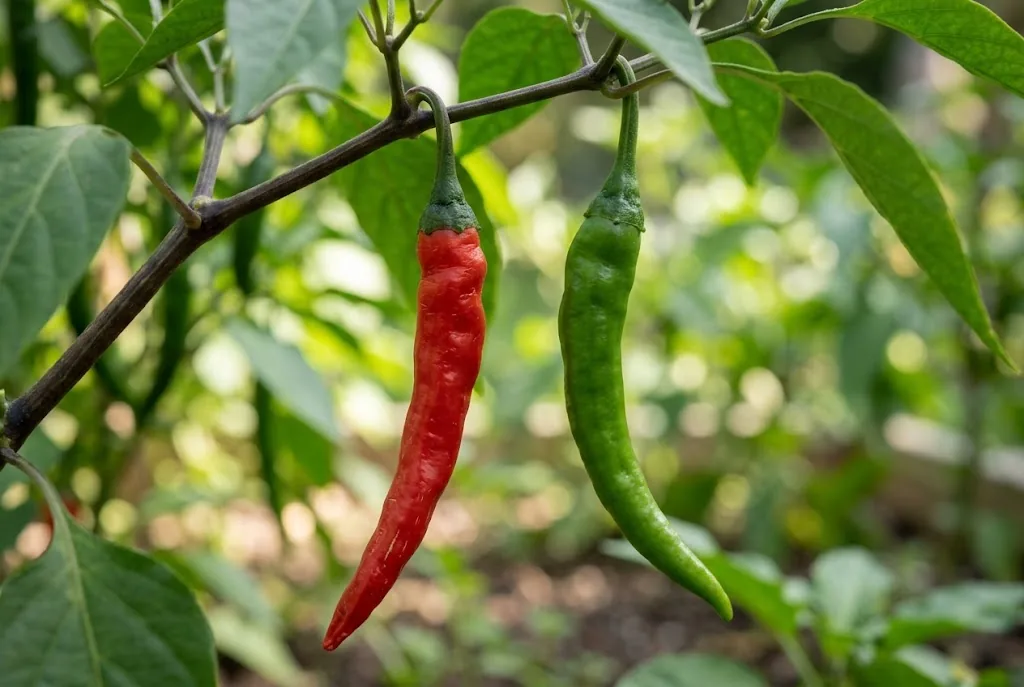
Seed catalogs do not always use names consistently. Check the packet description and mature-fruit photo, because “long thin” may describe a related selection rather than a genetically identical strain.
Heat and flavor
Holmes Seed Company rates its selection at 30,000 to 50,000 SHU. That makes it substantially hotter than a typical jalapeño, but the heat varies with the seed line and growing conditions. The range is a useful expectation, not a guarantee for a homegrown pod. The thin flesh and direct heat suit drying, flakes, powder, and dishes where you want heat without a thick, juicy wall. It can be used fresh, but its modest flesh-to-seed ratio makes it especially practical to dry and grind.
Fresh red pods work well minced into beans, soups, tomato sauce, marinades, and cooked vegetables. A little can season salsa or homemade hot sauces, while dried flakes suit dishes where fresh pods are not available. For a much hotter pepper in the same kitchen jobs, see Chocolate Habanero peppers. Add a small amount first, taste, then increase it. Dried pods can be crumbled into a dish or ground for a quick pepper seasoning. Check the pepper seed packet if heat or maturity timing matters, because the name alone does not identify every selection. It is a hot pepper, not one uniform strain.
Growing this pepper
Start seed in warmth
Start pepper seeds indoors about eight weeks before your local outdoor planting window. Sow them about ¼ inch deep in a clean, soilless mix. Keep the mix evenly moist, not waterlogged, and watch for the first sprout before removing bottom heat. The University of Minnesota Extension growing guide recommends warm conditions for germination, around 80°F to 90°F until emergence, then bright overhead light. Warm soil helps pepper seeds germinate. Move seedlings into individual cells after true leaves appear. Each seedling then has room to form a sturdy stem before hardening off.
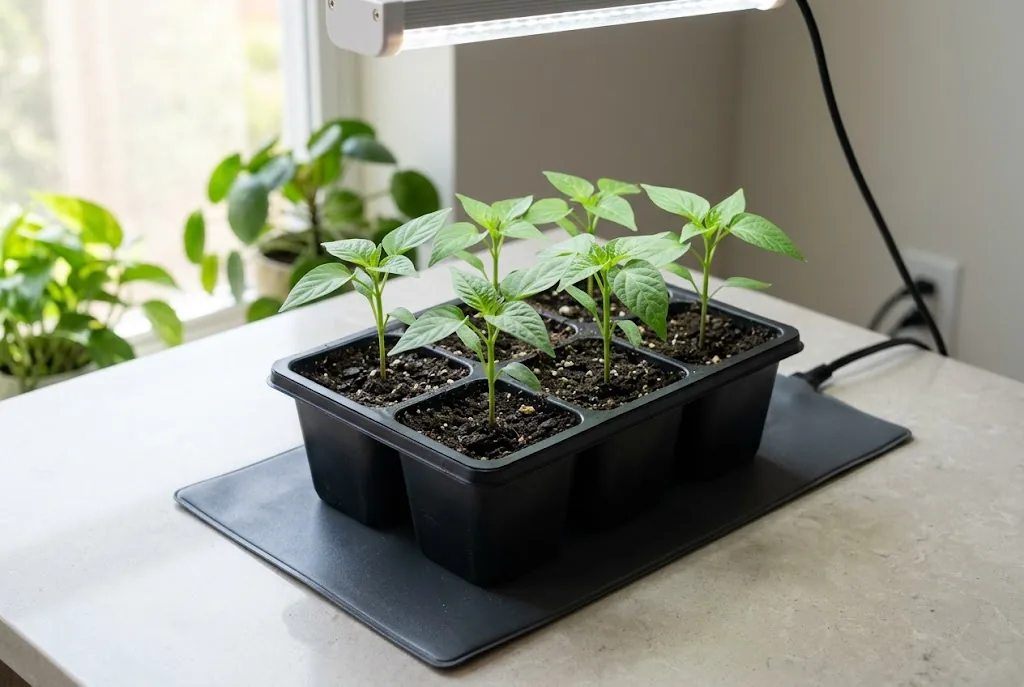
Holmes lists 70 relative days for its selection, while Cornell’s garden-variety listing gives a broader 60-to-85-day maturity range for Cayenne Long. These are seed-source estimates, and labels may count from different points. Use the figure on your packet as a planning aid; weather, transplant size, and harvest color all affect the calendar. If a label says “days to maturity,” check whether it counts from sowing or transplanting before comparing packets. Holmes lists the life cycle as annual, with perennial growth possible in tropical climates; in frost-prone gardens, plan to grow it as a warm-season annual.
Transplant after frost
Harden seedlings off over a week or two by giving them gradually more outdoor sun and breeze. Bring them inside if cold nights threaten. Then set plants out after frost danger has passed and nights are reliably mild. Minnesota Extension advises waiting until nighttime lows are above 50°F and spacing garden peppers about 18 inches apart. Set each transplant at its original soil line.
Peppers grow best once the soil has warmed, so in cooler climates black plastic mulch can warm the bed and help conserve moisture; remove it if the soil is already hot. Work in well-rotted compost before planting, then let a soil test guide fertilizer choices. Choose a sunny site with fertile, well-drained soil, and water deeply when the root zone begins to dry. Steady moisture helps fruit develop, so avoid letting the bed swing between very dry and saturated.
Full sunlight and warm days suit this heat-loving crop, but hot temperatures, especially warm nights, can interrupt flowering. Keep the root zone evenly moist during heat spells and expect fewer new pods until conditions ease.
In a container, use a pot with drainage holes and enough room for the plant’s bushy habit. Put it where it receives full sun, check the soil more often than you would in a bed, and water when the top layer begins to dry. Do not follow a rigid calendar: heat, wind, pot size, and plant growth change how quickly the mix dries. During flowering and fruit set, continue checking moisture rather than letting the container dry out completely.
Watch growth and feeding
Give pepper plants room for airflow and inspect leaves, flowers, and new growth regularly. Aphids can cluster on pepper leaves and leave curling or sticky foliage; identify the pest or disease before choosing a response rather than spraying by habit. Avoid routine sprays and heavy feeding. Minnesota Extension notes that too much nitrogen can produce leafy plants that are slow to bear fruit; base fertilizer choices on a soil test and follow the product label.
Each pepper flower can pollinate itself, so a separate pollinator plant is not required for fruit set. In still indoor air, a gentle shake can help move pollen. The University of Saskatchewan gardening guide notes that peppers usually self-pollinate, though crossing can occur.
Harvest and handle the pods
Pick green fruit for an earlier harvest or leave it on the plant until it colors red for a fully ripe flavor. Use clean snips rather than pulling hard on a branch, which can break stems. The University of Minnesota Extension recommends clipping peppers with sharp shears once they reach mature size; a green fruit can be ready to pick before it turns red. The thin walls make the pods convenient to dry, but they can also lose moisture quickly after picking.
Wear gloves when harvesting or cutting hot peppers, and keep your hands away from your eyes and face. Poison Control’s capsaicin guidance notes that the compound can irritate skin, eyes, and airways; ventilate the kitchen when chopping a large batch. If pepper juice gets into an eye, Poison Control says the first step is to irrigate it with plenty of warm water for 15 minutes; contact Poison Control for advice if pain or irritation continues.
Store, dry, and preserve
Keep freshly picked peppers dry and refrigerated, and use them while they are firm. For drying, choose sound pods and use a food dehydrator or another reliable method suited to your equipment. Thin-walled hot peppers are commonly dried whole or cut into pieces. They are ready when fully dry and brittle, not leathery. Penn State Extension recommends airtight storage in a cool, dark place. Cool the peppers before packing, keep the container away from heat and light, and grind only what you need so the remaining dried pods keep their aroma.

This type is also useful in cooked sauces and refrigerator pickles. For canning or shelf-stable pickled peppers, use a current tested recipe and follow its ingredient proportions and processing directions exactly. Do not treat an improvised vinegar, oil, or brine mixture as pantry-safe.
How it fits in the kitchen garden
Choose this variety if you value narrow, thin-walled fruit that can move from the plant to a drying rack and then into everyday cooking. This is a practical choice when you want bright red fruit that is easy to dry, but it is not a promise of a uniform crop: weather and care affect every harvest. Give it a warm start, full sun, and even soil moisture, then harvest green or red according to how you plan to use it. For a neighboring variety profile, compare its long, slim pods with Capperino peppers.
