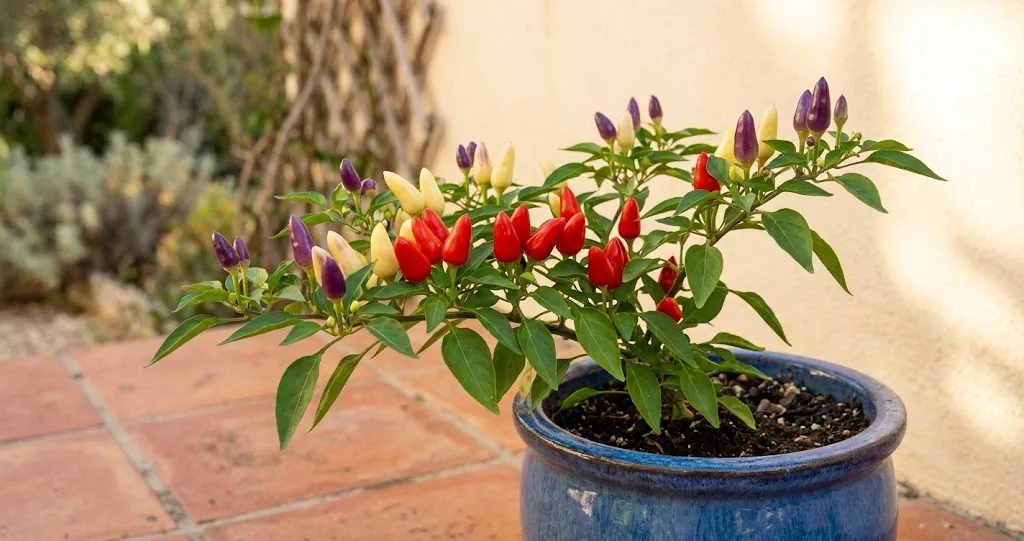
A windowsill lined with tiny, glossy pods that turn from near-black through cream to fire-engine red can stop a guest mid-sentence. These compact ornamental pepper plants exist for that moment. They were bred for color and form, not flavor, and almost every type on the market today is a selection of Capsicum annuum, the same species as bells and jalapeños. Pick a few packets of seeds, give them the same care as any patio type, and the show will reward you from midsummer through the first frost.
This guide walks through what makes a plant a showpiece, which types give the strongest display, how to grow them in pots or along a border, and the one safety question almost every new grower asks first: are these pods safe to eat? For a broader survey of species, heat groups, and culinary uses, see our guide to broader pepper variety roundups.
What makes a pepper an ornamental
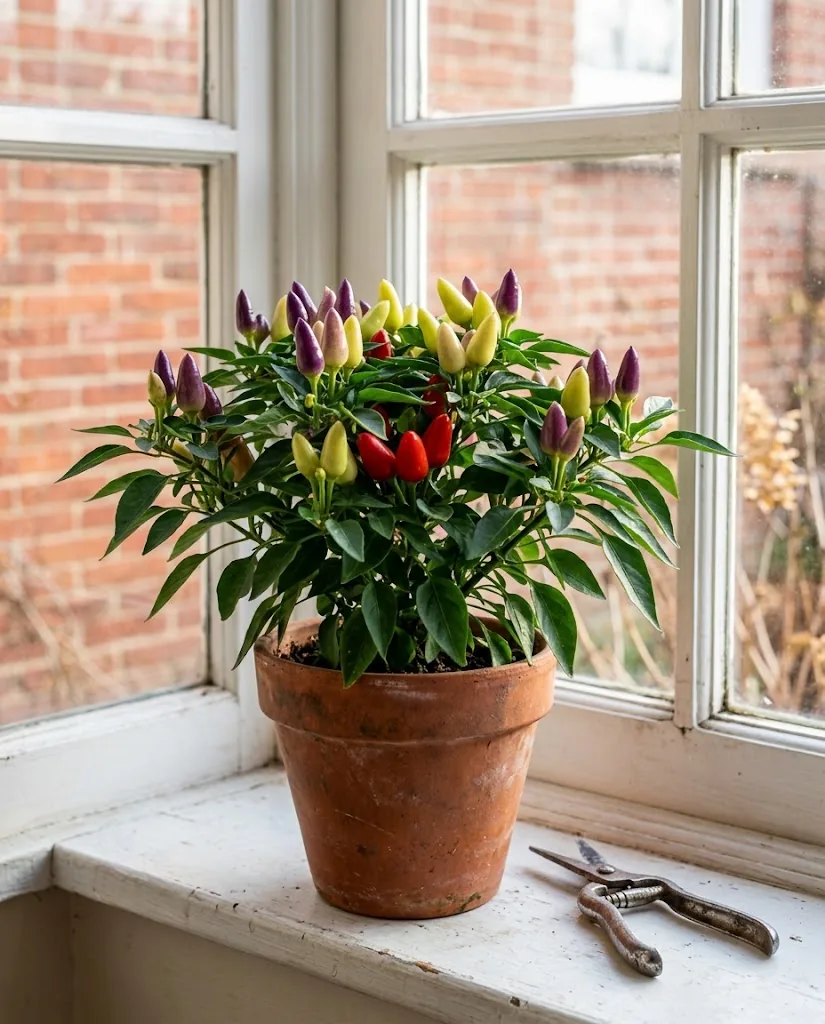
An ornamental earns its place for looks rather than kitchen work. Breeders selected plants that stay under 18 inches tall, carry upright pods that sit above the foliage like little jewels, and show a clear color shift as the fruit ripens. Most start near-black or deep violet, then move through cream or yellow to orange and bright red. That changing color is the trait gardeners value most.
Because they belong to the same species as bells, jalapeños, and cayenne, they share the same care needs and grow in a wide range of climates. A few chinense types exist, but garden centers mostly sell annuum selections.
Are the pods edible?
Technically yes, but the experience is rarely pleasant. Most were selected for color and pod count, not flavor, so the fruit tends to be bitter or harshly hot with little aromatic depth. All-America Selections describes Black Pearl as edible but “very hot,” to be used with care (AAS). There are exceptions: Chilly Chili F1 was bred to be non-pungent and stays 8 to 12 inches tall, and Medusa is sold as a non-pungent, child-safe type that grows 6 to 8 inches tall (PanAmerican Seed grower sheet).
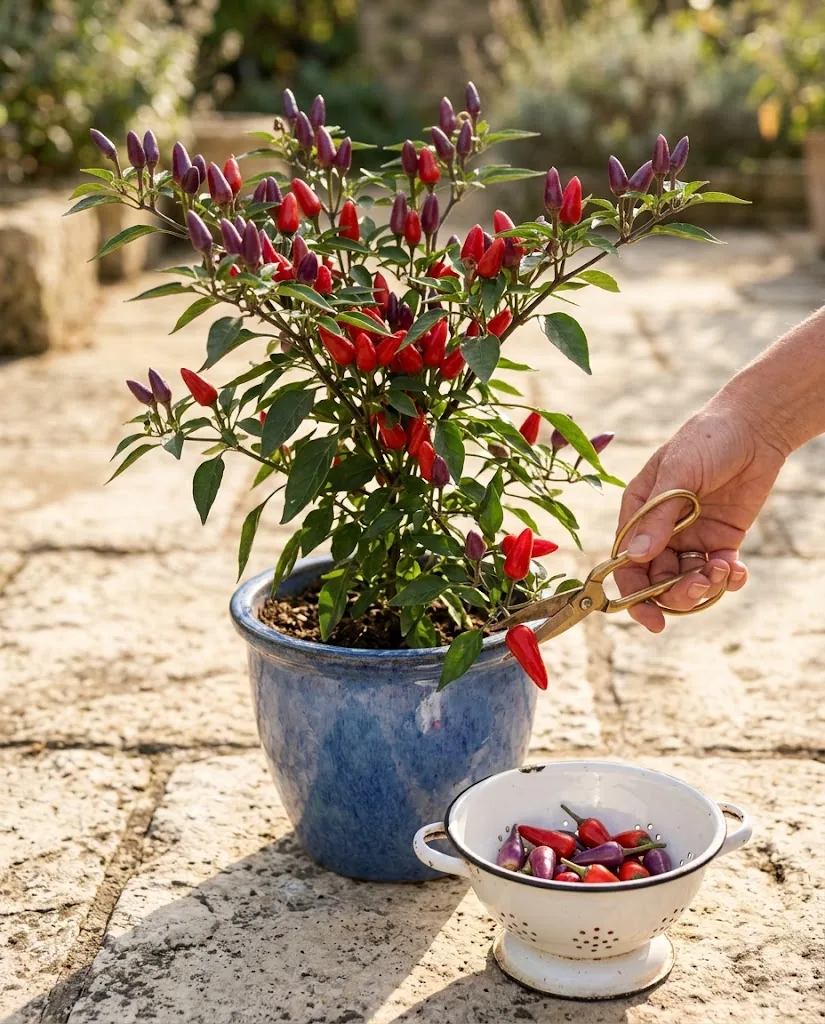
Unless a seed packet says the pods are non-pungent, treat every pod as hot. Wear gloves when you pick a basket of fruit, keep the pods away from children and pets, and wash cutting boards and hands thoroughly after harvest. If pepper oils reach skin, the Poison Control guidance on capsaicin suggests flushing with warm water, and for eye contact, rinsing with warm water for 15 minutes. Call Poison Control at 1-800-222-1222 for advice, and call emergency services for trouble breathing or chest discomfort (Poison Control). For the kitchen, plant a culinary type and keep the showy types for the view.
Best types for pots and borders
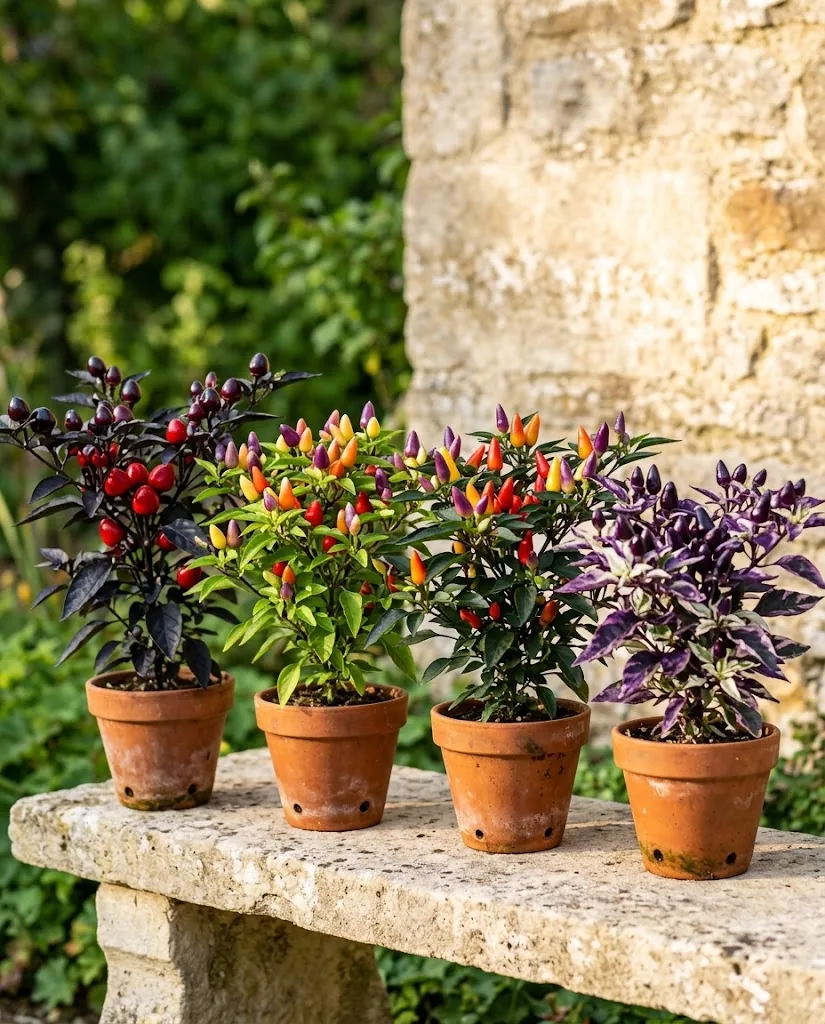
For a one-variety show that changes color over many weeks, Bolivian Rainbow is hard to beat. The 18-inch plant carries dozens of small, upright pods that move from deep violet through yellow and orange to red, and it stays attractive from midsummer to first frost. Black Pearl is the dramatic choice, with near-black foliage and glossy, pearl-shaped fruit that ripens to red. It grows 14 to 18 inches tall, and the contrast reads from across the yard.
Mixed plantings gain from variety. NuMex Twilight, developed at the Chile Pepper Institute, starts white, turns purple, then moves through yellow and orange to red, so every color shows on the plant at once (Chile Pepper Institute cultivars). Purple Flash shows variegated violet, white, and green foliage with clusters of small, round, dark pods. Chinese 5 Color carries the classic kaleidoscope look: deep violet, cream, yellow, orange, and red pods on the same plant. Sangria rounds out the easy, widely available options that handle containers without complaint.
When the planting will be seen at close range, Medusa delivers a different look: twisted, narrow pods that fan upward like flames on a tidy plant, perfect for a windowsill. For a full border, plant Bolivian Rainbow or Black Pearl as a low hedge in groups of three or five, and let the mass of color do the design work.
How to grow these plants
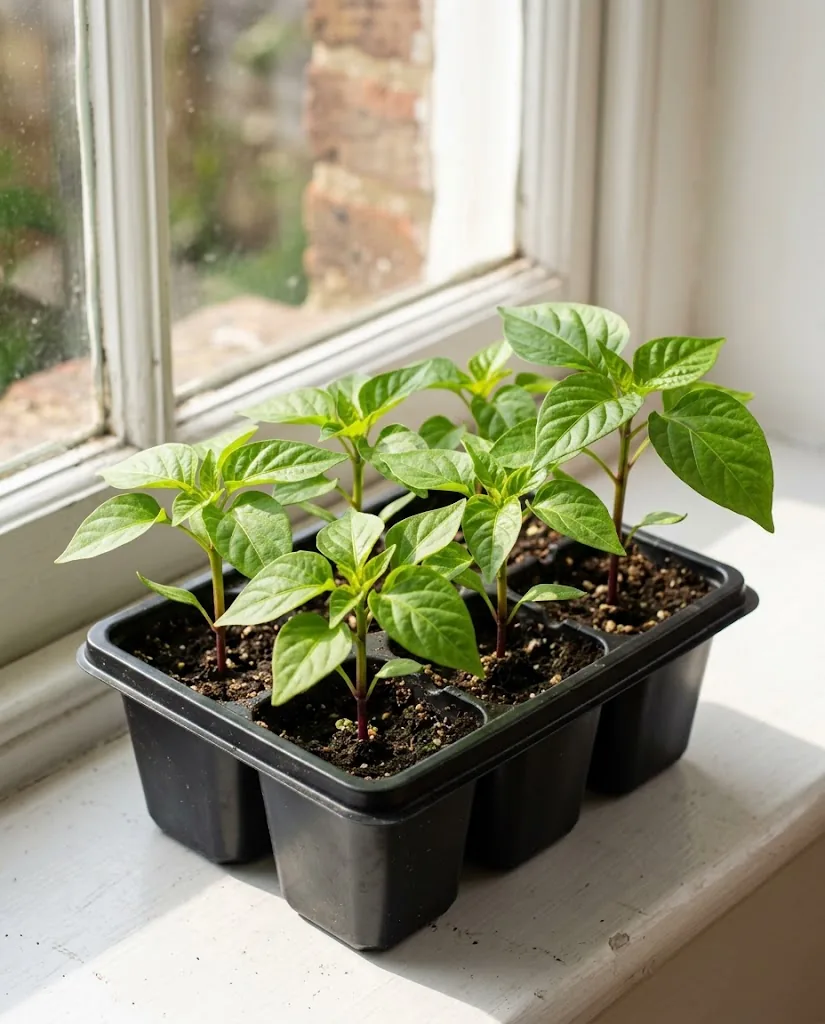
Treat them like any other warm-season fruiting plant. Start seeds indoors 8 to 10 weeks before your last frost date, pot them up once true leaves form, and transplant outside only when night temperatures stay above 55 degrees F. They do best in full sun, in well-drained soil, with steady moisture through the warm months.
For container planting, choose a pot at least 10 to 12 inches wide with drainage holes. A light, fertile potting mix suits them; a deep saucer under the pot keeps roots from sitting in water after rain. Feed every two to three weeks with a balanced liquid fertilizer until flowering, then switch to a lower-nitrogen blend to encourage pod set rather than leafy growth.
Pinch the growing tips once the plant has six or eight sets of true leaves to encourage branching. More branches mean more flowering sites, which means more bright pods. Throughout the season, deadhead the first flowers if you want a stockier plant with a later but heavier fruit set. Most plants reach their mature size in 12 to 14 weeks from transplant.
Design uses
Pots and mixed containers are the easiest entry. A single Black Pearl in a terracotta pot makes a strong accent by a doorway. A row of 4 inch pots along a sunny windowsill or balcony rail keeps the show close at hand. In mixed planters, combine a compact ornamental pepper type with trailing lobelia or sweet potato vine for color contrast and a soft edge.
For a patio harvest that pairs ornamental plants with food-bearing types, see our guide to growing peppers in tight spaces. In the garden border, plant in groups of three to five for the strongest color read. These plants tolerate partial shade, but the colors deepen and the pod set improves in full sun. They mix well with other annuals that ask for similar care: marigolds, salvias, coleus, and short grasses. Keep taller background plants to the north so the peppers stay in sun and the pods stay visible.
For seasonal displays, line a sunny path with alternating Bolivian Rainbow and Purple Flash, or anchor a fall display with Sangria and Black Pearl as the cool weather arrives. The pods hold their color well into October in most climates, which is the whole point of growing them.
Overwintering and end-of-season care
These plants are tender perennials in warm climates and annuals everywhere else. In zones 9 to 11 they can live for two or three years with a light prune in late winter. In colder zones, bring a healthy plant indoors before the first frost, cut it back by a third, and place it in the sunniest window you have. The plant will drop some leaves and slow growth through the short days, then resume flowering when light returns in spring.
If saving seed, wait until a fully colored pod is slightly soft and pulls cleanly from the stem. Slice the pod, scrape the seeds onto a paper towel, and let them dry in a cool, shaded spot for a week. Store dry seed in a paper envelope in a cool, dark place. Open-pollinated types come true from saved seed, so the next generation will look like the parent. F1 hybrids, such as the non-pungent type mentioned earlier, will not, so buy fresh seed for those each year.
Common problems
Spider mites are the most common indoor pest, especially when humidity drops in winter. A strong spray of water on the underside of the leaves every few days keeps them in check. Aphids cluster on new growth in spring; a brief wash with insecticidal soap removes them. Outdoor plants rarely suffer serious damage if they get full sun and steady moisture.
If a plant drops flowers before setting pods, the cause is usually a temperature swing, a dry spell, or a sudden move from indoors to a windy outdoor spot. Steady conditions solve the problem within a couple of weeks. Pale leaves usually mean the soil is exhausted; a dose of balanced fertilizer greens them up quickly.
Frequently asked questions
Do these plants come back every year?
Only in zones 9 to 11, where they can survive a mild winter outdoors. In colder climates, treat them as annuals or bring a healthy plant inside to a sunny window for the winter.
How hot are these peppers?
Most ornamental types are hot. Bolivian Rainbow is listed at 10,000 to 30,000 Scoville Heat Units (PepperScale), and Black Pearl at the same range (Wikipedia), though figures vary by seed line and source (checked September 2026). Non-pungent types such as Medusa are the exception. Always treat the fruit as hot until you have tested a small piece.
Can these peppers be grown indoors?
Yes. A sunny south-facing window with at least six hours of direct light, or a small grow light, keeps a compact type like Medusa or NuMex Twilight fruiting through winter. Water when the top inch of soil dries and feed lightly once a month.
Next steps
Pick one showpiece type, plant it in a pot, and watch the pods change color through summer. If you cannot find the plants locally, our guide to unusual peppers worth growing includes a handful of ornamentals that take a little more effort but reward it.
