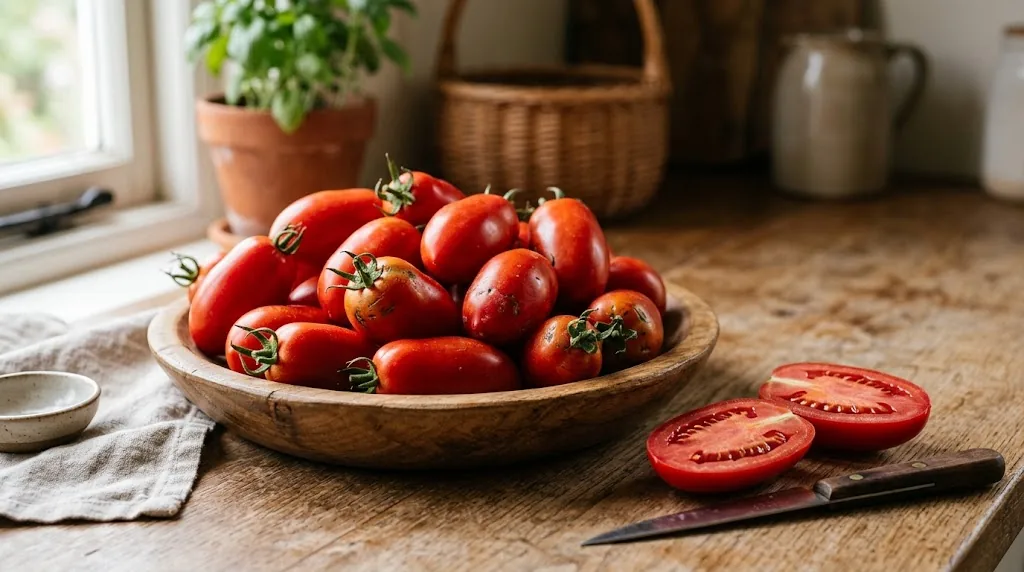
When a pot of tomato sauce takes hours to thicken, the variety in your basket matters. Paste tomatoes usually have firmer, meatier flesh and less free juice than slicing types, so they cook down with less water to evaporate. Familiar cultivars vary in fruit shape, flavor, and growth habit. Compare tomato varieties by what you want to harvest and how much support your garden can fit.
A paste tomato is still a tomato, Solanum lycopersicum, selected for fruit that works well in sauces, purees, and other cooked dishes. The category includes both heirlooms and hybrids, and no single variety is best for every garden. If you are choosing among tomato types more broadly, start with the main tomato types, then match fruit and plant habit to how you cook and grow.
What makes a tomato a paste tomato?
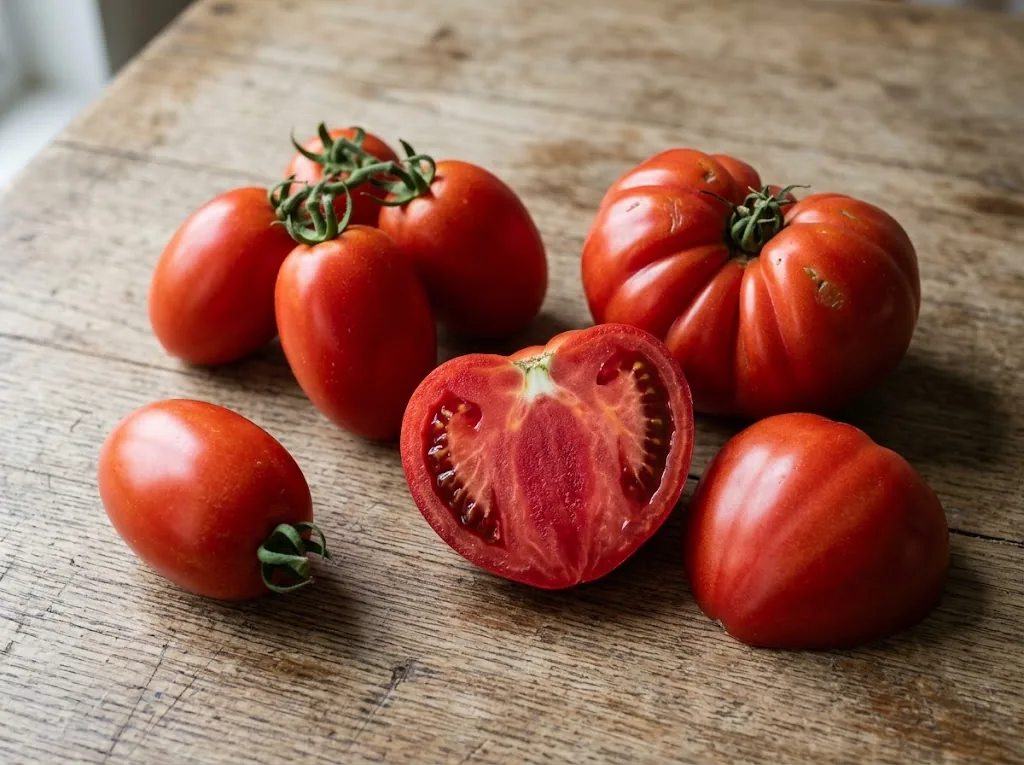
Paste tomatoes are often plum-shaped or elongated, with comparatively firm flesh and smaller seed cavities. Those traits help make a thicker sauce with less simmering than juicy slicers. The difference is a matter of degree, not a rule: paste varieties still vary in texture and flavor, and ripe fruit from any tomato cooks well into sauce.
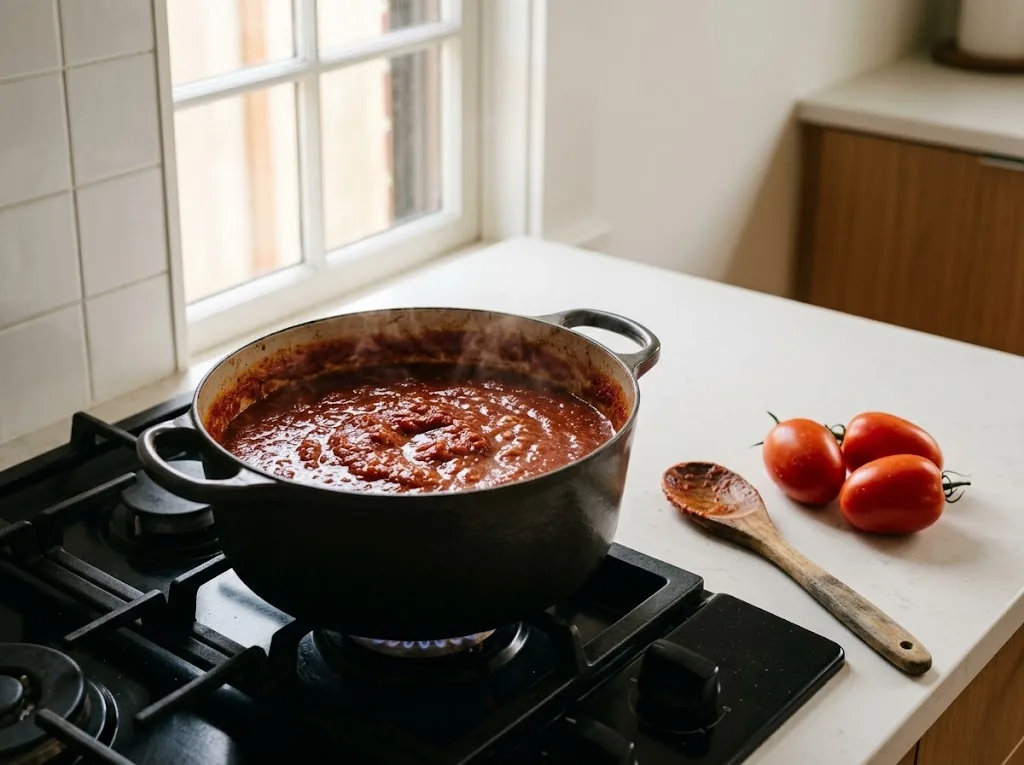
This label describes a useful cooking type, not a safety category for preserving. A meaty tomato does not make a recipe safe for shelf storage by itself. For home preservation, use a current tested recipe and follow its processing directions. Tomatoes must be acidified for canning because acidity varies by fruit and variety; the National Center for Home Food Preservation gives tested amounts and methods for specific products.
Comparing paste types with slicers and cherry tomatoes
Large slicing tomatoes tend to release more juice as they cook, so sauce may need a longer reduction. Paste types may save time at the stove, but flavor should guide the choice too. Some are rich and sweet; others taste more balanced or bright. A blend works well when you want both body and a fresh tomato flavor.
Cherry tomatoes are smaller and usually eaten fresh or roasted, though they can also become sauce. If you want a crop for salads, snacks, or quick roasting alongside your sauce tomatoes, see our guide to cherry tomato types and uses.
Roma, Amish Paste, and San Marzano
Use these as starting points, then check a seed packet or local extension guide for the variety’s current maturity, disease resistance, and growth habit. “Days to maturity” figures can differ among seed sources and growing conditions, so they are not a guarantee of harvest date.
- Roma: A classic, compact option. University of Delaware Cooperative Extension describes Roma as a determinate paste tomato with meaty, bright-red fruit and few seeds. A concentrated harvest can be convenient if you want to process a large batch at once.
- Amish Paste: An indeterminate heirloom known for larger plum or oxheart-shaped fruit. Delaware Extension lists it as a sauce tomato; fruit size and shape can vary, so expect less uniform pieces than with a commercial hybrid.
- San Marzano: An indeterminate Italian-type paste tomato with elongated fruit and a small seed cavity, according to Delaware Extension. Seed listings can vary, so check the named cultivar and its growing habit on the packet.
- Other paste cultivars: Extension lists several less familiar choices, including determinate and indeterminate types. Oregon State’s guide, for example, compares paste cultivars by vine habit and maturity. A locally recommended variety may outperform a famous name in your climate.
There is no universal winner. Choose for flavor and the harvest pattern you want, then weigh disease resistance and local performance. If one variety struggles in your garden, try a different cultivar next season instead of assuming all paste tomatoes behave alike.
Match the variety to your cooking and garden
For an even, predictable batch, look for a bush variety and note when its fruit is expected to ripen. Roma is one example, but the seed packet is the best source for the exact cultivar’s traits. If you would rather pick smaller amounts over a longer season, a vining type may suit you better. It will need a tall, sturdy support as it keeps growing. A gardener with limited room may prefer a compact plant, while a long row gives sprawling vines more space.
Fruit shape can help with kitchen prep but does not tell you everything about flavor. Long, pear-shaped or plum-shaped fruit is common in processing types, while some heirlooms are larger and more irregular. Read descriptions for flesh texture, seed cavity, and intended use. One local seed source may describe a cultivar differently from another, so compare the named variety rather than relying on the category alone.
Climate and disease pressure matter as much as a variety’s reputation. Ask a local extension office or experienced seed seller which tomato types perform well in your area, and look for disease-resistance codes that match problems you have actually seen. A claim of resistance is specific to named diseases; it does not make a plant immune to every problem.
Determinate or indeterminate: which plant habit fits?
Bush-type plants stop extending their main stems after setting terminal flower clusters, which tends to make the harvest more concentrated. Those plants produce much of their crop in a shorter window, which can suit gardeners who want to cook or preserve a large batch. Indeterminate vines keep growing and setting fruit over a longer stretch, so they need sturdy support and regular picking but can spread the harvest across the season.
Neither habit guarantees a larger crop. Space, weather, soil, disease pressure, and care all affect yield. Read the variety description before planting: Roma is commonly determinate, while Amish Paste and many San Marzano offerings are indeterminate, but seed listings can differ by cultivar.
Growing paste tomatoes for a useful harvest
Grow paste tomatoes as you would other garden tomatoes: give them a sunny site, fertile well-drained soil, and consistent moisture. Follow the seed packet for spacing and support because plant size varies. Mulch can help limit swings in soil moisture, and watering at the soil line helps keep foliage drier.
Tomato seeds are commonly started indoors and moved outside as transplants after local conditions suit warm-season crops. If you buy transplants, choose a sturdy tomato plant with healthy leaves rather than selecting only by height. Set up stakes, cages, or a trellis at planting time so you are not trying to push supports through a mature root system later. Illinois Extension notes that spacing needs depend on the growth habit and training method; follow the instructions for your particular variety.
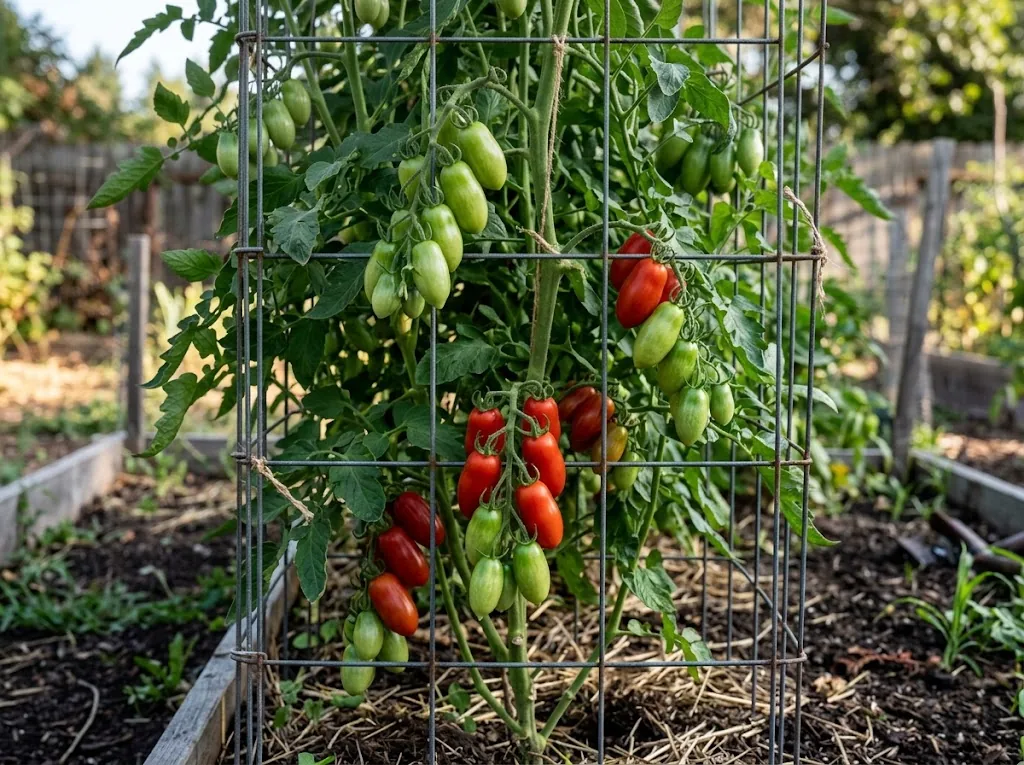
Keep the plant’s growth habit in mind as it develops. Bush types are easier to keep compact, while indeterminate vines keep extending and may need stronger support and more room. Pruning is not a universal requirement. Avoid removing healthy foliage without a clear reason, since leaves shade fruit and support plant growth. Both habits produce fruit suited to cooking, but their harvest windows differ.
Long, plum-shaped tomatoes may develop blossom-end rot. The dark, sunken patch appears on the blossom end of the fruit. It is a physiological disorder associated with calcium uptake problems, often made worse by irregular soil moisture or rapid growth. Keep moisture even, avoid excessive nitrogen fertilizer, and do not add calcium unless a soil test indicates a need. Remove damaged fruit; the affected spot will not heal.
Pick fully colored fruit when it is firm and ripe. Process sound tomatoes promptly. If fruit is already very ripe and you need a short delay, refrigerate it briefly; colder storage can dull texture and flavor. Bruised or decaying fruit should not go into a preserving batch.
Using paste tomatoes for home preservation
Paste tomatoes can be preserved at home, but only with a tested recipe for the product you are making. Paste tomatoes produce a thicker sauce, yet their texture does not replace the acidification and processing steps in a tested recipe. The National Center for Home Food Preservation advises adding bottled lemon juice or citric acid to preserved tomatoes using its specified amounts. Do not reduce the acid, change processing times, or treat a fresh sauce recipe as shelf-stable canning instructions.
If your harvest includes unripe fruit at season’s end, those tomatoes have different cooking uses from ripe paste tomatoes. Our guide to green tomatoes and ways to use them covers that separate question.
Choose the best paste tomato for your garden
For a compact plant and a more concentrated harvest, start with a bush cultivar or another locally recommended variety. For larger fruit and a longer picking window, compare Amish Paste or a vining San Marzano type. Grow two types side by side if you have room: a small trial will tell you more about flavor, harvest timing, and disease pressure in your garden than a universal “best” list can.
Whatever you choose, treat paste tomatoes as a cooking advantage, not a preserving shortcut. Match the plant to your space and schedule, then follow tested preservation guidance for every jar.
Sources for variety and preservation guidance
- University of Delaware Cooperative Extension, Paste Tomatoes
- Oregon State University Extension, Grow Your Own Tomatoes and Tomatillos
- National Center for Home Food Preservation, Canning Tomatoes
- University of Illinois Extension, Tomato
- Oregon State University Extension, tomato growth habits and support
- University of Illinois Extension, Blossom End Rot
