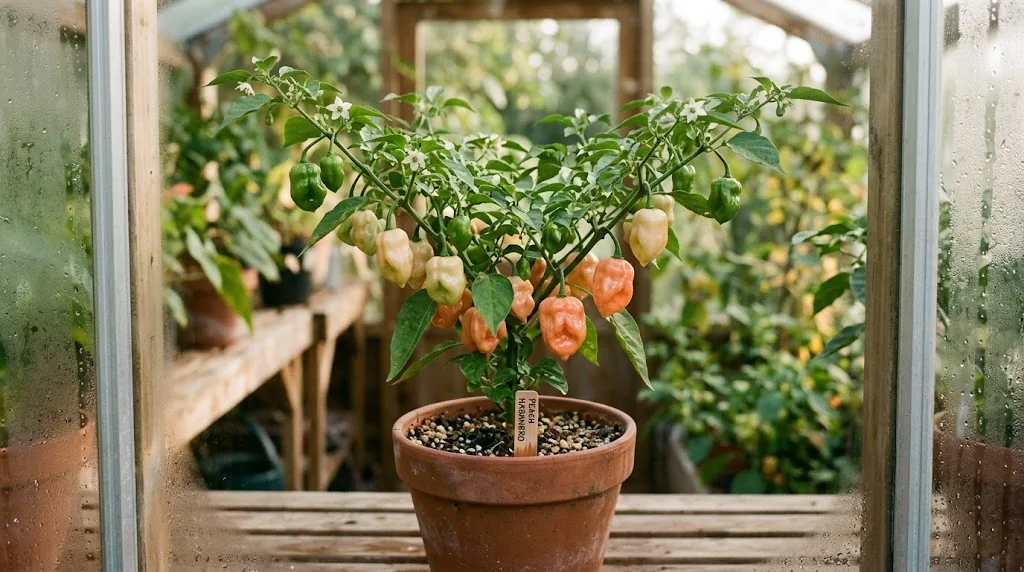
A ripe habanero pepper can be orange, red, yellow, or a soft salmon-peach. That pale color makes this variety easy to spot, but it does not make it mild: this is a very hot, spicy chile for cooks and gardeners who want habanero character with a different look.
What is this variety?
This is a peach-colored form of Capsicum chinense, the species that includes habaneros and Scotch bonnets. Its fruit typically ripens from green to pale peach or salmon. Seed sellers describe pods around 1.5 to 3 inches long, though size varies by seed line and growing conditions. The plants are often compact and bushy, which can make them a practical choice for a large patio container.
The name describes ripe color, not a fruit flavor or a cross between a chili and a peach. Grower and seed sources describe a fruity, citrusy, tropical character, sometimes with a sweet note. Taste a tiny amount first: the heat can quickly overwhelm the fruitiness.
Origin and history
The peach habanero is sold as a named cultivar, but its early history is not documented as thoroughly as that of major commercial cultivars. Pepper Joe’s credits James Weaver, an Amish farmer, with developing the strain from Orange Habanero, though that is the seller’s claim and no independent record was found. A 2020 garden club newsletter by grower Eric Levine describes growing peach habanero from seeds he bought in 2015 and saving seed from his 2018 harvest. Those accounts support a modern grower history, not a precise release year or a verified claim that every seed sold today descends from one stable line.
Suppliers also disagree about this color selection’s origin: Reimer Seeds labels its listing Caribbean, while Pepper Joe’s lists the USA. Those entries may describe the seller’s stock rather than the variety’s ancestry, so a specific origin remains unconfirmed. For context on how the cultivar fits among other varieties, see our guide to the broader range of chili pepper types.
Botany and pod appearance
The species name is Capsicum chinense. Despite “chinense,” Oxford University’s plant profile places the species among peppers native to the Americas, not China. Plants have green stems and leaves with white flowers, followed by wrinkled, lantern-shaped fruits. The fruit starts green and changes to pale peach or light salmon when ripe. Leave it on the plant until it reaches its mature color for the clearest variety character and full ripeness.
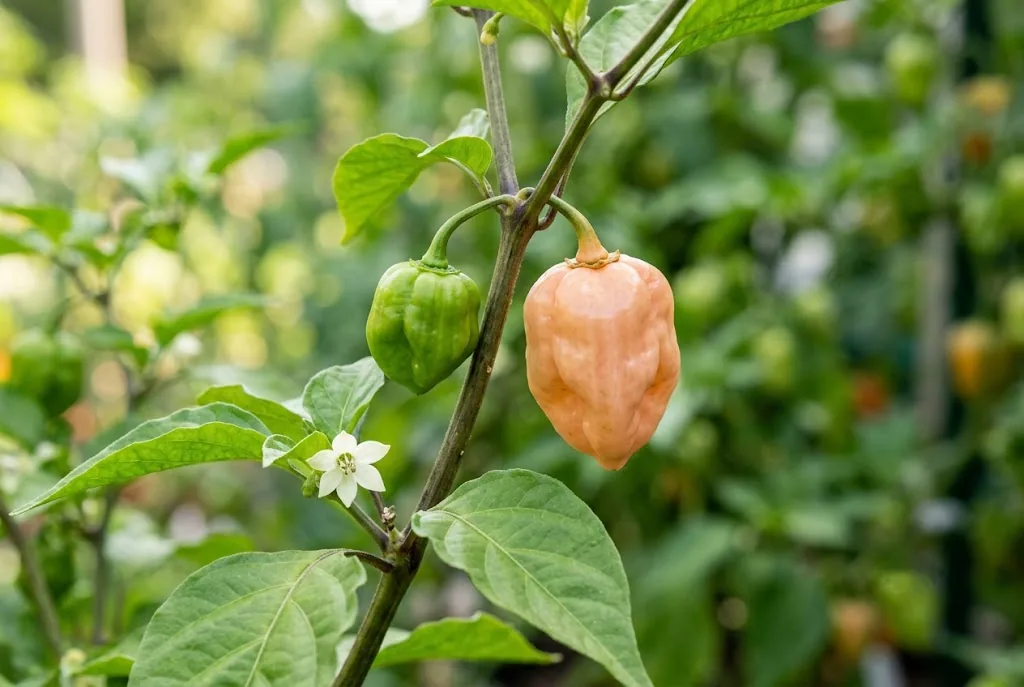
Reimer Seeds lists wrinkled pods around 1.5 inches long and plants 24 to 36 inches tall; Pepper Joe’s describes pods about 3 inches and plants about 2 feet. Treat those as supplier-specific estimates, not a fixed size for every plant.
When ordering seed, compare descriptions instead of relying on the color name alone. Reimer labels its listing open-pollinated, but sellers can maintain and describe seed lines differently. Check the packet for mature color, plant height, and harvest estimate, and ask how the line is maintained if you plan to save seed. A packet photo can help you recognize ripe color, but it cannot guarantee identical fruit in every garden.
Heat and flavor
Expect serious heat. Seed sellers report very high heat: Pepper Joe’s lists 200,000 to 350,000 Scoville Heat Units (SHU), while Reimer Seeds lists 315,000 SHU. These are vendor estimates, not a laboratory result for every fruit. Growing conditions, seed line, and the method used to estimate heat can all affect the number, so use the range as a rough guide rather than a promise.
The aroma and taste are commonly described as fruity, citrusy, and tropical, with a mild sweetness in some fruit. The mature color does not predict lower heat. If you are new to habaneros, handle a small piece carefully and taste it in a dish where you can dilute the heat with other ingredients.
How to grow the plants
Start seeds indoors about eight weeks before outdoor planting, especially where the warm season is short. Chili seeds need warmth: University of Minnesota Extension recommends keeping the starting mix at 80°F to 90°F until emergence. Use a clean seed-starting mix, sow about one-fourth inch deep, keep it evenly moist, and give seedlings bright overhead light as soon as they emerge. Germination timing varies, so do not discard a pot just because it has not sprouted on a fixed day.
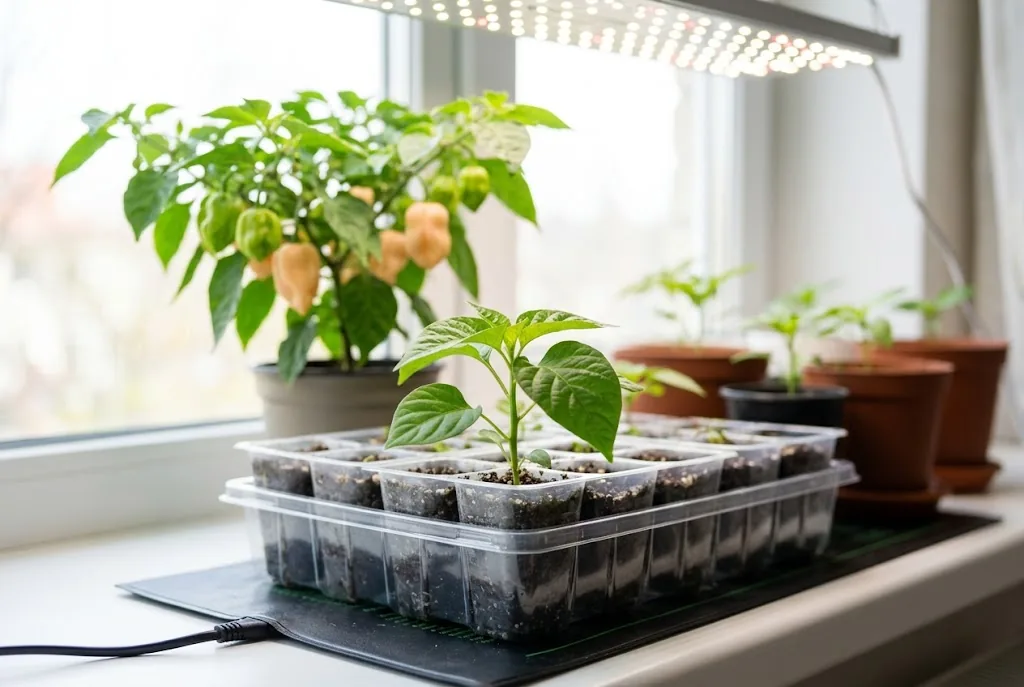
Pot up seedlings as they grow, then harden them off gradually before setting them outside. Wait until frost danger has passed and nights are reliably warm. Plant in a sunny spot with fertile, well-drained soil, or use a roomy container with drainage holes and fresh potting mix. A container is helpful if you need to move the plant into shelter as nights cool. The compact size described by some suppliers suits pots, but check the mature height listed for your own seed source.
Keep soil moisture steady rather than alternating between very dry soil and heavy watering. Water at the soil line when the surface begins to dry, and avoid keeping the roots waterlogged. Plants can drop flowers or set poorly when conditions are stressful. Excessively hot days, cool nights, drought, and saturated soil can all slow growth, so adjust watering and shelter to local weather instead of following a rigid calendar. The same extension guide notes that strong direct sun can mark fruit when leaf cover is sparse, so avoid stripping healthy foliage around developing pods.
Seed catalogs report very different harvest windows for this variety. Pepper Joe’s lists 70 to 79 days to harvest, while Reimer lists 100 or more days. Those figures may count from different starting points and describe different seed lines. Use your packet’s estimate as a planning aid, then judge ripeness by the fruit’s mature color. Warm, sunny conditions and a long growing season help chinense peppers mature.
Harvesting and handling
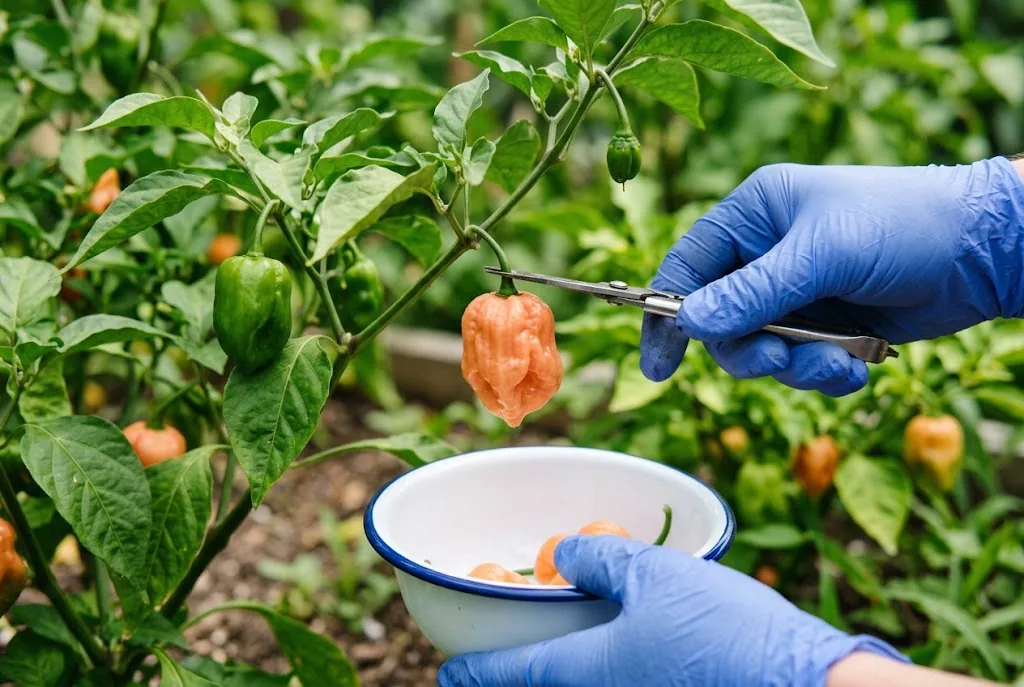
Pick fully colored fruit with clean scissors or pruners, leaving a short stem if you plan to store it briefly. Wear nitrile or other suitable gloves when cutting or handling hot chiles, keep your hands away from your face, and wash tools and work surfaces afterward. Capsaicin can irritate skin, eyes, and breathing passages. If juice gets in an eye, rinse with plenty of warm running water for 15 minutes; seek urgent help for breathing trouble or chest discomfort. See Poison Control’s capsaicin first-aid guidance for more.
Storing, drying, and preserving
Use fresh pods soon after harvest, or refrigerate them unwashed in a breathable container and check often for soft spots. For longer storage, freeze whole pods or dry them. Illinois Extension notes that indoor air drying works for hot chiles when they are kept in a well-ventilated area until completely dry. Very hot peppers can irritate your eyes and airways when cut, so work carefully and avoid breathing dust if you grind dried pods.
Store fully dried peppers in a clean, dry, airtight container away from heat and sunlight. Check for condensation after packing; if moisture appears, dry the peppers further. For drying and conditioning details, follow Illinois Extension’s home-drying guidance. Refrigerate homemade sauces, salsas, and pepper jellies unless you use a tested canning recipe and follow its instructions exactly. Do not assume a sealed jar is shelf stable.
For another Capsicum chinense comparison, see the profile of 7 Pot Jonah.
Culinary uses
Use peach habanero peppers where you want bright fruit aroma as well as heat. A small piece can lift a fresh salsa, a cooked condiment, a fruit-and-chile glaze, or a pepper jelly. It also pairs well with citrus, onion, garlic, tropical fruit, and rich foods that can soften its sharp burn. Add less than you think you need, taste, then increase gradually. If you want to compare a very different culinary variety, explore Siling Haba peppers.
A quick peach habanero hot sauce
For one small batch, combine 1 ripe peach, 1 small Peach Habanero (or start with half), 2 tablespoons cider vinegar, 1/4 cup water, and a pinch of salt. Wear gloves, remove the stem, and mince the chile. Simmer everything until the fruit softens, blend until smooth, then cool and refrigerate. Treat it like cooked leftovers and use it within 3 to 4 days, the window the USDA Food Safety and Inspection Service gives for refrigerated leftovers. Taste only after the mixture cools, and add more chile in a later batch if you want extra heat. This is a refrigerator condiment, not a canning recipe. For shelf-stable pepper jelly or sauce, use a tested formula such as the National Center for Home Food Preservation’s pepper jelly and follow it exactly.
Serve a small spoonful as a wing glaze, stir a little into cream cheese for crackers, or offer it beside chicken or pork fresh from the grill. The ripe fruit’s citrusy aroma also suits salsa and glazes, but the heat stays sharp, so let diners add more at the table rather than coating an entire dish at once.
Frequently asked questions
When should you start the seeds?
Start indoors roughly eight weeks before your local outdoor planting window. Keep the mix warm and moist, provide bright light after seedlings emerge, and transplant only after frost danger has passed. A seed packet may give a more specific schedule for its line.
How hot is the cultivar?
Seed sources report about 200,000 to 350,000 SHU, but estimates vary and are not a guarantee for each fruit. Treat it as a very hot chili.
Does it taste like a peach?
No. “Peach” refers to the ripe color. Growers describe a fruity, citrusy habanero flavor, not the flavor of peach fruit.
Can you grow it in a pot?
Yes. Sellers describe plants about 2 feet tall (Pepper Joe’s) to 24 to 36 inches (Reimer), which can fit a roomy pot with drainage. Give it full sun, warm conditions, and consistent soil moisture, and follow the height guidance for your seed line.
Is Habanero Peach another name for this variety?
The names are used interchangeably by some seed sellers. Seed lines and descriptions may differ, so check the species, mature color, and supplier details when buying.
