
Santaka peppers are compact, upright Japanese hot peppers with slender pods that ripen from green to bright red. This hot pepper fits a sunny garden bed or a roomy pot. A ripe pepper has a straightforward, sharp heat rather than a sweet bell-pepper flavor. Gardeners grow them for a steady crop, a firm 40,000 to 50,000 Scoville heat estimate, and peppers that dry well. It is a named variety of Capsicum annuum, not a separate species. If you are comparing cultivars, start with this guide to chili pepper varieties and their differences.
Origin of Tochigi Santaka peppers
The variety is associated with Tochigi Prefecture, north of Tokyo. A regional history from SHUNGATE traces Tochigi Kairyo Santaka to local producer Yoshioka Shokuhin Kogyo, which developed it by selecting from Yatsufusa peppers in Ohtawara. Seed listings describe the variety as released in 1955. This makes it a selected variety of Capsicum annuum, rather than a wild landrace. Seed histories do not all give the same level of detail about its development. Seed packets may call it a Japanese hot pepper or Hontaka.
Japanese red peppers are used in seasonings such as shichimi t?garashi, a blend whose ingredients vary by maker. Its slender fruit dries readily, so it suits that kind of use, but it is one of many peppers that can be used in a spice blend. The Japanese seasoning’s history is older than the variety’s modern seed listings, so the two should not be treated as the same story.
Botanical traits and pod appearance
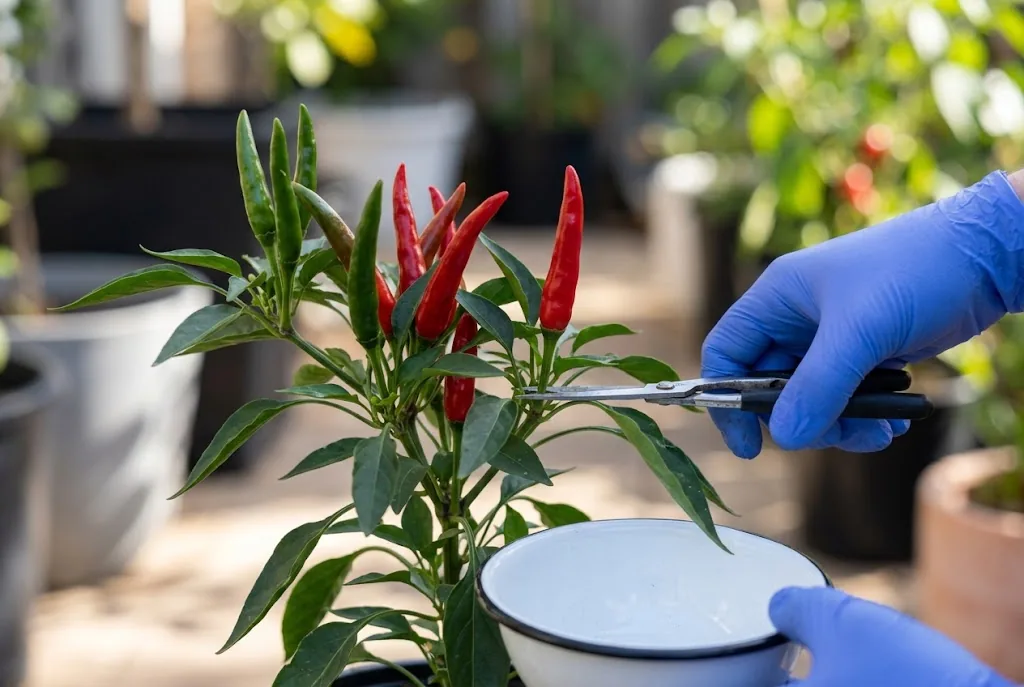
The plant is a warm-season annual in the nightshade family. It grows upright, often to around 2 feet, with green foliage and clusters of narrow, pointed pods. Catalog descriptions commonly put the peppers at about 2 to 3 inches long. The fruit points upward and changes from green to glossy red as it ripens. Exact size, yield, and height vary with seed line, growing conditions, and the seller’s description.
When buying pepper seeds, look for a clearly labeled packet and compare the listed pod shape and maturity details. Sellers sometimes use overlapping common names such as Japanese chili or Hontaka, so check that the botanical name is Capsicum annuum.
Santaka pepper heat and flavor
Seed companies commonly list the variety at 40,000 to 50,000 Scoville heat units (SHU). Treat that as a cultivar estimate, not a guaranteed reading for every pod. Heat varies with the seed line, ripeness, weather, and growing conditions, and the range is not a laboratory result for your harvest. The Santaka pepper tastes directly hot, with a clean, spicy flavor that can stand up to garlic, ginger, and other bold ingredients. It is not a sweet pepper. For another variety with a fruitier profile and a different species background, see peach habanero peppers.
Growing Santaka peppers from seed to maturity
To start seeds indoors, sow them about eight weeks before your area’s usual last frost. For pepper plants, the last frost date is a better guide than a fixed calendar date. Sow them about 1/4 inch deep in a clean seed-starting mix and keep the mix evenly moist. Warmth helps seeds germinate. University of Minnesota Extension recommends a heat mat around 80 to 90°F until seedlings emerge, with about 70°F soil as a useful growing temperature. A seed seller lists 10 to 25 days for germination, so do not discard a flat after only a few days. A seed is beginning to germinate when its first root appears. Keep the soil temperature steady and the mix damp, not soaked. Keep the seedlings under bright light so their stems stay sturdy.

Pot seedlings up after true leaves appear. Before planting outside, harden them off gradually over a week or two. Set them in a sunny spot only after frost danger has passed and nights are reliably warm. A sheltered raised bed or a pot with drainage works well; choose a size large enough to keep the root zone from drying too quickly. Give plants fertile, well-drained soil and steady water. Keep the soil moist, not waterlogged, and avoid heavy nitrogen feeding that encourages leaves at the expense of fruit.
Allow roughly 70 to 90 days from transplanting to ripe fruit, using the packet’s figure as the best estimate for that particular line. Botanical Interests lists 70 to 80 days from transplanting; Thresh Seed Co. lists 90. Treat those as seller estimates, since cool soil and low night temperatures can slow growth. Cool soil, low night temperatures, or a short growing season can delay flowering and ripening. Count the days after transplant, not from sowing indoors. If fruit set is slow, check warmth and sun before adding more fertilizer.
Harvesting and handling
You can pick pods green for a sharper, less mature flavor or wait until they turn red for the usual dried-pepper harvest. Pick individual peppers as they ripen instead of waiting for every pod in a cluster. Use clean scissors or snips to avoid breaking small branches. Wear gloves when harvesting or cutting hot peppers, and keep hands away from your eyes. Wash hands and tools with soap after handling, and do not touch contact lenses until your hands are clean.
For seed saving, let a healthy, fully red pod mature on the plant, then dry it completely before removing the seeds. Many listings call the variety open-pollinated, but peppers can cross-pollinate with nearby varieties. A small garden can still produce enough fruit for fresh use and drying. Separate plants or use a blossom bag if keeping saved seed true to type matters. To check whether leftover pepper seeds are viable, place 10 seeds between damp paper towels in a loosely closed bag, keep them warm, and check after the period listed on the packet. Count the seeds that sprout: if 7 of 10 grow, the sample germinated at about 70 percent. Illinois Extension describes this paper-towel test for home gardeners. This test estimates how many seedlings to expect; it does not guarantee that every seedling will thrive.
Storing, drying, and preserving
Use fresh pods soon after harvest or refrigerate them in a crisper drawer in a plastic bag. The University of Maine Cooperative Extension recommends washing peppers just before use and lists up to two weeks in the refrigerator crisper. To dry them, wash and dry the pods, then spread them in a single layer in a food dehydrator. Follow the appliance’s instructions and dry until pods are brittle throughout, not leathery in the center. Small, thin-walled peppers can dry quickly, so check them often. Cool completely before storing whole peppers or grinding them into flakes.

Keep dried peppers in an airtight container away from sunlight, heat, and moisture. Label the jar with the variety and date. Discard peppers if they become damp, moldy, or smell off. For freezing or pickling, use a tested recipe and safe food-preservation guidance rather than adjusting acidity or processing time by guesswork.
Culinary uses
Use the hot peppers sparingly at first. Add a whole dried pod to simmering soup or beans, then remove it when the dish reaches the heat you want. Crumble dried peppers into chili flakes, or slice fresh peppers into soups, stir-fries and other Asian dishes, sauces, and marinades. The flavor is spicy, so begin with a small amount. Remove the seeds and inner ribs for a milder result, though that will not remove all the heat. Upright clusters also make the plant ornamental in a sunny patio pot. If you enjoy comparing slender hot varieties, purple cayenne peppers offer another shape and color to explore.
Frequently asked questions
Should you harvest them green or red?
Either stage is usable. Pick green pods for an earlier harvest and a less mature flavor, or wait for full red color when you want the usual ripe, dryable pepper.
How long do they take to mature?
Seed listings range from about 70 to 90 days after transplanting. Read the packet for your seed line, and allow more time if nights are cool or the plant gets limited sun.
Can I grow it in a pot?
Yes. Choose a pot with drainage and enough volume to hold moisture around the roots, then give the plant full sun and water when the top layer of mix begins to dry.
Sources and further reading
- SHUNGATE, regional reporting on Tochigi peppers and Ohtawara
- Victory Seed Company, variety description and seed details
- Botanical Interests, pod, heat, and cultivation details
- Thresh Seed Co., variety description and 90-day maturity listing
- University of Minnesota Extension, growing peppers
- University of Maryland Extension, pepper cross-pollination and seed saving
- Illinois Extension, testing seed viability
- University of Minnesota Extension, drying and storing food safely
- University of Maine Cooperative Extension, storing and washing produce
- National Center for Home Food Preservation, tested pickling recipes
- Japan Ministry of Agriculture, Forestry and Fisheries, Kyo shichimi ingredients and regional variations
