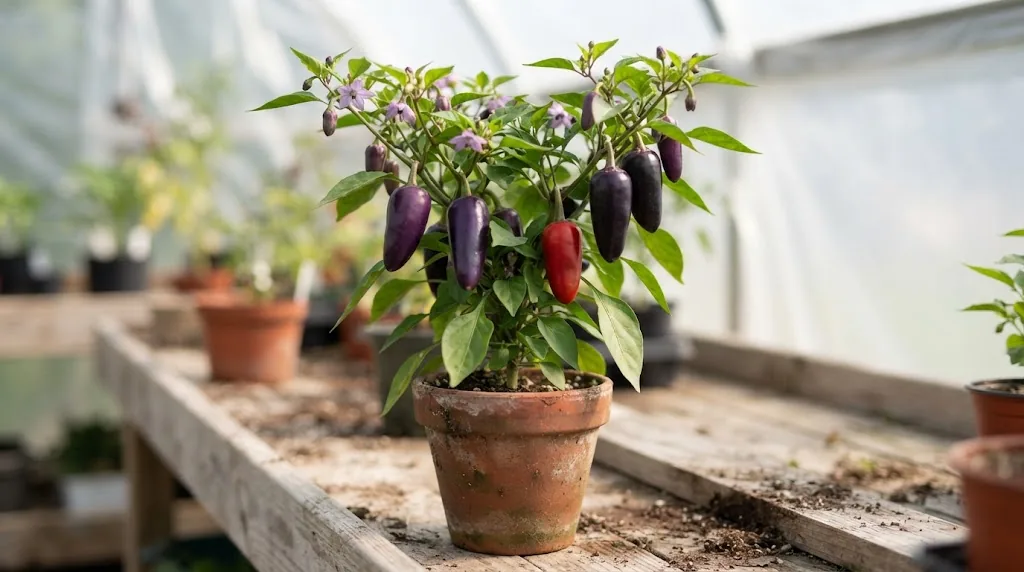
A purple jalapeno pepper makes a colorful plant before the harvest even begins: each lavender flower gives way to pods that pass through deep purple and almost black before turning red. It is still a jalapeño type, with the familiar tapered shape, crisp walls, and medium heat. You can pick the pods green, dark, or fully ripe.
For a broader comparison of pepper shapes, flavors, and heat, see our guide to the main types of chili peppers.
What is this jalapeño variety?
This is a named selection within Capsicum annuum, the species that includes common jalapeños. Catalog listings describe plants with lavender flowers and pods that start green, darken, then ripen red. The dark skin is a color stage, not a different species or a sign that the pod has spoiled.
The name does not point to one universally standardized strain. Some catalogs label their stock open-pollinated or heirloom, while listings vary in pod size, maturity date, and taste. Check the packet or seller listing for the particular stock you buy. Territorial Seed’s selection is listed as open-pollinated, with pods about 2¾ inches long; other suppliers describe them at roughly 3 inches. Those are seller-specific figures, not a guarantee for every plant. Pepper Joe’s describes its plant as compact, about 2 feet tall, with high yields; those seller-reported results depend on growing conditions.
The jalapeño name comes from Xalapa, Mexico, where the pepper is traditionally grown, according to the New Mexico State University Chile Pepper Institute. Reliable listings do not establish a distinct origin, breeder, or introduction date for this dark-podded selection.
Color, shape, and heat
Expect a bushy, warm-season plant with green foliage, smooth tapered pods, and lavender flowers. Plants produce pods that start green, shift through violet, and finish red if left on the plant. Light, temperature, and the selection can affect how dark the skin becomes; UGA Extension describes temperature-linked anthocyanin purpling in some peppers. Color alone is not a reliable ripeness test.
Pepper Joe’s listing places this variety around 2,500 to 8,000 Scoville heat units. Treat that as a catalog estimate, not a lab measurement of every pod. Heat varies with genetics, growing conditions, and maturity. Taste a small piece if you are unsure.
The flavor is usually described as jalapeño-like, with crisp flesh and a fresh, grassy bite when green. Some sellers describe fully mature pods as sweeter or fruitier. The skin may be dark while the inside remains green. Thick walls suit fresh salsa, stuffing, grilling, and pickling.

How to grow purple jalapeño pepper seeds
Give this warm-season vegetable a long growing season, ample direct sunlight, and fertile soil that drains freely. Start seeds indoors about eight weeks before your local planting date. University of Minnesota Extension’s pepper guide recommends warm starting conditions and gradual hardening before transplanting; Utah State University Extension also recommends warm germination, then cooler seedling conditions. A heat mat can help, but keep the mix damp rather than waterlogged.
- Sow about one-quarter inch deep in clean seed-starting mix. Keep the mix warm and evenly moist. Germination depends on seed age and temperature, so follow the packet and allow more than a few days.
- Give seedlings strong overhead light. Pot them up if roots fill their cells, and harden them off gradually before moving outdoors.
- Plant outside after frost danger has passed and soil has warmed. Choose a sunny spot with good drainage, or use a large container with drainage holes and fresh potting mix.
- Water deeply when the soil begins to dry. Aim for steady moisture, especially while flowers set pods, but do not leave roots in saturated soil.

For bed-grown Purple Jalapeños, wait until the soil is warm before applying organic mulch; it helps conserve soil moisture and limit weeds.
Catalog maturity estimates differ. Territorial Seed lists about 85 days, while other sellers give ranges closer to 80 to 89 days. These are estimates tied to each seller’s conditions and counting method, not a promise from transplant day. Warmth, light, and the time needed to grow a transplant all affect the first harvest.
Space plants according to the seed packet and leave room for light and air around the leaves. Stake a heavily loaded plant if branches bend. If you want a quicker harvest, compare the timing on the packet with an early jalapeño bred for an earlier crop; maturity estimates are not interchangeable.
Where to find seed
Search established seed catalogs using the names listed on each vendor’s packet. Availability changes through the season, so check current stock before ordering for a home garden. Listings from Pepper Joe’s and Gaia Organic Seeds describe the green-to-violet-to-red color change. Compare the stated days to maturity and pod size with your season and growing space.
When saving seeds, check whether the packet says open-pollinated or hybrid. Seedlings from a hybrid may not match the parent. Utah State University Extension notes that peppers can cross-pollinate, so saved seed may not come true to type unless flowering plants are isolated.
When and how to harvest
Pick pods while green, after they darken, or once they ripen red. Choose firm, unblemished peppers and use pruning shears if pulling might snap a branch. Regular picking encourages continued flowering; leaving some pods longer lets them finish changing color.
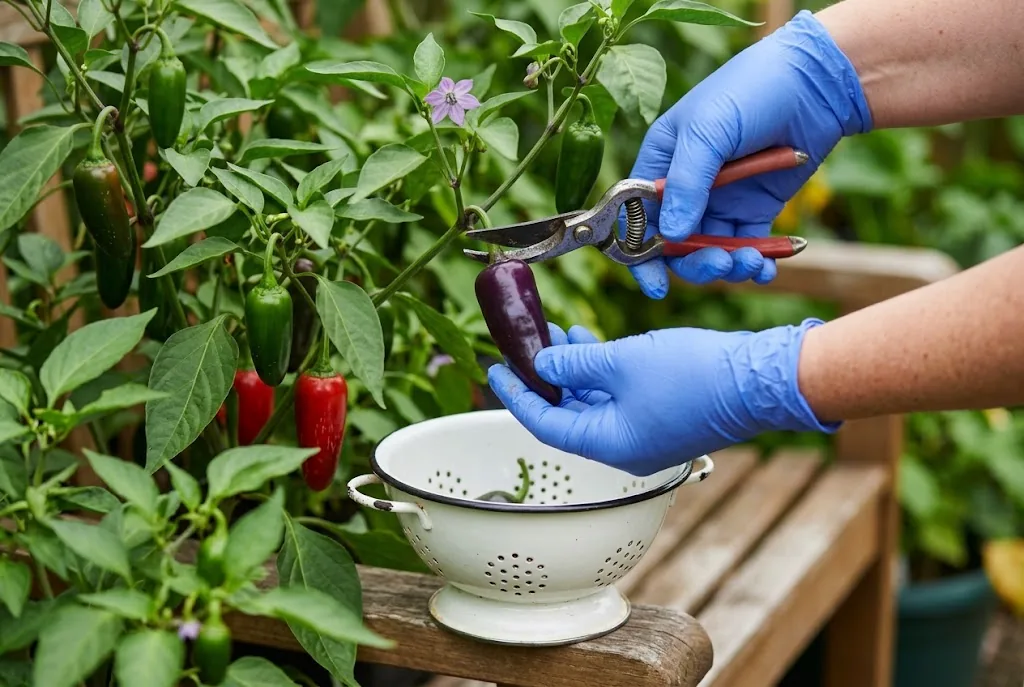
Wear gloves when handling a large harvest and wash your hands with soap and water before touching your face. Capsaicin can irritate skin and eyes. If juice reaches an eye, rinse with plenty of warm water for 15 minutes. Poison Control recommends copious warm-water irrigation for eye exposure; seek expert help for persistent or severe symptoms. A pod’s color does not tell you how hot it is.
Storing and preserving the harvest
Keep fresh pods dry and refrigerated, then use them while they remain firm. For longer storage, freeze whole or chopped peppers in a labeled freezer container. The National Center for Home Food Preservation gives tested directions for freezing hot peppers. You can also dry thin slices until brittle and store them airtight in a cool, dry place. Discard dried peppers if you see mold or detect an off smell.
Pickling changes acidity and food-safety requirements. Use a tested recipe from a trusted preservation source and follow its ingredient ratios and processing directions exactly. Do not assume a homemade pepper brine is shelf-stable because it contains vinegar.
How to use the pods
Use young green peppers in salsa, tacos, nachos, or a quick pickle. They add a fresh, spicy note without dominating a dish. Dark-stage pods make an eye-catching garnish for salads and sandwiches. Red ripe ones work well in cooked salsas, sauces, and grilled dishes. The skin can tint a dish, but the flesh and heat matter more than their color.

For a compact ornamental plant with several bright colors at once, compare this variety with NuMex Twilight, which has a different color display. Choose based on the harvest and taste you want, not appearance alone.
Frequently asked questions
Are the dark pods edible?
Yes. Green, dark, and red pods are all edible. Wash them before cutting and expect jalapeño-level heat, which varies from pod to pod.
Why can jalapeño pods turn violet?
A plant sold under this name is expected to develop dark pigment as it matures. Other jalapeño plants can show purplish patches when they express anthocyanin in response to conditions such as temperature stress. The University of Georgia Cooperative Extension describes this “blue nose” purpling in jalapeños. If your seed packet promised green fruit, check the rest of the plant and its growing conditions before deciding it is the named dark-podded type.
Do the pods turn red?
Many seed listings describe pods changing from green to dark violet and then red when left to ripen fully. The exact shade and timing depend on the selection and growing conditions. Pick at the stage that suits your recipe.
Are dark pods hotter than green ones?
Not necessarily. Sellers generally place this selection in the jalapeño heat range, but color is not a dependable heat gauge. Sample cautiously, especially when serving people who prefer mild food.
Are purple cayenne peppers the same thing?
No. Purple Cayenne is sold as a separate seed variety. Reimer Seeds describes it as an upright cayenne with narrow, thinner-walled pods, unlike the broader jalapeño shape. Check the seller’s listing and pod description instead of assuming the names refer to the same plant.
