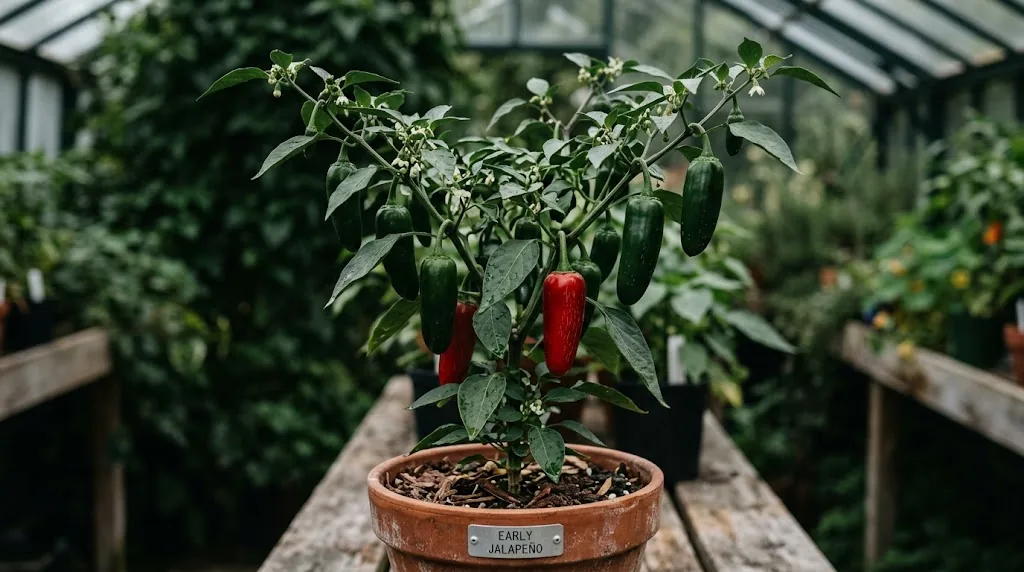
The early jalapeno pepper gives gardeners a familiar, thick-walled chile with a potentially earlier harvest window. Seed sellers use the name for an open-pollinated seed selection, though catalogs disagree on how many days it takes to mature. Think of “early” as a useful aim for a short season, not a promise. For a broader comparison of shapes and heat levels, see our guide to chili pepper varieties.
What is an Early Jalapeño pepper?
Early Jalapeño is a named type of Capsicum annuum, the species behind many familiar garden peppers. Seed listings describe this open-pollinated type as earlier than standard varieties, but the name is not used consistently across catalogs. No breeder, release date, or formal cultivar history is documented, so the label is best understood as a seed-trade name for an early-maturing selection.
The compact, leafy plant produces blunt-ended, thick-walled pods. A seed listing describes them at about 3 inches long and 1 inch wide at the shoulder. Oregon State University Extension describes the pods as roughly 3 inches long with smooth walls. They start dark green and can ripen red on the plant. Light, cork-like lines may appear on some pods as they mature; they are not a sign of poor quality.

The main difference gardeners seek is timing. If you want less heat rather than an earlier harvest, TAM Mild is bred for lower pungency. Heat and maturity still depend on the particular seed lot and growing conditions, so check the packet rather than assuming the two names are interchangeable.
Origin and history
The crop comes from Mexico, and Reimer Seeds describes this variety as originating there. No breeder or release date is documented for this selection. The earliest published record is a UMass Extension newsletter on a 2012 organic hot pepper trial at the UMass Research Farm, which included this variety because it was chosen for an earlier harvest. That report notes the fruit is smaller and lighter green than traditional types. Its practical identity comes from the traits sellers emphasize: classic pod shape and a chance to pick sooner in a cool or short-season garden.
That distinction matters most where summer is short. A quick-maturing seed choice can improve the odds of harvesting green pods before fall weather, but temperature, transplant size, light, and the seed lot all affect the calendar.
Heat and flavor
Oregon State University Extension lists 2,500 to 8,000 Scoville heat units for the crop in general. Botanical Interests lists its seeds at 2,500 to 5,000 SHU, while Reimer Seeds gives a 5,000 SHU estimate. These are catalog descriptions, not a laboratory result for every pod. Heat varies with genetics and growing conditions, and peppers from one plant can differ.
Green pods have the fresh, grassy bite people expect. As a pod ripens red, its flavor tends to become sweeter and fuller. Pick at the stage that suits your meal: firm green pods for salsa, stuffing, or pickles; red ones when you want a riper flavor or plan to dry and smoke them. Fully ripened, dried, smoked red pods are commonly called chipotles.
How to grow this short-season pepper
Start seeds indoors about 8 to 10 weeks before transplanting. Botanical Interests lists germination at 10 to 25 days and recommends a warm seed-starting mix, around 70°F to 90°F. Keep the mix evenly moist rather than soaked. Once the seedling emerges, give it strong light so it grows sturdy instead of leggy.

As a warm-season annual, set plants outside after the average last frost date, once the soil and nights have warmed. The seed listing recommends soil at about 70°F for direct sowing and warmer daytime conditions for transplants. Harden them off gradually over about a week. Choose a spot in full sun with fertile, well-drained soil and steady moisture. Oregon State Extension notes that peppers grow best in warm conditions and that blossoms may fail to set when temperatures fall outside their preferred range. A sheltered, sunny position can matter as much as the seed choice in a brief summer.
A roomy container is another option if it has drainage holes. Use potting mix, water when the surface begins to dry, and check more often during hot weather because pots lose moisture quickly. Avoid a waterlogged root zone. Use a balanced fertilizer according to its label; avoid adding extra feed by guesswork.
Maturity estimates vary. Botanical Interests lists about 63 days from transplanting, while Reimer Seeds lists 80 days. The starting point and growing conditions differ, so use the number on your own seed packet as a planning estimate and watch the plant for mature-size, firm pods. Botanical Interests calls this selection better adapted to cooler climates than other types, and Reimer Seeds says its peppers ripen about a week sooner than comparable varieties.
When to harvest and handle the pods
Harvest green pods when they have reached the expected size, feel firm, and have an even color. A mature-size fruit is a better cue than a fixed day count. Cut the stem with clean snips or lift each pod carefully so you do not break a branch. You can leave some on the plant to ripen red while picking others for fresh use.

Capsaicin can irritate eyes and sensitive skin, especially if a pod is crushed or cut. Botanical Interests advises washing hands thoroughly or wearing gloves when harvesting. Wear gloves if peppers bother your skin, keep your hands away from your face, and wash your hands and tools after handling. Avoid touching contact lenses while preparing them.
How to store, dry, and preserve them
Use fresh pods soon after harvest for the firmest texture. Refrigerate them unwashed in a breathable produce bag and rinse just before cooking. For longer storage, freeze whole or sliced peppers in a labeled freezer container. Their texture softens after thawing, so frozen pieces work better in cooked dishes, sauces, and soups than as crisp toppings.
You can dry ripe red peppers and keep them in a clean, airtight container away from heat and light. Smoking dried red pods produces chipotles. For a refrigerator pickle batch, keep the jar chilled. For shelf-stable jars, follow a tested recipe such as the National Center for Home Food Preservation pickled hot pepper method exactly, including its vinegar strength and processing time. Do not improvise a shelf-stable canning method.

Ways to use the peppers
Green pods are useful in salsa, tacos, cornbread, stuffed peppers, and pickles. Their thick walls hold up well to roasting and grilling, while thin slices bring a sharper bite to sandwiches and salads.
Red pods suit sauces and drying projects. If a harvest is larger than you can use fresh, freeze part of it while firm and save a few red ones for drying. For a very different pod size and heat level, continue to our profile of 7 Pot Brain Strain peppers.
Quick answers
Do the pods turn red?
Yes. Gardeners often harvest them green, but they can remain on the plant until red. The red stage is riper and often tastes sweeter.
How long do they take to mature?
Published estimates vary by seller and starting point. One seed listing says about 63 days after transplanting, while another says 80 days. Treat both as planning estimates and follow your packet.
Is this type milder than other peppers?
No reliable, universal heat difference from other peppers has been documented. Catalogs give overlapping ranges, and heat varies between seed lots and growing conditions. Check the seller’s description and taste a small piece before using a large amount.
For a short-season garden, this selection offers familiar flavor and a potentially earlier picking window. Start seeds indoors, wait for warm outdoor conditions, and let the plant guide your harvest instead of relying on the calendar alone.
