
Purple tomatoes are a color group, not one variety with one flavor. Some familiar dark types look dusky brown-purple because green pigment breaks down differently as the fruit ripens; their flesh can still be red. Other varieties develop true purple skin where sunlight reaches the fruit. A genetically engineered Purple Tomato is different again: it was designed to make purple pigment through the fruit. For a broader map of how color fits among tomato types, start with the variety name on the seed packet, not the color label alone.
Why some tomatoes look purple or black
In botanical terms, these examples are forms of Solanum lycopersicum, the cultivated tomato. The color label describes the fruit, not a separate species.
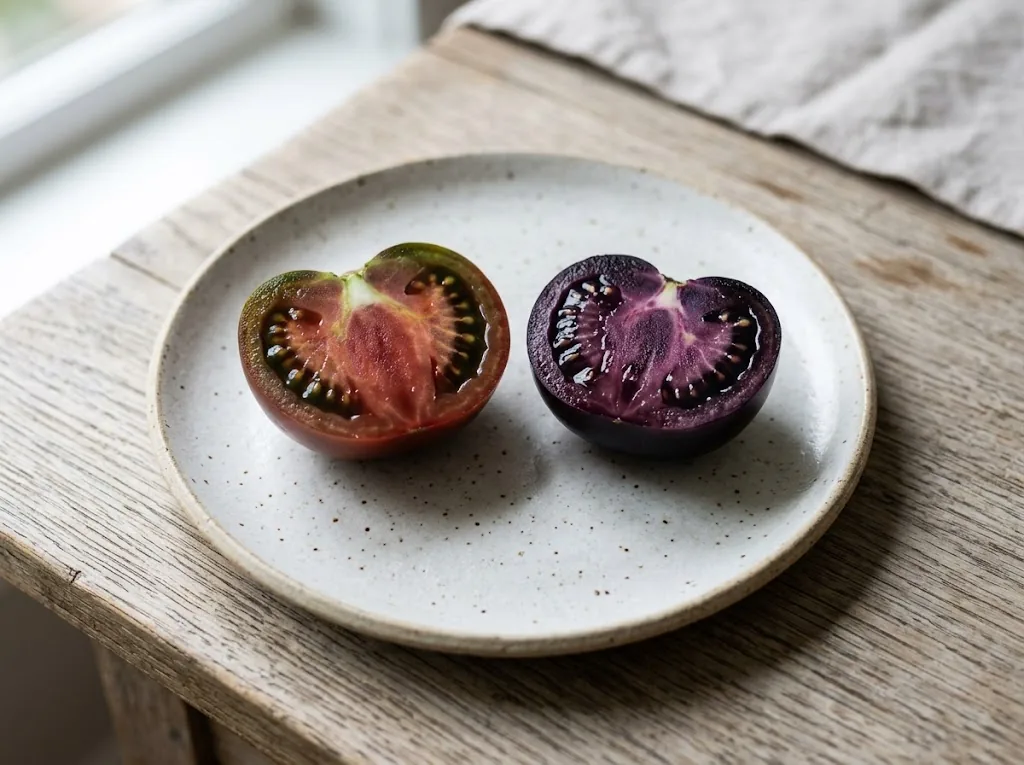
In many traditional dark varieties, a green-flesh trait slows the normal breakdown of chlorophyll. The remaining green pigment changes into a brown compound called pheophytin. Against red carotenoids such as lycopene, that brown tone can read as mahogany, smoky purple, or almost black. The effect is often strongest near the stem, while the cut flesh stays red or brick-red. Oregon State University explains this color chemistry in its purple tomato FAQ. That is why two fruits sold as dark purple tomatoes can have different skin and flesh colors.
A second group gets blue-purple skin from anthocyanin, a pigment also found in blueberries. In these conventionally bred varieties, the pigment forms mainly in skin exposed to sunlight, so a leaf or calyx can leave a green patch while the inside remains red. The name blue tomato describes the skin color, not a different species or a genetically engineered crop. A dedicated guide to blue tomatoes covers how those varieties were bred.
“Black tomato” and “purple tomato” are informal market names. A fruit can look burgundy, brown, or dusky purple depending on the variety, ripeness, and light. A dark shoulder alone does not tell you whether a tomato is ripe or whether its flesh will be dark.
What do purple tomatoes taste like?
There is no single purple-tomato flavor. Variety and ripeness matter more than a color label. Fedco’s catalog calls Cherokee Purple sweet, rich and juicy, with fruit averaging 10 to 13 ounces, but those are tasting notes, not promises that every fruit will taste the same. If you are choosing a first one, pick for the way you plan to eat it: fresh slices, salads, or sauce, and compare that description with the other variety details.
Color can make harvest timing less obvious. Cherokee Purple, for example, may keep green shoulders when ripe. Do not wait for every dark area to turn red. Check the mature color described for that variety and its feel; Iowa State Extension notes ripe tomatoes are slightly soft to the touch. Oregon State’s guidance for its sun-pigmented selections is that ripe fruit shifts from shiny blue-purple to dull purple-brown, with the bottom turning from green toward red. Use those cues for those varieties, not as a universal rule for every dark tomato; read Oregon State’s ripeness notes and Iowa State’s harvest guidance.
Popular purple and black varieties to compare
- Cherokee Purple: A classic open-pollinated slicer with dusky brown-purple skin, dark green shoulders, and brick-red flesh. Compare the current seed packet with this Cherokee Purple supplier description.
- Black Krim: The University of Delaware Extension lists this as a deep brown-red, indeterminate tomato. It is another option if you want a dark garden slicer; see the Extension’s cultivar notes.
- Indigo Rose: Oregon State breeder Jim Myers developed this through conventional crossing and selection. The skin turns blue-purple in sunlight, while the flesh stays red. It was the first dark purple tomato Oregon State introduced.
- Midnight Roma: A paste type developed at Oregon State, with purple skin. Its semi-determinate habit means much of the crop ripens in a more concentrated window, which can suit cooks making sauce or preserving a batch.
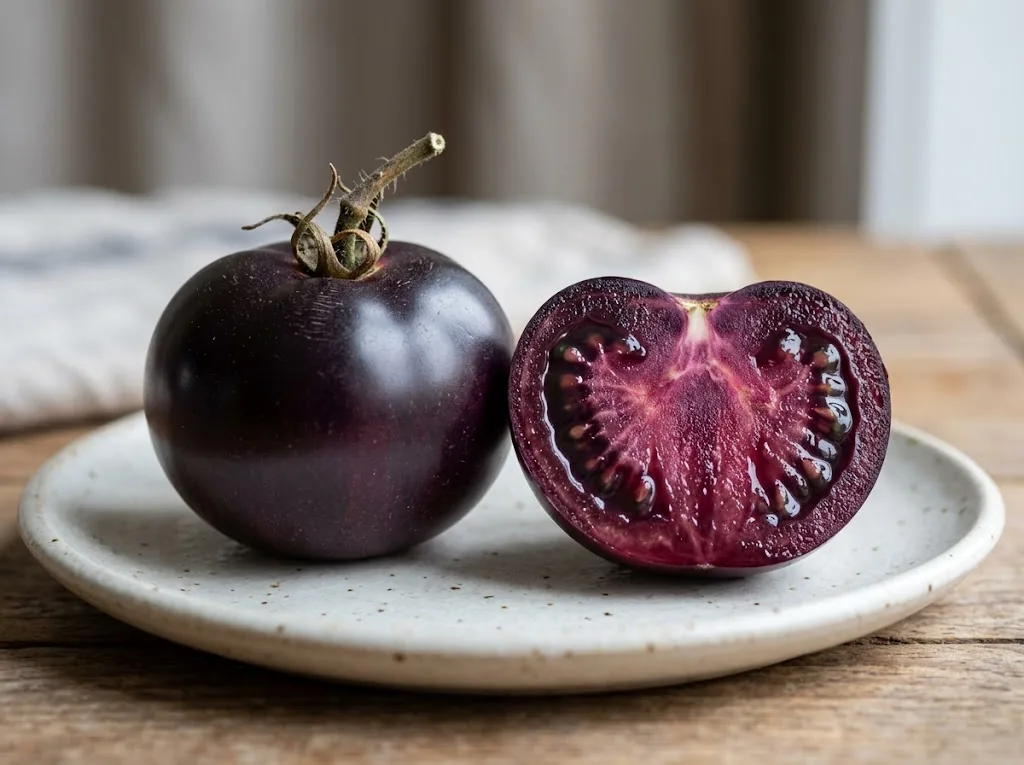
- The Purple Tomato: This product name refers to the engineered cultivar, not to all purple varieties. Its color reaches the flesh as well as the skin, unlike the usual skin-only color of conventionally bred anthocyanin tomatoes.

“Heirloom” describes a variety’s history and how it is maintained, not a color or a flavor guarantee. If that history matters to you, compare the seller’s description with this guide to heirloom tomatoes.
Growing and harvesting dark tomatoes
Grow these varieties as you would other tomatoes, while following the seed packet for the specific plant habit and local planting window. Start seeds indoors if your growing season calls for it, using clean seed-starting mix and warm conditions for germination. A heat mat can help when the mix is cool. Once a seedling emerges, provide bright overhead grow lights so its stem stays sturdy. A local extension guide can give dates that fit your frost pattern better than a national calendar.
After frost danger has passed and the soil has warmed, plant in full sun. Most vining tomato plants need a cage, stake, or trellis, installed at planting so roots are not disturbed later. Water the soil evenly through fruit growth rather than alternating between very dry and saturated conditions. Use a soil test and the fertilizer label to guide feeding. Penn State Extension recommends at least six hours of direct sunlight for tomatoes, while local climate determines the planting date.

Do not expose fruit by stripping away healthy foliage. On a skin-pigmented plant, direct light helps the skin develop its characteristic color, but leaves also protect fruit from harsh sun. Harvest by the variety’s mature color and feel, not by waiting for a black tomato to become uniformly black. Handle ripe fruit gently.
When comparing seed catalogs or nursery plants, check whether the listing describes a dusky red-fleshed variety, a skin-pigmented type, or the engineered Purple Tomato. For purple tomato seeds, look at growth habit, expected fruit use, disease-resistance codes, and the supplier’s maturity estimate. These details help you decide whether to grow the plant in a bed or container and whether its harvest will fit your season. Availability changes, so buy from a seller that identifies the variety clearly and provides current growing directions.
What is different about the engineered purple tomato?
Norfolk Plant Sciences developed its tomato by adding two snapdragon genes, Delila and Rosea1, that switch on the tomato’s own pigment-making pathways. The resulting fruit has much higher pigment levels in both skin and flesh than the conventional dark tomatoes described above. Norfolk Healthy Produce lists seeds for home gardeners; its current FAQ explains seasonal availability and location limits, so check the listing before ordering. The U.S. Food and Drug Administration’s consultation file documents the trait and says the agency had no further questions at that time about the safety, nutrition, and regulatory compliance of food from this specific tomato. That is the FDA’s conclusion from a completed consultation, not proof that eating it prevents disease.
USDA’s Animal and Plant Health Inspection Service separately reviewed the engineered tomato for plant-pest risk. APHIS found it unlikely to pose an increased plant-pest risk compared with a conventional tomato, so it was not subject to regulation under 7 CFR part 340. That decision addresses APHIS’ plant-pest authority; it is separate from the FDA food consultation and is not a general health claim. You can read the APHIS response and the FDA consultation record for the details.
Do purple tomatoes have extra antioxidant benefits?
Some varieties have more of certain pigments than others, but color alone is not a health measure. “Antioxidant” describes a chemical property; it does not show that eating a particular tomato prevents disease or treats a condition. The FDA consultation concerns the composition and food safety of one engineered line, not a clinical health benefit. Choose by taste, growing habit, and kitchen use.
Quick answers
Are all purple tomatoes genetically modified?
No. The Norfolk Purple Tomato is a specific engineered variety; the conventional varieties described above were developed without genetic engineering.
Are purple tomatoes purple inside?
Often not. Many dark varieties have red flesh. The conventional blue-purple skin type keeps most of its pigment in the skin, especially where sunlight reaches it. The engineered tomato is the better-known example with purple color through both skin and flesh.
Can I save seeds from a purple tomato?
Seed-saving depends on the variety and how it was produced. Open-pollinated types generally produce seedlings similar to the parent, while plants grown from hybrid seed may differ. Tomatoes are generally self-pollinating, though some varieties can cross; see UMN Extension’s seed-saving guide and check the supplier’s notes before saving seed.
