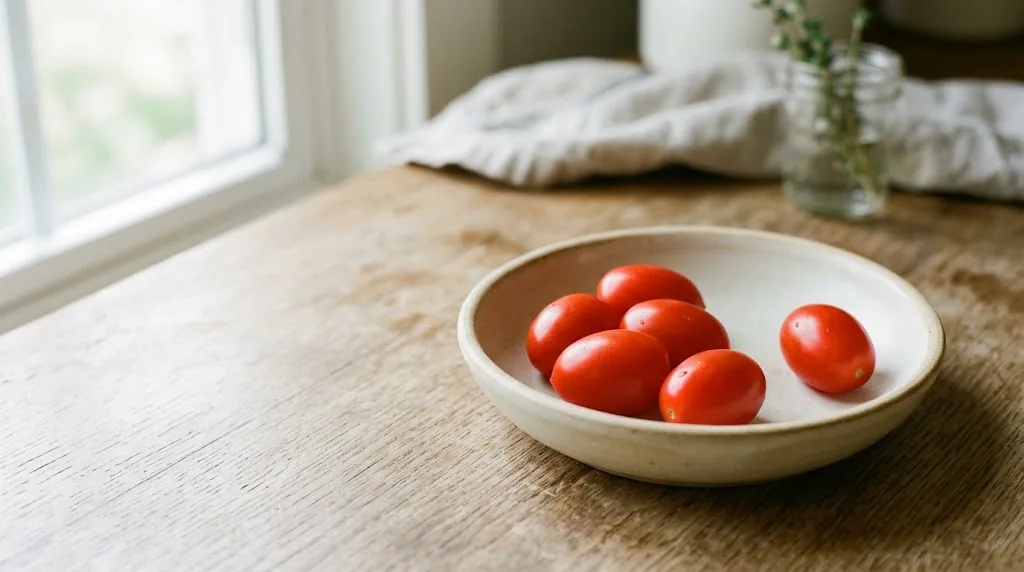
Grape tomatoes are small, firm tomatoes with an oval shape. Their sturdy skin and meaty bite make them easy to pack, snack on, or roast. Choose them when you want tomato pieces to hold their shape; reach for cherry tomatoes when you want a rounder, juicier bite.
Both are small-fruited forms of Solanum lycopersicum. The names describe common fruit shapes and textures, not two separate species. For a broader look at the many shapes and uses, see this guide to tomato types.
What defines this type?
This type is usually oblong, about the size of a grape, and sold ripe in red clusters or loose packs. “Grape” is a market category, not one cultivar. Seed catalogs list selections in several colors and plant habits, so check the variety description instead of assuming every plant will grow or taste the same.
Compared with many cherry tomatoes, these fruits tend to have thicker skins and firmer, meatier flesh. That gives them a satisfying bite and helps them tolerate packing and transport. It can also make the skin more noticeable when eaten whole. Ripeness and cultivar both shape sweetness: some are sweet, while others taste mild or tangy.
Grape vs. cherry tomatoes
Shape is the quickest clue. Cherry tomatoes are generally round; these are generally elongated. There is overlap, though, and some seed guides group elongated cherry types under “grape.” A package label or seed description is often more useful than trying to draw a strict botanical line between them.
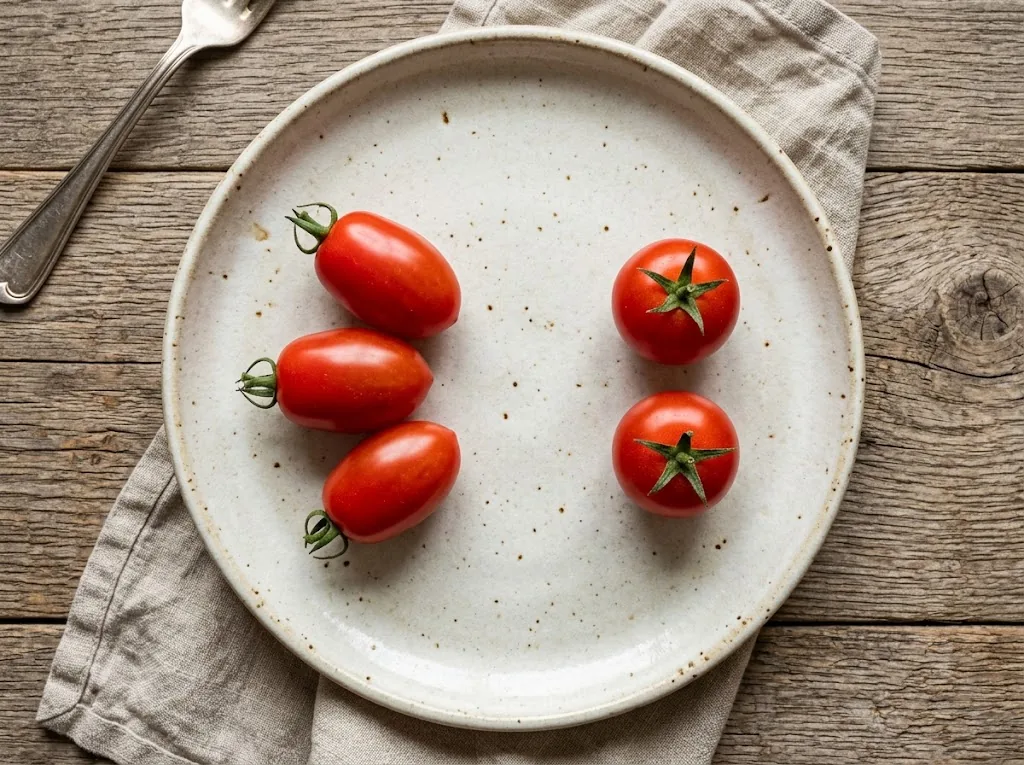
Cherry tomatoes often have thinner skins and a softer, juicier bite. Their firmer oval counterparts tend to stay intact in lunch boxes, salads, pasta, or skewers. The difference is not absolute. A ripe grape tomato can be sweet, and a cherry variety can be mild, so taste matters as much as shape.
Use either in most recipes that call for small tomatoes. Choose round cherries when you want to hollow and fill them; choose firm ovals when you want neat halves that keep their shape. If you are also choosing by color, explore purple tomato varieties.
Choosing varieties to grow
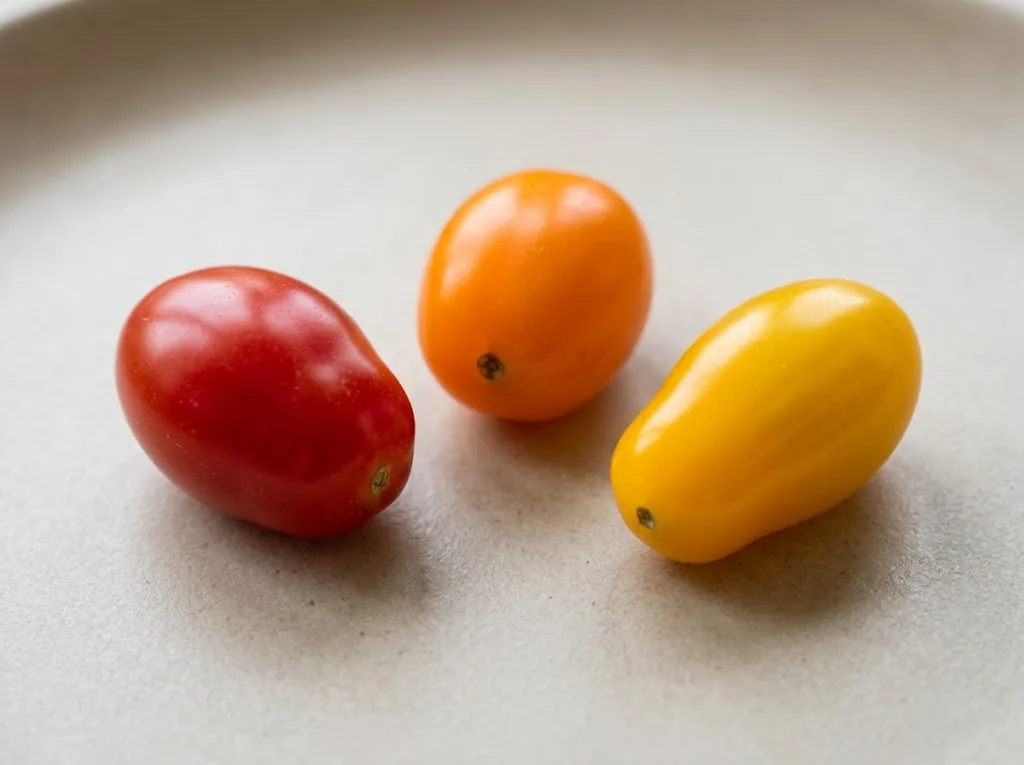
Seed catalogs offer red and other colored selections, with differences in sweetness, firmness, size, disease resistance, and harvest timing. Compare current catalog descriptions and local recommendations, since availability and performance vary by region. For a particular color or taste, buy seeds or a labeled transplant for that named cultivar rather than saving seed from an unlabeled grocery tomato.
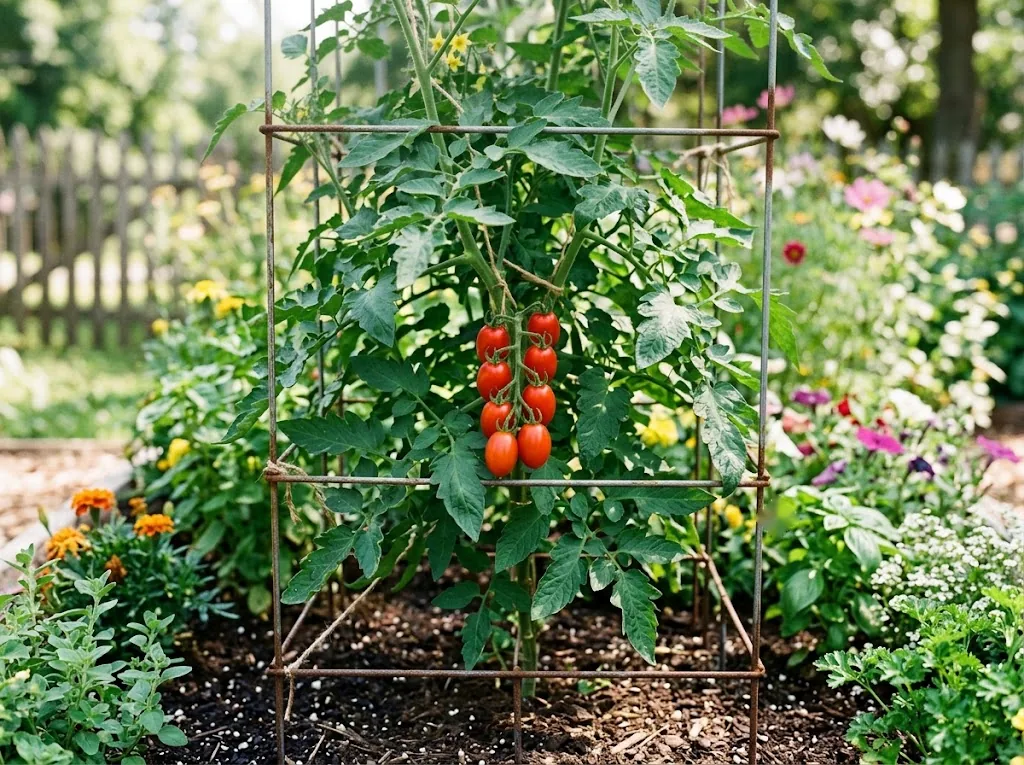
Check whether the plant is determinate or indeterminate. Determinate plants stay more compact and produce a concentrated crop. Indeterminate vines keep growing and setting fruit through the season, so they need a tall cage, stake, or trellis. The label tells you more about plant size and harvest pattern than the fruit category does.
Growing grape tomatoes
Give tomato plants a sunny site, warm soil, and a frost-free growing window. Set a cage or stake when you transplant, before roots spread. A compact determinate plant may suit a large container or small garden bed; a vining type needs room to climb.
Water deeply at the soil line and aim for steady moisture rather than repeated swings from dry to soaked. Inconsistent moisture can contribute to fruit problems, and wet foliage can encourage disease. Follow the seed packet for spacing, maturity, and resistance details. Harvest when the fruit reaches its expected color and comes away easily. If a cluster clings, snip the stem instead of pulling and bruising the fruit.
If you are deciding between bite-sized fruit and large slicers, compare them with oxheart tomatoes, grown for their much larger, heart-shaped fruit.
Storage and freshness
Keep whole tomatoes on the counter when you will eat them soon. Chilling can dull fresh tomato flavor, so room temperature is a good choice for fruit you plan to serve shortly. If the room is very warm or ripe tomatoes need to last longer, refrigeration may slow deterioration; let them warm before serving for better flavor. UC Davis Postharvest recommends counter storage for flavor, and UC Davis Health advises refrigerating cut tomatoes within two hours.
Leave whole tomatoes unwashed until you are ready to use them, and remove any damaged fruit from the pack. Rinse under clean running water just before eating or cutting. Cover cut pieces and refrigerate within two hours.
Fresh, roasted, or cooked
Eat these tomatoes whole, halve them into a salad, or toss them into pasta near the end of cooking. Their firm texture works well on a skewer or in a lunch box. When a recipe calls for cherry tomatoes, they are usually an easy swap. Add a little cooking time if you want the centers to soften.
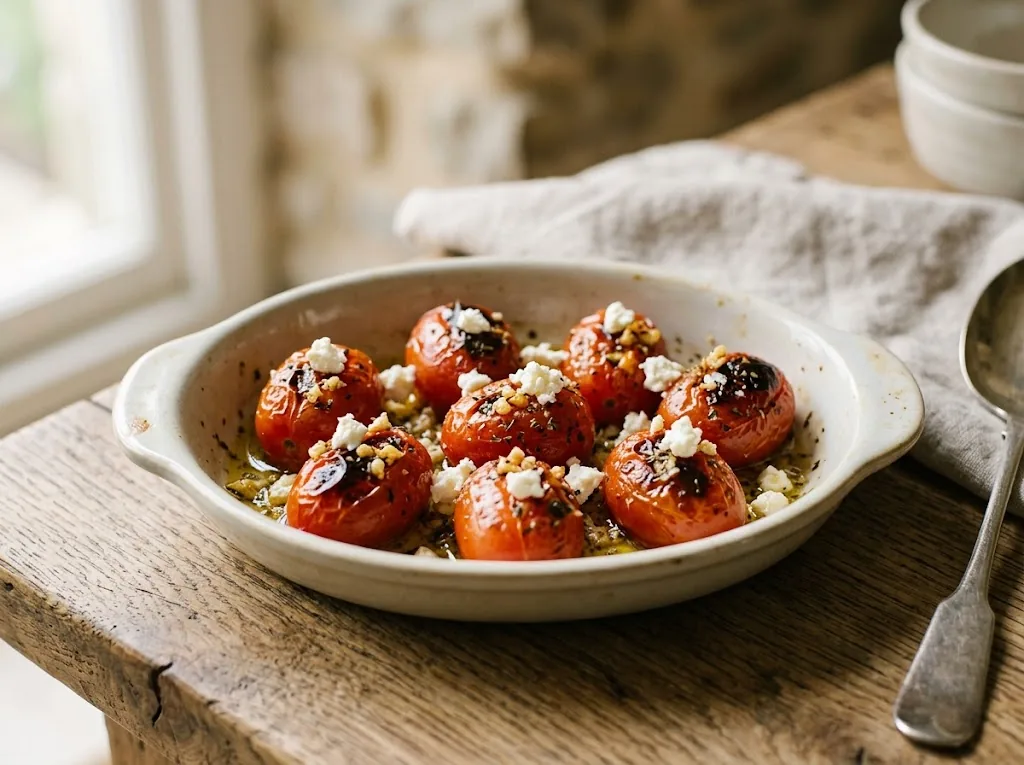
For a delicious roasted tomato side, heat the oven to 425°F. Toss 2 cups grape tomatoes with 1 tablespoon olive oil, 1 minced garlic clove, a pinch of salt, and black pepper. Spread in a single layer and roast for 15 to 20 minutes, until the skins blister and some tomatoes collapse. Toss the roasted tomatoes and their juices with pasta, spoon them over toast, or finish with feta and a pinch of oregano after roasting. Refrigerate leftovers in a covered container.
Are they the same as cherries?
They are closely related small tomatoes, and the names overlap in some seed and produce listings. The grape label usually means firmer, oval fruit; cherry usually means rounder, juicier fruit. Either works in most salads and cooked dishes.
Should small tomatoes be refrigerated?
Usually not. Whole ripe fruit keeps its best flavor at room temperature, and the refrigerator is only for very ripe fruit you cannot eat soon; bring chilled fruit toward room temperature before serving. Cut tomatoes should be covered and refrigerated within two hours.

How to use them
Use them for fresh snacking, salads, pasta, skewers, and quick roasting. Their firm flesh is handy when you want tomato pieces to keep their shape, and their small size means they cook quickly.