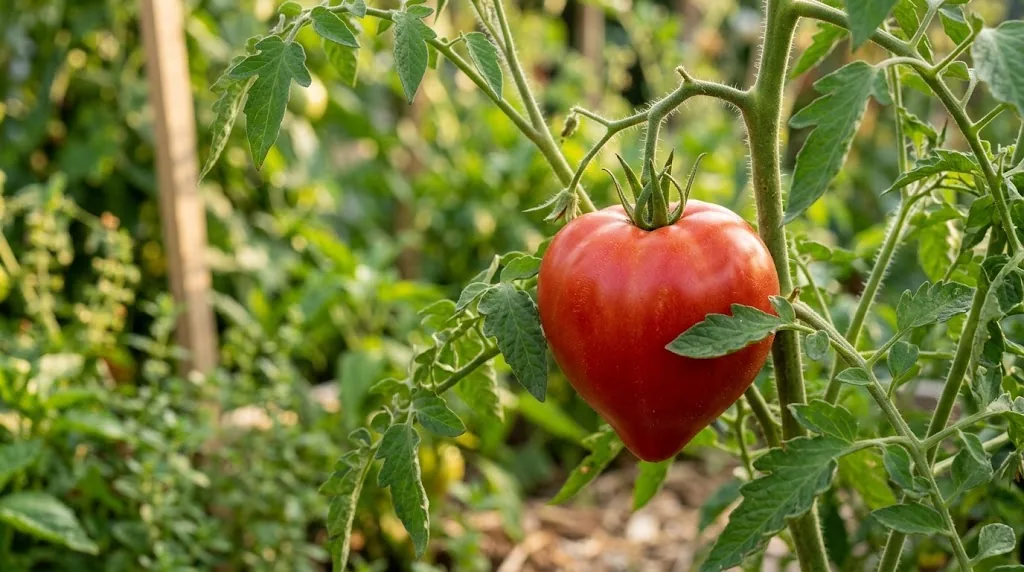
A ripe oxheart tomato can turn an ordinary sandwich into lunch. It has broad shoulders that taper toward the blossom end, and thick slices sit neatly on bread. The label describes a fruit shape shared by many named varieties, rather than one uniform cultivar. Before buying tomato seeds, check the packet for color, plant habit, and harvest details.
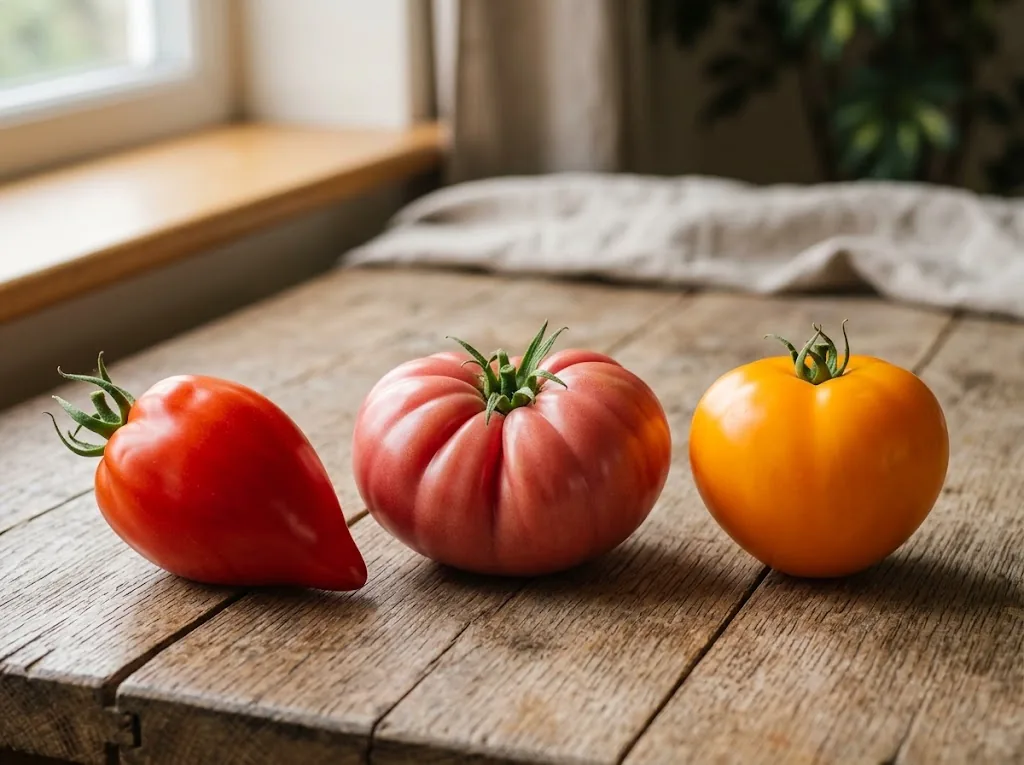
This shape is one distinctive option among the many types of tomatoes. Some fruits look like a clear heart; others are ribbed, lopsided, or more cone-shaped. Rutgers Cooperative Extension includes oxheart as a fruit-shape category in its tomato variety database.
What defines an oxheart tomato?
“Bull’s heart” and “oxheart” labels both appear in seed catalogs, but a shared name does not prove that two packets contain the same cultivar or share a single origin story. Compare the named variety, seed source, fruit description, and growing notes before buying. The shape can occur in heirloom varieties and other named selections, with different colors, sizes, flavors, and maturity times.
Like other cultivated tomatoes, these plants belong to Solanum lycopersicum, the species named by the University of Minnesota Extension tomato guide. Some cultivars have thick walls, but flesh and seed amounts vary by selection. The label alone does not guarantee a particular texture, yield, or flavor.
Oxheart tomato varieties to look for
Choose a named cultivar when you want a particular fruit color or growth habit. Cornell’s Orange Oxheart listing describes a vining heirloom with large orange-yellow fruit shaped like a heart and an 80-day maturity estimate. One seller’s collection of oxheart tomatoes lists Anna Russian as an indeterminate plant with large pinkish-red fruit at 70 days, while its Bull’s Heart listing gives 87 days. These details describe the listed cultivars, not every packet carrying the same general label.
Seed companies also sell their own selections, including Upstate Oxheart from Hudson Valley Seed. The company describes it as a vining plant and provides care and maturity details for that seed line. Treat days-to-maturity estimates as specific to the seller’s named selection, usually counted from transplanting. Another seller or cultivar may give different figures.
If you want to save seed, check whether the variety is open-pollinated and follow the seller’s isolation guidance. Seeds saved from a hybrid may not grow true to the parent, as Utah State University Extension explains. Read more about heirloom tomatoes and how that label differs from simply having an old-fashioned look.
How to grow these tomatoes
Use the same basic care as for other full-size tomatoes, then give the plant sturdy support. A healthy seedling needs full sun and a frost-free growing season. Start seeds indoors according to the packet, or buy sturdy seedlings. Set them outside after frost danger has passed and the soil has warmed. Harden indoor-grown plants off gradually so they adjust to outdoor sun and wind.
Check whether your selected variety is determinate or indeterminate. Vining plants keep growing and need a cage, stake, or trellis. Install the support at planting time, and leave enough room for air to move through the foliage. The University of Minnesota Extension recommends two to three feet in all directions for vining tomatoes.

Water deeply at the soil and aim for steady moisture while fruit develops. Large fruit can crack when moisture levels swing from very dry to very wet, and inconsistent moisture can contribute to blossom-end rot. Utah State University Extension describes cracking from rapid moisture changes; the University of Minnesota guide explains blossom-end rot risk from uneven watering. Mulch slows evaporation, and watering at the base keeps leaves drier. Use a soil test to guide fertilizer choices; excess nitrogen can produce leafy growth at the expense of fruit.
Check fruit as it colors and softens, using the cultivar description as a guide. Heavy fruit can strain branches, so lift ripe tomatoes instead of pulling hard on the vine. On vining plants, fruit often ripens over an extended period rather than all at once.
What are they good for?
The broad shape and meaty flesh make these tomatoes useful slicers. Cut thick rounds for sandwiches, layer them with basil and mozzarella, or add wedges to a summer salad. If a slice is especially juicy, blot away excess liquid before putting it on bread.

Ripe fruit also works in sauce, especially when you have enough to cook down a batch. Taste it before seasoning because sweetness and acidity vary by cultivar. For small tomatoes that roast quickly or tumble into salads, compare the uses of cherry tomatoes. Large fruit gives you thick slices for fresh meals and plenty of flesh for a simmering pan.
Are oxheart and beefsteak tomatoes the same?
Some seed catalogs file the same tomato under more than one label. Rutgers Cooperative Extension lists beefsteak and oxheart as separate fruit-shape categories in its variety database, which is a useful reminder that a shape label does not identify the cultivar by itself. Read the individual listing if shape, color, or growth habit matters to you.
Choose a named variety for its fruit shape and match its growing habit to your garden’s season and support. A specific seed packet gives you a better starting point than the general label alone.
