Thyme keeps for weeks when you handle the leaves gently and pick the right method for storing fresh herbs. The sprigs have woody stems and small, waxy leaves that handle cold and dryness far better than soft herbs like basil and cilantro, which is why a few practical choices in the kitchen are usually all it takes to keep the leaves usable long after you bring them home. This guide walks through each storage option, the time you can expect from each, and the small habits that quietly shorten the useful life of a stored bundle.
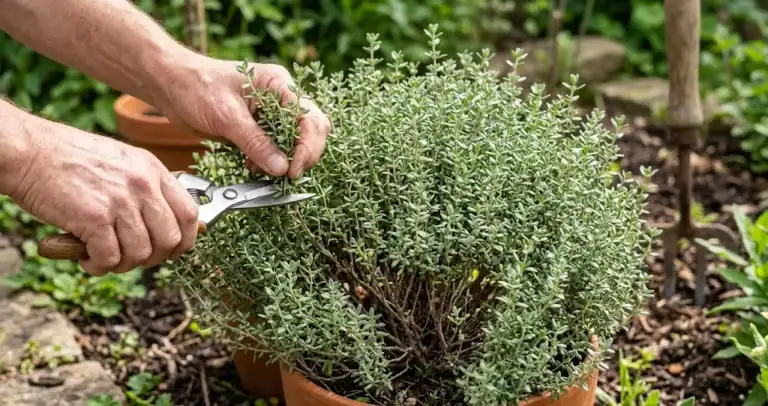
For details on what to do at the moment you cut the stems, the practical walkthrough of how to harvest thyme covers the timing and technique that set up the storage steps below.
Why thyme stores better than most soft herbs
It is a hardy perennial in the mint family, with tough little leaves built to survive dry Mediterranean summers. That same toughness is what gives the sprigs good storage life once they are off the plant. Tender herbs like basil turn black in the cold because the chill damages their cells, and parsley wilts fast once the stems lose water. These leaves hold up because they are small, firm, and naturally low in moisture, so a wrapped paper towel can absorb the little water that does escape.
The two things that shorten how long the leaves stay good after harvest are excess moisture and warm air. If you can manage both, the sprigs will stay aromatic for weeks. The methods below each address one or both of those enemies.
Wash and dry the sprigs before storing them
Always wash thyme before storing it. The wash-and-store habit pays off quickly once you make it part of the routine. Give the bunch a quick rinse under cool water, then shake off the excess and lay the sprigs flat on a clean kitchen towel or a sheet of paper towel. Pat them dry or roll them up in the towel for a few minutes. A salad spinner is also a fast way to remove water if you grow the plant indoors or harvest a big handful from the garden. Any moisture you leave on the leaves will turn to condensation inside the storage bag, and that condensation is what turns the leaves brown and slimy in a few days.
To keep the sprigs fresh on the counter for a day, you can skip the wash if you bought them from a clean source and you plan to use them fresh within a day or two. Otherwise, dry or freeze them for later, and make the quick rinse a habit. The same routine works for a small bunch of chives or a single chive you want to keep on hand. Rinsing also lets you spot any sprigs that have started to yellow before you lock them in with the good ones.
Refrigerator method: paper towel in a zip bag
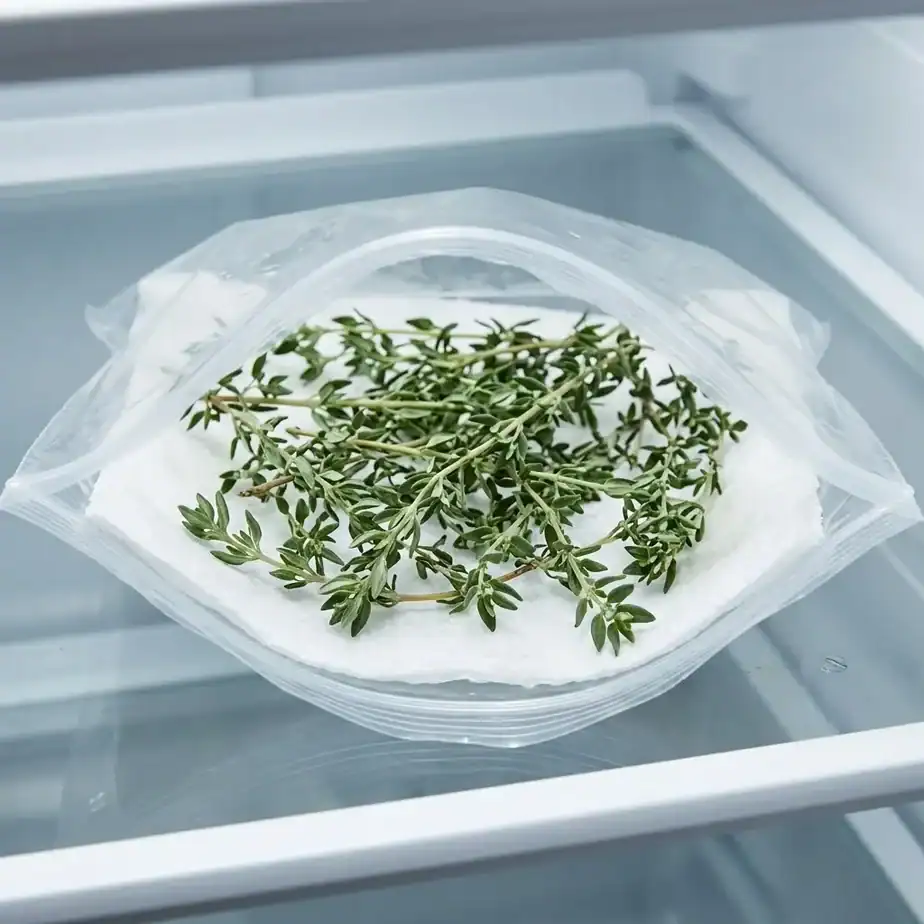
This is the everyday approach that works for most home cooks. Line a zip-top plastic bag with a dry or slightly damp paper towel, lay the thyme inside, and loosely close the bag so a small amount of air can move through. The towel catches the moisture that the leaves give off, which is what would otherwise rot them. The bag keeps the humidity stable without sealing the bunch in a damp environment.
Stored this way, the leaves keep for two to three weeks in the refrigerator. Replace the paper towel if it feels damp after the first week, and check the leaves for any that have started to blacken. Pull out anything that looks off so it does not spread.
Glass-of-water method for cut stems
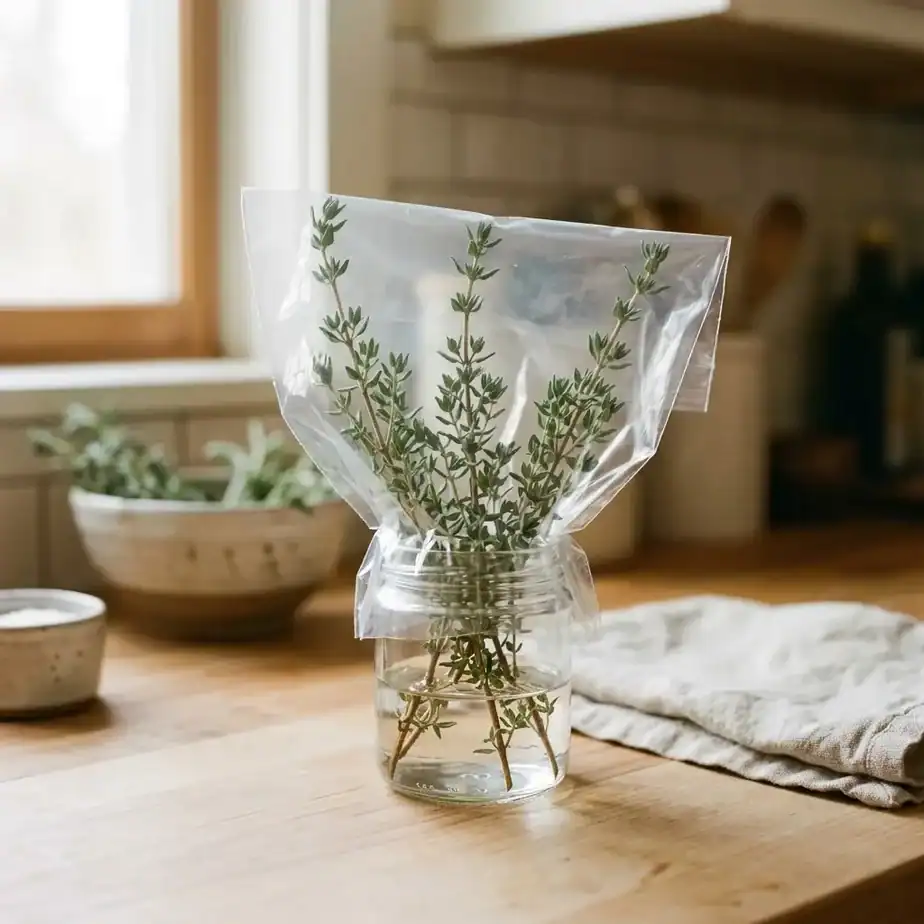
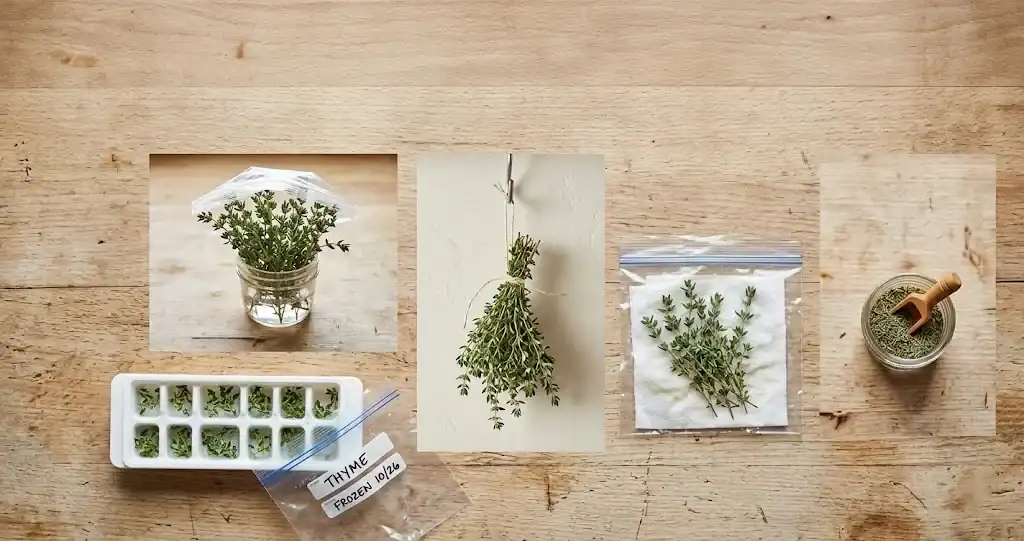
If you have bought thyme with the stems still attached, treat it like a small bouquet. Trim the bottom of the stems at a slight angle so the stem ends can drink, add about an inch of water to a small glass, set the sprigs in the glass, loosely cover them with a plastic bag, and refrigerate. Change the water every two days. The cut stems will keep drawing moisture, which is exactly what they would do in the ground, and the cool air of the fridge slows the growth that would otherwise use up the leaves’ flavor.
This method works particularly well if you buy the sprigs at the farmers’ market and want them to look attractive on the counter for a day or two before cooking. It also works for lemon thyme. Sage, oregano, and rosemary are other woody Mediterranean herbs that store the same way.
Freezer method: ice cube trays or freezer bags
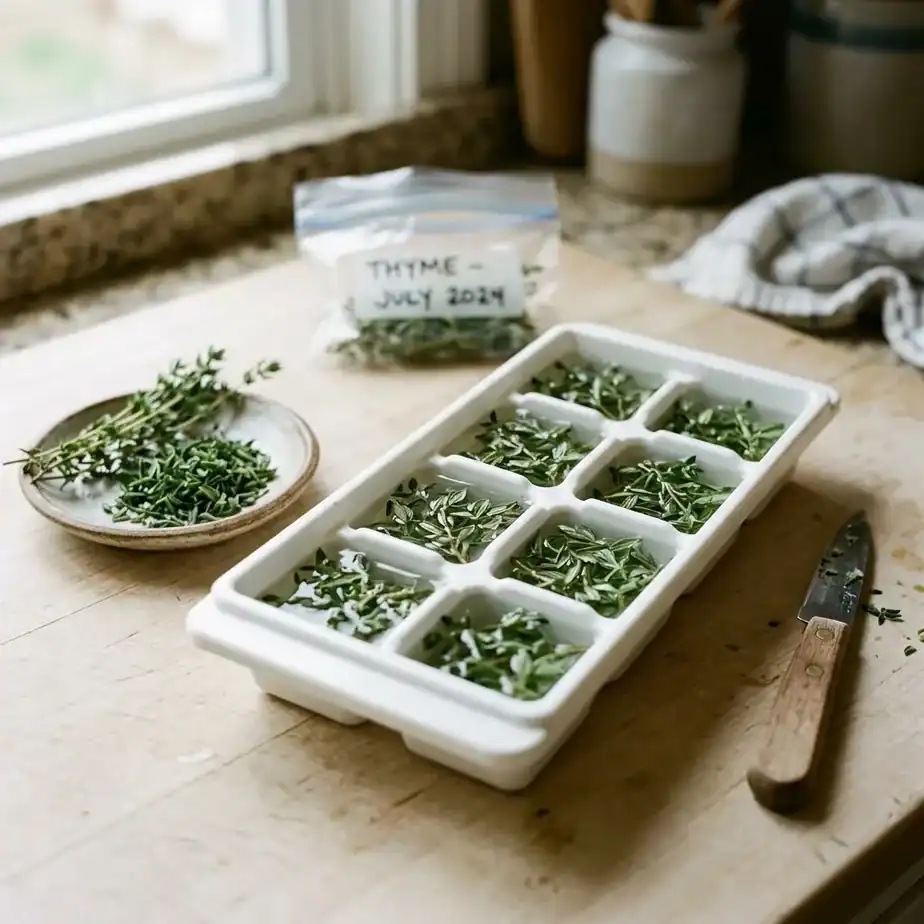
When you want to freeze herbs in bulk, freezing is the right answer for a big harvest of thyme, whether from the garden or a sale at the store. Strip the leaves from the woody stems, chop them roughly if you like, and pack the chopped leaves into an ice cube tray. Cover with water or olive oil and freeze. Once the cubes are solid, transfer them to a labeled freezer bag with the date. Drop a cube directly into soups, stews, and braises while you cook. The frozen leaves keep their flavor for four to six months, which covers most of the gap between summer harvests and the next growing season.
If you would rather skip the tray, you can also freeze the leaves loose on a parchment-lined sheet pan, then tip the frozen leaves into a freezer bag. Spreading them out first keeps them from freezing into a single clump, which makes it easier to scoop out only what you need.
For the broader framework of moving a harvest from the garden into storage, the broader how to harvest herbs guide covers timing, tools, and what to do at scale when you are storing more than a few sprigs.
Drying thyme for long-term storage
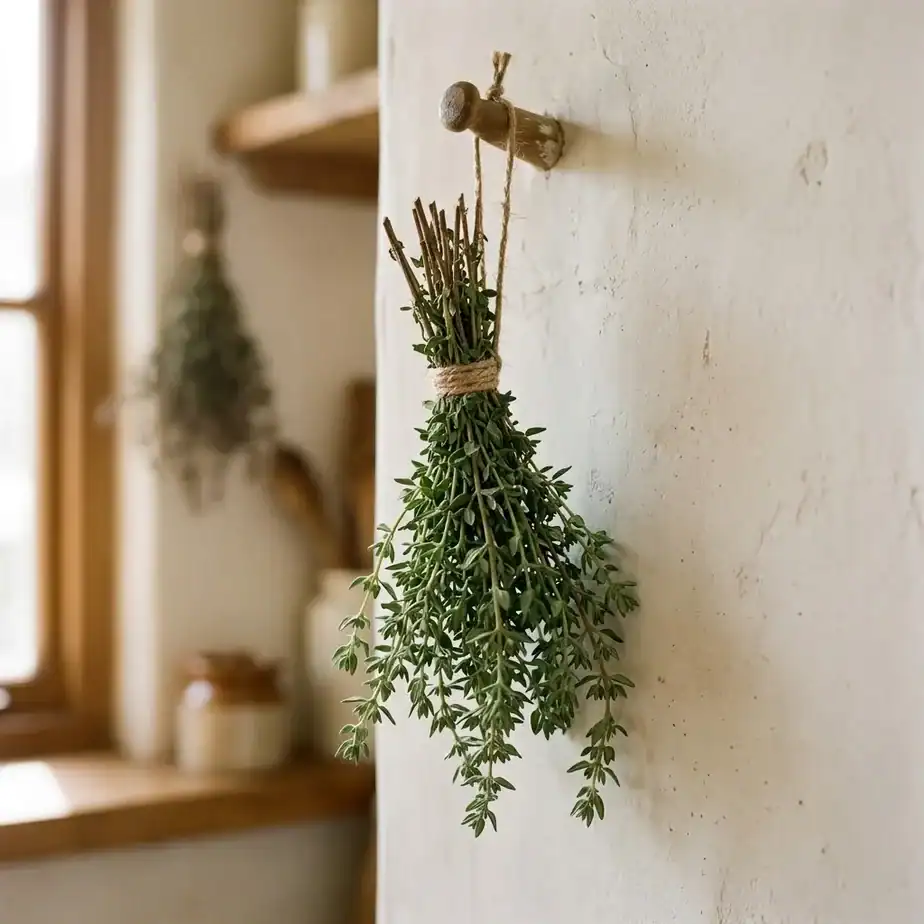
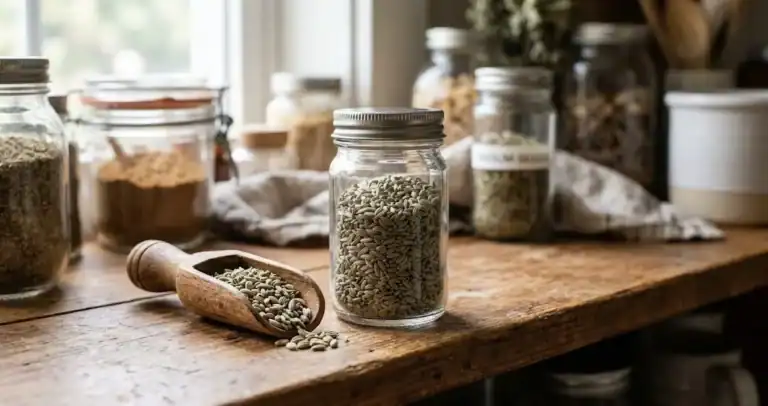
Air-drying is the oldest method for dry herbs and still the simplest approach. Tie small bundles at the stems and hang them upside down in a warm, dry, well-ventilated spot out of direct sunlight. A pantry, a kitchen corner, or a covered porch all work well. The bundles usually dry in one to two weeks. Once the leaves crumble easily between your fingers, strip them off the stems and store them in an airtight container, ideally a small jar with a tight lid.
You can also dry in a low oven at around 110 degrees F for two to three hours, or in a dehydrator if you have one. Heat speeds things up but it can also cook off some of the volatile oils that give the sprigs their flavor, so the slower air-dry method is generally gentler. The dried leaves keep for about a year in an airtight jar, which makes this the longest-storage option on this list.
Herb vinegar and infused oil
If you want to keep thyme past the freezer’s six-month mark, an infused vinegar is a good option. Pack a clean jar loosely with fresh sprigs, cover them with a mild white wine vinegar or apple cider vinegar, and seal the jar. Let it sit in a cool, dark place for two to three weeks, then strain out the sprigs and use the flavored vinegar in salad dressings, marinades, and pan sauces. The vinegar keeps for at least a year in the pantry.
An infused oil is also a possibility, but food safety matters. Herb-infused oil supports the growth of Clostridium botulinum at room temperature, which is why the National Center for Home Food Preservation advises that herb-infused oil be refrigerated and used within two to three days, or frozen in small portions for longer storage. Do not keep infused oil on a pantry shelf.
How long you can actually store herbs this way
The simple answer is that you can expect fresh thyme in the refrigerator to last two to three weeks, the frozen leaves four to six months, the dried leaves about a year, and an infused vinegar at least a year. The actual life depends on the freshness of the sprigs at the moment you stored them and how cleanly you handled them along the way. A sprig that was already wilting in the grocery store is not going to last three weeks in your fridge no matter what method you use.
If you want a quick test, rub a leaf between your fingers and smell it. If the aroma is still bright and lemony, the leaves are fine. If the smell is faint or musty, they have lost most of their flavor and are better off in the compost than in the pan.
Common mistakes that shorten the leaves’ useful life
The biggest mistake is sealing the sprigs in a wet bag. Moisture on the leaves plus no airflow equals rot, usually within days. A loosely closed bag with a paper towel inside avoids that. The second mistake is storing them in the warmest part of the fridge, which is usually the door. The temperature swings there cook the leaves slowly, and they turn brown. A middle shelf near the back is a steadier spot. The third mistake is throwing the sprigs into the vegetable crisper drawer next to ethylene-producing produce like apples and tomatoes, which ages the leaves faster.
The fourth mistake is forgetting to label and date anything you freeze or dry. Six months of frozen cubes look exactly the same on the outside, and you do not want to be guessing what season a particular bag came from.
Putting the leaves to work after storage
Once thyme has been dried or frozen, the leaves work best in cooked dishes where they have time to rehydrate. A frozen cube goes straight into a simmering soup. A pinch of dried leaves belongs in a slow-cooked stew or a long braise, where the heat pulls the flavor out of the leaves over thirty minutes or more. Fresh sprigs, by contrast, hold up to a quick finish on roasted vegetables or a pan sauce, which is why learning to keep the leaves going for two to three weeks pays off at the stovetop.
For a fuller walk through the side of the kitchen where stored sprigs end up, the cooking collection pulls together the ways to cook with thyme and the dishes that bring them back into daily use.
Frequently asked questions about storing thyme
Should I store the leaves at room temperature or in the fridge?
For fresh sprigs, the fridge is the safer choice. Room-temperature storage works for a few hours at most, and only if the stems are in a glass of water. Anything longer than a day at room temperature will see the leaves wilt and dry out.
Can I freeze rosemary or thyme without blanching?
Yes. Soft herbs like basil benefit from a quick blanch before freezing because it slows the enzymes that cause flavor loss, but the sprigs are hardy enough that you can freeze the raw leaves directly and still get good flavor four to six months later.
Are dried leaves as flavorful as fresh?
The dried form is more concentrated by weight, which is why most recipes call for less of it than fresh. The flavor profile is slightly different because the drying process loses the brighter top notes, so the savory, earthy tones come forward. In slow-cooked dishes, the difference is barely noticeable.