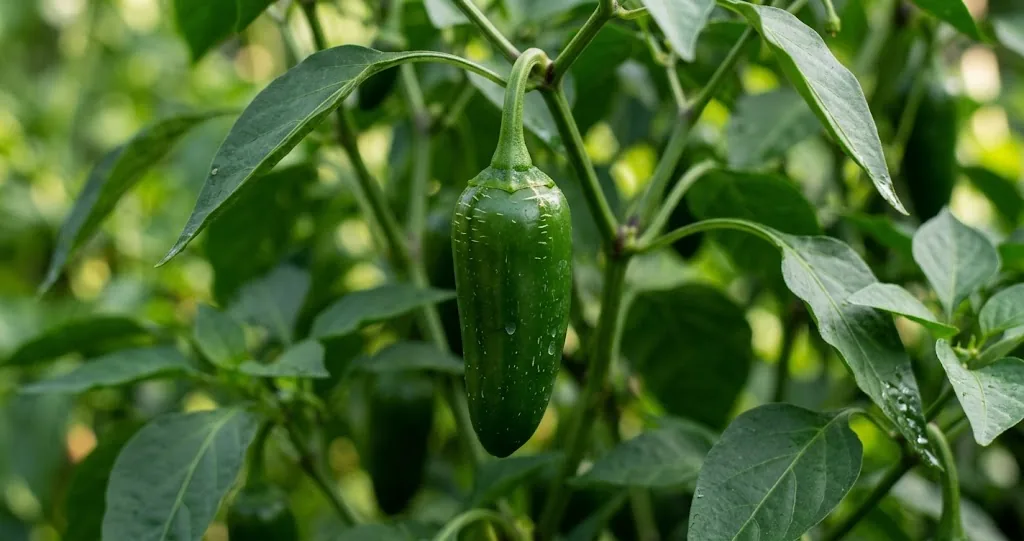
Jalapeño (Capsicum annuum) is the most familiar hot pepper in the United States and the daily workhorse chili of Mexican kitchens. This variety of Capsicum annuum carries a bright, grassy heat, ripens from green to red on the same plant, and slips into nearly every dish that needs a little fire without burning the meal. Today, the jalapeno pepper is the everyday chile of Mexican and Tex-Mex home cooking, picked green for fresh dishes or left to ripen to red for chipotle. This profile covers the origin, botany, heat, growing and culinary uses of the pod from sowing to plate.
Origin and history: named for Xalapa, Veracruz
The common name jalapeño comes from Xalapa, also spelled Jalapa, in Veracruz. In Spanish, jalapeño means “from Xalapa.” The University of Veracruz identifies the city as the source of the name.
Domesticated Capsicum annuum has deep roots in Mexico. Genetic, linguistic, and archaeological evidence places its domestication in one or more areas of Mexico, including central-east and northeastern regions. A peer-reviewed origin study supports that conclusion. Spanish and Portuguese trade then carried chilies far beyond the Americas after 1492.
A note on the name. Capsicum has two documented proposed origins: Latin capsa, “box,” and a Greek root associated with biting. The evidence does not settle the question. Annuum comes from Latin annus, “year,” although this frost-tender species can live for more than one season where frost is absent. The Capsicum monograph documents the competing origins.
Botany and technical facts
The jalapeño is a cultivated variety of Capsicum annuum, the same species as bell peppers, cayenne, and most sweet paprika types. A mature pod runs 5 to 9 cm long and 2.5 to 3.5 cm wide, with a smooth, thick wall and a blunt, rounded tip. The skin is glossy and dark green at the everyday picking stage, then ripens through brown-green, blush, and finally to a deep red. Mature pods often show fine pale corking lines, small stretch marks on the shoulder that signal the pod has finished sizing up and is ready or about to turn red.
The plant is a compact bush, usually 60 to 90 cm tall, with smooth ovate leaves and small white flowers that open singly at each branch fork. A healthy bush sets dozens of pods through the growing season and keeps producing until the nights turn cold. For the bigger family picture, the types of chili peppers guide walks through where jalapeños sit among the rest of the varieties.
Heat and flavor
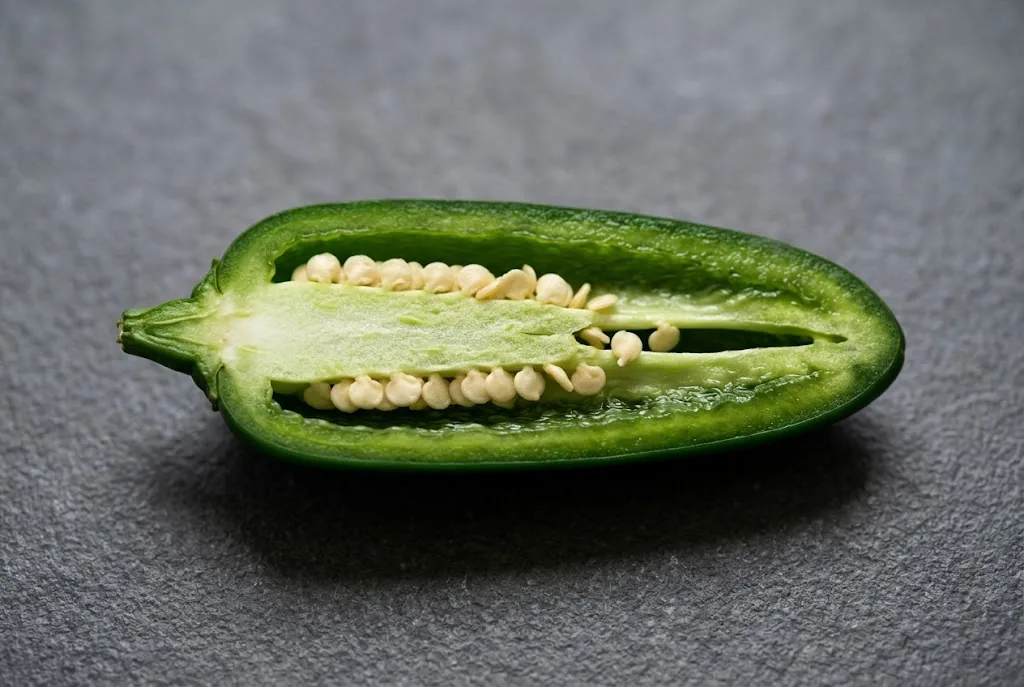
Jalapeños measure 2,500 to 8,000 Scoville Heat Units (SHU), making them a popular chile pepper for cooks who want noticeable but manageable heat. They sit above bell peppers and well below cayenne or habanero. Capsaicinoids are made and concentrated mainly in the placenta, the pale internal tissue that holds the seeds. Seeds can seem hot because they touch that tissue. Removing the placenta and seeds usually lowers perceived heat, though it does not remove it entirely. New Mexico State University’s Scoville scale lists the range; a New Mexico State University study describes capsaicinoid accumulation in placental tissue.
Within that range, the exact pod depends on the cultivar, the ripeness at harvest, and the growing conditions: a stressed plant running on limited water in poor soil tends to run hotter than a well-fed one grown in even moisture. Hot weather at the peak of summer pushes the heat upward; cool, even conditions bring a milder result with little heat. Green, the fresh pod tastes bright and grassy, with a clean vegetal sweetness underneath the heat. Letting the pod ripen to red deepens the sweetness and adds a faintly fruity note, which is why red jalapeños are what most chipotle peppers are smoked from: the riper pod carries more sugar to balance the smoke. The same variety grown by a friend in coastal California can taste noticeably milder than one grown in inland Texas, even with identical seed.

Germination and growing
Jalapeños need a long warm growing season, so most home gardeners start seeds indoors 8 to 10 weeks before the last frost date. Sow in cell trays or small pots about 6 mm deep, keep the soil at 24 to 29 °C, and expect germination in 7 to 14 days. A heat mat and a humidity dome speed things up; without bottom heat, germination can stall or run uneven. Once the seedlings show their first true leaves, move them off the heat mat and into the brightest light available: a south-facing window works in a pinch, but a simple LED shop light hung 10 cm above the tray produces sturdier, stockier plants with strong green leaves. Pot up into larger containers as the roots fill each cell, and only transplant outdoors after night temperatures stay above 13 °C, because jalapeño plants dislike cold soil. For the exact timing for your climate, see the when-to-start-chili-seeds guide. An experienced grower quickly learns to read the seedling leaves: bright green and held firm means the tray is happy; pale and stretched means more light, fast.
Choose a sunny spot in the garden that gets at least six to eight hours of direct light a day. The jalapeño is an easy to grow vegetable plant for any home vegetable garden, with the same basic needs as a bell pepper: well-drained soil amended with compost, good drainage away from the root crown, and a slightly acidic pH around 6.0 to 6.8. Soil for planting should be loose enough to let new roots push through quickly. Keep the root zone evenly moist; letting the soil swing between bone-dry and soggy produces blossom drop and small, misshapen pods. A balanced organic fertilizer at planting, followed by a low-nitrogen, higher-potassium feed once flowers appear, drives fruit set instead of leafy growth. Mulching with straw or shredded leaves keeps soil moisture steady and blocks weed competition. If you grow multiple nightshades (tomatoes, peppers, potatoes, eggplant), rotate the bed every season with crop rotation; jalapeños share soil-borne diseases with their cousins, and rotation can help where a soil-borne disease is present, but it does not prevent tobacco mosaic virus. A mulch of straw also keeps soil from splashing up onto the lowest leaves and spreading pathogens. Space plants 45 to 60 cm apart for good air circulation; staking is usually unnecessary, but a tomato cage keeps heavy late-season branches upright when they are loaded with pods. A common companion plant pairing puts basil, chive, or onions near the pepper bed; the main benefit is the pollination traffic the herbs attract, and the arrangement keeps the jalapeño’s vigor steady through the hottest weeks. A well-tended bush with strong green leaves is the most reliable signal that the next flush of pods will set fruit well.

Days to first harvest are usually 70 to 90 days from transplant. The two most common problems are blossom end rot, which points to uneven watering rather than disease and is fixed with a steady moisture schedule, and blossom drop, which happens when nights stay cold, when heat passes 35 °C for long stretches, or when soil swings between dry and soaked. Yellowing leaves usually mean nitrogen deficiency if the whole plant is pale, or a magnesium shortage if the veins stay green while the leaf yellows between them; a soil test or local extension guidance is a better basis for any nutrient correction than routine Epsom-salt use. Aphids, spider mites, and cutworms are the most common pests; insecticidal soap or a strong spray of water handles aphids and mites, and a collar around the stem stops cutworms. The jalapeño also grows well in a 12 to 15 liter container with drainage holes, filled with a quality potting mix, watered more often than a bed and fed lightly every two weeks. A grower who keeps notes on weather, watering, and first flower often spots the difference between a hungry plant and a sick one before the leaves tell the story.
Harvest and handling
Pick the pods when they reach full size and a glossy dark green, usually 70 to 90 days from transplant, with the first flush often arriving in late summer for a sowing started indoors in late winter. Picking small flushes every few days keeps the plant flowering and setting new fruit, rather than finishing a single wave and shutting down. Use clean pruners or a sharp knife when cutting the pods from the plant, or twist and pull gently by hand to avoid tearing the branch. If a sweeter flavor is wanted, or if the plan is to make chipotle, leave the pods on the bush until the pod matures to a bright red; the change takes two to three more weeks and the plant keeps flowering and setting new fruit in the meantime. Fine corking lines on the shoulder, sometimes stretching into small brown lines as the pod ages, are a sign the pod has matured longer on the plant, which deepens flavor toward sweet while the wall stays thick; corked pods are often picked at that stage because the flavor is at its peak.
A home gardener with a small kitchen can harvest the first ripe red pods for the table, leave the rest to keep maturing on the bush, and still finish the season with a freezer full of green pods for winter.
Wear gloves when harvesting a large flush, especially from ripe red pods. The capsaicin transfers easily to fingers and from there to eyes, nose, and mouth, and it does not wash off with plain water. A quick wipe with rubbing alcohol removes the residue before washing hands in soap. Cut the stem short on each pod so the fruit keeps longer in storage.

Storing, drying and preserving
Fresh jalapeños keep in the refrigerator’s crisper drawer for one to two weeks in a paper bag or loosely wrapped. For longer storage, three home methods work well: pickle them, dry them, or freeze them.
Pickled jalapeños, the familiar escabeche with carrots, onion, and garlic in a vinegar brine, hold for months in the refrigerator and are a one-hour weekend project. A few peppercorns and a bay leaf in the jar add depth without turning the brine into a dill pickles flavor; if a sweeter profile is wanted, swap the carrot coins for a strip of red bell. Serious Eats publishes a tested refrigerator escabeche worth following on the first try.
To dry jalapeños, thread them on cotton string into a ristra and hang in a warm, dry, well-ventilated room, or use a dehydrator at 55 °C until the pods are brittle. Fully dried pods store for a year in an airtight jar and grind into a clean, bright chili powder. Freezing is the simplest option: wash, dry, and freeze whole on a tray before transferring to a bag; the pods lose crunch but keep flavor for cooked dishes.
Culinary uses
Jalapeños are versatile because the heat sits in the friendly middle of the scale: enough to notice, not enough to drown out the dish. A few everyday uses at home:
- Fresh and raw. Minced into salsa, pico de gallo, guacamole, or a yogurt-based dip for tacos and nachos.
- Stuffed. Halved, deseeded, and filled with cheese, then baked or grilled as the familiar jalapeño popper. A tray of stuffed jalapeño poppers is a long-time favorite on party platters and on most jalapeno recipes boards.
- Charred. Blistered whole in a dry skillet or over a flame, then chopped into tacos, salads, or grain bowls.
- Pickled. Sliced into rings and packed in vinegar brine for nachos, sandwiches, burgers, and pizza.
- Smoked. Ripe red pods smoked low and slow become chipotle peppers in adobo, the backbone of many braises and chilis.
- Ground. Dried pods crushed into flakes or fine powder for sprinkling on pizza, eggs, popcorn, or roasted vegetables.
Pair jalapeños with creamy and starchy foods (cheese, sour cream, avocado, beans, rice, eggs) where the cooling element balances the heat. Acid also helps: a squeeze of lime, a splash of vinegar, or a tomato-based sauce lifts the chili rather than fighting it. A quick blender salsa, a jar of pickled rings, or a simple cheddar cheese sauce with minced pod turns weeknight dinners into something memorable without taking over. Blister a handful of green pods over a dry cast-iron skillet, slip them into warm tortillas with a little sour cream, and the result is one of the simplest salsas you can put on the table in under ten minutes, loaded with flavor. A jar of quick pickled rings also makes a fine taco topping, and a bowl of green salsa with minced pod, lime, and cilantro comes together in five minutes flat.
For canning, follow a tested recipe rather than improvising on acidity and salt; the safety margin is real for any low-acid vegetable preserve. For a classic popper, halve, seed, and fill with cream cheese and a little cheddar, wrap each with a half-slice of crispy bacon, and bake until the cheese melts. Chorizo and eggs, a handful of diced Roma tomato, and a minced pod make a quick breakfast that brings the heat without taking over; a few roasted and blended pods turn into a salsa-style red sauce for enchiladas. A tray of minced pods folded into a cheddar cheese dip is the fastest weeknight path to tortilla chips with the kind of heat most adults can enjoy. For a lighter finish, mince a pod and stir it into yogurt for a drizzle over grilled fish, tacos, or roasted vegetables; the dairy cools the heat without hiding it.
For more fire in the same dish, reach for serrano peppers or a small amount of habanero; for less, swap in a poblano, Anaheim, or a fresh bell pepper. Anaheim peppers, banana peppers, and fresh bell peppers are all Capsicum annuum relatives that can stand in when heat at a different level is wanted. The closest cousin in the same species on the hotter side is the serrano pepper.
For a quick enchilada sauce, bloom one minced pod in oil with chorizo and diced Roma tomato, then stir it into the red sauce. For jalapeño poppers, mix roasted pods with cream cheese and cheddar cheese. Both ideas give a practical use for tortilla chips, tacos, or a weeknight dinner without repeating the same popper recipe.
Sources: New Mexico State University Scoville scale and capsaicin research, University of Veracruz jalapeño fact sheet, peer-reviewed Capsicum taxonomy and origin research, University of Maryland Extension, and Serious Eats refrigerator escabeche method. Reviewed 2026-09-20.
