
Many gardeners wait until April to start tomatoes and basil, then sow their chilies at the same time. By the time cool nights return in fall, those late-started pepper plants have barely set a flower. The fix is to count backward from your last frost date and give different chili species different lead times, because a jalapeño and a ghost pepper run on very different clocks. Growing from seed in the right window is the single biggest predictor of a full harvest.
Most chili seeds should be started under lights about 8 to 10 weeks before the time it is safe to plant outdoors. The New Mexico State University Chile Pepper Institute notes that some types need a longer lead time, and that germination itself usually takes 2 to 4 weeks, with some chinense varieties taking up to 5 weeks. Treat a seed packet or reputable variety listing as the deciding source for a named cultivar, especially for slow superhots and rocotos. In frost-free climates, use local extension or agricultural guidance to choose a season that avoids your area’s most stressful weather rather than applying a temperate frost-date calendar.

Find your last frost date first
Your local average last frost date is the single most useful number for timing chili seed starting in a temperate climate. The USDA Plant Hardiness Zone Map describes winter cold tolerance, not local last-frost dates, so do not use a zone number as a sowing calendar. Search your county, municipality, or region plus “last frost date,” or use a local extension service. The point is to work from a date that reflects your microclimate, not a national average.
A sunny windowsill or small greenhouse can serve as a nursery during those early weeks, although seedlings still need enough bright light to avoid stretching. Growers in the Southern Hemisphere should work backward from their own local spring planting date. In frost-free regions, use locally published seasonal guidance instead of translating a last-frost calculation.
Match the timing to your chili species
Different Capsicum species evolved in different climates and finish fruit at very different speeds. The genus breaks into five domesticated species, and three of them account for nearly all the chilies home gardeners grow. Picking the right species for your season is the second step, after you have your frost date in hand. From a single seedling in a four-inch pot to a full-grown pod-laden plant, the same timing logic applies.
Fast finishers: Capsicum annuum
This group includes jalapeños, serranos, and many everyday peppers, along with milder Anaheim and poblano for stuffing. Many annuum cultivars finish sooner than slow chinense types, but a named cultivar’s seed packet remains the reliable source for days to maturity and indoor lead time. If you are running late, choose a cultivar whose listed maturity fits the frost-free season you actually have. Sweet peppers such as bell and banana types need the same warm, frost-free conditions.
Slow ripening: Capsicum chinense and C. baccatum
Habaneros, Scotch bonnets, ghost peppers, Carolina Reapers, and ají amarillo are chinense types. They often need more calendar room than quick annuum cultivars because germination and fruit maturation can both be slower. NMSU specifically notes that some chinense varieties can take up to 5 weeks to germinate. Use the packet’s maturity estimate and your local transplant date to choose the starting date. Capsicum baccatum varieties also vary widely, so do not assign every ají a single fixed schedule.
The slowest: Capsicum pubescens
Rocoto and manzano peppers are C. pubescens types with different growing habits from most common garden chilies. Give them extra planning attention and follow a reliable cultivar-specific source for sprouting and maturity rather than assuming a universal number of weeks. For a fuller breakdown of all five species and where each one fits, the broader guide to growing chili peppers covers the genus end to end.
Work the calendar backward
The calculation is simple once you have a local transplant date and a cultivar’s stated indoor lead time. Count backward from the outdoor planting date, then put the sowing date in a calendar. Build in a short hardening-off period before planting, and keep a little flexibility for an unusually cold spring. Count back from your local conditions, not forward from a national calendar.
For example, if a seed packet recommends eight weeks indoors and your local safe planting date is May 5, sow around March 10. A variety listed as needing twelve weeks indoors would be sown around February 10. This method works for every named variety without pretending that every pepper in one species matures on the same schedule.
Tropical and subtropical timing
Where frost is not the limiting factor, a temperate last-frost calculation does not apply. Rainfall, humidity, heat, disease pressure, and local cultivar choices can matter more than the calendar month. Use advice from a local agricultural extension service, seed supplier, or experienced regional grower to identify the most reliable sowing season for your area.
Keep a chili growing calendar with your own sowing, transplanting, flowering, and harvest observations. After one or two seasons, that record will be more useful than a generic schedule copied from another climate.

Common timing mistakes
Starting too late is a common mistake, and it can leave gardeners with seedlings that do not have enough season to mature fruit. Starting too early can also cause problems when plants become root-bound indoors. Match the start date to the cultivar and your climate, not to a calendar month, and remember that a recommended window is more useful than a single rigid day.
Another pitfall is forgetting that chinense types can germinate slowly and failing to allow enough time for a specific cultivar. NMSU notes that some chinense varieties can take up to 5 weeks to germinate. Read the packet closely, record when you sowed, and avoid assuming that a slow variety will follow the schedule of a fast annuum cultivar.
Set up your sowing station
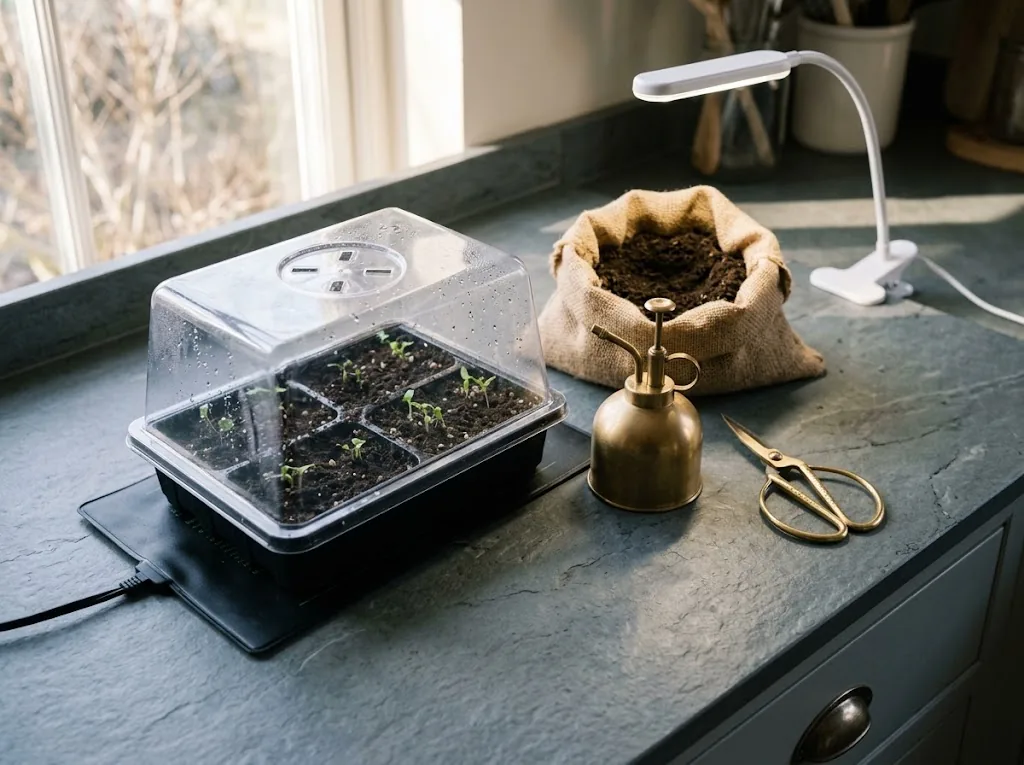
A few basics make the timing work: a heated propagator or heat mat for the cooler months, a south-facing windowsill or simple grow lights, fresh seed-starting compost, and small pots or cells. Bottom heat at 27 to 32°C (80 to 90°F) is the typical temperatures to germinate chinense and baccatum quickly. A standard seed tray filled with a coir-and-compost blend works well; the seed coat softens faster in loose, moist mix. For a full walk-through of compost mixes, container sizes, and the actual sowing technique, the dedicated guide on germinating chili pepper seeds covers it in step-by-step detail.
Quick reference: make a cultivar-based plan
| What to check | Why it matters |
|---|---|
| Local safe planting date | This anchors the calendar for temperate climates. |
| Seed packet indoor lead time | Different cultivars in the same species can mature at different speeds. |
| Expected sprouting period | Slow varieties need room in the plan before they become usable transplants. |
| Hardening-off period | Gradual outdoor exposure helps seedlings adjust before planting. |
Putting it on a planting calendar
Work backward from your local planting date, use the packet’s recommended indoor lead time, and write the sowing date in your garden planner. Mark a hardening-off period before transplanting, then update the calendar with your actual germination and first-harvest dates. Growing seedlings well from the start sets up the whole season, and a few extra weeks of planning can pay off all summer with steady plant care.
