Two pods from the same plant can deliver noticeably different heat. Chili heat is not a single number stamped on a fruit. It reflects plant genetics, ripening stage, growing conditions, and the natural chemicals a pepper produces for reasons that have very little to do with your dinner.
This guide walks through what actually drives the burn, where the heat lives inside the pod, and how growing conditions can shift it. Along the way you will see how the Scoville scale fits in and why a green jalapeño on a sandwich can feel different from a ripe red one. For the deeper look at the active compound itself, see how capsaicin interacts with the pain sensors in your mouth.
What chili heat actually is
The burn of a hot chili pepper is caused by a family of chemicals called capsaicinoids. The dominant one is capsaicin, with dihydrocapsaicin, nordihydrocapsaicin, homocapsaicin and homodihydrocapsaicin contributing smaller amounts. Capsaicinoids do not generate actual heat, but they activate a sensor called TRPV1, the same nerve receptor that warns you about painful heat above about 43 degrees C (109 degrees F). When capsaicin binds to TRPV1, your brain receives a signal that the mouth is on fire. Very concentrated capsaicin can still irritate skin and mucous membranes.
Because the sensation is a sensor event, it behaves differently from taste. The burn lingers, builds with each bite, and may feel worse with hot drinks. Cold milk or another full-fat dairy food can help because capsaicin dissolves more readily in fat than in water. Water alone is usually less helpful after a hot pod.
Why some peppers are hotter than others
Genetics is the biggest driver of chili heat. Differences in the capsaicinoid pathway, across species and between cultivars, determine whether a pepper is sweet, mildly hot, or intensely pungent.

- Capsicum annuum includes familiar kitchen peppers such as bell peppers, jalapeños, serranos, cayenne, and poblanos. Its cultivars range from sweet bells with no detectable heat to hot cayennes.
- Capsicum chinense includes habaneros, Scotch bonnets, ghost peppers, Carolina Reapers, and many other superhot cultivars. Their heat can run from about 100,000 SHU into the millions.
- Capsicum frutescens includes tabasco and many small bird peppers. South American varieties such as aji amarillo and lemon drop belong to the related Capsicum baccatum group.
Individual cultivars can differ enormously. A bell pepper sits at zero on the Scoville scale, a hot cayenne can reach tens of thousands of units, and a Carolina Reaper has tested around 1.6 million. The capsaicinoid pathway is present in pungent peppers, but genes controlling its activity vary sharply among cultivars.
For the framework that turns those numbers into something comparable in the kitchen, see how the Scoville scale translates panel tasting into standardized heat units.
Where the heat lives in the pod
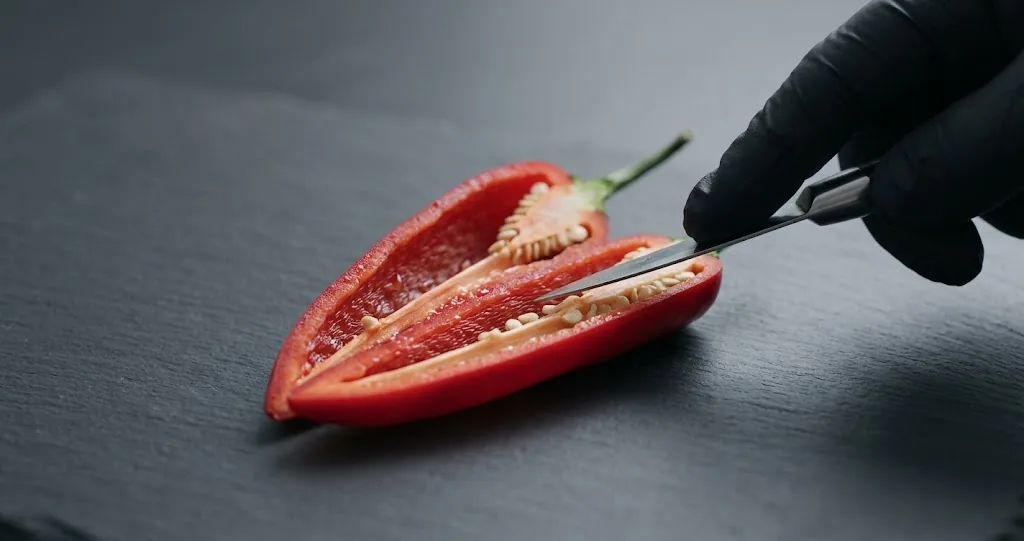
Heat is not spread evenly through a chili pepper. Capsaicinoids are concentrated in the placental tissue, the pale spongy ribs that the seeds attach to. Seeds can pick up capsaicinoids by contact, and the pod wall is usually milder by comparison. Some extremely hot varieties also make substantial capsaicinoids in the pod wall, so the boundary is not absolute.

This matters when you cook. Removing the seeds and the white pith cuts a jalapeño’s effective heat dramatically. It does not eliminate it, because the inner wall still carries some capsaicin, but the difference between a seeded and a fully de-ribbed chili pepper in the same dish can be obvious. Commercially processed hot sauces usually run the whole pod, so removing seeds at home gives you a milder result than the bottled version.
How ripening changes the heat
Ripening can change a pepper’s heat, but the pattern depends on the cultivar. In some peppers, capsaicinoids rise as the fruit colors and peak at red maturity. In others, the peak comes earlier, then falls as the fruit continues to mature. A green jalapeño and a ripe red jalapeño can therefore taste and feel different, but color alone does not reliably predict which one is hotter.

For a grower, the useful rule is to learn the harvest stage for the specific cultivar. Harvest charts, seed descriptions, and a small side-by-side tasting of your own crop are more useful than assuming every red pepper will be hotter.
How growing conditions shift the heat
Genetics sets the broad range, while growing conditions can shift where an individual crop lands inside it. Water, nutrition, temperature, light, pests, and the timing of stress can all affect capsaicinoid production, but they do not do so in the same way for every cultivar.
Water stress is the clearest example. Controlled studies have found higher capsaicinoid levels in some cultivars under drought, while other cultivars show little response or a decline. The timing and severity of the stress matter, and drought can reduce fruit set and yield. It is not a dependable shortcut to a hotter crop.
Fertilizer, temperature, and light also affect plant growth and fruit chemistry, but the research does not support a universal recipe of lean nitrogen, hot days, cool nights, or harsh sun for hotter pods. Give plants the conditions recommended for their cultivar, then treat any heat difference as part of normal crop variation rather than a result you can guarantee.
For a closer look at how much difference stress actually makes and what the research shows, see the evidence on whether stressing chili plants makes them noticeably hotter.
Why peppers evolved capsaicin in the first place
The compound does not protect chili seeds from every animal. Birds swallow pods whole and disperse the seeds, and birds are not bothered by capsaicin because their sensory receptors are insensitive to it. Small mammals, including rodents, are deterred, and the same chemistry that burns the mouth also inhibits the fungi and microbes that would otherwise rot the fruit.
The leading evolutionary story, supported by work from researchers including Josh Tewksbury and colleagues, is that the compound is a directed defense against mammals. Plants in the genus that produced more of it survived better because their seeds ended up in the right places. Modern cultivars inherited, and in some cases amplified, that trait.
How heat is measured
The original Scoville organoleptic test, developed by Wilbur Scoville in 1912, measured heat by diluting an extract in sugar water until a panel of tasters could no longer detect burn. A jalapeño at 5,000 on the scale needed to be diluted 5,000 times before the burn disappeared, and that dilution factor became the rating.
Modern labs use high-performance liquid chromatography, or HPLC, to measure the actual capsaicinoid concentration in parts per million and convert the result to SHU using a published multiplier. HPLC is faster, more reproducible, and not dependent on a panel of trained tasters, but the scale itself is unchanged.
Why some people chase the burn and others cannot stand it
Repeated exposure can reduce the burn a person reports from capsaicin over time. That helps explain why the same pod can feel mild to one eater and overwhelming to another. The mechanism is still being studied, and tolerance does not make an extremely hot pepper safe or pleasant for everyone.
Personal sensitivity, previous exposure, portion size, and the food around the pepper all shape the experience. If you want to explore hotter chilies, increase heat gradually and stop if it causes significant discomfort.
Health effects: benefits, risks and what to ignore
Chili peppers are food, not medicine. Eating them is different from using capsaicin in a medical product.
High-concentration topical capsaicin patches have evidence of helping a minority of adults with post-herpetic neuralgia. Evidence for painful diabetic neuropathy is less certain, and these clinical products are not a reason to self-treat a medical condition with food. A Cochrane review of high-concentration topical capsaicin describes the limits of that evidence.
Very hot peppers can cause intense discomfort, especially if their oils reach the eyes or broken skin. Wear gloves when cutting superhots, avoid touching your face, and seek medical advice for severe or persistent symptoms.

Calming the burn: what actually works
Water is usually less helpful because capsaicin is fat-soluble. The most reliable kitchen choices give it something else to mix with.
- Full-fat dairy: Milk, yogurt, sour cream, or ice cream. Their fat can help dissolve capsaicin.
- Starchy food: Bread, rice, or a tortilla can make the sensation easier to manage while you wait for it to fade.
- A pause: The burn usually eases with time. Avoid adding more pepper while your mouth is still reacting.
If capsaicin gets on your skin, wash with soap and water before touching your face. If it gets in your eyes, rinse with clean water and seek medical advice if pain or vision changes persist.
The short answer
Chili heat comes from capsaicinoids, mostly capsaicin, concentrated in the placental tissue of the pod. Plant genetics sets the broad range for each variety. Ripening and growing conditions can shift heat within that range, but their effects depend on the cultivar and the crop. The Scoville scale and modern HPLC measure how much of that chemistry is in the pod, and the burn itself comes from capsaicin activating the same nerve sensors that warn you about painful heat.
Once you understand that mix, the rest of the silo starts to fit. New varieties change the genetic range. Growing conditions help explain why pods from one crop do not always taste alike. The Scoville scale gives you a way to compare them, while your own tasting tells you what those numbers mean at the table.
