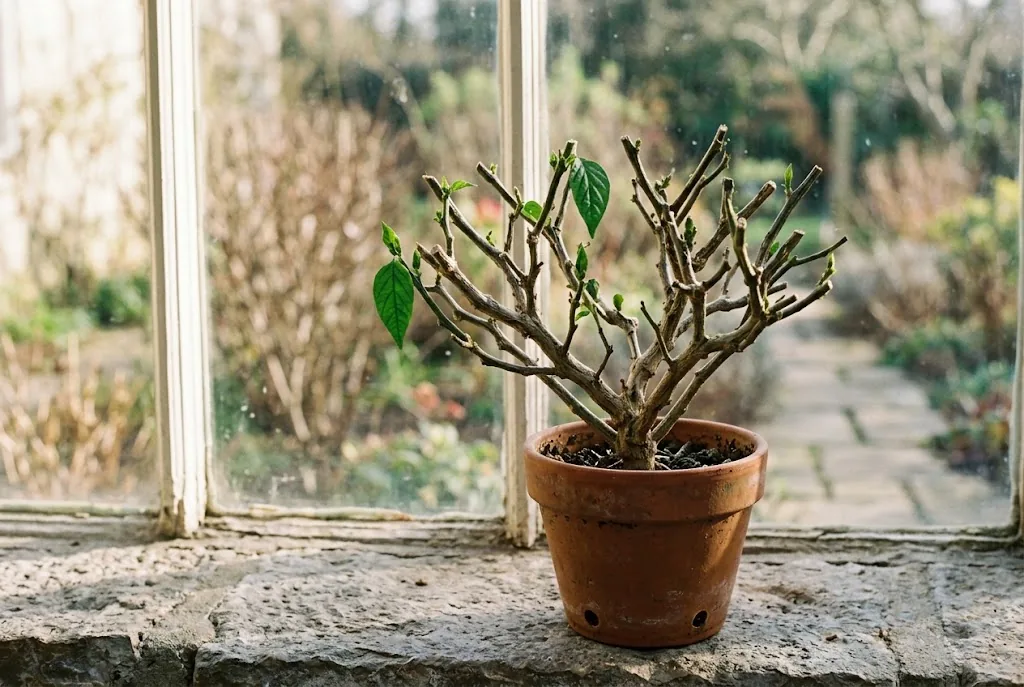
Most growers treat peppers as single-season crops, tossing healthy plants onto the compost heap when autumn arrives. Botanically, however, each chili pepper plant is a tender perennial. In warm growing regions of the Americas, a single Capsicum bush can thrive and yield for several years. Pepper growth slows in cool weather, and freezing conditions can damage the plant. Move a healthy plant under cover before freezing nights to give its established roots a chance to grow again next spring.
Understanding how to manage cold protection is a fundamental part of learning how to grow chili peppers as sustainable perennials. An overwintered plant keeps its established stems and roots. If it stays healthy through winter, it may resume growth sooner than a new seedling when light and warmth return.
Why Overwinter Chili Plants Instead of Starting from Seed?
Every home gardener knows that starting from seed every spring takes patience. Starting peppers from seed takes time and indoor space. Overwintering a healthy favorite may offer these advantages:
- Potential head start: An established plant may put on new growth sooner than a spring seedling.
- Another growing season: Keeping the plant alive gives it another chance to flower and fruit. Yield still depends on light, warmth, and care.
- Saving favorite genetics: Overwintering preserves an exceptional pepper variety that showed outstanding vigor, flavor, or disease resistance.
- Less seedling clutter: You need fewer seed trays, heat mats, and nursery pots taking up indoor space in late winter.
While many crops are grown as an annual, protecting a healthy pepper plant through winter can spare you from starting that variety again from seed.
Which Chili Species Overwinter Best?

You can overwinter peppers from several species in suitable conditions. Species can differ in growth habit, but no type is guaranteed to survive. Consider these examples:
- Capsicum pubescens: Rocoto and Manzano are Andean peppers adapted to cooler conditions than many cultivated chilis. Their hairy stems and leaves help identify the species, but they still need protection from freezing temperatures.
- Capsicum chinense: This species includes habaneros, ghost peppers, and Scotch bonnets. Keeping a healthy plant can save the time needed to raise a replacement from seed; harvest timing depends on the growing conditions.
- Capsicum baccatum: This species includes many ají varieties. Choose a healthy plant with sturdy stems and enough space to keep it inside.
- Capsicum annuum: Jalapeños, serranos, and cayennes can also be overwintered. Give their pots good drainage and avoid leaving the mix soggy.
When to Start Overwintering Chili Plants
Move plants before the first freeze. Even brief cold exposure can damage leaves and stems, making winter survival less likely.
Plan the move as nighttime temperatures approach 50 degrees Fahrenheit (10 degrees Celsius), and certainly before freezing nights. Harvest remaining fruit before pruning so the plant can focus on surviving winter.
How to Prepare and Prune Chili Plants for Winter

Prune back a large plant to a manageable size before bringing it inside. Remove dead or damaged growth and check remaining leaves and stems for pests. The amount of pruning depends on the plant and the space available.
Before you begin cutting, review the fundamentals of pruning chili plants to make clean, sanitary cuts above active nodes. Use clean, sharp shears and keep enough healthy stems and nodes for spring regrowth:
- Locate several healthy nodes on the main stem and branches that may produce new shoots.
- Shorten long side branches to make the plant easier to house without cutting into damaged or diseased tissue.
- Remove yellow, damaged, or pest-infested leaves. Healthy leaves can remain if the plant will receive adequate light.
- If the plant grew in an outdoor garden bed, carefully dig around the drip line, lift the root ball, place the root ball in a draining pot with fresh potting mix, and water it in lightly.
Winter Care: Light and Water During Dormancy

A plant growing slowly through winter needs less water than it did outdoors in summer. Check it regularly rather than following a fixed watering schedule.
The Royal Horticultural Society advises keeping an overwintered chili in a warm, bright place, such as a sunny indoor windowsill, heated greenhouse, or conservatory, and watering sparingly. Avoid a garage or basement that freezes or lacks useful light.
If you have enough light to maintain active growth indoors, see our guide on growing chili peppers indoors using dedicated lighting setups.
Water sparingly while growth is slow. Check the potting mix before watering, then water enough to moisten it without leaving the pot soggy. Good drainage and avoiding overwatering help reduce root rot and fungus gnats.
Managing Pests on Overwintered Plants
Inspect plants before they come inside and continue checking them through winter. Watch for these common problems:
- Aphid infestations: Check stems and the undersides of remaining leaves for clusters of aphids.
- Treatment when needed: If you find pests, isolate the plant and use a control labeled for peppers and indoor use. Follow the product directions; do not spray a pest-free plant routinely.
- Soil gnats: Avoid persistently wet potting mix, which favors fungus gnats.
Waking Plants Up and Moving Outdoors in Spring

As days lengthen in spring, watch for new shoots and gradually return the plant to active growing conditions:
- Increase light and warmth: Move pots to a warm sunny windowsill or under a supplemental grow light, aiming for temperatures around 70 degrees Fahrenheit (21 degrees Celsius).
- Resume watering and feeding: Begin watering more often as new shoots emerge. Once fresh green leaves form, repot if necessary and feed with a dilute liquid organic fertilizer to encourage steady growth.
- Harden off gradually: When nighttime outdoor temperatures stay reliably above 50 degrees Fahrenheit, harden off the plants outdoors over 10 to 14 days before moving them to their permanent sunny positions in the garden.
Common Overwintering Questions
Will chili plants regrow after winter?
Often, if the stems and roots survived winter. Increase light and warmth, then look for fresh shoots before increasing water and fertilizer.
Can pepper plants survive the winter in a garage or basement?
Only if the space stays above freezing and has adequate light. A warm, bright indoor spot is a more dependable choice; avoid a dark or freezing garage.
How cold is too cold for chili plants?
Frost can damage pepper leaves and stems. Move plants under cover before freezing nights. For active growth outdoors, wait until nighttime temperatures are reliably above about 50 degrees Fahrenheit (10 degrees Celsius).
Is it worth overwintering pepper plants?
It can be worthwhile for a healthy favorite or a variety that takes time to raise from seed, such as a habanero or rocoto. Survival and next season’s harvest depend on winter light, temperature, pests, and spring care.
