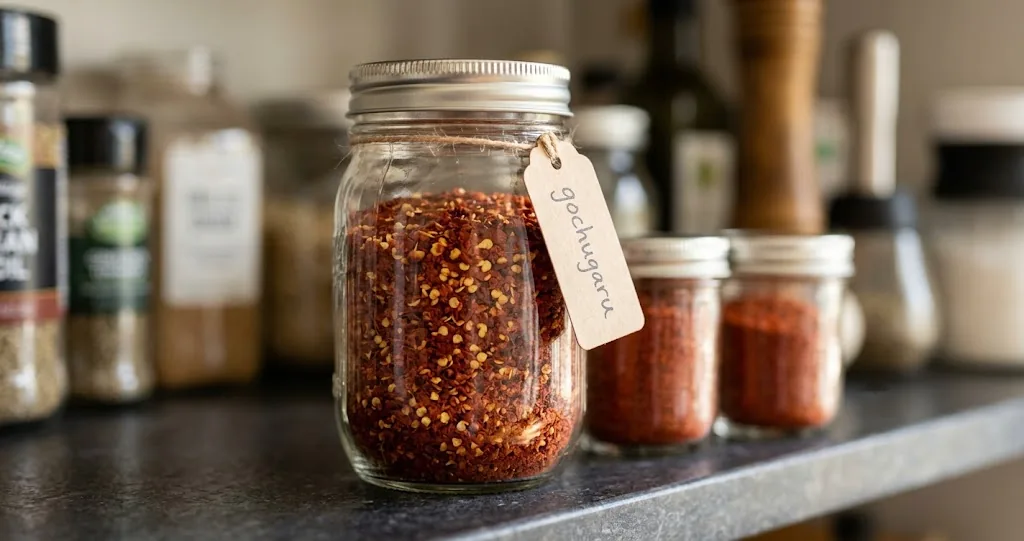
Gochugaru (????) is ground dried red chili used in Korean cooking. Coarse flakes season cabbage, stews, and spicy marinades; a finer grind blends into smooth sauces and fermented condiment. Choose by both texture and the heat label, because a coarse bag is not necessarily mild and a fine bag is not necessarily hotter.
This guide explains what it is, how the coarse and fine grinds differ, what it tastes like, the dishes that depend on it, and the closest substitutes when you cannot find it. For a deeper look at turning fresh pods into flakes at home, see our guide to how to make chili flakes and powder.
What is gochugaru?
The seasoning comes in coarse and fine grinds. Taeyangcho describes peppers dried in the sun, not a single cultivar. Maangchi explains the common coarse product and distinguishes it from fine pepper powder. Seed removal and processing vary, so check the product rather than expecting a fixed amount of seeds.
Korean red pepper flakes and Korean chili flakes usually describe the coarse product. A finely ground version is also gochugaru; it is not a different spice merely because the particles are small.
Buy a product labeled for your intended dish. Drying method, pepper selection, and processing can all vary between producers, and the culinary name does not identify one seed variety.
Coarse, fine, and the grinds in between
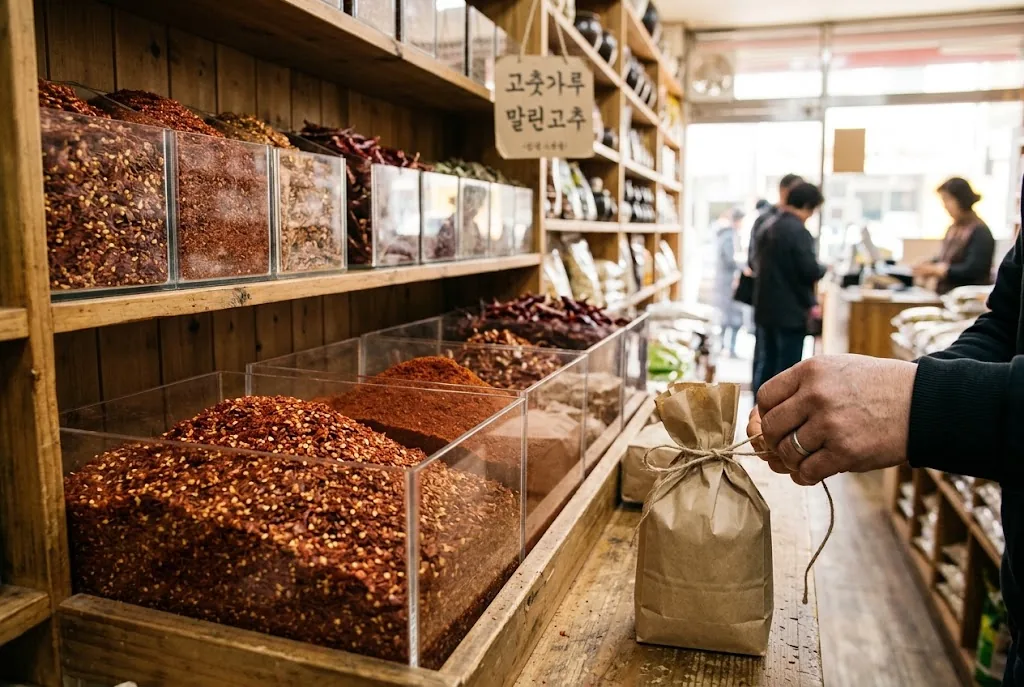
Korean markets sell three textures, and the one you buy changes the dish.
- Coarse grind: visible flakes suited to cabbage seasoning and stews.
- Medium grind: useful where you want smaller visible pieces in a sauce.
- Fine grind: sold for smooth mixtures, including as gochujangyong gochugaru. Maangchi describes this fine seasoning.
- Heat labels: maewoon means spicy, while deol-maewoon indicates a milder product. Neither word specifies particle size.
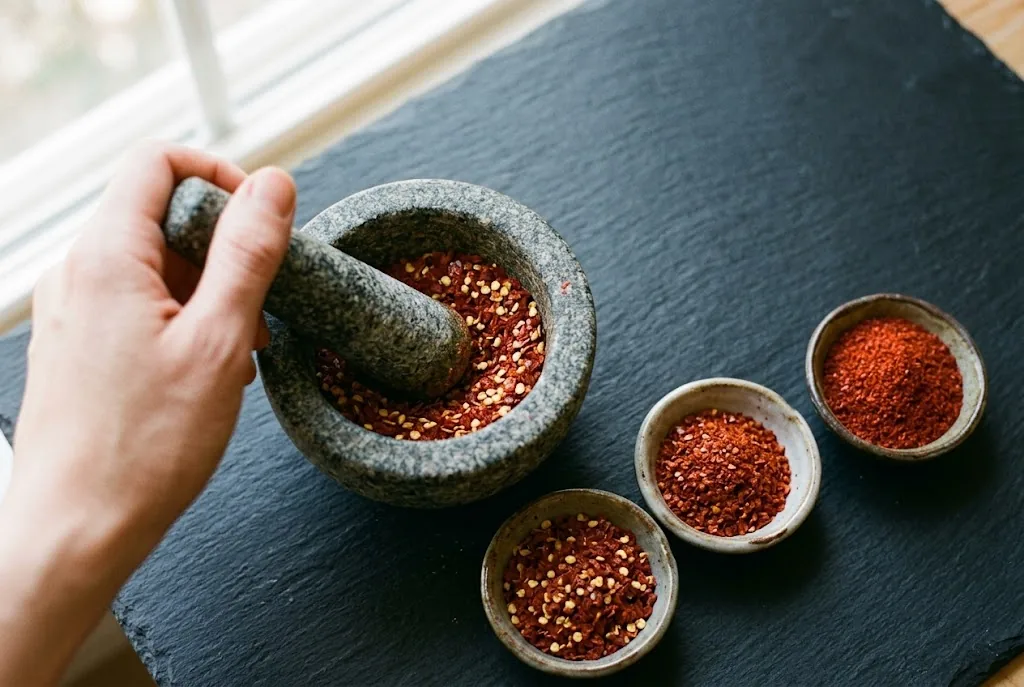
Most home cooks keep one bag of coarse for fermenting and a small jar of fine for sauces. If you only want to buy one bag, start with coarse.
What does it taste like?
Expect fruity aroma and warmth, with the strength depending on the bag. Sun drying does not mean smoke drying, so a smoky note is not guaranteed. Taste a small amount in food before committing a whole batch.
There is no universal Scoville range that separates coarse flakes from fine particles. Grinding changes texture and how the seasoning disperses; it does not by itself increase the capsaicin concentration. Choose the heat level on the label independently of the grind.
A musty smell or visible mold is a reason to discard the product. Faded color or weak aroma may indicate age, but neither proves a particular drying error. Buy a quantity you can use while it is fresh.
How to use it
Use it during cooking for stews and sauces, or stir a small amount into a dressing. Start with the specified quantity and adjust to the heat of your particular bag.
Cabbage and radish ferments
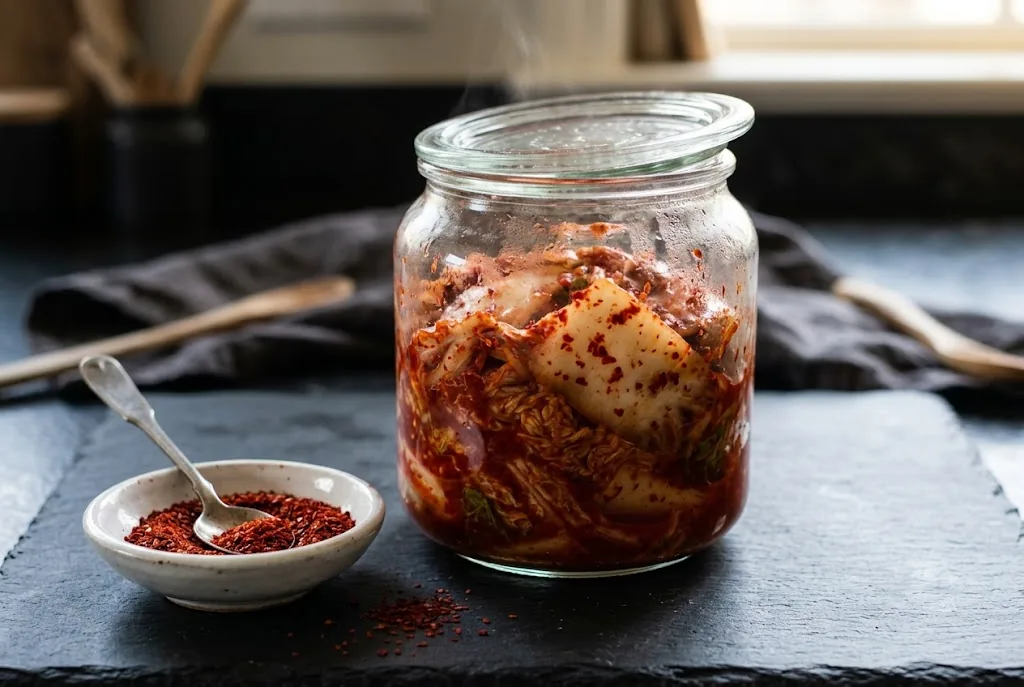
Coarse flakes are commonly used in the seasoning for baechu kimchi. Follow a complete method for the salt, vegetables, seasoning, temperature, and storage. Korean Bapsang refrigerates its cabbage method after one or two days at room temperature, rather than leaving it on the counter for weeks. Kkakdugi is cubed radish; ojingeo means squid, not a specific watery ferment.
Soups, stews, and jjigae
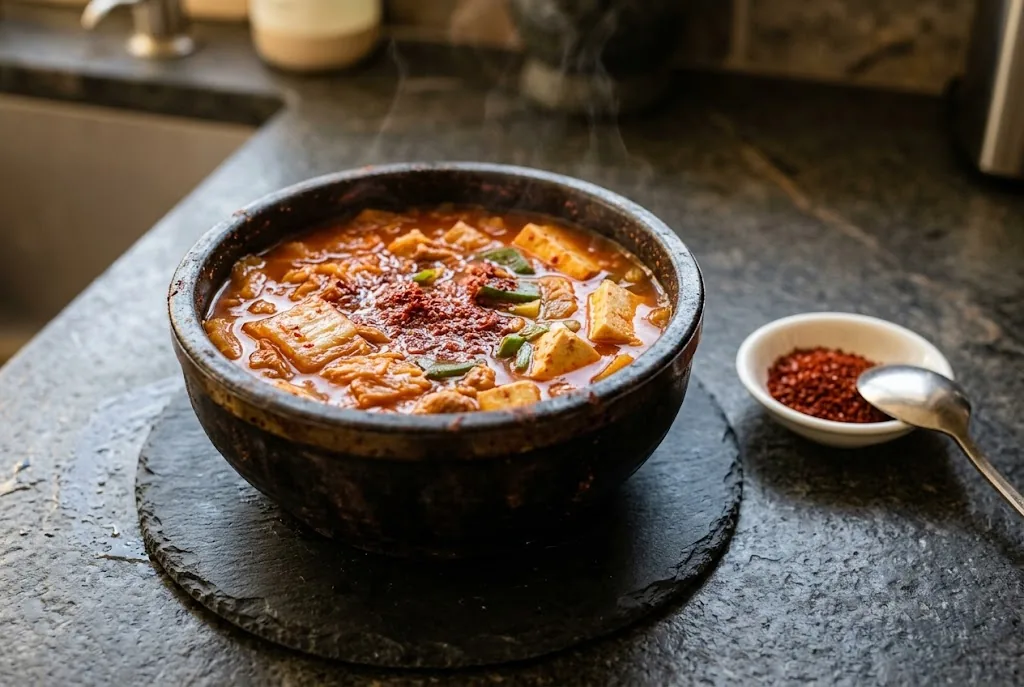
A spoonful of the coarse grind stirred into the broth at the start of sundubu jjigae (soft tofu stew) or kimchi jjigae is what makes the broth brick-red rather than orange. It does not fully dissolve, so you will see small red specks floating on the surface, and that is normal.
Marinades and grilling
Use the flakes for a deliberately spicy marinade or a dish such as dak galbi. Classic beef bulgogi and galbi do not automatically contain chili, so do not add chili merely because the dish is Korean. Follow the seasoning balance of the particular dish.
Sauces, dressings, and dipping
Mix a pinch of the fine grind with vinegar, soy sauce, sesame oil, and a little sugar for a simple dipping sauce. This is not ssamjang, which uses fermented condiment; Maangchi gives a complete ssamjang method. You can also add a little to mayonnaise or yogurt for a seasoned spread.
Tteokbokki and other street food
For tteokbokki, follow a method that specifies both flakes and fermented condiment. The ground seasoning contributes color and warmth without the same thickness or sweetness, so the two are not interchangeable spoon for spoon.
Gochugaru versus fermented chili paste
Gochugaru is ground dried chili. Gochujang adds its own sweetness, salt, body, and savory flavor as well as heat. Substituting it for ground seasoning changes several parts of the dish, not just the color.
If you change from flakes to paste, taste before adding extra salt or sugar and adjust the liquid as needed. For a preparation that depends on fermentation or a precise sauce texture, use the specified product.
Best substitutes
When you cannot find the real thing, the closest stand-ins depend on the dish. For a wider discussion of substitutes for any pepper, see our guide to chili pepper substitutes. A few reliable choices for it specifically:
- Aleppo pepper: a coarse, fruity alternative, but taste before adjusting heat and check for added salt.
- Kashmiri chili: a red alternative when color matters; it may be finer and change texture.
- Sweet paprika with a pinch of cayenne: an accessible blend when an exact Korean flavor is less important. Smoked paprika adds smoke that the original may not have.
- Crushed red pepper: suitable for a heat adjustment, but often a different flavor and texture. Use sparingly.
Check the ingredients of an American seasoning blend: cumin, oregano, garlic, and other seasonings may change the dish. A single-ingredient dried pepper is a clearer starting point for substitution.
Buying and storing it
Check texture, heat labeling, ingredients, and best-before information. Buy recent stock rather than selecting a fixed harvest year. Reject a bag with mold or a musty smell; color alone cannot establish quality or authenticity.
Follow the package storage instructions. Maangchi keeps a working portion refrigerated and freezes the remainder for up to six months. Keep the container tightly sealed and avoid introducing moisture with a wet spoon.
Frequently asked questions
Is gochugaru just chili powder?
The term covers coarse flakes and a fine grind. It usually identifies dried red chili, whereas many US seasoning blends include other spices. Read the ingredients and choose the texture the dish needs.
How hot is gochugaru compared to cayenne or paprika?
The heat varies with the pepper selection and product, so there is no dependable coarse-versus-fine Scoville rule. Cayenne may make a substitution much hotter; start with a small amount rather than replacing by volume.
Can I use gochugaru in non-Korean cooking?
Yes. Use it anywhere you would reach for chili flakes or spice dust, especially in egg salad, popcorn, salad dressings, dry rubs for grilled vegetables, and roasted nuts. The fruity sweetness lifts milder dishes more than generic flakes do.
Is gochugaru the same as crushed red pepper?
They can differ in pepper selection, heat, grind, and flavor. Check the label and taste the actual batch. Generic crushed flakes are a useful heat adjustment but do not guarantee the same result.
Try it in your next dish
Start with a complete cabbage or stew method and the grind it recommends. Keep the bag sealed and note its heat before making substitutions. For more ways to use chilies, see our cooking with chili guide.
