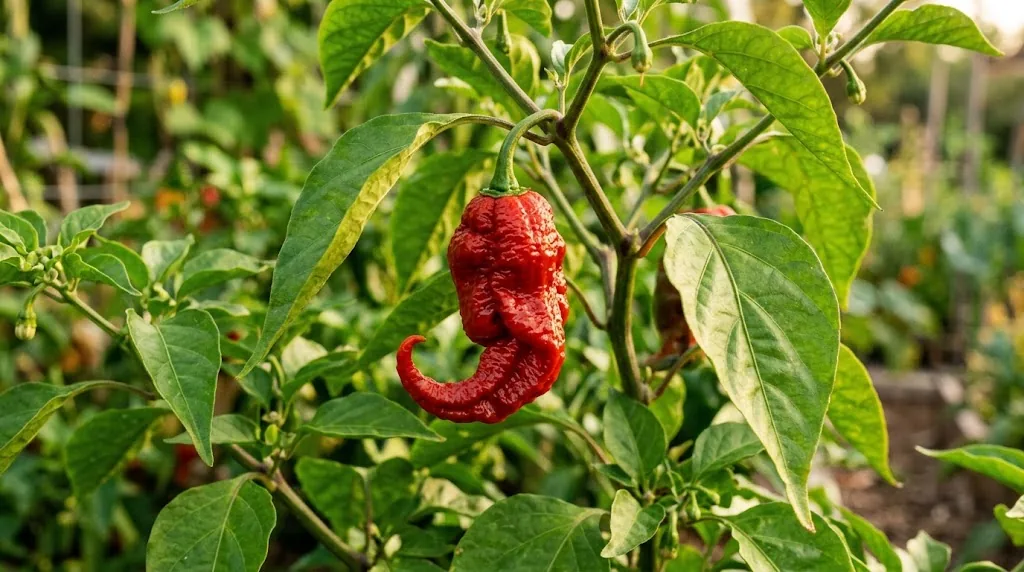
The Death Spiral pepper is a very hot, heavily wrinkled chili with a name that fits its twisted, scythe-tailed shape. It belongs to Capsicum chinense, and its heat is usually described in estimates rather than a published, independent lab test. Growers choose this variety for its unusual fruit, warm-season challenge, and aromatic taste.
Here is what is known about its origin, how to grow it, and how to handle ripe fruit without letting even a small amount overwhelm a dish.
For a wider look at how varieties differ in shape and heat, continue to our guide to types of chili peppers.
What is the Death Spiral pepper?
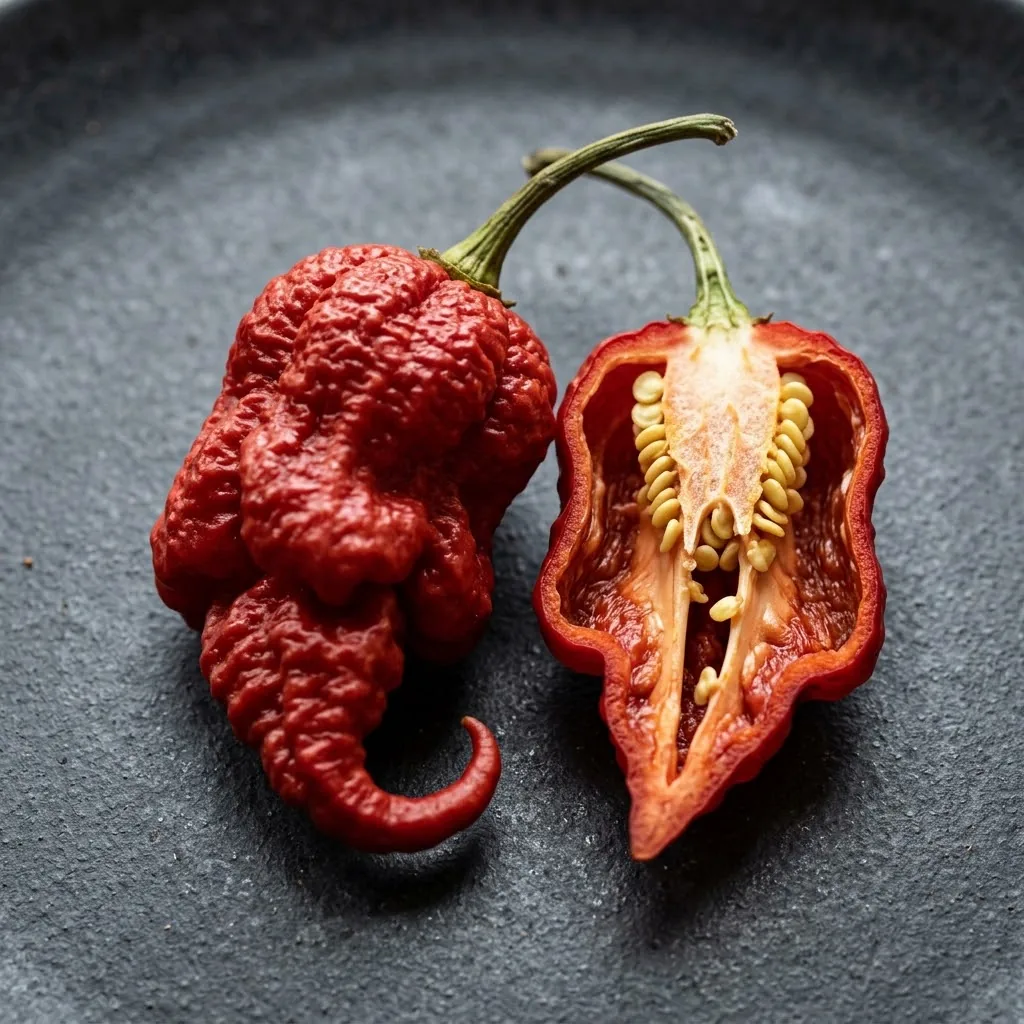
Death Spiral, also sold as Death Pepper, is a named Capsicum chinense variety. Each pod is contorted and deeply wrinkled, often tapering to a curved point or tail. Sellers describe ripe color as red, orange, or reddish orange, while some plants pass through green and other intermediate shades. Shape and color can vary between lines and individual plants.
Published accounts do not tell the origin story in quite the same way. Baker Creek says English grower Terry Smith supplied Naga Bubblegum Red stock to Jim Duffy, who selected and named Death Spiral after a later growout. Pepper Geek instead describes Smith as the grower who made the cross. Both accounts connect the pepper to the United Kingdom and to Naga and related lines, but the available sources do not establish a single uncontested breeding history. The useful takeaway is that Death Spiral is a cultivated variety, not a wild pepper.
How hot is it?
Specialty sellers and pepper references commonly estimate Death Spiral at around 1 million to 1.3 million Scoville heat units (SHU). Pepper Geek estimates 1 million or more and says it has not found an official rating; Baker Creek gives an estimate near 1.3 million. Treat those numbers as estimates, not a guaranteed reading for every pepper. Scoville values can come from measured capsaicinoid content, and laboratory high-performance liquid chromatography gives more reproducible results than taste testing, as the National Institute of Standards and Technology explains.
That puts the pepper firmly in super hot territory, but it does not support calling it the world’s hottest or the deadliest. Heat varies with the plant, fruit, and growing conditions, and the name on a packet is not a lab result. Individual Death Spirals can differ, so do not taste a whole pepper to find out where it lands. The Scoville figure is a scale estimate, not a dependable promise of how one fruit will taste.
What does it look and taste like?
The deep folds and crooked tail make a ripe fruit easy to recognize beside smoother, straighter varieties. Many descriptions mention a green calyx where the stem meets the fruit, unlike the colored calyx on some related lines. As pods ripen, they may turn from green through peach or orange to red. Expect variation: not every pepper develops a pronounced tail.
Growers describe the flavor as fruity, citrusy, and sometimes floral beneath the heat. Those notes are subjective and can vary between plants. Use a very small amount in salsa, a cooked sauce, or a stew, then taste the finished food before adding more. If you are comparing other Capsicum chinense varieties, Cheiro Roxa peppers offer a different profile to explore.
How to grow Death Spiral peppers
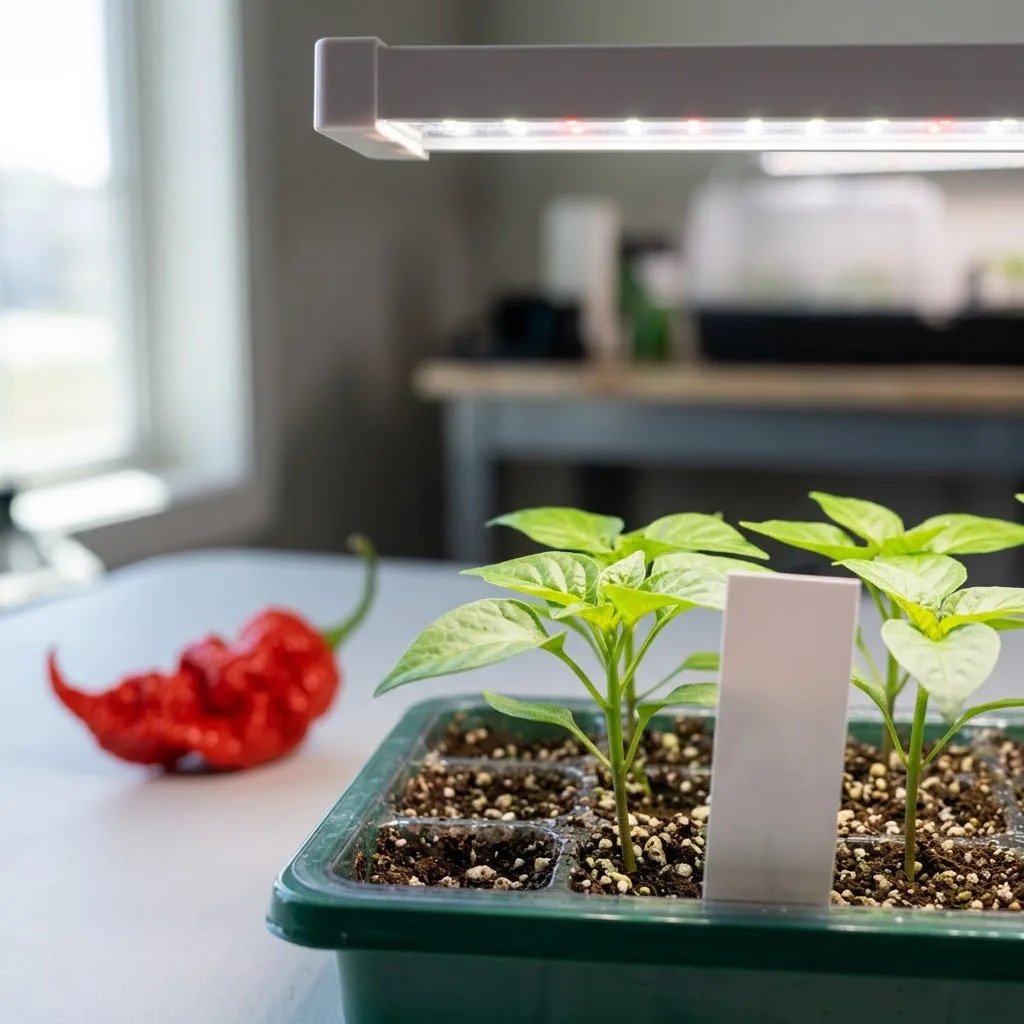
Start with fresh seed stock from a seller that identifies the variety and offers growing details. Capsicum chinense needs warmth to germinate. UMN Extension recommends keeping pepper-starting mix at 80 to 90°F until seedlings emerge. Baker Creek lists 21 to 28 days for this variety to sprout, but germination depends on freshness, temperature, and moisture, so allow extra time rather than discarding a slow tray too soon.
Sow in clean starting mix and keep it evenly moist, not waterlogged. Give seedlings strong light as soon as they emerge. Move young plants outdoors only after frost danger has passed and nights are warm; harden them off gradually so direct sun and wind do not shock them. Choose a warm, sunny spot in the garden or a large container with drainage. A container also makes it easier to extend the season in a short-summer climate.
Water when the surface of the mix begins to dry, then let excess drain away. Avoid a fixed calendar because heat, pot size, and weather change how quickly soil dries. Add support if branches become weighed down by fruit. Baker Creek lists 90 to 120 days to maturity for its listing, while Pepper Joe’s gives a different estimate for its own offerings. Treat catalog days as seller-specific planning estimates, not a promise for every plant.
For a variety-specific profile of a much milder, small-fruited option, see Aji Cito peppers.
Harvest safely
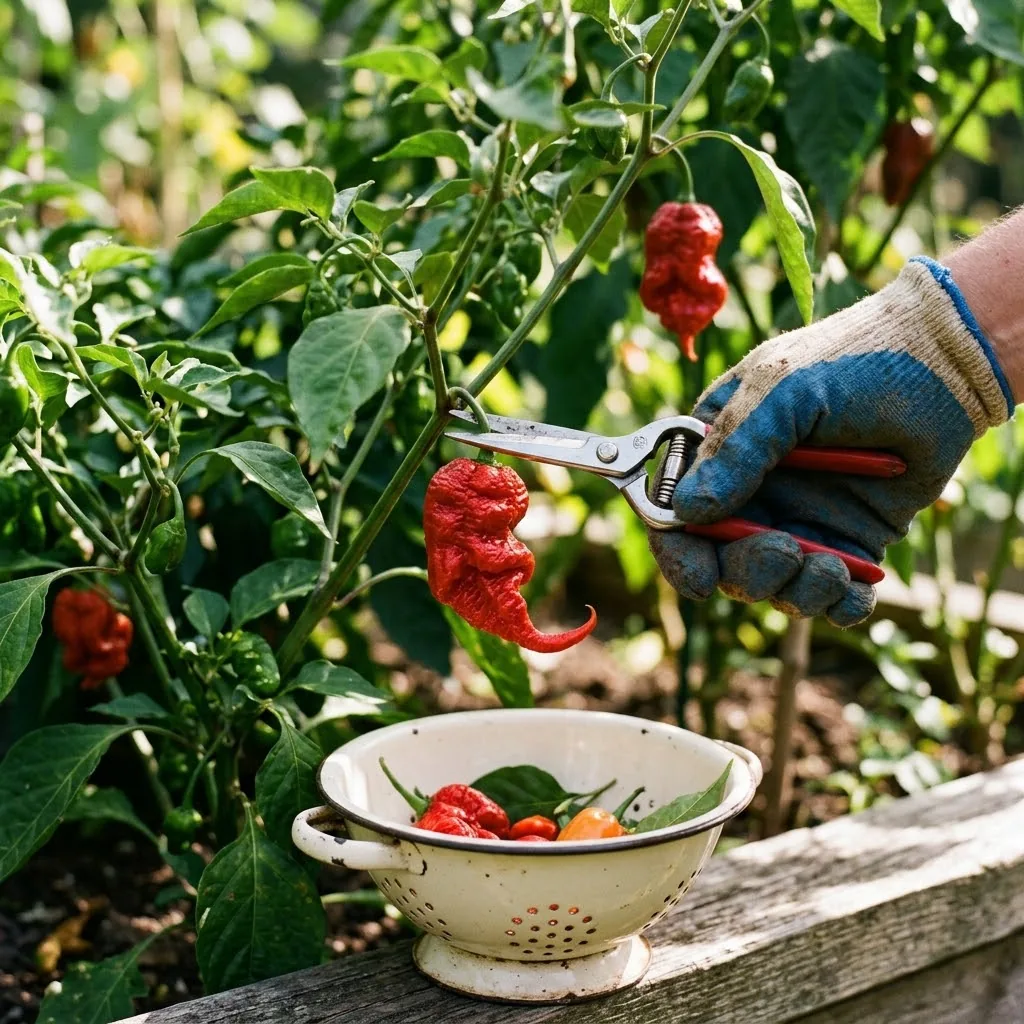
Pick the fruit when it reaches the color and maturity you want, using clean snips if the stem does not release easily. UMN Extension recommends gloves when picking hot peppers and washing hands before touching your eyes. The Poison Control Center also advises gloves and avoiding face contact. If juice gets into an eye, rinse with plenty of warm water for 15 minutes. For breathing trouble or chest discomfort, call emergency services or contact Poison Control.
Store the peppers and use a little at a time
Keep fresh peppers refrigerated and use them promptly. Baker Creek recommends up to two weeks in an airtight container, or freezing whole fruit for longer storage. Label the container clearly so nobody mistakes a super hot pepper for a mild one. For dry storage, the UC Cooperative Extension guide says whole ripe red chile peppers can be dehydrated until crisp; it also recommends a mask while grinding dried hot peppers. Grind them outdoors or with good ventilation to limit floating powder.
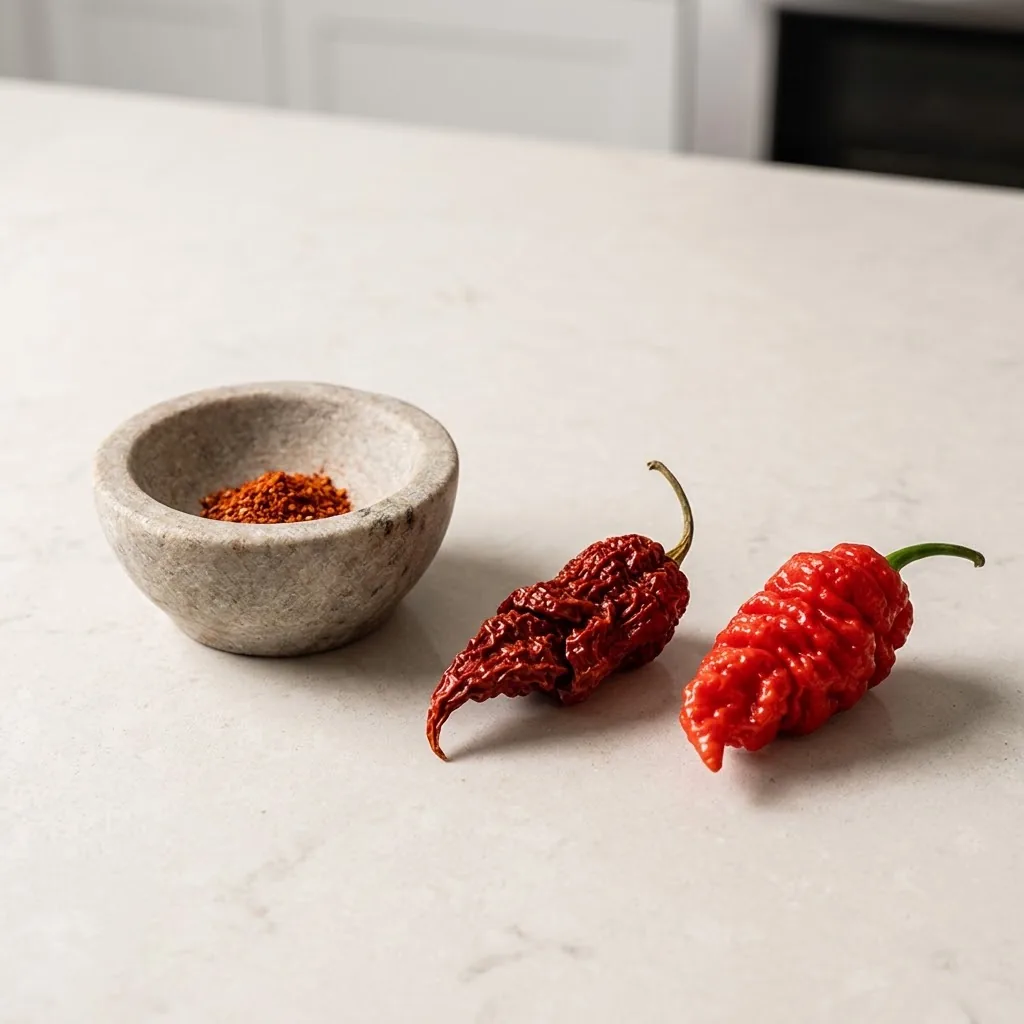
A tiny piece can bring intense heat and a fruit-forward note to a cooked dish, salsa, or hot sauce. Start with less than you think you need, keep the rest of the meal mild, and add more only after tasting. Compare varieties before choosing seed, since heat estimates and fruit traits differ between named peppers.
Frequently asked questions
Is Death Spiral hotter than a Carolina Reaper?
The sources checked here do not give a reliable, variety-wide lab comparison. Listings give estimates, and individual fruit varies. Do not treat a seller’s figure as a direct contest result.
Can you grow Death Spiral peppers indoors?
Yes, if you can provide strong light, warmth, and enough room for a fruiting plant. A sunny window may be insufficient in a dim home, so a grow light can help. Outdoors, wait until conditions are warm and frost-free.
Where can you buy Death Spiral seeds?
Several specialty sellers list the variety, including Baker Creek and Pepper Joe’s. Check that the listing names Death Spiral and gives a current germination or growing estimate; descriptions and lines can differ.
