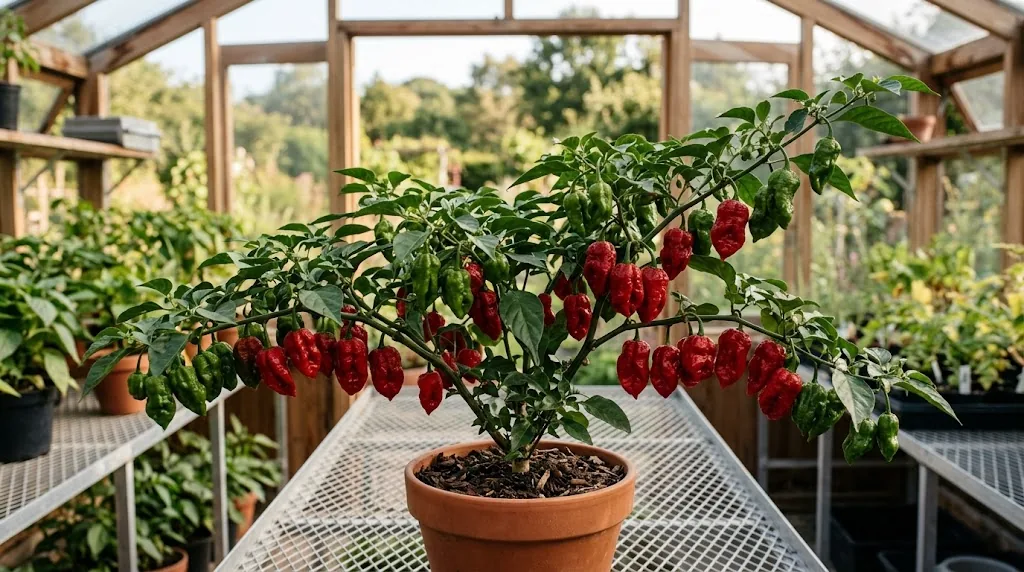
Dorset Naga combines a short British breeding story with scorching pungency that can overwhelm an unprepared cook. This distinctive Capsicum chinense variety began with Naga Morich seed from Bangladesh, then was selected over several years in Dorset for a more uniform crop. Its ripe pods are intensely hot, fruity, and best used a little at a time.
If you are choosing among hot varieties, our guide to different types of chili peppers can help put its flavor and pungency in context.
Where did this variety come from?
Joy and Michael Michaud of Sea Spring Seeds developed the variety in West Dorset, England. They began with Bangladeshi Naga Morich stock from an Asian shop in Bournemouth. It took several years of selection to develop a distinctive, uniform and stable population suited to British conditions.
Scoville Heat Units (SHU) are the unit used to express pungency. In their own account of the Naga saga, the breeders describe growing a chilli that measured 923,000 SHU. After three years of independent trials by the Community Plant Variety Office in France, it was recognised as a distinct variety in 2009, and Sea Spring Seeds was awarded plant variety protection. The variety is therefore a selected, protected line developed from Naga Morich, not simply another name for every Naga Morich strain. The name joins its Dorset breeding home with the Naga family of peppers. That link matters when shopping: a packet marked only “Naga” may refer to a different strain or landrace, so check that the source identifies the named line specifically. Sea Spring Seeds explains the Naga Morich parentage and selection process in its history. Sea Spring Seeds’ account of the Dorset Naga’s development provides the variety history and its testing details.
What do its pods look like?
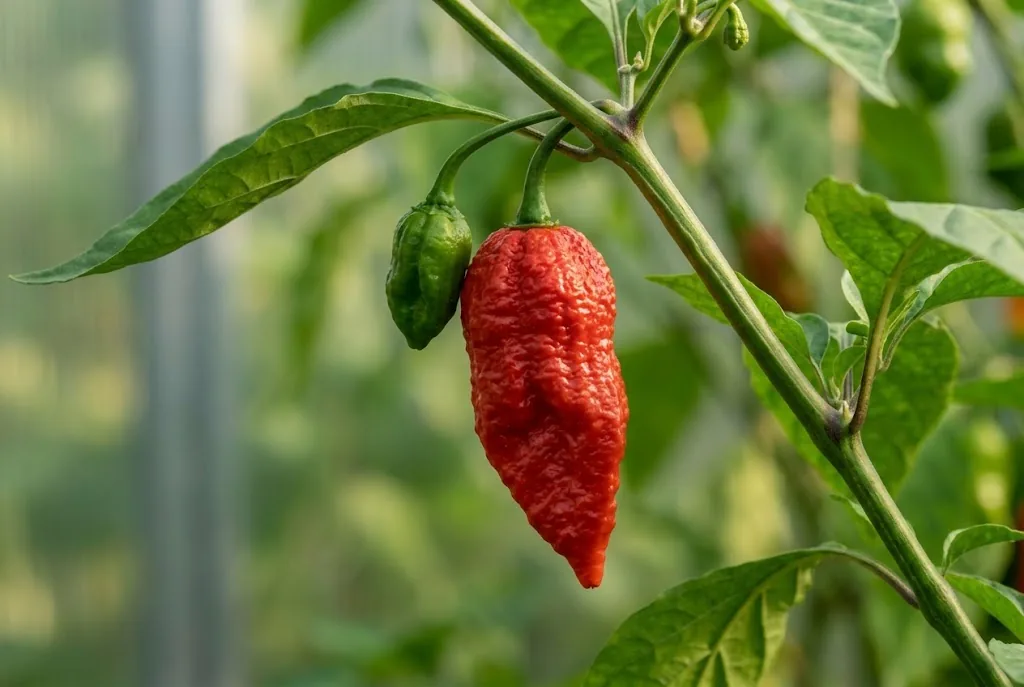
The plants produce pendant, tapered fruits with wrinkled, uneven skin. Pods mature from green to a saturated scarlet, though color and shape can vary somewhat with conditions and seed source. The fruit is a Capsicum chinense, the same species as habanero and ghost chile types, but its characteristic Naga-like pointed, crumpled form helps distinguish it from rounder habaneros and the longer, smoother cayenne. Compare its pointed ripe fruit with the differently colored Mustard Habanero to see how varied this species can look.
Expect a warm-season crop that benefits from a long, bright season. In a greenhouse or large container, branching stems can carry multiple fruits. A sheltered patio can work in a reliably warm climate, but cool nights and a short summer can delay flowering and ripening.
How pungent can the pods be?
The breeder reports crop averages above 1 million SHU, with samples ranging from 800,000 to about 1.6 million SHU. Individual fruit and growing conditions vary, so treat the figure as a benchmark rather than a promise.
Dorset Naga may be hotter than some ghost peppers, but the reported ranges overlap. “Ghost pepper” usually refers to Bhut Jolokia, also a superhot C. chinense, and Carolina Reaper and Trinidad Moruga Scorpion are other familiar superhots. A fruit’s measured pungency depends on the sample and the test, so compare these peppers cautiously rather than ranking them by name. For a time, Dorset Naga was counted among the hottest peppers, but Guinness World Records certified Pepper X at 2.69 million SHU in October 2023. The Royal Horticultural Society pepper trial notes also explain that growing conditions and ripeness change pungency.
How does the ripe fruit taste?
Before the burn takes over, ripe fruit has a fruity aroma and a bright, slightly sweet flavor. The aroma can seem floral or tropical, with a sharp, fresh chili note. Use aroma as a cue for flavor, not a measure of pungency: a small piece can still dominate a dish. As it matures, the pod can smell sweet and fruity, but that does not soften the burn. A green pod is less mature and may have a sharper, greener flavor; leave fruit on its stems until it colors fully when you want the variety’s fullest aroma.
How to grow this crop
This plant needs an early, protected indoor start and a long, warm season. Sow in a clean seed-starting mix and keep it evenly moist and warm. Chili seeds germinate best with steady warmth near 70°F; a heated propagator can help, as the RHS growing guide recommends. Move seedlings into bright light as soon as they emerge, then pot them on when roots fill their small cells. The RHS recommends indoor sowing from late winter to mid-spring for this crop group.

Move young specimens outside only after frost risk has passed and nights stay warm. A greenhouse, polytunnel, or sunny conservatory gives the most reliable conditions. In a hot region, use a sheltered outdoor position with full sun and airflow. Choose a container with drainage holes and fresh potting mix, or fertile, well-drained garden soil. Keep the root zone evenly moist without leaving the soil waterlogged. As it grows, support heavy branches before they bend under fruit.
Flowering and fruit set can slow during cool spells or very hot greenhouse conditions. Ventilate a greenhouse on hot days and avoid letting a container dry completely. Since days to maturity vary with climate and growing setup, watch the fruit rather than relying on a fixed calendar. Allow the pods to ripen from green to red on their stems to develop their mature aroma. In a short-season region, keep it under cover late in the season so its remaining fruit has time to color.
Pick and handle the pods carefully
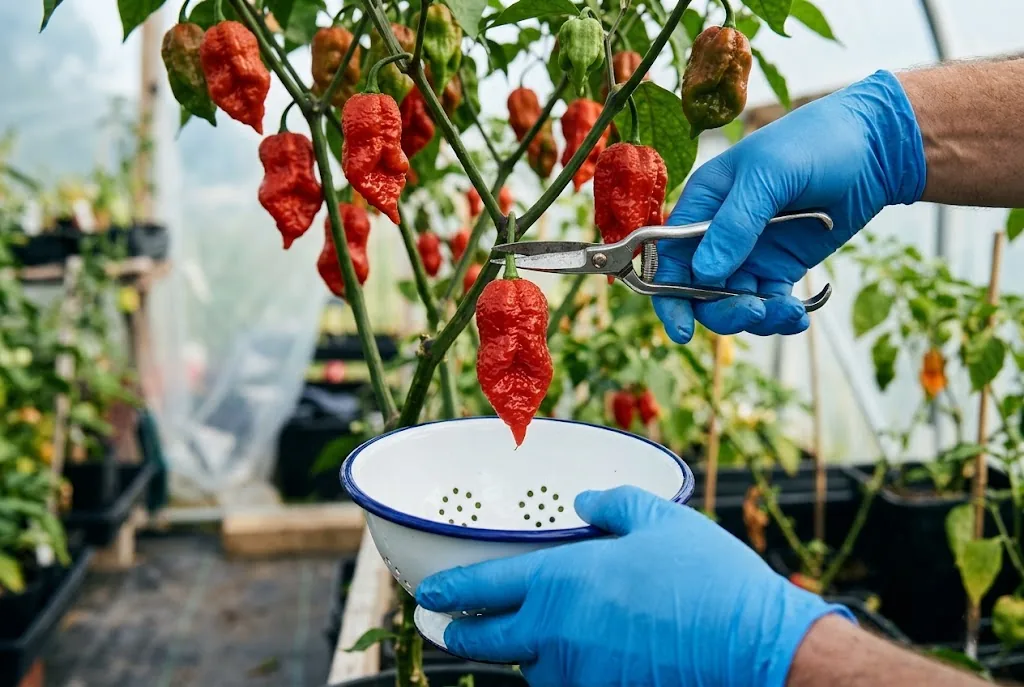
Pick ripe fruit with clean snips, leaving a short stem attached. Wear nitrile or other suitable gloves, keep your hands away from your face and eyes, and wash tools and work surfaces after handling. Capsaicin can irritate skin, eyes, and airways; ventilate the room when cutting or cooking a large amount. Poison Control capsaicin guidance recommends gloves and avoiding contact with the face when handling hot peppers.
How to store and dry the fruit
Keep fresh pods in a breathable bag in the refrigerator for short-term use. To preserve a harvest, freeze whole pods or dry them thoroughly before storing them in a sealed container in a cool, dark place. Once fully dry, grind a small amount into powder and blend it into a larger spice mix, labeling the jar clearly so nobody mistakes the powder for a mild chili. Never grind dried fruit without good ventilation, and do not inhale the dust.

Using these superhot pods in cooking
Use a tiny piece first, then add more only if the dish needs it. For sauces or marinades, blend a small quantity into a larger base rather than tasting a whole slice. Its fruity aroma suits hot sauce, curry, chutney, and long-simmered sauces where a small amount can season a full batch. Remove the stem and mince only a small amount, or infuse a whole pod in a sauce and remove it before serving. Pair it with acidic ingredients, fruit, tomatoes, or coconut milk to balance its sharp bite, but remember that dilution changes the serving size rather than making the fruit itself mild.
If you enjoy smoky flavors, Morita peppers are jalapeños that are dried and smoked, a very different route from using a fresh superhot pod.
Frequently asked questions
Can it outpace a ghost pepper?
Sometimes, but not every fruit exceeds Bhut Jolokia. Their reported ranges overlap, and individual fruit varies. Treat both as superhot peppers and handle them carefully.
Can it thrive in a pot?
Yes. Use a roomy container with drainage and place it in a greenhouse or the warmest sunny sheltered spot available. Container plants need regular moisture checks in hot weather.
Where can I find pepper seeds or sauce?
For seed labeled as the protected line, look for an authorized supplier. The breeders offer seed and plants through Sea Spring Seeds and direct readers to their nursery. Hot sauces may use Dorset Naga or other Naga types, so check the ingredient label if the exact variety matters.
Can I save seed from a home-grown pod?
For a reliable, true-to-type crop, check that the supplier is authorized. Sea Spring Seeds states that breeders’ rights restrict commercial production and sale of seed of this variety without permission. Seed saved from a pod may also not produce a uniform crop if cross-pollination occurred.
Raise this superhot through a long, warm season
This is a named C. chinense variety with a documented origin in Dorset, a fruity aroma, and heat that can reach well over one million SHU in crop testing. Give it warmth, light, steady moisture, and time to ripen. Harvest with gloves, start with very small amounts in the kitchen, and let its aroma guide the dish before the burn takes over.
