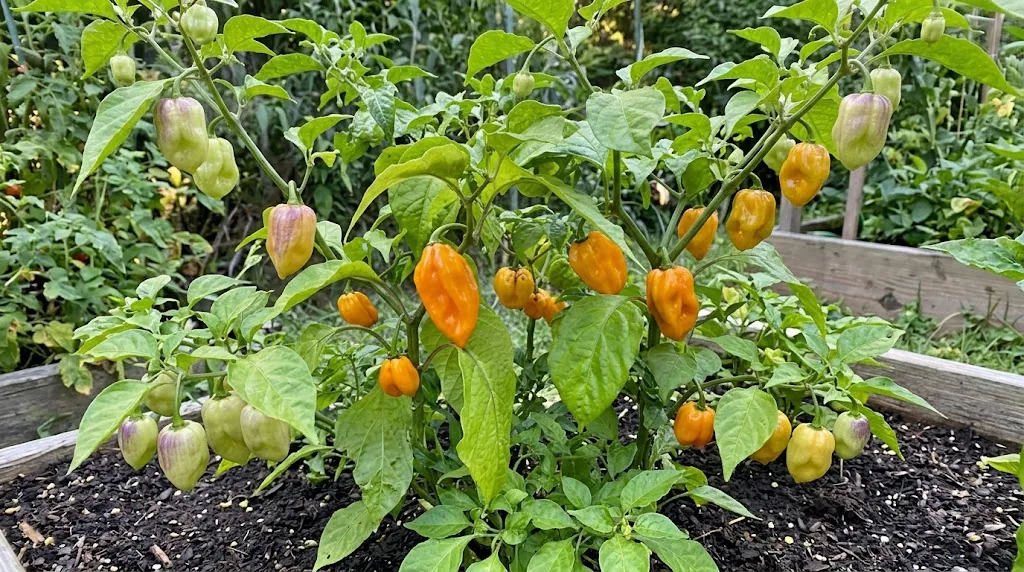
This habanero selection is known for pods that ripen from pale green with a purple blush through mustard yellow to bright orange. The name describes the fruit’s color, not a prepared condiment. This profile traces the documented Pennsylvania selection, describes its plant and fruit, and explains how to grow, handle, store and cook with it. For the wider context of varieties and their roles in cooking, see our guide to chili types.
Origin and naming
The variety belongs to Capsicum chinense. Seed Savers Exchange records it as an unusually colored off-type found in the garden of member James Weaver in Kutztown, Pennsylvania, in the late 1990s. This is the documented story of how the selection was noticed; it does not establish where its older ancestry began. Its catalog describes productive plants and fruit that moves from pale green with a purple tinge to golden orange, then bright orange. Seed Savers Exchange catalog
Catalogs may style the name as Habanero, Mustard or Habanero Mustard. Here, those labels refer to the same color selection. A prepared “habanero mustard” is a condiment, and recipes for it are a separate topic.
Plant and fruit profile
As a type of Capsicum chinense, this habanero pepper has the lobed, wrinkled form associated with the group. A second commercial listing describes distinctly ribbed fruit about 4 centimeters long. The catalog also lists plants around 32 inches tall. Those are supplier descriptions, not measurements that every plant will match. Kokopelli variety description

The changing color is a useful harvest clue. Unripe pods are immature; fruit can be picked once it reaches mature size, at the golden stage or later when orange. Kokopelli describes the plant as ornamental because several ripeness colors can appear together. Color alone does not identify a cultivar; check the seller’s variety name and compare pod shape as well as color.
Heat and flavor
A cultivar-specific laboratory measurement was not available in the sources reviewed. UF/IFAS gives 100,000 to 350,000 Scoville heat units as a general habanero range, while the catalog calls this selection very hot without assigning it a number. Treat that range as context, not a guaranteed reading for a particular fruit. NMSU explains that formal chile heat measurement can use high-performance liquid chromatography (HPLC), while genetics, weather, growing conditions and fruit age affect capsaicinoid levels. A grower review can describe one harvest, but it is not a standardized heat test; look for a named variety and a stated lab test when comparing numeric claims. UF/IFAS pepper profile New Mexico State University chile research
Habaneros are often described as fruity, citrus-like and floral. Use a small piece when tasting a new harvest. Removing the pale inner membrane may soften a dish, but it will not make a very hot pod mild.
How to grow the plant
Start seeds warm
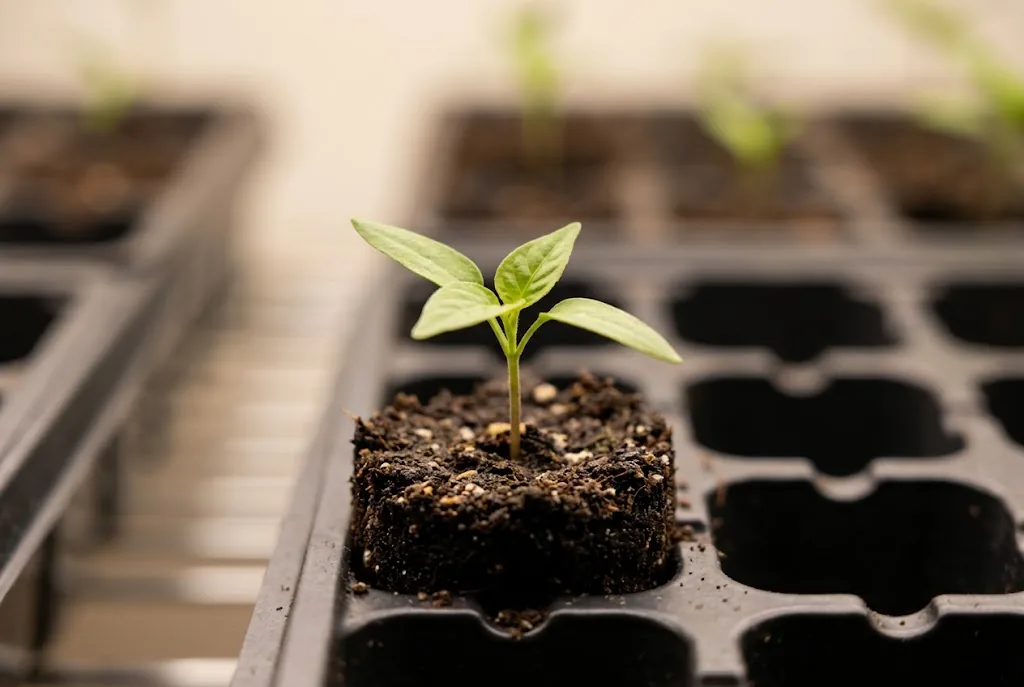
Give this warm-season crop a long head start indoors. The University of Minnesota recommends starting pepper seeds about eight weeks before outdoor planting and keeping the starting mix at 80 to 90°F until emergence. Provide bright overhead light and keep the mix moist without waterlogging it. The catalog listing gives 95 to 100 days from transplant; regard that as an estimate for the listed line, since growing conditions change the calendar. University of Minnesota Extension growing guide
Transplant into sun and warmth
Harden seedlings off gradually, then move them outdoors after frost danger has passed and nights are warm. Keep the root ball at its original soil level. Choose full sun and well-drained soil. The variety listing includes in-ground, greenhouse and pot culture, and labels it late-maturing. In a short growing season, plan the indoor start early and consider protected growing; use a container with drainage holes on a patio. The University of Minnesota home-garden guide uses 18 inches between plants and 30 to 36 inches between rows as a general pepper spacing reference. Leave room for a bushy plant, and follow local spacing guidance because climate and planting conditions differ. For a separate profile of another species in the pepper collection, see Cili Padi (Capsicum frutescens).
Water steadily and inspect often
Water when the soil begins to dry, adjusting for rainfall, warmth and pot size instead of following a fixed calendar. Even moisture supports fruit development, but saturated soil can stress roots. Avoid excess nitrogen, which can encourage leafy growth at the expense of fruit. Check leaves and pods for problems, identify a pest before acting, and follow the label on any control product.
Harvest and handling
Clip fruit from the stem once it reaches mature size. Pick at the mustard-orange stage for the signature color, or wait for orange fruit. Wear gloves while harvesting and cutting, keep hands away from eyes, and wash hands and tools after handling. Minnesota Extension recommends these precautions for hot peppers. UMN Extension harvest advice

Storage and preserving
USU Extension says fresh chiles can be refrigerated for two to three weeks. To keep a harvest longer, freeze whole or cut pieces in freezer-safe packaging; properly packaged chiles held at 0°F or below keep for up to a year. Frozen pods work well in cooked dishes, salsas and sauces. USU Extension storage chart USU Extension chile preservation guide
For flakes or powder, dry ripe pods in a dehydrator until brittle, then store them in a clean, closed container as a finishing spice. For shelf-stable canned peppers, use a tested method and pressure canner; do not improvise processing times.

Culinary uses
The ripe pods add vivid color and substantial pungency to fresh salsa, marinades, cooked dishes and hot sauce. A small piece can season a larger batch, so add gradually and taste as you go. Adjust salt only after tasting the dish. The fruity flavor works well when balanced with acidity and sweetness, but the amount needed depends on the pod. This is a spicy ingredient; protect your hands and eyes during preparation. Readers comparing other Capsicum chinense selections can explore Bahamian Goat peppers.
A quick mustard sauce
Yield: about 4 tablespoons, or four small servings. Stir together 3 tablespoons mayonnaise, 1 tablespoon prepared mustard, 1/2 teaspoon cider vinegar, and 1/4 teaspoon honey. Wearing gloves, mince a tiny piece of ripe fruit and mix it in; begin with about 1/8 teaspoon, then add more gradually to taste. Serve with sandwiches, burgers or roasted vegetables. This fresh recipe is for immediate use, not canning or shelf storage. Refrigerate any leftover sauce at 40°F or below within two hours. USDA leftover-handling guidance

Frequently asked questions
Is it a separate species?
No. It is a selection of Capsicum chinense, the same species as habaneros. The name refers to the ripening color.
How hot is it?
No cultivar-specific test was found. UF/IFAS places the broader habanero group at 100,000 to 350,000 SHU, and individual fruit can vary.
When should I harvest?
Pick when fruit has reached mature size. For the signature appearance, wait until the pods turn golden orange; they may continue to bright orange.
Will saved plants match the parent?
Some out-crossing can occur among pepper types, and saved seed from a cross may not preserve the parent’s fruit traits. If consistent color and shape matter, buy plants from a supplier that identifies the selection clearly. USU Extension seed-saving guidance
