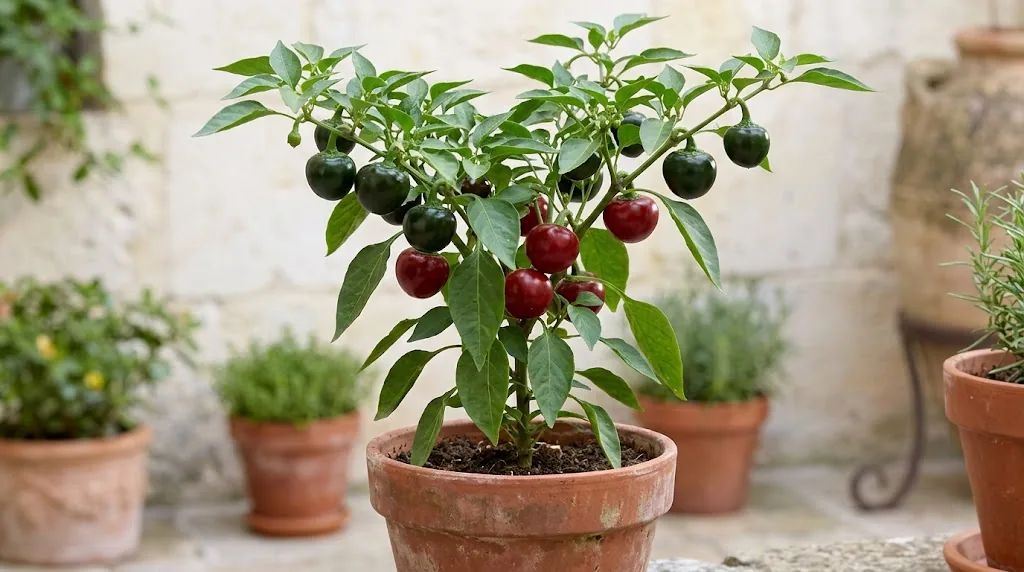
Capperino peppers are compact, round, thick-walled chilies sold as an F1 hybrid for stuffing and pickling. The breeder lists a heat level of about 7,000 Scoville units, while a US seed seller calls it moderately hot. That difference is a reminder to treat the figure as a guide, not a promise about every pod.
For a wider look at shapes, heat, and kitchen roles, see our guide to different chili pepper types.
What is Capperino?

SAIS, an Italian seed company, lists Capperino F1 as a compact, upright pepper with round pods about 3 to 3.5 centimeters across. They start very dark green and ripen deep red. Johnny’s Selected Seeds describes the shape as round to slightly flattened and gives an average diameter of 1½ inches. Its catalog also calls this cherry type popular in Italy, but does not document a deeper folk history.
The F1 label means the seed is a commercial hybrid. Seedlings grown from saved seed may not match the purchased selection, so buy new seed if you want a predictable crop. These product listings establish the hybrid’s commercial identity; they do not establish a folk origin story.
Origin, heat, and flavor
The sources reviewed identify a named commercial hybrid, but they do not give a dated development history. Johnny’s says the variety is popular in Italy. SAIS reports 7,000 Scoville units. Johnny’s describes moderate heat but does not publish a Scoville range, so treat the breeder’s figure as a guide rather than an exact measure. Taste a small cooked piece before adding more to a dish.
The firm, thick flesh is suited to filling and preserving. If you want another ornamental and edible variety to compare, read about Buena Mulata peppers.
How to grow the hybrid

Start seeds indoors in warm conditions, then transplant after frost danger has passed and the soil has warmed. Johnny’s recommends sowing about eight weeks before transplanting and keeping the seed-starting mix around 80 to 90°F. Utah State University Extension gives about 80°F for germination and recommends bright light for young seedlings. Harden each seedling off before moving it outdoors, and add a layer of mulch around the base to hold moisture.
Choose a sunny spot with fertile, well-drained soil. The compact plant can grow in a pot, greenhouse, or garden bed. SAIS lists resistance to tobacco mosaic virus strain 0; resistance narrows a risk but does not promise immunity. In a container, use a pot with drainage holes and keep the mix moist, not soggy. University of Minnesota Extension notes that watering needs change with container size and temperature, so check the soil rather than following a fixed schedule. Use a soil test to guide fertilizer; too much nitrogen can encourage leafy growth over flowering.
Johnny’s lists about 60 days to green pods and 85 days to red ripe pods. Treat those as catalog estimates, not a guaranteed schedule. Check plants as they grow and use the seller’s color and size descriptions as your practical guide.
Harvesting and handling
At harvest, cut firm, full-size peppers with clean scissors or pruners instead of tugging on the branches. Pick them green or leave them to ripen red. The seller recommends prompt picking of the first full-size pods to encourage later fruit set.
Capsaicin in a hot pepper can irritate skin and eyes. Wear gloves if you are sensitive, avoid touching your face while cutting, and wash your hands and tools afterward. To see how far heat can climb beyond this hybrid, look at the Trinidad Moruga Scorpion, which New Mexico State University’s Chile Pepper Institute lists at 2 million SHU, far above SAIS’s 7,000 figure, so never swap one for the other in equal amounts.
Storing, drying, and preserving
Use fresh pods while they are firm, or freeze them for later cooking. To dry them, slice the thick flesh into pieces and use a dehydrator until brittle, as Utah State University Extension recommends for chiles. Pack fully dry pieces in a clean container and store them away from heat and light.
For shelf-stable pickled peppers, follow a tested home-canning recipe without changing its proportions or processing steps. Peppers are low-acid vegetables, and an improvised vinegar brine is not a safe substitute. For a refrigerator pickle, use a reliable recipe and keep it refrigerated.
Culinary uses

The round cherry shape makes this pepper handy for small stuffed appetizers. Core the pod, remove seeds and ribs if you want less heat, fill it, and bake it until the flesh is tender and the filling is hot. Soft cheese, rice, or a savory meat mixture all work as fillings. For pickling, keep the pods whole or halved and follow a tested recipe, as described above, so the brine stays safe. Chopped pieces can also add a sharp note to sauces, salsas, soups, salads, and other cooked dishes. Start with a small amount when cooking for people whose heat tolerance you do not know.
Sources and variety notes
- SAIS Capperino F1: plant habit, pod size and color, growing settings, and the breeder’s heat figure.
- Johnny’s Selected Seeds: hybrid status, pod description, maturity estimates, and seed-starting guidance.
- Utah State University Extension: general pepper seed starting and garden care.
- Utah State University Extension, How to Preserve Chiles: drying peppers until brittle.
- University of Minnesota Extension: container moisture and watering.
- National Center for Home Food Preservation: safe use of tested recipes for preserving low-acid peppers.
- Poison Control: capsaicin exposure prevention and irritation guidance.
- New Mexico State University Chile Pepper Institute: Trinidad Moruga Scorpion heat listing.
