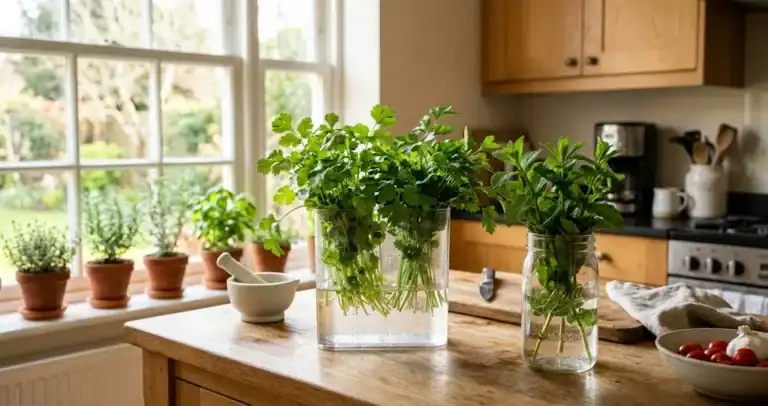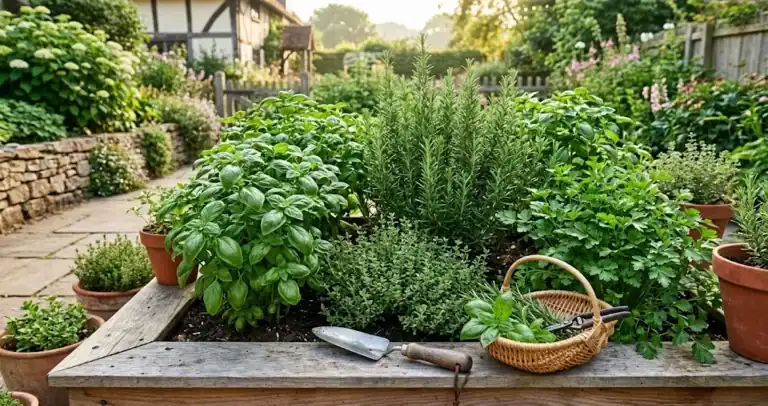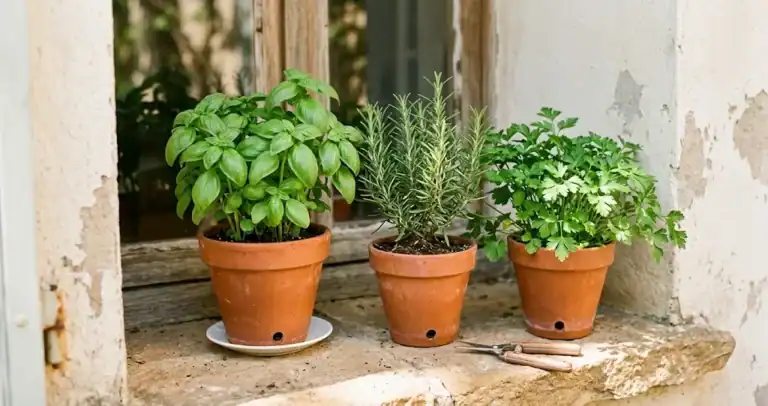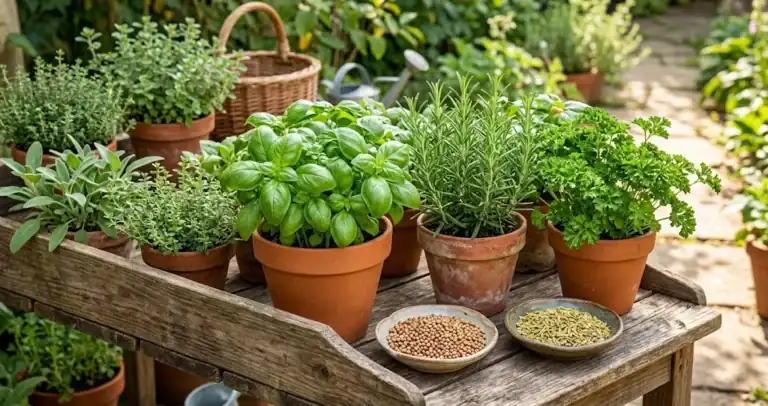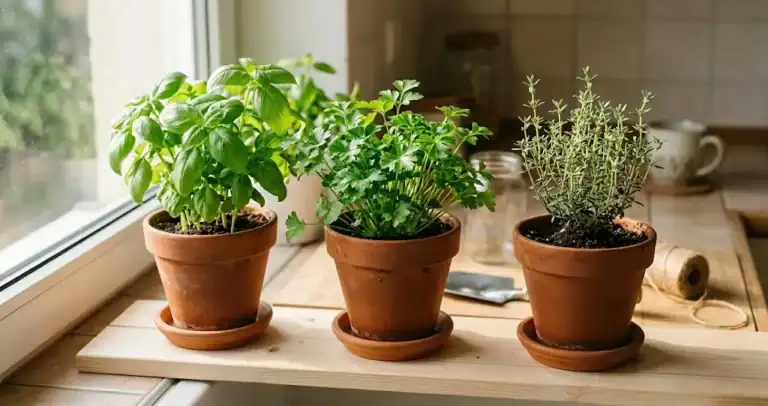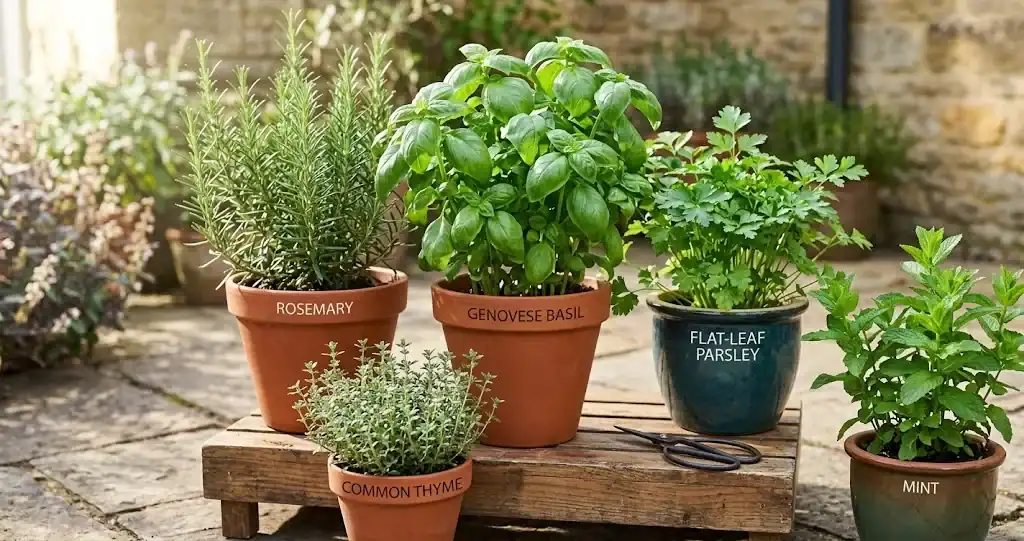
A small pot of basil on a sunny windowsill is one of the easiest ways to add fresh flavor to weeknight dinners. Container herb gardening brings that payoff indoors or out, on a patio, a balcony, or a stoop, and it skips the soil prep, weeding, and space demands of a full garden bed. This complete guide to growing herbs in containers walks through everything a beginner needs to start a thriving potted herb garden, from picking planters and soil to choosing herbs and keeping them productive.
What a container herb garden gives you
A potted herb garden keeps herbs close to the kitchen and lets you control the soil, sun, and water each plant gets. Many herbs grow well in tight spaces, start fast from seedlings, and bounce back quickly when conditions change. For renters, apartment dwellers, and any gardener who wants fresh herbs without a yard, planting in containers is the simplest entry point.
The tradeoffs are real, too. Planters dry out faster than ground soil, so watering matters more. Containers limit root space, which keeps plants smaller and means a rosemary bush that would grow four feet tall in the ground stays compact in a 12-inch pot. None of this is a problem if you match the planter to the herb and pay attention to watering.
Pick planters that drain
Good drainage is the single most important feature of any herb container. A vessel without adequate drainage holes traps water at the bottom, the roots sit in mud, and the plant slowly suffocates. Most kitchen herbs hate wet feet, so a pot that holds water is usually a slow way to lose the plant.
Choose planters with at least one drainage hole, and ideally more. Terracotta breathes and helps soil dry out between waterings, which suits Mediterranean herbs such as rosemary, thyme, and oregano. Glazed ceramic and plastic hold moisture longer, which favors basil, parsley, and mint that prefer steady moisture. Whatever the material, the planter should be deep enough for the herb’s roots and wide enough that the crown has a little breathing room around the stem.
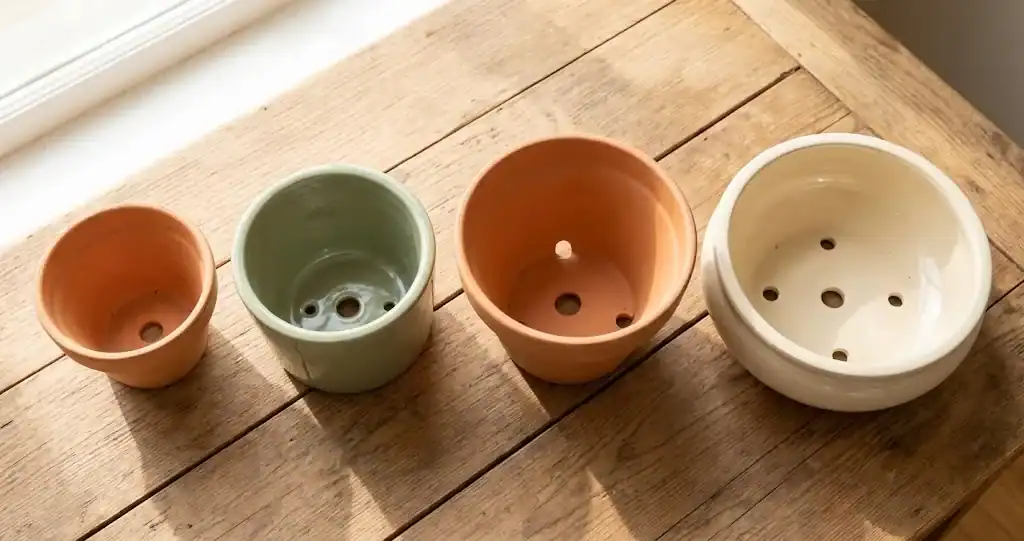
For a single herb, start with an 8 to 12 inch container. For a mixed grouping, use a larger window box or a wide round planter so each plant gets its own root space. Place containers where you can reach them easily for watering and harvest. The full breakdown of materials, sizes, and shapes lives in the guide to choosing the right herb containers.
Use a quality potting mix
Garden soil compacts in containers and strangles roots. A bagged potting mix is the right call for almost any herb in a container garden. Look for a well-draining mix that lists perlite or vermiculite on the bag. These light additives keep the soil airy so water drains through and roots get oxygen.
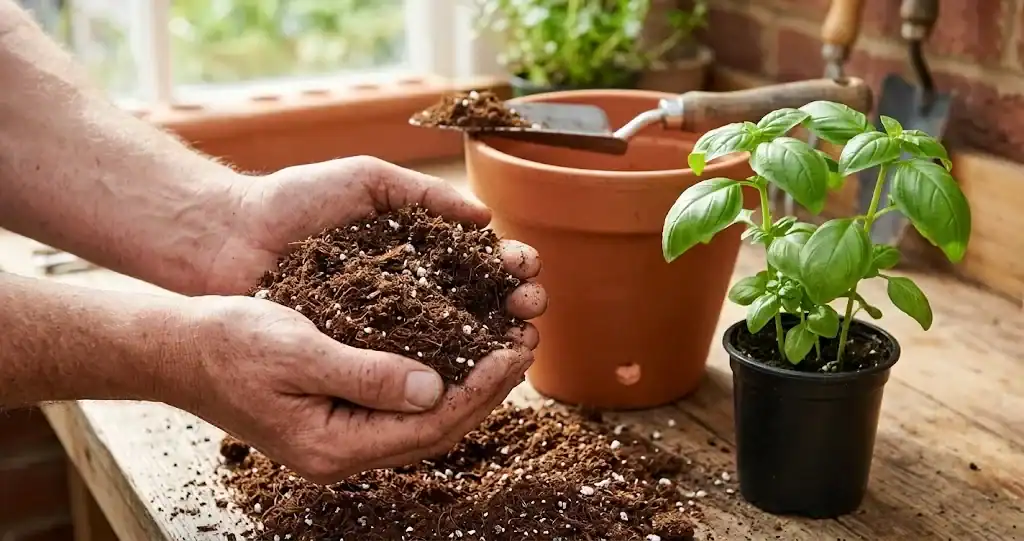
Skip the gravel-at-the-bottom trick. A layer of rocks in a pot raises the water table inside the planter and makes drainage worse, not better. A good well-draining mix does the real work. If you want extra moisture control for thirsty herbs, blend a little more perlite into the mix or top the soil with a thin mulch layer to slow evaporation.
Pick herbs that fit your light
Herbs split into two camps by light needs. Full-sun herbs want six or more hours of direct sun a day and do best on a south-facing windowsill, a sunny patio, or a balcony without shade. The sunniest spot in your kitchen or yard is usually the right place to start. Shade-tolerant herbs manage with four hours and can sit a few feet back from a bright window.
Easy full-sun herbs for beginners
- Basil, including sweet and Genovese types, which grow fast from seed or seedling and give a steady supply of leaves for pesto, salads, and pasta. It is one of the easiest herbs to grow.
- Rosemary, a Mediterranean woody perennial that asks for full sun, fast-draining soil, and careful watering, and rewards consistent snipping.
- Oregano and its close cousin marjoram, both pungent kitchen staples that grow happily in smaller containers.
- Sage, with broad gray-green leaves that hold their flavor through long cooking.
- Chives, the mild onion-flavored herb that comes back year after year in most climates.
- Tarragon, the classic French fines herbes herb, which prefers well-drained soil and full sun.
Shade-tolerant herbs to try
- Parsley, both flat-leaf and curly, which tolerates partial shade and produces for months.
- Mint, which grows in sun or shade but spreads aggressively, so always grow mint in its own planter.
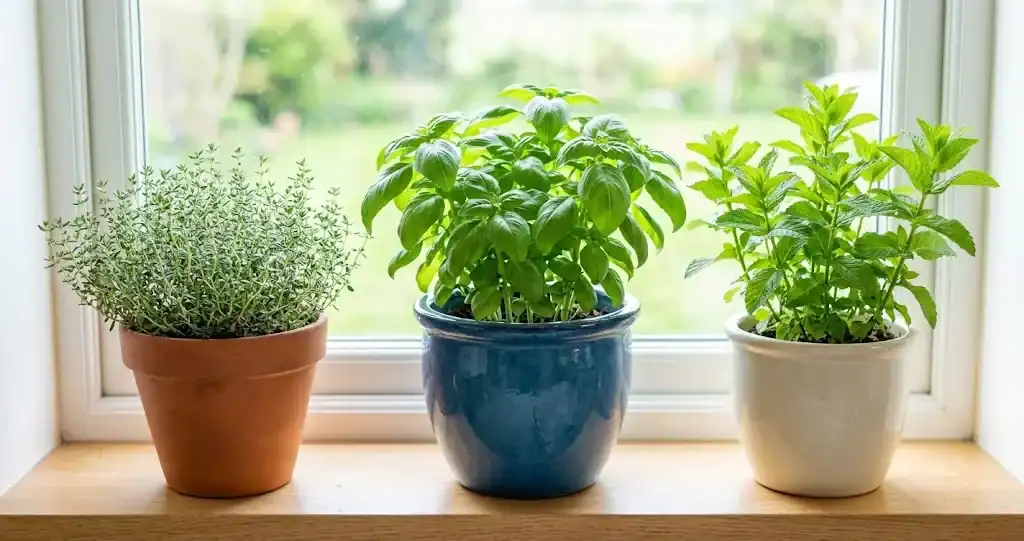
For a first container herb garden, start with three or four herbs you already cook with. Adding more is easy once you see how each one grows.
Plant herbs the right way
Most beginners buy starter plants from a garden center or supermarket. That is the fastest path to a harvest. Open the nursery pot, gently tease the roots apart if they are tightly wound, set the plant in the new container at the same depth it was growing before, and fill around it with fresh potting mix. Water deeply until water runs out the bottom, then let the surface dry before watering again.
Starting from seed works well for basil, parsley, chive, and dill. Sprinkle seeds on moistened mix, cover lightly, and keep the soil damp until germination. Basil, chive, and dill usually sprout within a week in a warm spot, while parsley commonly takes three to four weeks and is normal for it to feel slow.
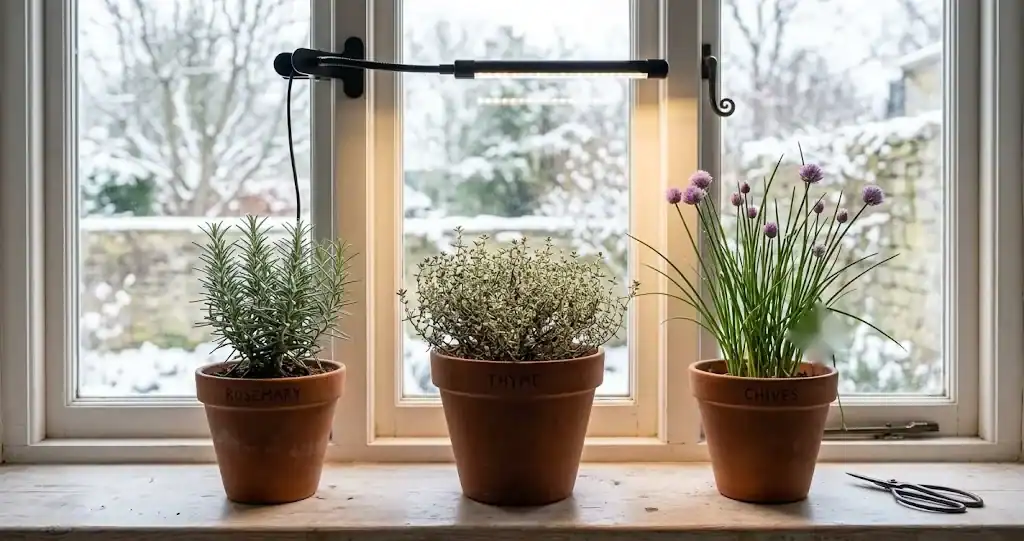
For perennial herbs like rosemary, sage, and oregano, whether a plant stays outside or comes indoors depends on the plant’s hardiness, the local winter, the exposure of the container, and the light available inside. A potted plant on an exposed patio may need a sheltered corner, while a tough sage near a south-facing wall can ride out a mild winter outdoors. Bring tender plants in before hard frost and grow in containers in the brightest window you have. Trim lightly so they put energy into roots rather than soft new growth.
Water and feed on a simple rhythm
The fastest way to lose potted herbs is inconsistent watering. Soil in containers dries faster than ground soil, especially in terracotta, on sunny patios, and during summer. Check the top inch with a finger; if it feels dry, water deeply until it runs out the bottom. If it still feels moist, wait.
A basic rule: water most herbs when the top inch dries out, water mint and basil as soon as the surface feels slightly dry, and let rosemary, oregano, and sage dry more between waterings. Underwatering shows up as drooping leaves; overwatering shows up as yellowing leaves and a sour smell from the soil.
Container herbs do not need heavy feeding. A dilute liquid fertilizer every three to four weeks during active growth is plenty for most. Overfertilizing produces lush leaves with weak flavor, which is the opposite of what most cooks want.
Harvest in a way that keeps plants producing
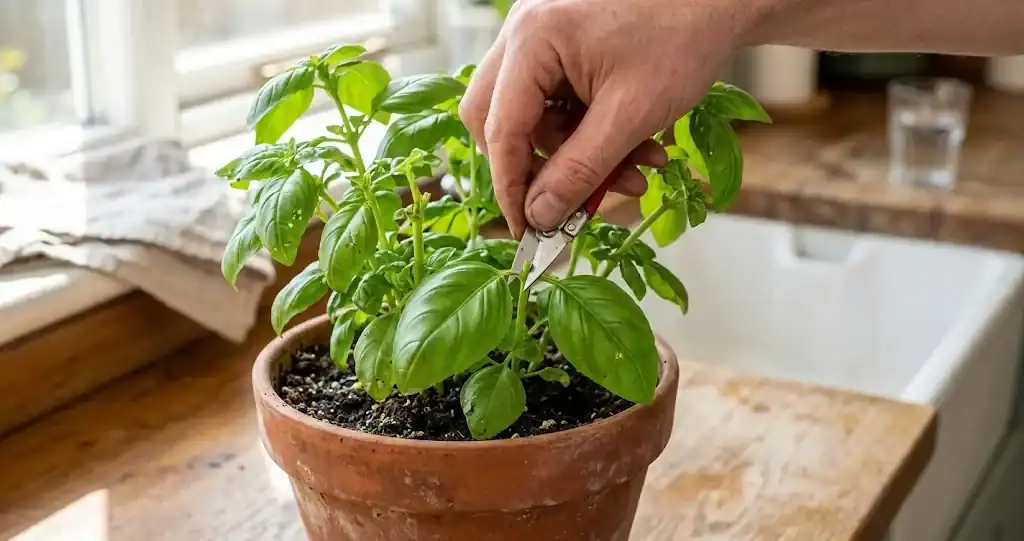
The harvest itself shapes how the plant grows. Snip the top few inches of stems rather than plucking individual leaves, and cut just above a leaf pair where two leaves meet the stem. The plant branches from that joint, so a regular trim keeps it bushy and productive rather than tall and leggy.
In the kitchen, fresh herbs go in at the end of cooking so their flavor stays bright. A few torn leaves lift a tomato salad, chives finish a baked potato, oregano seasons a roast chicken, and mint goes into a yogurt sauce. A small container just outside the kitchen door makes picking a handful for dinner effortless. The full playbook on looking after herbs in pots covers year-round feeding, pruning, and pest checks.
Troubleshooting common problems
Yellow leaves usually mean overwatering or poor drainage. Let the soil dry, check that the planter drains freely, and trim off the yellowed growth.
Leggy stems with small leaves mean not enough sun. Move the pot to a brighter spot or run a small grow light a few hours a day.
White powder on leaves is usually powdery mildew, which happens in damp, still air. Improve airflow around the plant, water at the soil level rather than over the leaves, and remove affected growth.
Slow growth in mid-summer can be a heat pause. Mint and basil slow during the hottest weeks. Trim flowers off basil as soon as they appear to keep leaves coming.
Frequently asked questions
Do herbs in pots need full sun?
Most kitchen herbs want six hours of direct sun a day. Basil, rosemary, thyme, oregano, and sage all do better in bright spots. Chives manage with four hours.
How often should I water herbs in containers?
Check the top inch of soil daily in summer. Water deeply when the top inch dries out for most herbs, sooner for mint and basil.
Can I grow herbs in pots indoors year-round?
Yes. A south-facing window or a simple grow light on a timer keeps most herbs producing through winter. Rotate the pot a quarter turn each week so growth stays even.
What is the easiest herb to grow in a container?
Mint, basil, and chives are forgiving for first-time gardeners. Mint in particular tolerates a wide range of conditions, though it spreads aggressively and should always have its own pot.
Do I need to fertilize container herbs?
A dilute liquid feed every three to four weeks during active growth is enough. Heavy feeding weakens flavor.
What herbs are best as edible container plants?
Annual herbs such as basil, dill, and cilantro give quick returns from seed. Perennial herbs such as sage, thyme, and oregano come back year after year and earn their place in a long-term container garden.
Which herbs grow best in a small container?
Compact, low-water herbs such as thyme, oregano, chives, and parsley tolerate smaller pots and still produce well. Mint grows in almost any size container, though it should always have its own planter to keep it from spreading.
Where to go from here
Planting a potted herb garden is the easiest way to keep fresh flavor within arm’s reach of the stove. Pick a sunny spot, choose two or three herbs you already cook with, and start small. The right planter, the right mix, and a simple watering rhythm do most of the work.
For a broader look at garden planning, soil prep, and the wider herb selection, see the beginner’s guide to growing an herb garden.