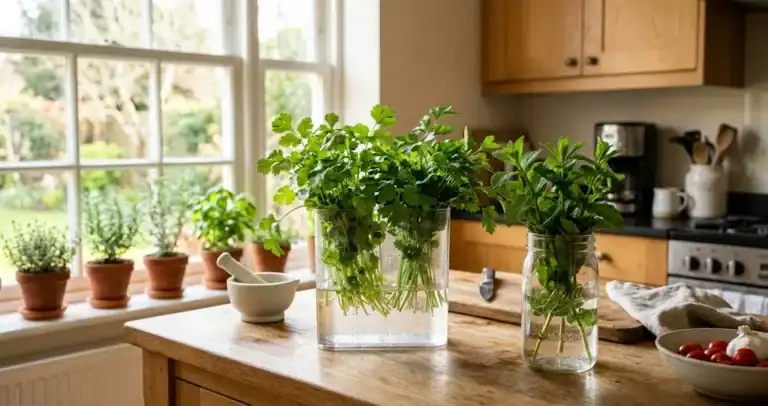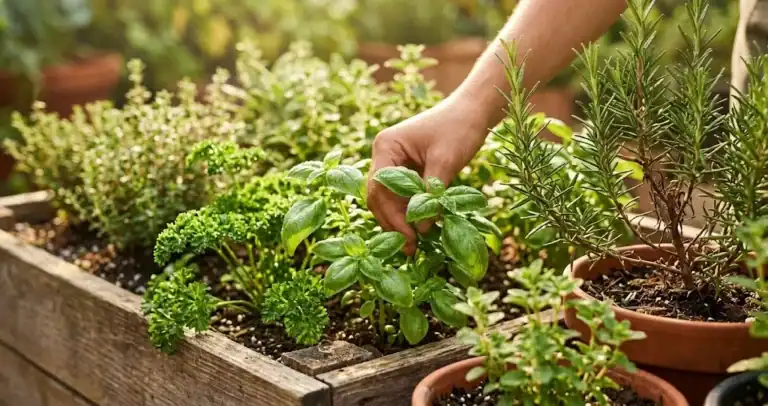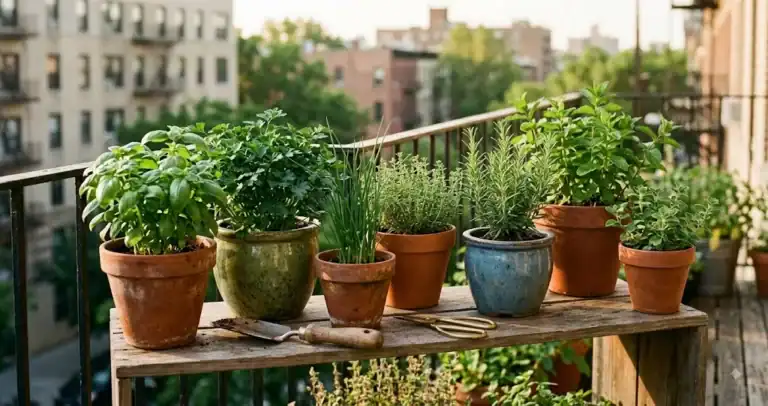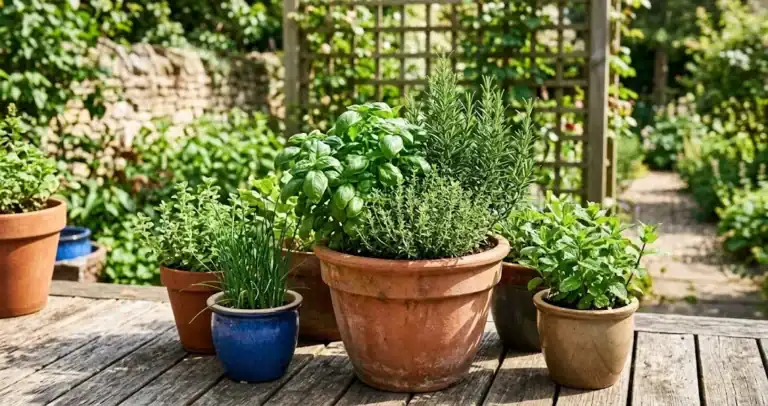
A potted herb patch asks for very little and pays you back with fresh flavor all season long. Most culinary herbs are forgiving plants that thrive in containers, even on a small balcony or a sunny kitchen windowsill. The basic recipe is simple: match the vessel to the herb, fill the pot with a free-draining potting mix, water on a finger test, give the plant the light it asks for, and trim often to keep growth bushy. This guide to growing herbs in pots brings together the practical tips that make container herb gardening reliable from the first transplant through several seasons of harvest. Grow herbs in pots and the routine fits a windowsill, a balcony, or a small patio without losing flavor or harvest.
Why herbs do well in containers
Containers give a gardener something a garden bed cannot: a private, movable microclimate for each plant. Mediterranean herbs such as oregano and thyme come from dry, rocky hillsides and sulk in heavy, wet ground. A planter filled with gritty, free-draining soil recreates their home conditions on a sunny patio. Tender herbs, basil included, drink on their own schedule in containers, free from competition in a shared bed. Containers also solve the space problem: a renter who cannot dig a bed can still harvest fresh herbs from a fire-escape planter, while an apartment dweller can keep an indoor herb patch thriving year-round under a grow light. Grow herbs in containers and you can also follow the sun across the seasons and bring tender plants indoors before frost.
Choose the right container
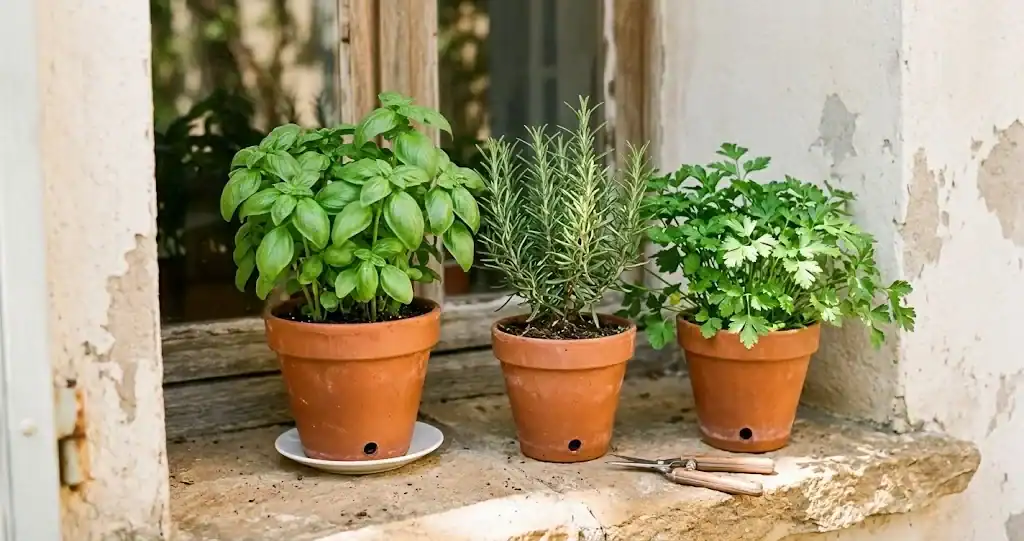
Size and material matter more than looks. Almost every culinary herb sends out a fibrous root system that hates sitting in water, so a drainage hole at the bottom is non-negotiable. A terracotta vessel breathes through its walls and helps the mix dry evenly between waterings, which suits Mediterranean options such as oregano. Glazed ceramic, plastic, and fabric grow bags hold moisture longer and work better for leafy herbs that prefer steady moisture. If you love the look of terracotta but the soil dries too fast in summer, line the inside with a thin plastic sheet pierced with a drainage slit.
Size the vessel to the plant. A single specimen wants at least an 8-inch pot with several inches of root room. Mint tolerates a small home but fills it within a season. The smallest vessels, four to six inches, suit shallow-rooted herbs, chives and thyme among them, while a deep planter box can host several plant herbs together if they share water and sun needs. For a closer look at materials and sizing, see our guide to picking the right pot.
Use a free-draining potting mix
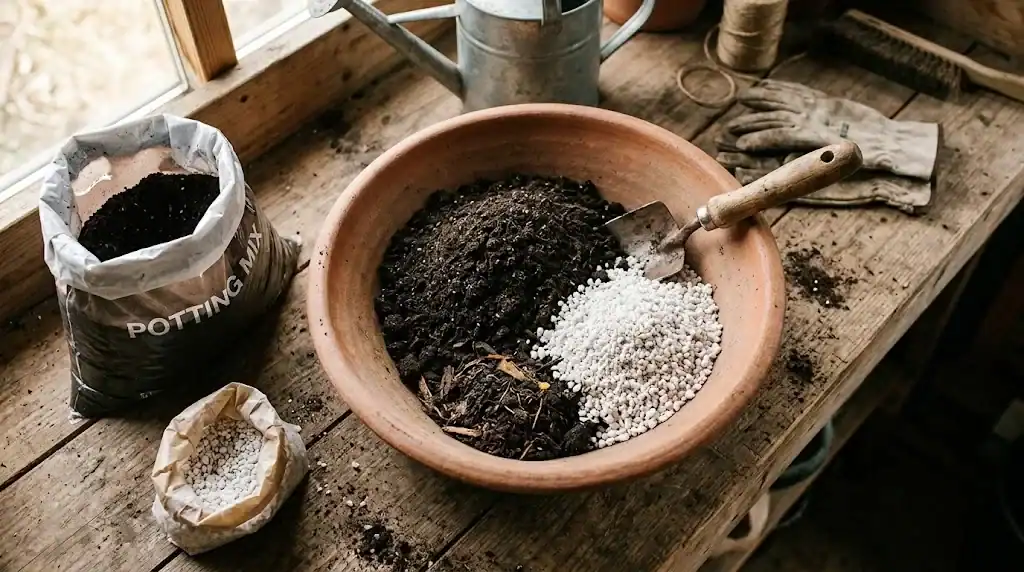
Never use garden soil in a container. Garden soil compacts in pots, smothers roots, and traps moisture against the drainage hole. Instead, choose a bagged potting mix labeled for containers, then loosen it further with grit, perlite, or coarse sand. A reliable starter blend is two parts potting mix to one part perlite or grit, which keeps roots oxygenated and lets excess liquid run through quickly. Mediterranean herbs do best in an even grittier blend of one part potting mix to one part coarse sand or fine gravel, which mimics the rocky soil of their native hills and protects them from the wet feet that cause root rot. A well-draining soil mix is the single biggest factor in keeping potted herbs alive.
A handful of compost mixed into the blend gives leafy herbs a steady supply of nutrients for the first month or two. After that, plan to feed the plant through regular fertilizing, since most container mixes run out of nutrition faster than garden soil does. Good drainage and a free-draining mix make a real difference for container herbs in pots of every size.
Water on a finger-test schedule
The fastest way to kill a potted herb is to water on a timer without checking the soil. Gardeners call the routine the finger test for good reason: push a finger an inch into the potting mix. If it feels dry at that depth, irrigate thoroughly until excess drains from the bottom. If it feels moist, wait a day and check again. Most herbs prefer a soak-and-dry rhythm rather than a daily sprinkle, because constantly damp soil suffocates roots and invites fungal disease.
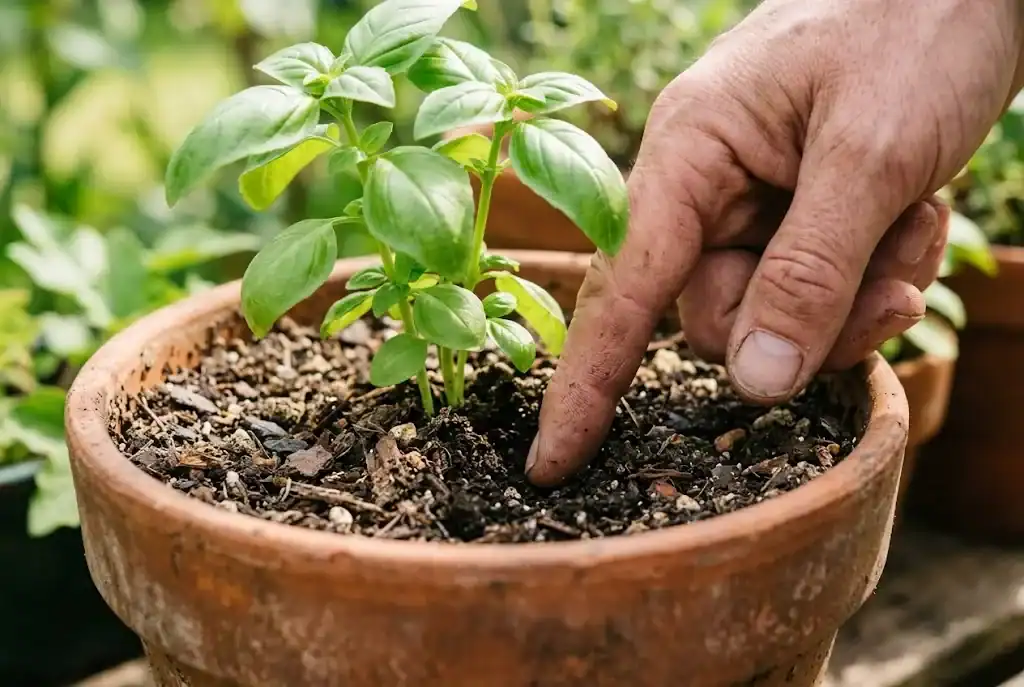
Adjust the routine to the herb, the vessel, and the weather. Mediterranean herbs in terracotta on a sunny patio may need watering every two to three days in midsummer. Leafy herbs in plastic containers on the same patio may need watering every day. Sage in partial shade in spring may need watering only once a week. When in doubt, lift the container. A dry vessel feels noticeably lighter than a freshly irrigated one, and that simple weight check tells you more than any schedule can.
Match the herb to the sun
Sunlight drives the essential oils that give herbs their flavor and aroma, and most kitchen herbs want as much as they can get. Basil, oregano, and thyme all want at least six to eight hours of direct sun a day. Leafy herbs such as parsley, cilantro, chives, and mint tolerate partial shade, particularly during the hottest part of the afternoon. A container has an advantage over a garden bed here: when a heat wave hits, you can move a stressed basil to afternoon shade or carry a planter of chives out of the blasting sun onto a cooler step.
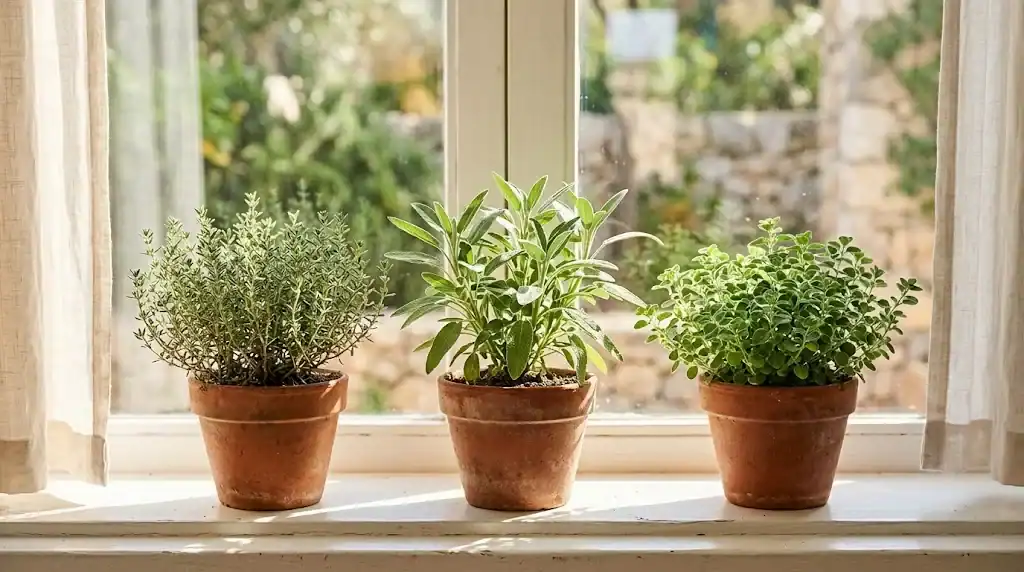
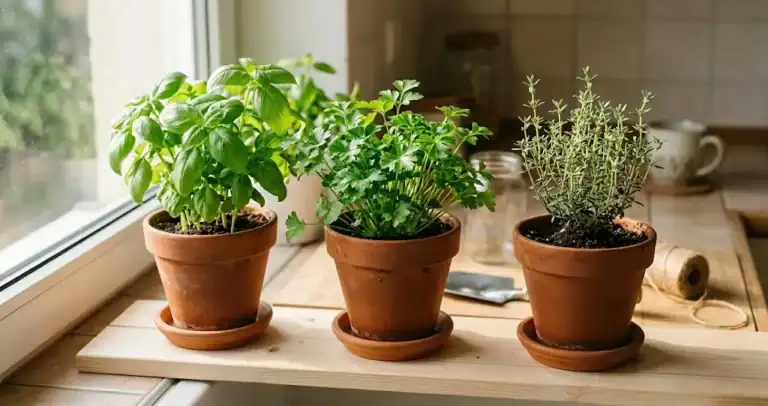
Indoor herb gardens need bright light, and a south-facing windowsill is the gold standard. During short winter days or in dim apartments, a full-spectrum LED grow light set four to six inches above the foliage for twelve to fourteen hours a day keeps leaves short, sturdy, and full of flavor. Without enough light, indoor specimens stretch into pale, leggy stems with thin leaves and little aroma. A grow light is the simplest fix for the long, dark months and keeps herbs growing indoors year-round, so even a small kitchen can grow herbs indoors through winter without losing flavor.
Feed lightly, and feed regularly
Container-grown herbs have a limited root zone and a limited pantry. Once the initial charge of compost in the potting mix is spent, the plant needs supplementary nutrients to keep producing new leaves. A liquid seaweed feed or a balanced organic fertilizer diluted to half strength, applied every two to four weeks during active growth, suits most leafy herbs. Mediterranean herbs want even less; a single light feeding in spring is usually plenty for the whole season. Over-fertilized plants grow fast but lose flavor, and over-fed rosemary produces soft new growth that struggles to survive winter.
Watch the leaves as your guide. Yellowing lower leaves often point to a nitrogen shortfall. Slow growth with pale new leaves suggests the plant needs a broader nutrient boost. Crusty white build-up on the soil surface signals salt buildup from hard water or synthetic fertilizer, and a deep irrigation that flushes liquid through the drainage hole clears it away.
Pinch and trim to keep plants bushy
Regular harvesting does double duty in a potted herb patch. Each pinch removes the growing tip and forces the plant to send out side shoots, which gives you a bushier, more productive plant instead of a single tall stem. Start pinching early, as soon as the plant has several sets of true leaves, and never remove more than a third of the foliage at a time. Cut just above a leaf pair so the plant branches from that node. The classic potted herb responds dramatically to this treatment; a single specimen, pinched weekly, can produce several cups of leaves across a season.
For flowering herbs, pinch off buds as soon as they appear unless you want the plant to set seed. Once basil, cilantro, or chives bolt, the leaves turn bitter and the plant focuses its energy on reproduction. A quick weekly check keeps the plant in leaf production. Rosemary blooms on its own schedule; let it flower if you like, then trim back the spent stems to keep the plant tidy.

Refresh the container and the soil each season
A potted herb does not live forever in the same soil. Over a season, the potting mix settles, the nutrients leach out with each watering, and salts build up around the root zone. Plan to refresh the soil at least once a year, in early spring as growth resumes. Knock the plant out of its vessel, tease apart any circling roots, and replant in fresh potting mix with a pinch of compost. If the plant has outgrown its home, step up to a container one size larger, two to four inches wider in diameter. If the plant is getting leggy or woody, take cuttings and start a fresh plant rather than nursing an old one.
Some herbs are short-lived by nature. Basil is an annual plant that finishes its life when frost arrives. Cilantro bolts in heat and rarely lasts past early summer. Rosemary can live for years in the right conditions, but it dislikes root disturbance and is happiest left alone except for an annual refresh. Mint is famously tough but benefits from a yearly division, because a few years in the same container leaves a congested root ball with little room for fresh growth.
Choosing the best herbs for pots
Almost every kitchen herb grows well in containers if you give it the conditions it likes. The easiest herbs to grow in pots are the ones that already evolved to handle dry cycles or confined root runs, and they cover most cuisines you cook at home. Basil, mint, oregano, sage, thyme, rosemary, and lavender are in the Lamiaceae family. Parsley (Petroselinum crispum) is in Apiaceae, while chives (Allium schoenoprasum) are in Amaryllidaceae. Most are Mediterranean herbs that thrive in lean, gritty soil with full sun and are forgiving of missed waterings. The list is easy to grow for beginners, and many herbs grown in containers come back year after year with a little winter protection.
For leafy harvest, mint is one of the easiest herbs in pots and the most productive across a warm growing season. Mint should always have its own vessel because its roots run aggressively through any shared container. For drying and winter storage, rosemary is among the easiest herbs because its woody stems hold flavor long after harvest. For a small garden or a balcony, choose three or four herbs you actually cook with rather than ten you will forget to water. Best herbs to plant together in one planter are those that share the same water and sun needs.
Pair herbs that share the same conditions
Grouping herbs in one container saves space and looks lovely on a patio, but the pairing has to make sense. Mediterranean herbs, including oregano and sage, want dry feet, lean soil, and full sun, and they thrive in the same terracotta planter with a gritty mix. Basil, parsley, and chives prefer steady moisture and richer soil, and they make a good kitchen-door grouping. Mint is best in its own container, because its roots run through any shared vessel and crowd out neighbors within a season.
Watch the watering rhythm in any shared planter. If one plant wants dry soil and another wants steady moisture, neither will be happy. The simplest pairing rule is to group by water need: dry-loving herbs together, moisture-loving herbs together, mint alone. A 12-inch container can host three or four small herbs as long as the conditions match and the plants have a few inches of space between root balls. With a small space and the right herb container gardening plan, a window box, a balcony rail, or a single sunny step is enough room to grow herbs year-round.
Harvesting herbs without slowing them down
Once your pots are established, regular harvesting keeps them productive and supplies the kitchen at the same time. Snip leafy herbs in the morning after the dew dries but before the sun hits hard, when the essential oils are at their peak. Cut whole stems rather than single leaves; the plant branches from the cut and grows back bushier. For woody herbs such as rosemary and oregano, snip a few inches off the top of each stem and avoid cutting into the bare wood at the base, which may not regrow. Harvesting herbs from a potted plant never takes more than a few minutes each week, and the regular trim doubles as the pinching routine that keeps growth compact.
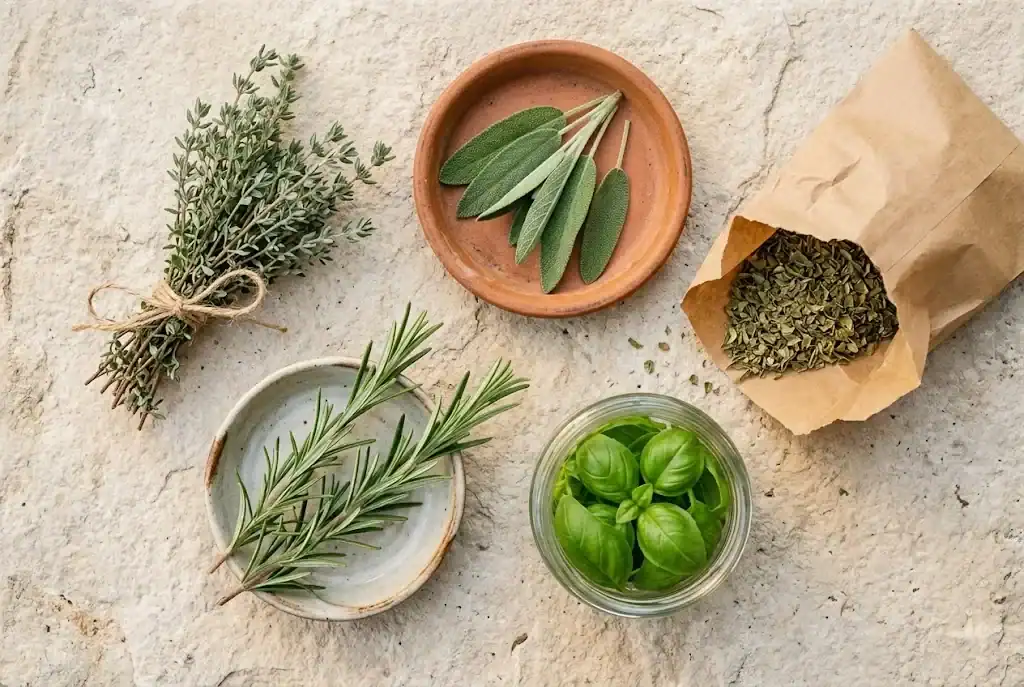
Most herbs are easy to dry for winter storage. Tie small bundles of thyme at the stem and hang them in a warm, airy spot out of direct sun. Once the leaves crumble between your fingers, strip them off and store them in a labeled jar. Parsley is easier frozen than dried; chop the leaves, pack them into an ice cube tray with a splash of olive oil, and pop the cubes into freezer bags. A single 8-inch pot of basil can supply several trays of pesto cubes across a season.
Common mistakes to avoid
Most herb-growing problems trace back to a few recurring mistakes. Overwatering is the largest single cause of potted herb death, especially in winter when growth slows and the soil stays wet longer. Containers without a drainage hole, even attractive decorative cache pots, leave roots sitting in liquid and should be reserved for outer shells with the herb planted in a plain nursery pot inside. Putting a sun-loving herb in deep shade or a shade-loving herb in blasting sun is the second common mistake; the plant will limp along for a few weeks and then give up. Crowding too many herbs into a small pot is the third; roots compete for moisture and nutrients, and growth slows across the whole planter.
Skipping the pinch is the fourth mistake, and the easiest to fix. A potted specimen that has not been pinched will run to a single stem and exhaust itself. Five seconds with a pair of snips each week turns a leggy plant into a productive, leafy one. Finally, ignoring the seasonal refresh is the fifth. A potted herb outgrows its soil within a year, and a quick spring repot with fresh mix keeps the plant vigorous for another season. For more on the ongoing care an herb patch needs, see our tips for nurturing herb gardens.
Frequently asked questions
What herbs should not be potted together?
Mint should never share a container with other herbs, because its roots spread aggressively and crowd out neighbors. Herbs with very different water needs, such as rosemary and basil, should also live in separate pots. Mediterranean herbs including oregano make one good group; basil, parsley, and chives make another.
Do herbs prefer deep or shallow pots?
Most herbs prefer a moderately deep container, eight inches or more, so the root system has room to anchor and the soil volume holds enough moisture between waterings. Shallow-rooted herbs, chives among them, can grow in six-inch pots, but deeper is generally better.
How often should you water herbs in pots?
Check the soil with your finger every day in summer. Water thoroughly when the top inch of potting mix feels dry, then let excess drain from the bottom. In cooler months, herbs need less frequent watering, sometimes only once a week.
What is the easiest herb to grow in a pot?
Among culinary herbs, mint and chives are the easiest because they tolerate a wide range of conditions and grow well after over- or underwatering. Basil is the easiest of the heat-lovers, as long as it gets plenty of sun, steady moisture, and regular pinching.
Build a thriving herb patch that lasts
A potted herb patch rewards a few minutes of attention each week with months of fresh flavor. Start with a container that drains freely, fill it with a light potting mix, water on the finger test, and give the plant the sun it asks for. Trim often, feed lightly, and refresh the soil each spring. Within a season, a single planter of basil or a window box of mixed herbs becomes a daily ingredient you can reach for any time dinner is on the stove. If you have only a small space, you can still grow in containers and keep a steady supply of fresh leaves within reach. For a broader look at starting from scratch, see our beginner’s guide to growing an herb garden.