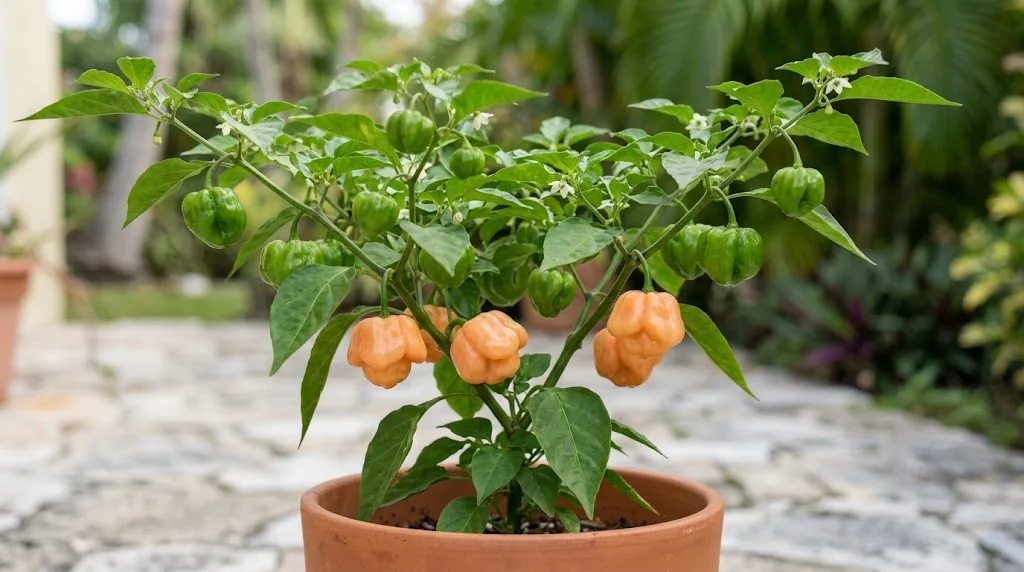
A Bahamian Goat pepper has a small, ribbed pod and a naming problem. It is a hot pepper, but in the Bahamas, “goat pepper” can mean red Scotch bonnet; specialty catalogs also use Bahamian Goat for a peach-colored Capsicum chinense selection. The two labels are related by local usage, but they do not always describe the same plant.
For a wider view of chili varieties and how this one fits among them, read our guide to chili varieties.
What is a Bahamian Goat pepper?
The common name “goat pepper” has more than one meaning. In a report about Bahamian agriculture, the Bahamas Agricultural and Industrial Corporation calls the country’s red Scotch bonnet the “goat pepper”. That local usage is broader than one catalog selection, so check the label and fruit description when buying.
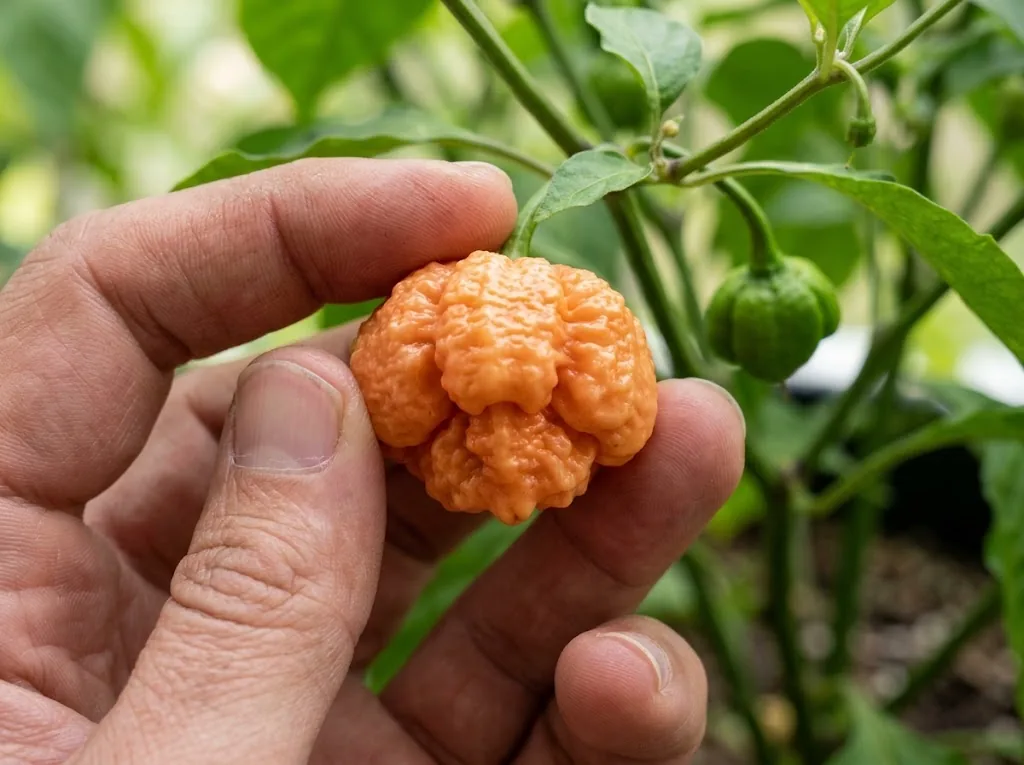
Specialist listings identify this selection as C. chinense and describe a squat, deeply ribbed pod that resembles a miniature pumpkin. The fruit starts green and ripens to peach. Sellers describe a fruity flavor and estimate 100,000 to 350,000 heat units, but they do not provide laboratory results or a formal pedigree. The shared catalog name is not proof of a registered cultivar or landrace. Compare the descriptions from TummelstaChili and Bishy Barnabees before you buy. Neither source documents a breeder or release date, and I could not verify an origin story for the name.
How hot is Bahamian Goat?
The catalog heat estimate is 100,000 to 350,000 Scoville heat units (SHU). Treat that as a guide, not a guaranteed reading for every fruit. This heat level is in habanero territory and will be too intense for many cooks. The available sources support a very hot Caribbean chili, not a reliable claim that it is the world’s hottest. For a much milder option, see TAM Mild Jalapeno peppers.
What do goat pepper pods look and taste like?
Expect a rounded or slightly flattened pod with pronounced ribs. A specialist seller lists fruit about 3 to 5 centimeters long; another gives about 5 centimeters. Size and shape can vary among sources, so use those figures as a visual guide rather than a grading standard. Ripe fruit is often described as peach-colored, though listings sometimes use orange for the mature color.
Catalogs also differ on plant size. One lists mature plants at 60 to 90 centimeters tall, while another gives 60 to 120 centimeters. Leave enough space for a branched plant, and use the packet’s figure as a local planning estimate rather than a guarantee.
Growers describe a fruity, sometimes citrus or floral note behind the heat. That profile makes a small amount useful in salsa, marinades, seafood dishes, or sauce. Start with a thin slice, taste, and add more only if you want the extra heat. If you want another distinct chili profile to compare, see our page about Puya peppers.
How do you grow the plant?
This warm-season crop needs a long, bright growing window. The University of Minnesota Extension’s general pepper guide recommends starting about eight weeks before outdoor planting. Sow about one-fourth inch deep in a sterile seed-starting mix. The guide uses a heat mat set at 80 to 90°F until seedlings emerge, with 70°F soil described as ideal. TummelstaChili lists 10 to 14 days to germination at 24 to 26°C for this variety; use the temperature on your own packet if it differs.
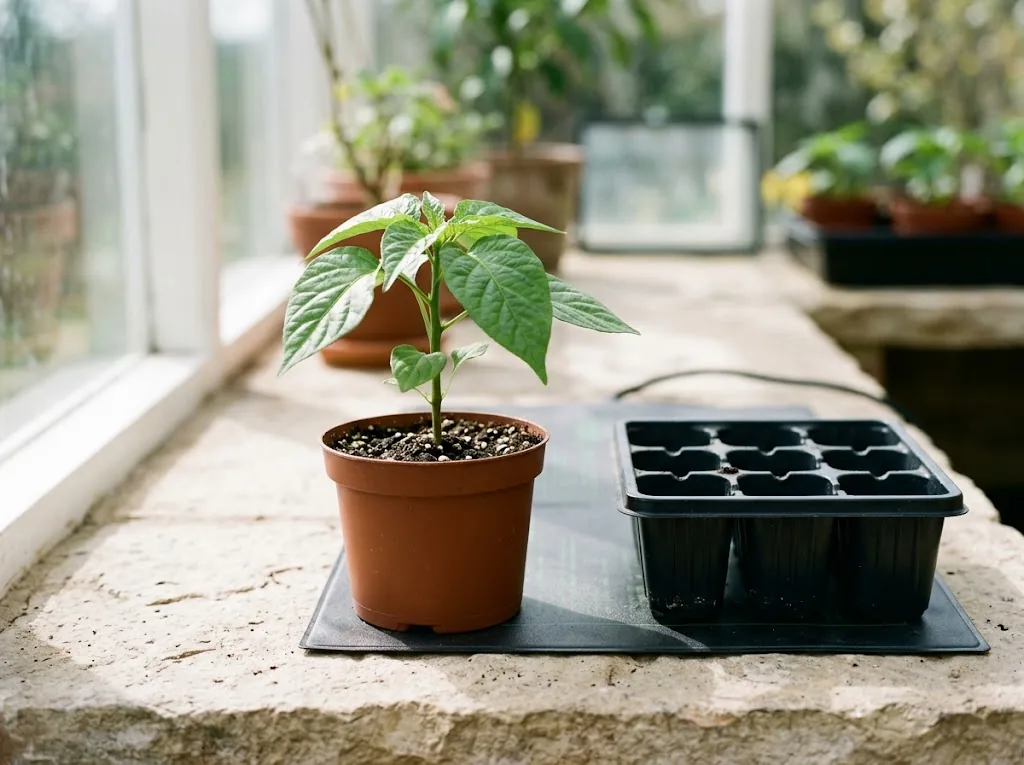
Give seedlings bright overhead light. Pot them on after true leaves appear, then harden them off gradually before planting outside. Wait until nighttime temperatures are reliably above 50°F. Choose a warm, sunny site with drainage. In a garden bed, the Extension guide gives 18 inches between plants as a general starting point. A container can work if it has drainage and room for a mature plant; no source gives a container size specific to Bahamian Goat.
Build fertility from the soil you have. The Extension guide recommends a soil test before adding phosphorus or potassium, since extra fertilizer is not automatically helpful. Compost can improve the planting area, while consistent moisture helps the flowers and young fruit develop.
Keep the soil evenly moist, especially while the plant flowers and sets fruit. Check the soil and weather instead of watering by a fixed calendar. Dry soil and uneven moisture can weaken flowers and small fruit. When transplanting, set the root ball at the same soil line it had in its pot.
One specialist seller lists 90 to 120 days to maturity, but does not say whether the count begins at sowing or transplanting. Treat that as a rough planning estimate and check the packet. Local temperature, light, and care can change when the first ripe pods appear.
When should you harvest and how should you handle it?
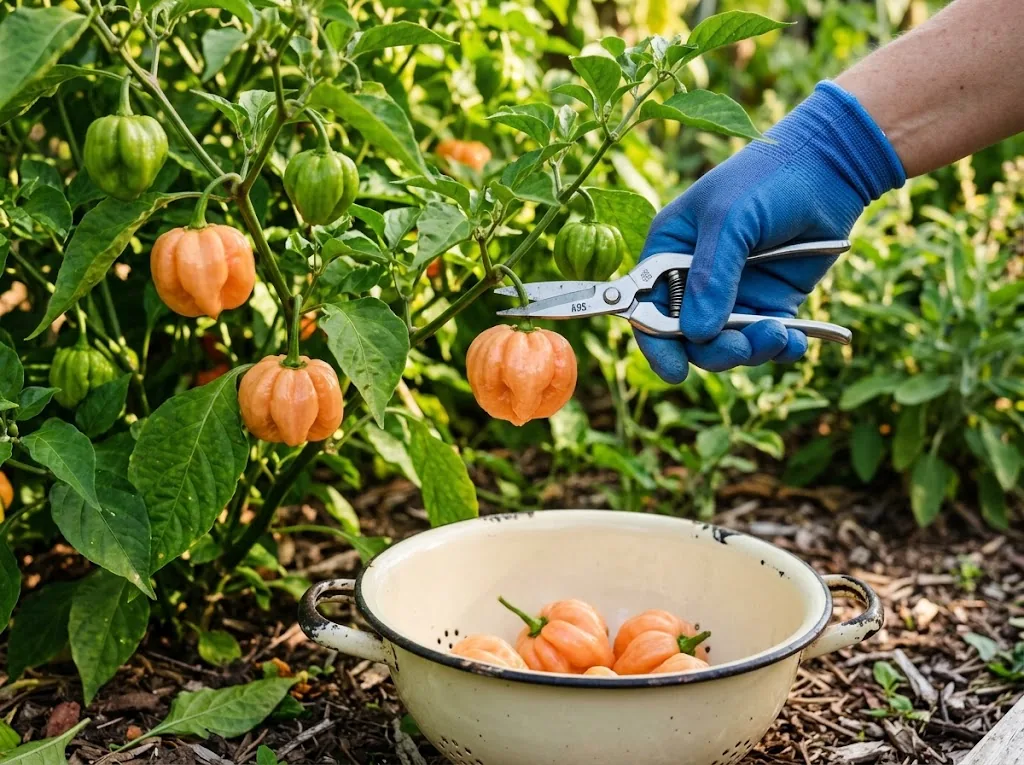
For the peach-colored selection, wait until the fruit reaches its mature color if you want the appearance described by sellers. Clip the stem with clean shears rather than tugging the branch. Wear rubber, latex, or nitrile gloves while handling hot fruit, and wash your hands before touching your face or eyes.
If juice gets in an eye, rinse right away with plenty of room-temperature water for 15 to 20 minutes, then contact Poison Control for advice. Call emergency services for breathing trouble or chest discomfort. Wash the knife and work surface after handling.
How can you store and preserve a harvest?
Use fresh fruit soon or refrigerate it. Peppers keep for a week or more in the refrigerator, although their skins can become pitted if they stay cold too long. The National Center for Home Food Preservation says to wash and stem hot fruit before packaging it for the freezer.
For dried fruit, use a tested drying method and dry pieces until they are brittle or crisp. Pack them only after they have cooled, then use a clean, dry, tightly sealed container in a cool, dry, dark place. Check for moisture during storage and discard anything moldy. See the National Center for Home Food Preservation’s advice on freezing hot peppers and storing dried foods. Do not treat an improvised pepper sauce, pickle, or oil as pantry-safe. For canning, follow a tested recipe such as its instructions for canning peppers.
How are goat peppers used in Bahamian cooking?
A local island food guide says Bahamians use goat, banana, and bird peppers fresh or dried and ground in pepper sauces. That refers to local goat peppers generally, not necessarily the catalog selection described here. You can use a small amount of this fruit-forward chili in hot sauces, salsa, or a marinade when its heat and aroma suit the dish. Add it gradually, since the catalog estimate is very high. If you dry extra fruit, grind it in a well-ventilated area and avoid breathing the dust.
For Bahamian Goat pepper seeds, start with specialist catalogs and compare the species, mature color, pod shape, and growing notes. Check current stock before ordering. The name alone is not enough to distinguish the peach-colored C. chinense selection from other peppers sold locally as goat pepper.
