
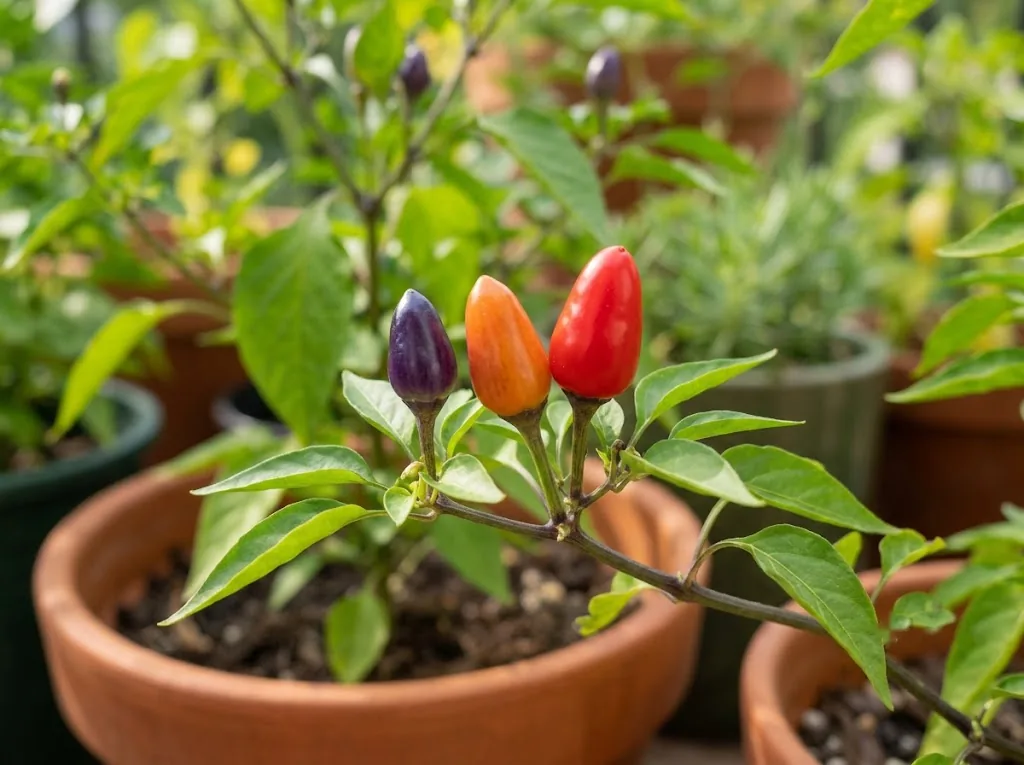
This cultivar’s small, upright fruits can look more like a seasonal display than a crop. They start dark blue-purple, often pass through orange, and ripen red. This compact variety is grown mostly for its looks, but its edible fruit carries real pungency. Think of it as an ornamental pepper that can season a dish in small amounts.
For a broad comparison of common hot pepper varieties, see our guide to their shapes, pungency, and uses.
What is Filius?
Filius Blue is a named form of Capsicum annuum, the same species that includes many sweet and hot peppers. The Royal Horticultural Society classifies it in the Longum Group and describes a small, bushy plant with edible, ovoid fruit. A 2020 research paper on Filius peppers describes blue and green forms, named for their immature fruit hue; both ripen to red, sometimes a bright red. The darker form is the one sold under this name.
The fruit is small and grows upright, so several stages can appear together; each pod is about one inch long. Light changes how the immature pods look: they may read as indigo, violet, or nearly black, then show orange before reaching red. Baker Creek describes the foliage as having a bluish tinge, and the flowers add a second ornamental detail before fruit forms. In a pot, growth stays compact, though final size depends on conditions. RHS lists roughly 4 to 20 inches for mature height and spread; Pepper Joe’s describes plants up to 24 inches tall.
Where did this pepper originate?
Pepper Joe’s lists Mexico as the origin, and Baker Creek describes this variety as an heirloom. No reliable cultivar history confirms where or when the variety was selected, so treat those details as seller descriptions rather than a documented origin story. The botanical identity is clearer: it belongs to Capsicum annuum, a domesticated crop with a long history across the Americas.
Filius Blue pepper: heat and Scoville range
Published Scoville estimates, measured in heat units (SHU), differ. PepperScale gives 30,000 to 50,000 SHU, while Pepper Joe’s lists 40,000 to 58,000. These are seller or editorial estimates, not a lab result for every plant. Pod size, growing conditions, and ripeness all vary, so use the range as a rough guide rather than a promise about a particular fruit. A filius blue pepper can vary from its neighbor on the same branch.
The RHS says the pods become milder as they ripen. PepperScale also describes the purple stage as sharper than the red one, while seed sellers disagree about the best stage to pick. If you want to compare ripeness, taste a tiny piece from one pod before using more. Wear food-safe gloves when cutting several, keep your hands away from your eyes, and wash your hands and tools afterward. Store picked fruit away from children and pets.
What does it taste like?
Descriptions vary, but the taste is usually simpler than the plant’s appearance suggests. Some sources describe a straightforward pepper taste; others note mild sweetness in ripe fruit. PepperScale compares the reported Scoville range with cayenne, while individual pods can still feel hotter or milder than the estimate suggests. The red stage may be less sharp and less hot. Since a small pod can still dominate a dish, begin with a thin slice and adjust after tasting.
The RHS lists the fruit as edible. Its decorative purpose does not prevent a correctly identified pepper from being eaten. Still, do not identify a specimen by appearance alone. Confirm the nursery label says Capsicum, and avoid eating a store-bought decorative pepper if you do not know what treatments were applied. Follow pesticide labels and their picking intervals.
Growing Filius peppers
A sunny patio pot or the front of a warm garden bed suits this small pepper. The RHS recommends full sun, a sheltered position, and well-drained soil. Use a container with drainage holes and a quality potting mix. A pot also makes it easier to move the pepper under cover when cold weather returns.
Start seeds indoors
Start seeds indoors early enough to raise sturdy transplants before outdoor weather warms. Timing varies by region: Baker Creek recommends sowing 8 to 12 weeks before the last expected frost, while the RHS lists mid-February to early April for UK conditions. Use your local frost date and the packet for your seed lot. Baker Creek lists 10 to 14 days to sprout at 80 to 85°F. The RHS recommends 18 to 21°C for sowing, so supplier directions differ. Keep the mix evenly moist and use the temperature recommended by the source of your seeds.
Sow into clean seed-starting mix at the depth printed on the packet. Once the seedlings emerge, give them strong light and enough space for airflow. Pot them on when they have true leaves. Before planting outdoors, harden them off over several days in a sheltered spot, extending their time outside gradually. Move them into the garden only after frost danger has passed and nights are reliably warm. Cold soil slows pepper growth and can injure young roots. The University of Minnesota Extension recommends starting pepper seeds about eight weeks before outdoor planting and waiting until nighttime lows stay above 50°F before transplanting. Its guide also recommends bright overhead light and gradual exposure to outdoor sun.

Care through the season
Give it several hours of direct sun, and turn an indoor pot now and then so growth stays balanced. Iowa State Extension recommends at least six hours of direct sun for peppers. Water when the top layer of potting mix begins to dry, then let excess drain. Avoid standing water around the roots. In a bed, water the soil and add a light mulch after it warms to slow moisture loss. Consistent moisture matters while flowers and young fruit form; prolonged dry soil can weaken fruit set.
Feed according to the potting mix and fertilizer label. The RHS recommends a high-potash liquid feed after the first fruit sets. Avoid adding extra fertilizer just to force growth. Check leaves and stems often for aphids, whiteflies, or spider mites, particularly under cover. Identify a pest before choosing a treatment, then follow the product label.
Indoor plants need strong light, warmth, and airflow. A bright window may not provide enough winter light, so a grow light can help. Rotate the pot for even growth and avoid watering on a fixed calendar; check the mix instead. If your space is limited, a Brazilian Starfish pepper is another compact chili to compare, though its species and fruit shape differ. This short cultivar also suits a front-edge edible landscape, where the pods can be seen without taking up much room.
Harvest and handling
Pick the pods at the stage that suits your preferred bite. Purple fruit is often reported as hotter, while fully red fruit may be milder. Baker Creek lists 80 to 90 days to maturity, but the page does not say clearly where its count begins. Treat that figure as a rough planning estimate and watch for the fruit to change color.
Use clean scissors to clip fruit without tearing a branch. Wear gloves if you are picking many pods, and avoid touching your face. Rinse the pods under running water before cooking. Use fresh fruit soon, or freeze or dry extras for later. Iowa State Extension describes fresh pepper storage in cool, humid conditions. Label preserved pods clearly so their small size does not disguise their pungency.
How to use the pods
A thin slice can season salsa, beans, soup, or a sauce. The ripe red fruit may suit a dish when you want a gentler bite, but taste your own pod first. Remove the stem and start with less than you think you need. A whole pod also makes a striking garnish; tell diners it is hot before serving.

If you want to compare other container-grown varieties, read about Hot Paper Lantern peppers. Filius Blue earns its place when you want a compact container plant with vivid fruit and a usable crop, rather than a pepper selected mainly for complex kitchen flavor.
Filius Blue pepper seeds: choosing a source
Specialist pepper seed companies and heirloom catalogs sell packets, and garden centers may offer potted decorative peppers in season. Before you buy, compare the botanical name, the variety name, the packet count, and the growing directions. Treat words such as “heirloom” and any quoted SHU range as the seller’s account, and keep the packet for its variety-specific sowing instructions.
Frequently asked questions
Can you eat the fruit?
Yes. The RHS describes the fruit as edible. Confirm that the plant is a labeled Capsicum and avoid decorative store plants if their pesticide treatment is unknown.
Does the fruit get hotter as it ripens?
Sources disagree, but the RHS says the pods lose pungency as they ripen. Taste a very small amount from your own plant before adding it to a recipe.
Can you grow the pepper indoors?
Yes, with enough light and warmth. A grow light can help when a sunny window is too dim, and good airflow makes indoor care easier.
Is it useful in cooking?
It can add heat and color in a small amount, though many cooks prefer peppers bred for more complex kitchen notes. Start with a thin slice and add more only after tasting.
Sources
- Royal Horticultural Society: classification, fruit, and growing advice
- University of Minnesota Extension: starting pepper seeds and hardening off seedlings
- Iowa State University Extension: pepper sun, water, harvesting, and storage
- Baker Creek / Rare Seeds: seller’s variety description and growing estimates
- Pepper Joe’s: seller-listed origin, Scoville estimate, and mature size
- PepperScale: published Scoville estimate and taste description
- Plants (2020): research on Filius fruit forms and ripening colors
