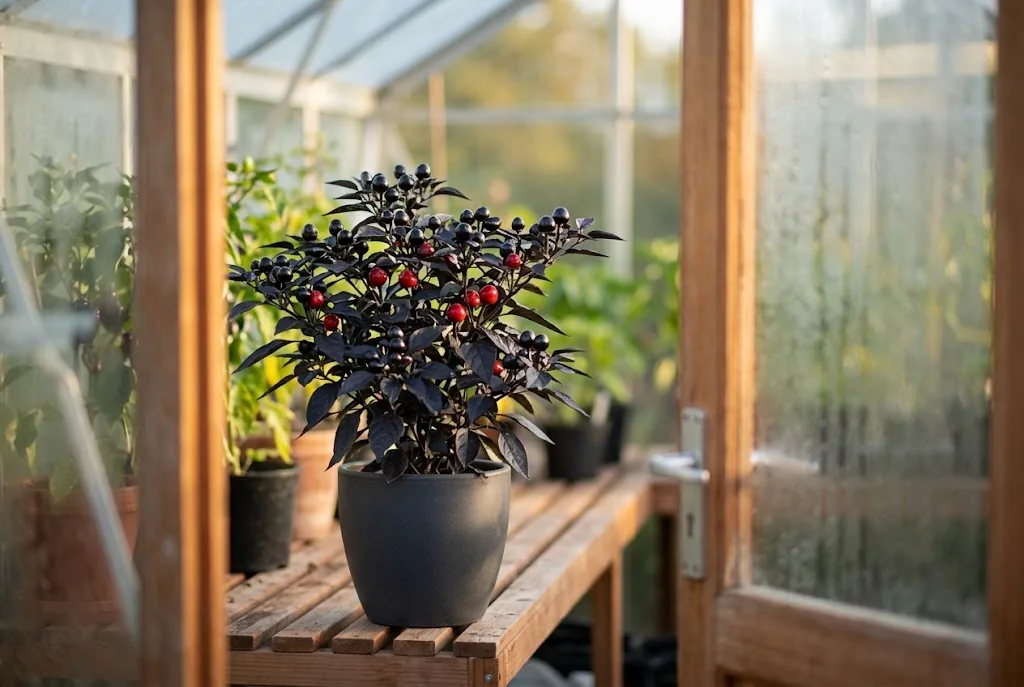
Black Pearl peppers look like polished beads against nearly black leaves, then turn cherry red as they ripen. This ornamental cultivar also produces edible, distinctly hot pods. It suits a sunny patio or border where you want color as well as a small harvest. Here is how the named variety was developed, what its heat is like, and how to grow it.
Our guide to types of chili peppers explains how varieties differ in shape, flavor and heat.
Black Pearl pepper: origin and history
‘Black Pearl’ is a named cultivar of Capsicum annuum, developed in the United States for ornamental value and hot pods. USDA researchers John Stommel and Robert Griesbach bred it through a cooperative project with PanAmerican Seed. They selected for dark leaves, an upright habit and clusters of round peppers. The National Arboretum traces its breeding to a purple-leaved parent selected from an open-pollinated population of ‘Royal Black’ and a green-leaved, small-fruited parent. It is a cultivar, not a landrace or a catchall name for black-colored peppers.
After trials in several states and national evaluations, the variety became a 2006 All-America Selections winner. Judges recognized its garden performance and striking contrast between black foliage and upright pods. It remains a notable ornamental pepper selection for gardeners who want color beyond the usual green leaves. Each upright cluster can carry six to eight peppers. The USDA release record and U.S. National Arboretum plant introduction document its development and award.
Botany and appearance
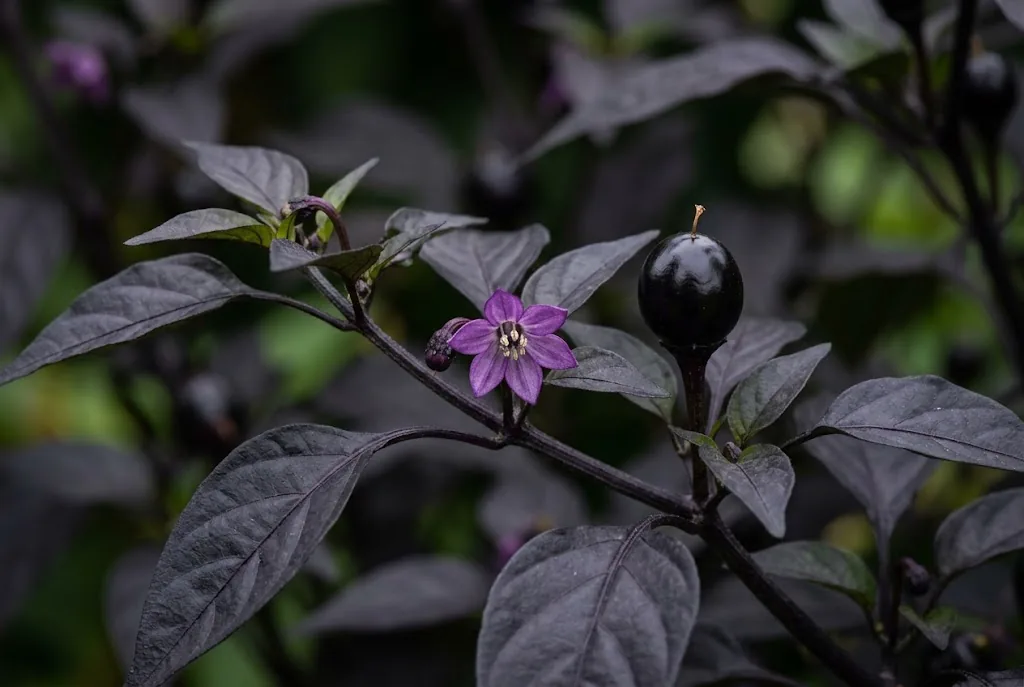
The bushy, upright plant averages about 18 inches tall and 12 inches wide, though a long, warm season can carry it to 2 or 3 feet. New leaves may start green before turning glossy purple-black. Small violet flowers appear in summer, followed by upright clusters of nearly round peppers roughly 3/8 to 0.6 inch across. Pods begin shiny black and ripen to bright red. One branch may hold black, changing and red peppers at once.
Although botanically a tender perennial, it is usually grown as an annual in places with frost. A sunny border or mixed planting shows off its dark leaves; strong direct light also supports flowering and a heavy crop. Shade can leave the leaves greener and reduce fruit set. A container works well for this compact variety. Keep it in full sun to encourage each bloom to set a pepper.
Black Pearl pepper heat and flavor
This is an ornamental pepper with genuinely hot pods, not a mild decorative substitute for a bell pepper. Seed sellers and plant guides commonly estimate 10,000 to 30,000 Scoville heat units (SHU), but their published ranges differ and fruit is not always lab-tested. Treat that figure as a rough guide, not a guaranteed reading for every pepper. Heat can vary with growing conditions and ripeness.
The flavor is peppery, though most descriptions emphasize the heat rather than a distinct sweet or fruity profile. Taste a very small piece first. Do not assume a black pod is fully ripe: wait for red if you want the finished color and maturity. Removing the white inner membrane and seeds may reduce heat, but will not reliably make a hot pepper mild.
For a contrasting profile from a different species, read our guide to Dragon’s Breath peppers.
Growing Black Pearl peppers
Start indoors about eight weeks before your local last-frost date. Sow about a quarter inch deep in a clean, fine starting mix and keep it warm and evenly moist. The University of Minnesota Extension recommends warm conditions around 80 to 90°F for pepper germination. Packet guidance and conditions vary, so allow extra time if sprouts emerge slowly. Give young plants bright overhead light to prevent weak, stretched stems.
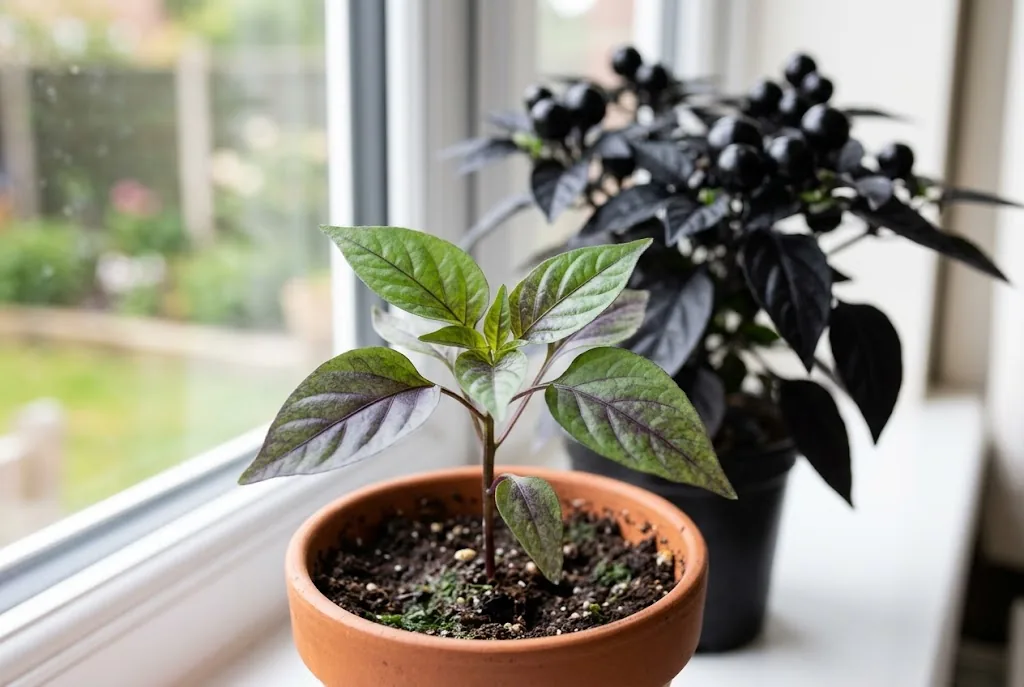
Pot seedlings up as they grow, then harden them off outdoors gradually over about a week. Move them outside after frost danger has passed and nights are reliably warm. Peppers are cold-sensitive. Choose the sunniest spot available and use fertile, well-drained soil. For a patio planter, a 3- to 5-gallon size with drainage holes is a practical starting point. Containers dry faster than garden beds, so check moisture often.
Water deeply when the top layer begins to dry, then let excess drain. Aim for steady moisture rather than repeated drought and soaking. Avoid heavy nitrogen feeding, which can push leafy growth at the expense of blooms and pods. Use a balanced fertilizer according to its label. The compact bush needs little pruning; remove damaged leaves and support a heavily laden branch if it leans.
There is no single reliable days-to-maturity figure across seed vendors. Commercial listings range from roughly 70 days to more than 110, and sellers may count from transplanting or sowing differently. Use the number on your packet as a planning estimate, then watch the plant: flowers need time to set peppers, and glossy black pods need additional warm weather to become mature and red. If your season is short, sow early indoors or grow it in a movable planter.
Common setbacks include slow growth in cool weather, flower drop during temperature stress, and pests such as aphids or spider mites. Check leaf undersides and act early with a strong water rinse or another suitable control. Avoid overwatering cool soil and give the roots enough room before expecting a heavy crop.
Harvest and handling
Pick peppers while they are glossy black or wait until they turn red. Use clean snips to cut the short stems instead of tugging on branches. Harvest a few at a time so the rest can continue to ripen. Wear gloves if your skin is sensitive, and avoid touching your eyes or face. Wash hands and tools with soap and water when you finish.
Keep children and pets from sampling decorative garden plants unless you can identify the variety and supervise access. The fruit is safe to eat, but can be much hotter than its small size suggests. If you are uncertain about a plant’s identity or growing history, do not eat its peppers.
Storing and preserving
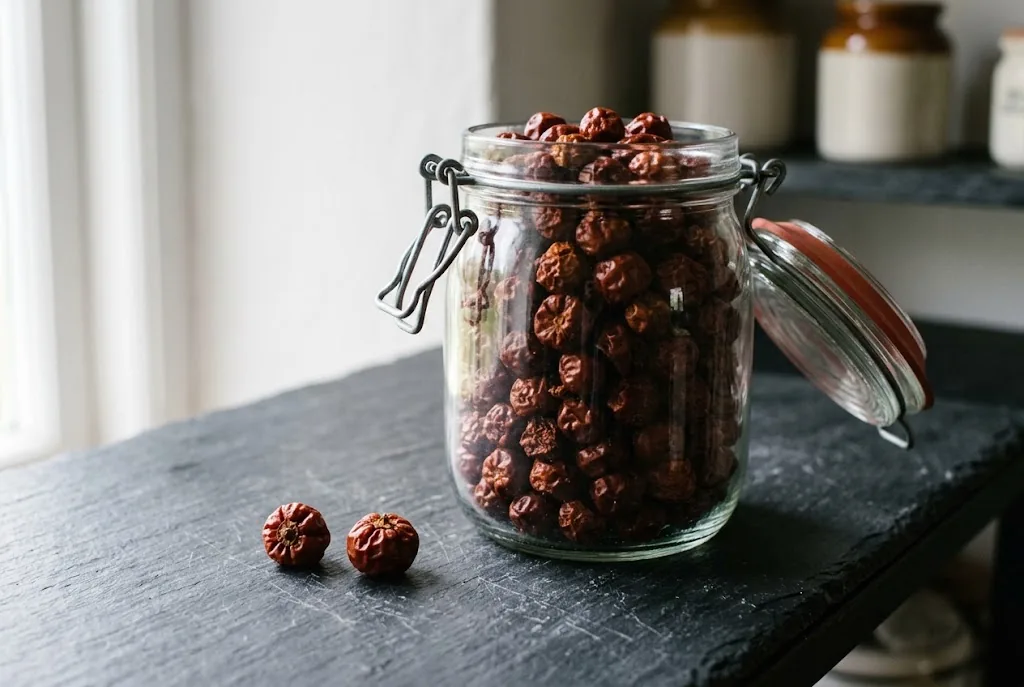
Use freshly picked peppers soon, or store dry, unwashed pods in a breathable bag in the refrigerator and check them for soft spots. For longer storage, freeze whole peppers in a labeled freezer-safe package. You can also dry them in a food dehydrator or another method designed for peppers until they are brittle throughout. Work in a ventilated area and avoid breathing dust if you crush dried pods. Keep them airtight in a cool, dark cupboard.
Culinary and garden uses
The cultivar was bred first for decorative appeal. Dark leaves and black-to-red pods bring contrast to a sunny patio, border or fall display. The peppers are safe to eat and can add heat to sauces, soups or a small batch of salsa. Since each pod is tiny and potentially hot, taste a sliver before adding more. Use them sparingly until you know the heat of your harvest.
This variety can also add color beside larger food crops, as long as it gets full sun and warmth. For another long green cooking pepper, see Siling Haba peppers.
Sources and further reading
- U.S. National Arboretum: ‘Black Pearl’ plant introduction
- USDA Agricultural Research Service: cultivar release
- All-America Selections: ornamental peppers
- University of Minnesota Extension: growing peppers
