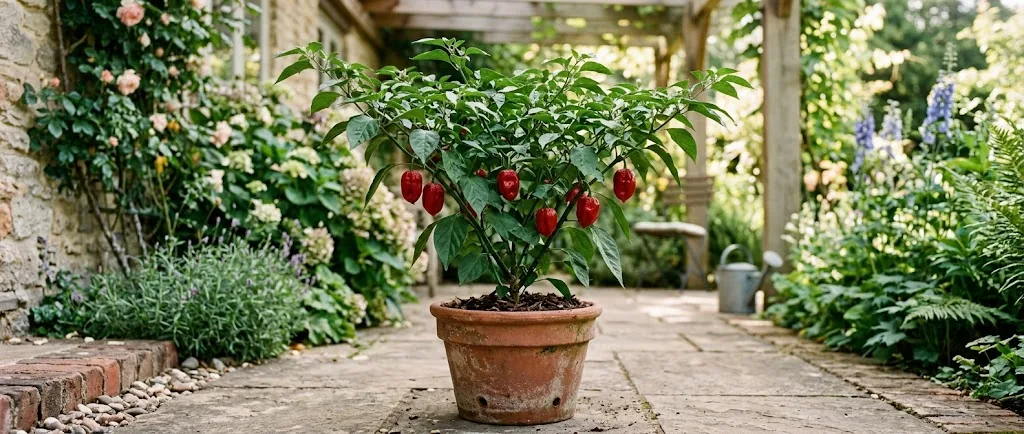
One Armageddon pepper can overwhelm a whole dish. This British-bred F1 hot pepper is known for a breeder-reported rating above one million Scoville heat units, early maturity for a superhot, and firm red pods about 4 to 5 centimeters long. Its history and growing traits help explain why the name appears on packets and supermarket shelves.
Tozer Seeds developed this named Capsicum chinense cultivar in the United Kingdom. It is a commercial F1, not a wild landrace or a stable open-pollinated type. The breeder says it spent five years in development and was the first British-bred F1 super-hot chili from its program. Read the breeder’s 2019 launch account for the original announcement. For a wider view of species, shapes, and pungency, see our guide to chili pepper types.
Origin and breeding
Tozer Seeds developed the cultivar for commercial growers who wanted a vigorous, uniform, earlier-maturing superhot. The company introduced it in 2019, when the pods began appearing in Tesco stores. Tesco’s announcement named Salvatore Genovese as the commercial grower supplying the launch through his Bedfordshire business. “First British-bred” describes its breeding story, not a world-record claim. It is a modern variety selected for commercial consistency.
In the seed trade, F1 means growers cross selected parent lines to create a consistent first generation. Tozer does not publish the parents, so claims about a specific cross should be treated cautiously. Seeds saved from an F1 plant may grow, but the next generation can vary in vigor and pod traits. For a predictable crop, buy fresh packets sold under the F1 name. Oregon State University Extension explains why hybrid offspring do not reliably reproduce the parent.
Appearance and botanical identity
The breeder identifies it as Capsicum chinense. Its pendant pods hang down from the branches. They are oval to nearly round, with a small pointed tail, and measure about 4 to 5 centimeters long by 3 to 4 centimeters wide. The color changes from pale green to red as they ripen. Tozer describes the pods as uniform, one of the traits selected in this F1.
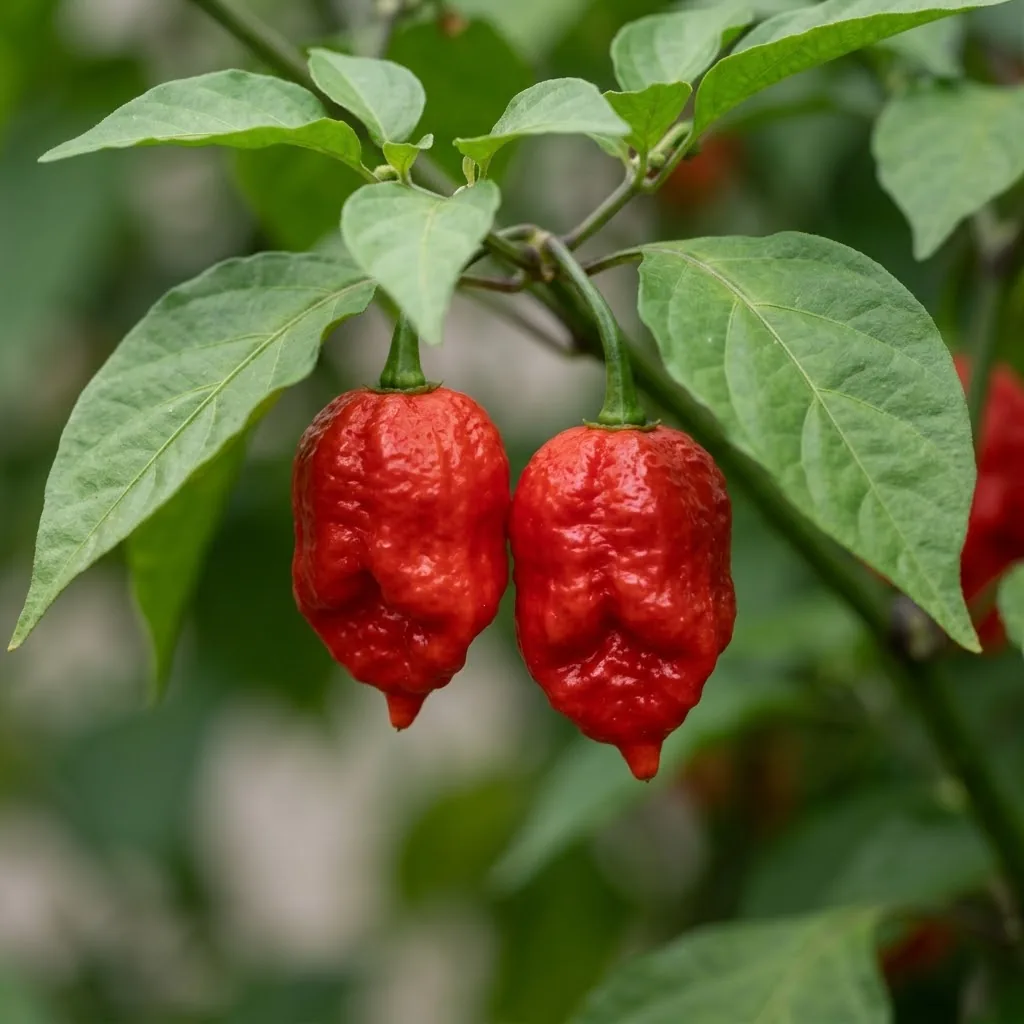
Superhot pods can look alike in a basket, so a photograph alone is weak evidence of identity. Check the packet or nursery label. If you are comparing named cultivars, see our profile of Black Pearl peppers.
Rating and flavor
Tozer’s product sheet lists a reading of 1.3 million Scoville heat units (SHU), based on trial data. The breeder also cautions that growing conditions can change a reading, so regard this as a reported benchmark rather than a guarantee for every pod. Each SHU is one unit on the scale. The original publicity compared it with Carolina Reaper using figures available at the time; do not treat that old comparison as a current world ranking.
At this level, the burn is far beyond what most people want in a regular serving. A tiny piece can season a large pot of food, while a whole pod can overwhelm a small pan. The breeder describes the taste as extremely hot; at that intensity, it can drown out subtler flavors. Another C. chinense cultivar has its own character; see our profile of Peach Habanero for comparison.
Growing this chili at home
Tozer reports that the F1 matures at least 14 days earlier than a leading rival in its trials, but it does not give one universal number of days from sowing to harvest. Weather, light, and transplant size all affect timing. In a short-season area, start indoors rather than relying on direct sowing. A warm, bright, sheltered position gives the long-season crop its best chance.
Sow indoors
Sow in clean, sterile starting mix, following the packet depth. Keep it evenly moist, not soggy. Pepper seeds germinate best with warmth: Penn State Extension lists about 85°F as the optimum temperature, and a heat mat can help in a cool room. Once seedlings emerge, put them under bright light close overhead so stems stay sturdy instead of stretching.

Begin about eight weeks before outdoor planting, then harden off the young plants gradually. Move them outside after frost danger passes and the soil warms. University of Minnesota Extension advises waiting until nighttime lows stay above 50°F. Cold soil and chilly nights can stall growth, even in a vigorous cultivar.
Choose a sunny site and steady care
Give the plant full sun, warmth, and well-drained soil. A container works if it has drainage holes and enough volume for a mature crop; a pot at least 25 centimeters wide is the minimum listed by Unwins, while a larger container gives roots and moisture more room. Use potting mix in containers. In a garden bed, avoid ground that recently held tomatoes, potatoes, eggplant, or other peppers.
Water when the surface begins to dry, then soak the root zone thoroughly. Do not leave a pot sitting in water. Follow the fertilizer label, and feed as flowers and pods begin to form. Avoid excess nitrogen, which can favor leaves and delay fruit set. Utah State University Extension’s pepper guide also recommends well-drained soil and restraint with fertilizer. Tozer reports improved vigor and yield, but warmth, light, and consistent care still shape results in a home garden.
Harvest and safe handling
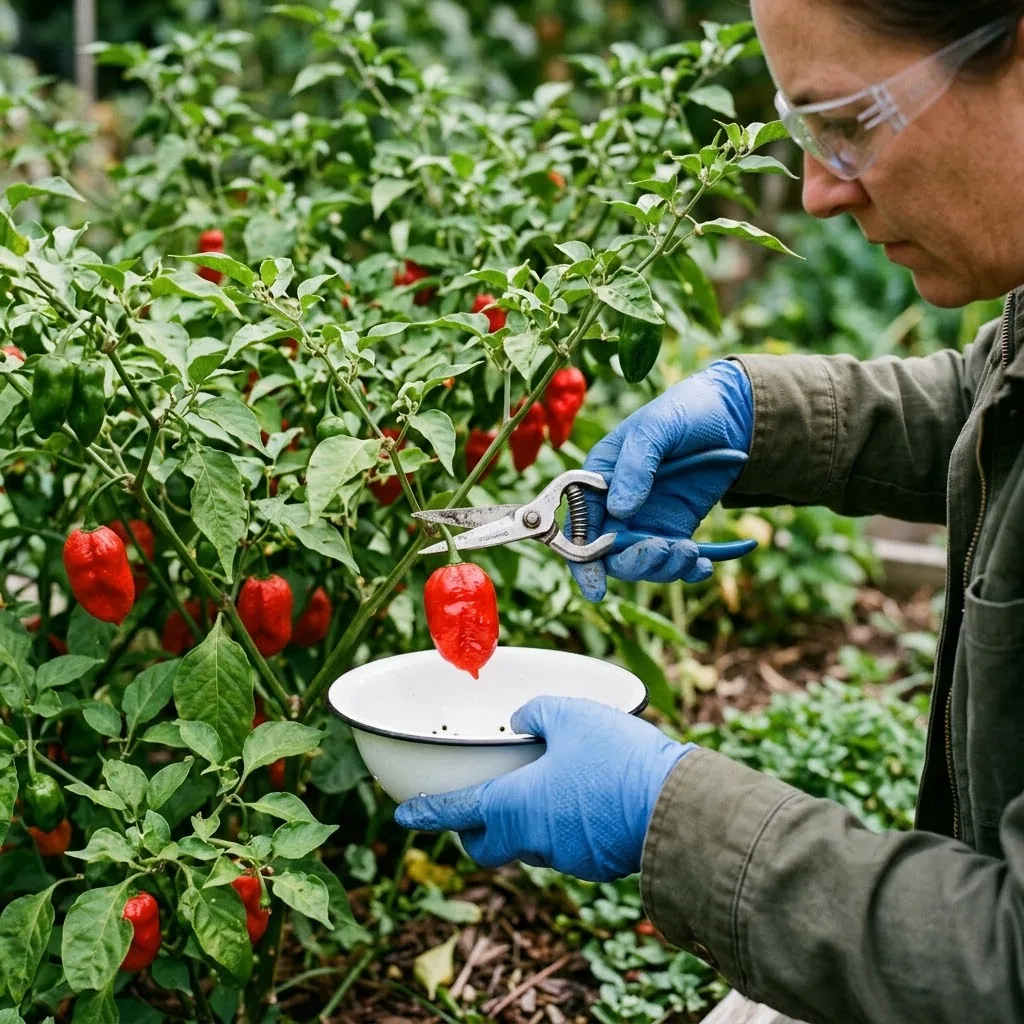
Pick the pods when they turn red and feel firm. Snip them with clean scissors or pruners instead of tugging at a branch. The reported pungency makes bare-handed handling unwise. Wear nitrile gloves and eye protection, keep hands away from your face, and wash tools and surfaces afterward. Poison Control notes that capsaicin can irritate skin, eyes, and airways. If juice gets into an eye, rinse with lukewarm water for 15 minutes. Seek urgent help for breathing trouble or chest discomfort.
Storage and preserving
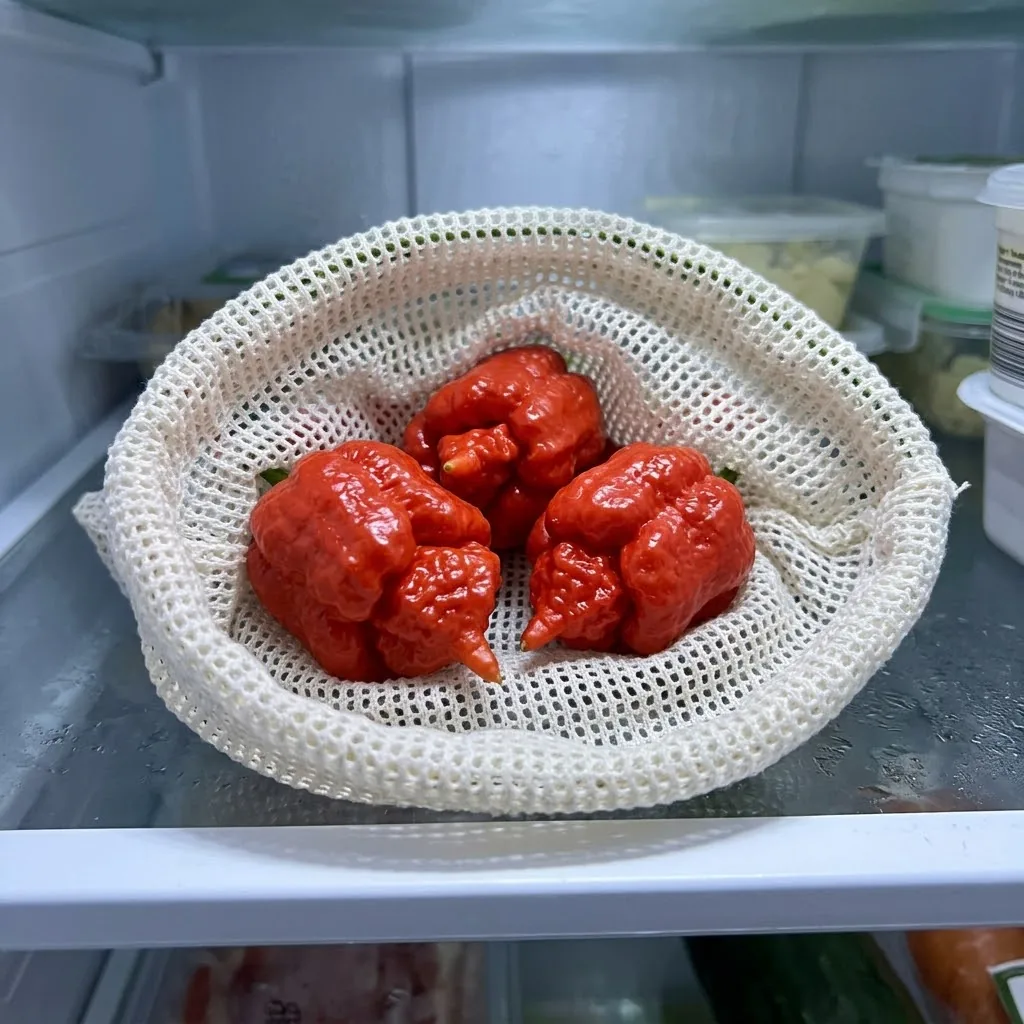
For short-term use, refrigerate dry, uncut pods in a breathable produce bag and use them while firm. Freeze whole peppers in a sealed container for later cooking; they soften after thawing, which works well in soups and stews.
Drying is another option for flakes or powder, but work with good ventilation and avoid breathing dust. Keep children and pets away from the work area. For shelf-stable pickles or canned sauce, follow a tested preservation recipe exactly. Do not improvise the pepper-to-acid ratio or processing time, because safe canning depends on acidity and method.
Culinary and other uses
Treat this as an intensely pungent ingredient, not a one-for-one replacement for a mild chili. Begin with a tiny piece and taste before adding more. A measured amount can bring serious punch to a large pot of stew, carefully balanced hot sauce, or dried flakes. When cooking, keep the kitchen ventilated and avoid leaning over a steaming pan.
Label jars clearly so nobody mistakes a superhot condiment for a mild one. The compact, colorful crop can also be grown as an edible conversation piece, but the main reason people seek it out is its exceptional pungency.
Frequently asked questions
How should you read the rating?
It is a breeder-reported trial figure, not a fixed reading for every pod. Growing conditions affect pungency, so one crop may taste hotter or milder than another.
Will collected seeds grow true to type?
Plants from saved F1 seed may not match the parent in vigor, maturity, or pod traits. Buy fresh packets if you want the named cultivar’s expected characteristics.
Can it grow in a container?
Yes. Unwins recommends a container at least 25 centimeters wide and a warm, bright position. Choose a larger pot if possible, water consistently, and support branches if the crop makes them bend.
Sources and verification
- Tozer Seeds, development and 2019 launch account
- Tozer Seeds, product sheet and trial caveat
- Tesco, retail launch announcement
- Oregon State University Extension, hybrid offspring
- Penn State Extension, germination temperatures
- University of Minnesota Extension, pepper growing
- Utah State University Extension, growing peppers
- Poison Control, capsaicin exposure
- Unwins, growing instructions
- National Center for Home Food Preservation, preserving peppers safely
