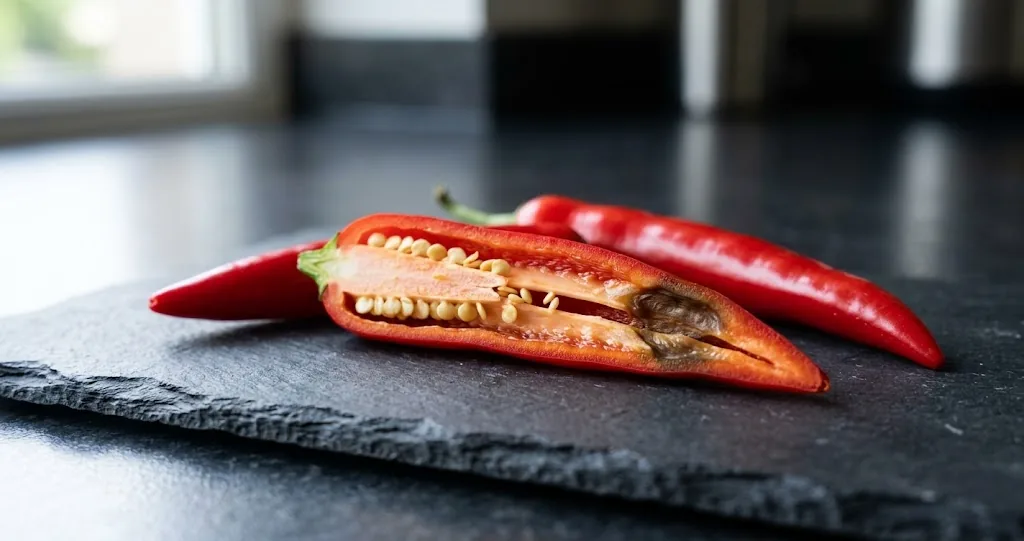
A chili leaf that curls one afternoon, a fruit with a sunken dark patch on the bottom, seedlings that keel over the day after you water them. The signs look sudden, but the cause usually sits underneath the plant or in the air around it. Chili plant problems can come from fungi, bacteria, viruses, pests, or growing conditions. Disease-causing organisms reach plants in different ways, including contaminated seed, tools, insects, and splashing water. A few, like blossom end rot, are not plant diseases at all but a calcium uptake problem wearing the costume of one. Sorting one from the other is the first job, because the right response to a virus differs from the fix for waterlogged soil.
This guide covers the common problems home chili growers actually meet: leaf curl, blossom end rot, bacterial spot, the most common pepper diseases and viral mosaics, damping off in seedlings, sunscald on pods, plus root and crown diseases that show up in damp summers or heavy soil. Use it as a working field manual, with the understanding that no single article replaces a confirmed diagnosis from your local extension service when a whole pepper crop or chili planting is at stake. Whether you grow sweet pepper and chili peppers together, you face the same pests and diseases in both, or focus on the hot side of Capsicum annuum alone, the same disease pressure applies, and an infected plant can put neighboring plants at risk.
How to read what the plant is showing
Before reaching for a spray, slow down and look. The shape of the symptom, where it sits on the plant, and how fast it spread tell you almost as much as any picture.
- Lower leaves yellowing first usually points to watering, root, or nutrient problems. Damage that begins on new growth can point to pests, viruses, herbicide injury, or environmental stress.
- A single deformed leaf on an otherwise healthy chili may reflect physical damage rather than a spreading disease. A repeating pattern across new growth is a real problem.
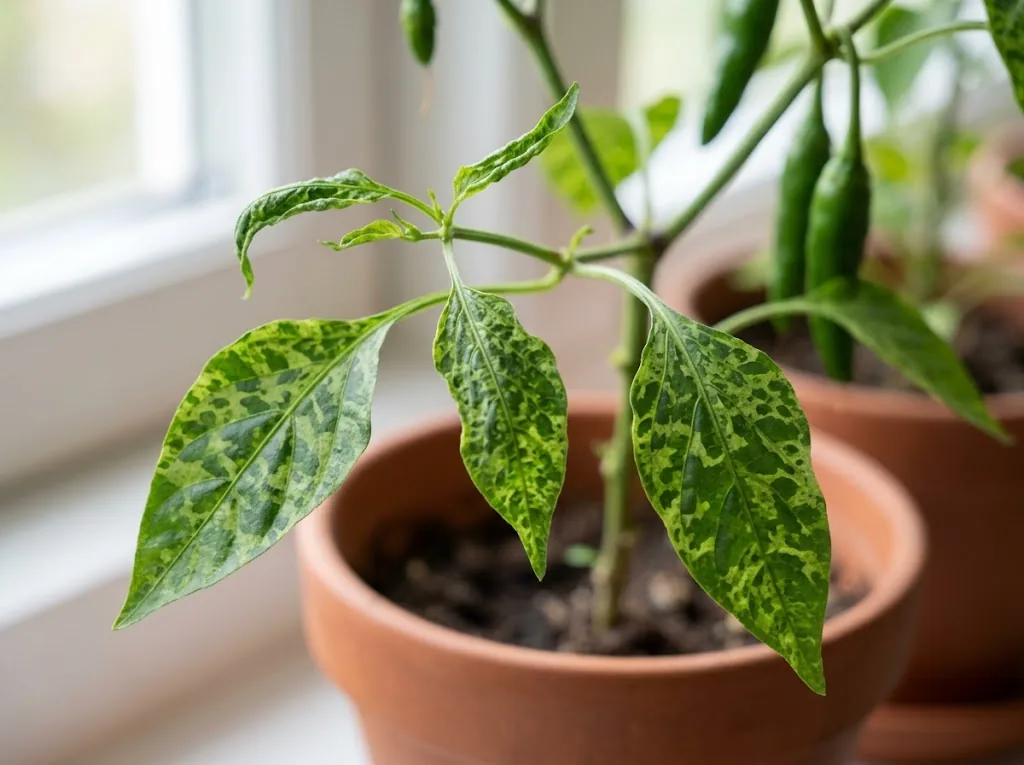
- Water-soaked lesions that turn brown may suggest bacterial leaf spot, though several problems can look similar. Dry, dusty white patches on the underside of leaves suggest powdery mildew. A blotchy light and dark green across many leaves suggests a virus.
- Sunken, leathery patches on the bottom of the pod are blossom end rot, a calcium issue. Soft, wrinkled rots on the side of the pod are usually infections of a different kind.
Once the symptom has a shape, the rest of the diagnosis is mostly a process of elimination, and that process starts with two questions: what is the soil doing, and what has touched the plant recently.
Leaf curl on chili plants
Curled leaves are a common complaint from chili growers. Causes include pests, viruses, herbicide exposure, and growing stress. The curl itself is rarely the whole story; the position and direction of the curl, and the look of the leaf surface underneath, narrow it down quickly.
What causes chili leaves to curl
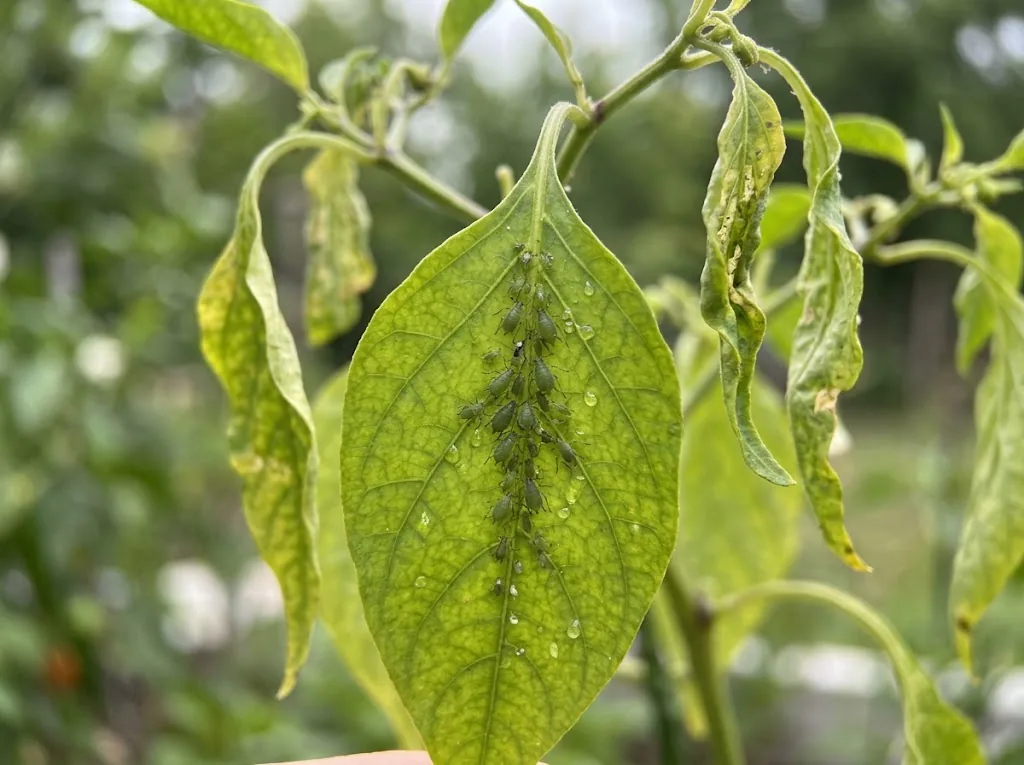
- Aphids, thrips, and broad mites feeding on the underside of new growth cause cupping, puckering, and downward curling. Check the leaf undersides for tiny insects or stippling.
- Viral infections, especially cucumber mosaic virus, chili vein mottle virus, and tomato spotted wilt virus, distort new leaves and curl them into narrow straps or fern-like shapes. These viruses spread by different routes. Aphids can carry cucumber mosaic virus, while thrips carry tomato spotted wilt virus. Tobacco mosaic virus spreads mainly when contaminated hands or tools touch plants.
- Herbicide drift, even at very low levels, causes leaves to cup downward and become thick or strap-shaped. No living organism is involved, and the new growth will eventually grow out if exposure stops.
- Heat, drought, and strong wind cause leaves to cup upward to conserve water. The fix is shade and even moisture, not a spray.
- Overwatering, compacted soil, or root damage causes leaves to curl downward with a dull green or yellow color because the roots cannot pull water up fast enough.
How to fix curling chili leaves
Start with the underside of the leaves. If you see aphids clustered on the new growth, a spray of water can knock them off. If they return, use an insecticidal soap labeled for peppers, following its directions and checking the plants again. If the curl is paired with a mottled light and dark green pattern, isolate the plant and seek a diagnosis before removing it. If leaf curl followed a stretch of wind, nearby spraying, or extreme heat, consider those exposures while checking for pests and other symptoms.
Check moisture a few inches below the surface before watering. If soggy soil is the cause, improve drainage and allow the upper layer to dry slightly between waterings. Watch the next leaves for healthier growth; damaged leaves may not straighten. For the broader picture of healthy growth, the cluster guide on how to grow chili peppers covers the day-to-day conditions that prevent stress curl in the first place.
Blossom end rot on chili fruit
Blossom end rot looks dramatic and almost always shows up as the first pods are setting. A pale patch appears at the blossom end of the fruit, darkens to brown or black, and dries into a sunken, leathery scar. Newer pods on the same plant often stay clean.
It is not a disease
Blossom end rot is a calcium deficiency in the developing pepper fruit, but it is almost never a calcium deficiency in the soil. Calcium moves into the plant dissolved in water. When water delivery is uneven, calcium delivery is uneven, and the fast-growing fruit tip is the first place to suffer. Common triggers are alternating wet and dry soil, sudden heat waves, cold soil early in the season, and excessive nitrogen feeding that pushes plant growth faster than the roots can keep up.
How to clear blossom end rot
- Even out watering. Deep, infrequent waterings that let the top 2 to 3 cm (1 in) of soil dry between rounds beat shallow daily splashes for calcium delivery.
- Mulch with straw or compost to keep soil moisture steady through hot afternoons.
- Hold off on high-nitrogen feeds until the first pod set is past. Switch to a balanced feed or one slightly higher in potassium and calcium.
- Remove badly damaged fruit if you do not plan to eat it, and focus on steady moisture to protect developing pods.
A foliar calcium spray is rarely the answer, because the spray reaches the leaf, not the developing fruit, and the underlying problem is transport, not supply. Fix the soil moisture and the next round of fruit usually comes in clean.
Bacterial leaf spot
Bacterial leaf spot, caused by Xanthomonas species, can be confused with other leaf-spot problems. It shows up as a small, angular lesion on the leaf, usually bounded by veins. The spots dry to a tan or dark brown and often drop out, leaving a shot-hole appearance. Bacterial lesions may appear on lower leaves. Pods can also develop small raised lesions and scabs. Warm, wet conditions favor spread to neighboring plants, especially when splashing water moves bacteria onto a lower leaf.
Bacterial leaf spot spreads in wet, warm conditions and rides on contaminated seed, young starts from the nursery, splashing water, and shared tools. Infected leaves cannot be restored, and severe cases can cause extensive leaf drop. Prevention does most of the work.
- Buy disease-free pepper seeds. If you save seed, use a published pepper-specific hot-water treatment protocol with an accurately controlled bath; the wrong temperature or timing can harm germination.
- Avoid working among wet plants. Prune and stake in dry weather.
- Water at the soil, not over the leaves. Drip irrigation or a slow soaker beats a sprinkler.
- Rotate peppers out of the same bed for at least two years. The bacteria survive in crop debris and on related nightshade weeds.
- Copper sprays give partial protection when applied at the first sign of disease and during extended wet weather, but they do not cure an established infection.
Viral diseases: mosaic, leaf curl, and the rest
Viruses are the heartbreak of chili growing because they cannot be cured and they spread easily. Tobacco mosaic virus, cucumber mosaic virus, tomato mosaic virus, tomato spotted wilt virus, and chili veinal mottle virus can affect peppers. Their transmission routes differ: some travel on insects, while tobacco and tomato mosaic viruses can spread on contaminated hands and tools. Alfalfa mosaic virus can also affect peppers. A weed or nearby crop can serve as a host plant for some pepper viruses, so good weed management helps reduce reservoirs. Different plant species harbor different viruses.
What viral infection looks like
The visual signs vary by virus, but most include some combination of mosaic patterns of light and dark green, yellow mottling, fern-like or strap-shaped leaves, stunted growth, and pods that are small, distorted, or marked with sunken rings or patches. Symptoms alone cannot identify which virus is present. Common symptoms include mottled leaves and stunting, but confirmation requires a diagnostic test. An infected plant may survive with reduced yield.
What to do about a virus
- Confirm before action. Ask your local extension service or plant diagnostic lab how to submit a sample and what testing costs.
- Remove and destroy infected plants. Do not compost them. Bag and discard, or burn where allowed.
- Control the vectors. Manage the insects that transmit the virus identified in your area. Reflective mulch or row covers may reduce exposure early in the season; insecticidal soap can help manage soft-bodied pests but cannot cure a virus. Many pests are easier to control when numbers are low.
- Sanitize. Wash hands and tools with soap or a dilute bleach solution before moving between plants.
- Plant resistant varieties next season. Many modern chili cultivars carry TMV, ToMV, or CMV resistance, and reading the seed catalog notes pays back over years.
If chili pests are part of the picture, the dedicated guide on common chili and pepper pests covers aphid, thrips, whitefly, and spider mite control in the kind of detail that does not fit here.
Damping off in seedlings
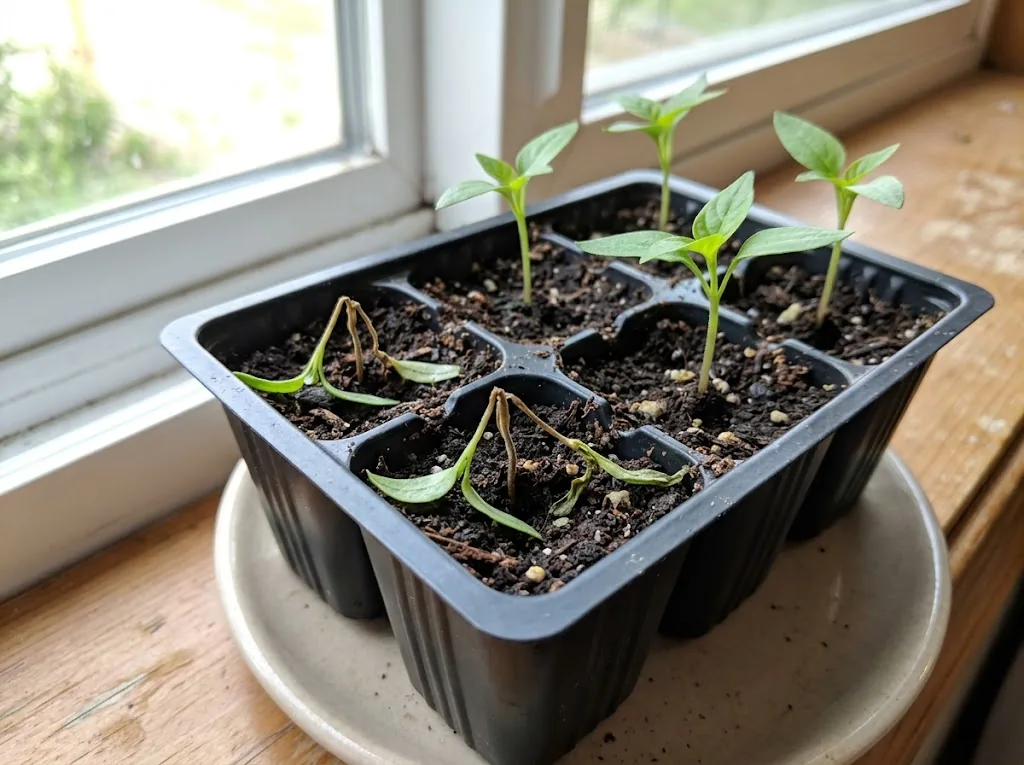
Damping off is a group of seedling diseases caused by fungi and water molds called oomycetes. The classic signs are a healthy-looking seedling that flops at the base overnight, a pinched or discolored stem at the soil line, or seedlings that simply never emerge. Pythium is an oomycete; Rhizoctonia and Fusarium are fungi. These organisms persist in growing media and are favored by excess moisture and crowded seedlings. These organisms can live in the soil and persist on contaminated plant material. Use fresh seed-starting mix and clean trays before sowing another batch.
Prevention is everything, because treatment on an infected seedling is too late.
- Use a sterile seed-starting mix, not garden soil.
- Clean trays and pots with a dilute bleach soak before reuse.
- Sow thinly so airflow stays high and humidity does not pool.
- Water from below and let the surface dry slightly between waterings.
- Keep temperatures steady. A heat mat set to 24 to 27 °C (75 to 80 °F) for the germination phase helps young plants push through the vulnerable stage quickly.
- If damping off recurs, start with clean containers, fresh mix, better airflow, and careful watering. Ask your extension service about products labeled for the diagnosed cause if cultural steps are not enough.
Mold problems on pods and leaves
Powdery mildew
Powdery mildew on chili plants shows up as white, powdery patches on the undersides of leaves, with yellowing on the top surface in the same spots. The fungus can infect leaves across a range of humidity levels; warm weather can favor its spread. A greenhouse pepper plant needs good airflow and regular inspection of lower leaves. Improve airflow and remove badly affected leaves. If treatment is needed, choose a product labeled for powdery mildew on peppers and follow its directions.
Anthracnose
Anthracnose is a pod disease that starts as small, water-soaked spots on ripe or ripening pods and deepens into sunken dark lesions, often with concentric rings of pink or orange spores in the center. It spreads in warm, wet weather and rides on splashing water. Mulch the bed, water at the soil line, pick pods as soon as they ripen, and rotate the chili crop. If anthracnose recurs, ask your extension service about preventive products labeled for peppers; sprays do not repair infected pods. Remove affected fruit and plant material from the bed.
Phytophthora root and crown disease
Phytophthora capsici is an oomycete, technically not a true fungus, but it behaves like one. It lives in garden soil and attacks the root system and the crown of the plant, causing sudden wilting that does not recover with watering, brown discoloration at the soil line, and roots that turn black and soft. Heaviest in poorly drained beds and after heavy rains, this root rot pathogen can survive in the soil for years. There is no cure once the plant is infected, and severe cases end in plant death. Improve drainage, raise the bed, rotate out of peppers and tomatoes, and remove infected plants with their root ball intact.
Sunscald on pods
Sunscald is not infectious but it earns a place in any chili problem roundup because it is regularly mistaken for disease. Flat, papery, bleached or pale patches appear on the side of the pod that faces the sun, usually on pods that were shaded by leaves until a heavy pod set or a storm suddenly exposed them. The damaged tissue dries into a thin, light-colored scar and may turn red prematurely on ripening varieties.
There is no treatment, but the prevention is simple: keep the canopy full with even watering and balanced nitrogen, stake or cage plants so pods hang inside the leaf cover, and consider shade cloth during extreme heat if exposed fruit repeatedly scalds. Discard pods with soft rot or mold. A firm pod with only a dry scald patch may be usable after cutting away the damaged tissue.
Verticillium wilt and Fusarium wilt
Both diseases cause similar symptoms: lower leaves yellowing and wilting during the day, partial recovery at night, then permanent wilt as the infection blocks the vessels within the root and stem. Verticillium dahliae is more common in cool soils; Fusarium prefers warm soils. Both survive for years in the soil and both spread through contaminated tools and water. Severe infections can eventually kill the plant.
There is no effective chemical cure. The reliable response is to remove and destroy infected plants, rotate the bed out of all solanaceous crops for at least three years, plant resistant varieties when available, and sterilize stakes and tools with a 10 percent bleach solution between seasons. Remove crop debris and weeds that may shelter pathogens between seasons. Ask your local extension service whether soil solarization is useful in your climate.
How to tell a disease from a nutrient problem
Nutrient deficiencies and diseases share some symptoms, but the pattern of where they appear is usually different. The table below is a starting point, not a substitute for a soil test.
- Calcium deficiency appears on new growth as tip burn and on pods as blossom end rot. Magnesium deficiency appears on older leaves as interveinal yellowing. Nitrogen deficiency appears as uniform pale green or yellow on the oldest leaves first. Nitrogen deficiency generally appears first on older leaves because the plant moves nitrogen to new growth.
- Most bacterial and oomycete diseases appear as discrete spots, lesions, or defined zones of damage. Nutrient problems usually appear as gradients across the leaf surface.
- Viral symptoms tend to follow the leaf veins and to repeat across many new leaves at once. Nutrient symptoms usually appear gradually and unevenly.
When the visual pattern is ambiguous, a soil test can help identify nutrient or pH problems, though it cannot diagnose an infection. For the heavy end of chili nutrition, the article on the best soil mix and pH for growing chili peppers walks through target pH, organic matter, and amendment rates for healthy root function. Planting in raised beds is also a useful prevention move for heavy soils because raised beds drain faster than ground-level plots.
Prevention: an integrated approach
No single step prevents every chili plant disease, but a handful of habits cover most of them. The control methods are mostly old-school: rotate, space, water at the soil, sanitize, mulch, choose resistant varieties, and control the aphid, thrips, and spider mite populations early.
- Rotate. Avoid growing peppers, tomatoes, other nightshades, or potatoes in the same bed for three to four years.
- Space for airflow. Crowded plants stay wet longer after rain and dew, and that favors every bacterial and oomycete problem on this list.
- Water at the soil. Drip lines, soaker hoses, or a careful hand watering that avoids the leaves all reduce disease pressure noticeably.
- Sanitize. Clean stakes, cages, pruners, and pots at the end of every season. Wash hands before moving between plants, especially after handling tobacco, which carries tobacco mosaic virus.
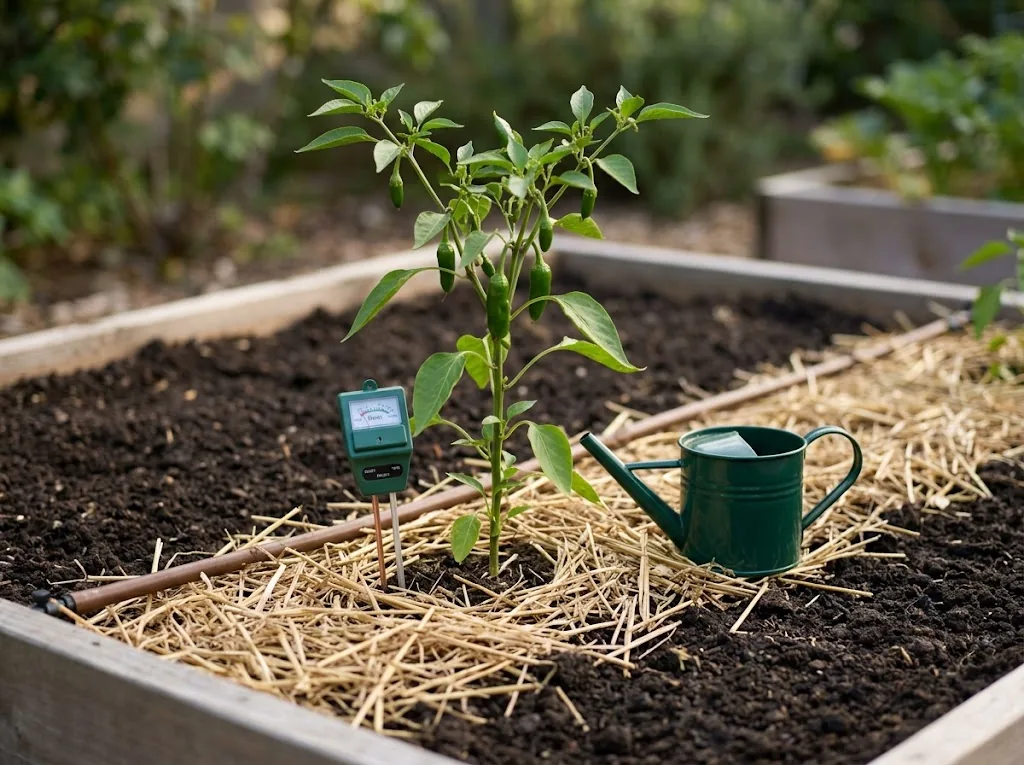
- Mulch. Two to three inches of straw or compost keeps soil splash off the lower stems and steadies moisture.
- Choose resistant varieties. Read the seed catalog notes for TMV, ToMV, CMV, and Phytophthora resistance, especially in climates where those diseases have been a problem.
- Control the aphid, thrips, and spider mite populations early. Many viral chili plant diseases ride in on these insects, and an insect infestation is easier to stop when numbers are low.
When to pull a plant
Pulling a plant feels like giving up, but in a small home garden it is often the cheapest decision. Remove and destroy the plant if any of these are true:
- A virus has been confirmed by a diagnostic lab, or an extension specialist recommends removal.
- The crown or main stem is soft, discolored, or hollow.
- More than half of the foliage is already lost, the affected plants are failing to push new growth, and what is left looks deformed.
- A severe pest infestation cannot be controlled with appropriate measures and the plant is declining.
Bag the plant, do not compost it, and clean the tools and gloves that touched it before moving on. Removing diseased plants promptly is the cheapest form of crop insurance on a small plot.
Frequently asked questions
Why are my chili plant leaves curling?
Leaf curl is usually one of four things: pests feeding on the new growth, a viral infection, herbicide drift, or environmental stress. Check the undersides of the leaves for aphids or thrips, look for a mottled pattern across many new leaves, and rule out recent weather extremes or nearby spraying before treating for any of these problems.
Can a chili plant recover from leaf curl?
It depends on the cause. Stress curl and pest-driven curl usually recover once the underlying trigger is removed. Viral curl does not, and the chili should be removed to protect its neighbors.
Is blossom end rot a disease?
No. Blossom end rot is a calcium transport problem in the pod, almost always triggered by uneven watering, heat stress, or excessive nitrogen. Even out moisture, mulch the bed, and the next flush of pods usually sets clean.
Can I eat chili peppers from a diseased plant?
Discard pods that are soft, foul-smelling, or visibly moldy. For other damage, use only sound fruit and ask your extension service when the cause is unclear.
What is the safest fungicide for chili plants?
The right product depends on the diagnosed disease. Choose a fungicide labeled for peppers and that disease, follow the label, and start with watering, sanitation, and airflow measures where appropriate. An insecticide will not cure a fungal or bacterial disease.
How do I tell bacterial leaf spot from fungal leaf spot?
Bacterial lesions are usually angular, bounded by leaf veins, water-soaked at first, and frequently develop a yellow halo. Fungal-style lesions tend to be round, dry in the center, and often show concentric rings or visible spores. Both can occur together, and a lab test is the only sure way to separate them.
The bottom line
Some chili plant problems spread quickly, so check new symptoms promptly. Move calmly: confirm what you are looking at, separate the diseases from the stresses, fix the soil moisture before reaching for a spray, and pull plants that have crossed the line rather than gambling the rest of the chili crop on a cure that does not exist. Clean seed, well-drained soil, crop rotation, and regular checks of leaf undersides reduce the risk of many problems on this list.
