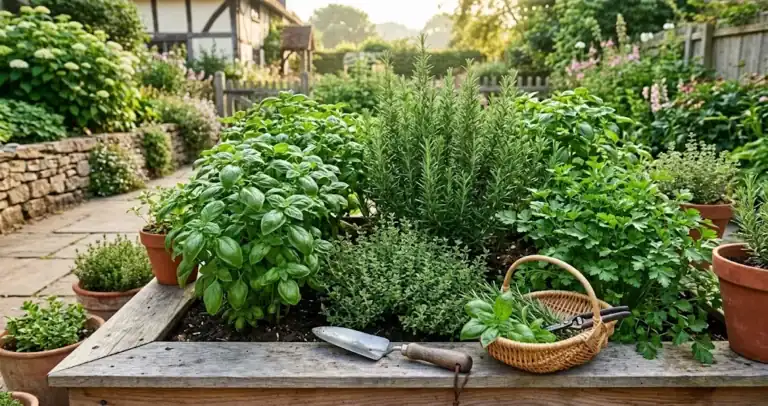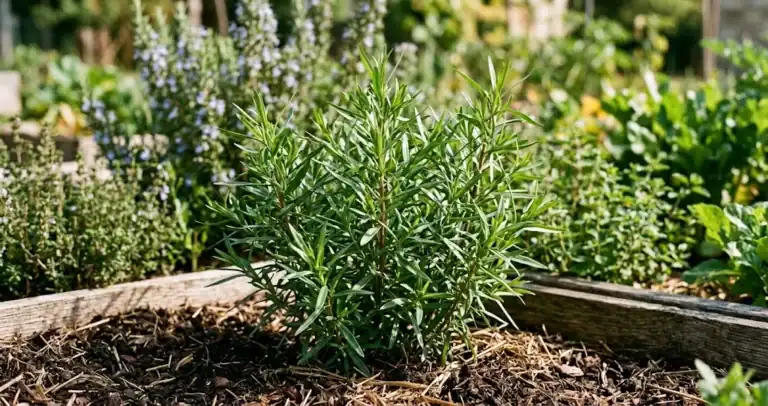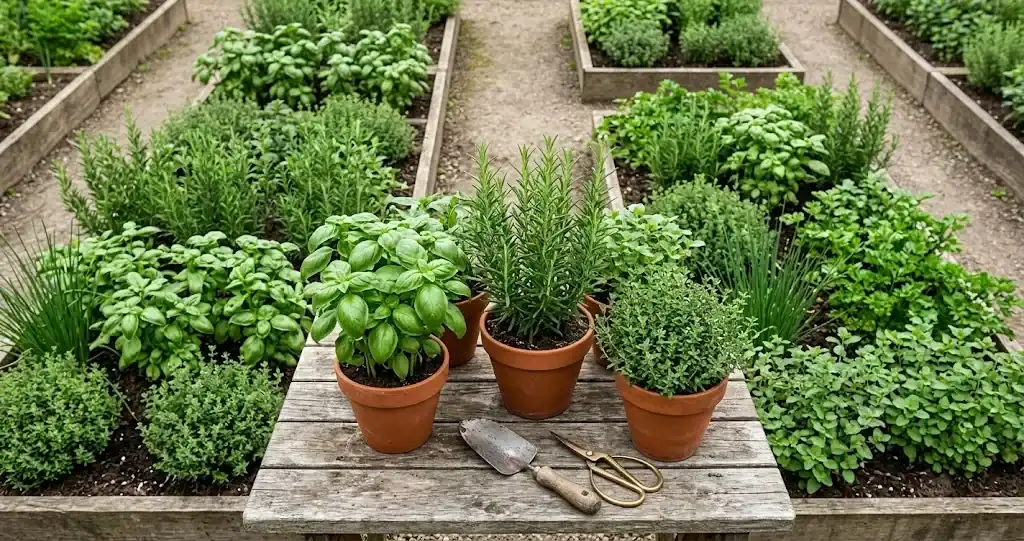
Fresh culinary herbs are among the most rewarding and easy to grow plants for any home gardener. Whether you tend a large outdoor plot, cultivate a raised vegetable garden, or keep a little herb garden on a sunny kitchen windowsill, mastering herb growing basics gives you an ongoing harvest of fragrant leaves for cooking. Growing your own herbs requires only a few core fundamentals: matching each plant to its preferred growing conditions, providing generous sunlight, using loose soil with good drainage, and harvesting regularly to stimulate vibrant new growth.
Because culinary herbs originate from contrasting climates, their care requirements vary considerably. Mediterranean favorites like rosemary, oregano, and thyme thrive in dry, gritty soil under baking heat, whereas tender, leafy greens like basil and parsley demand richer ground and steady moisture. If you are starting fresh, learning how an herb garden comes together provides a helpful roadmap for bed design, companion grouping, and seasonal planning before you sow your first seed.

Understanding plant types: annual, biennial, and perennial herbs
Before you buy nursery starts or plant herbs from seed, it helps to understand how different types of herbs complete their lifecycle. Grouping plants by their life cycle ensures you provide appropriate care and prevents surprise when a short-lived variety naturally fades.
Annual herbs complete their entire life span in a single growing season. Familiar annuals include sweet basil, cilantro, and dill. These plants sprout rapidly from herb seeds, develop lush foliage, bloom, and quickly go to seed once summer heat peaks. To keep a dependable supply of fresh culinary cilantro leaves across the summer, practice succession sowing every three weeks rather than relying on a single planting.
Biennial herbs take two full growing seasons to complete their life cycle. Parsley is the classic culinary biennial. In its first season, this plant produces dense rosettes of flavorful, dark green leaves. During its second spring, the plant expels its energy into flowering umbels, drops seeds, and dies back. Most gardeners treat parsley as an annual, replanting it each spring for the sweetest, most tender foliage.
Perennial herbs persist for three years or longer, establishing durable, fibrous root crowns. Dependable culinary perennials include rosemary, thyme, sage, oregano, and chives. While hardy perennial herbs die back during the winter frost in northern regions, their roots remain alive underground, pushing out fresh green shoots each spring. When gathering your planting supplies, understanding how to choose herb seed versus propagated cuttings helps you select vigorous, disease-resistant varieties suited to your hardiness zone.
Sunlight and site selection: where to plant herbs
Sunlight drives essential oil production in culinary plants, giving them their distinctive fragrance and culinary punch. Most herbs need six to eight hours of sunlight a day to stay compact, strong, and richly flavored.
Assess your garden space to match herbs to their light preferences:
- Full sun (6 to 8+ hours): Mediterranean woody herbs like rosemary, thyme, sage, and oregano, as well as heat-loving basil, need direct full sun. Without adequate light, their stems stretch out and become weak, pale, and spindly.
- Partial shade (4 to 6 hours): Tender leafy species such as chive, sweet marjoram, cilantro, and mint grow well with morning sun and light afternoon shade, which protects them from scorching midday heat.
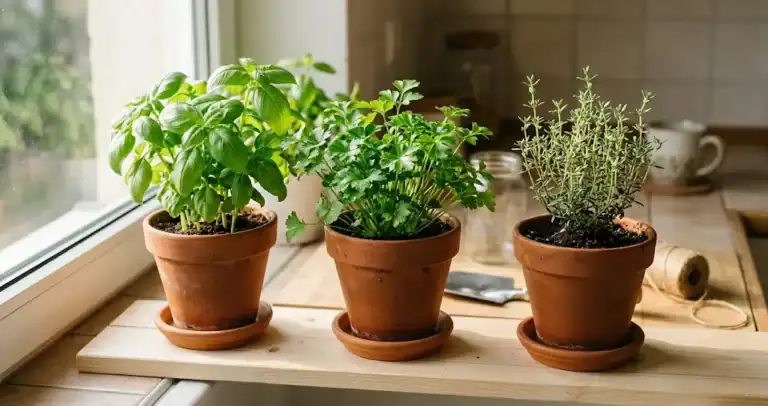
If you are growing herbs indoors, adequate light is the single most important factor. Place your pots directly on a south-facing sunny window where they receive steady natural light. When natural daylight falls short during winter, an inexpensive full-spectrum LED grow light positioned six inches above the canopy for twelve to fourteen hours a day will keep foliage dense and healthy.

Soil, potting mix, and drainage: what herbs need below ground
Soil quality makes or breaks an herb garden. The fundamental rule for almost all herbs is good drainage. Herb roots need constant access to soil air; if they sit in soggy, compacted earth, they rapidly suffocate, causing lower leaves to turn brown or yellow from root rot.
Match your growing medium to your planting method:
- Garden beds and raised beds: Native soil should be loose and friable. Work two to three inches of well-aged compost into the top eight inches of ground soil to break up dense clay, enhance moisture regulation, and supply gentle, long-term soil biology.
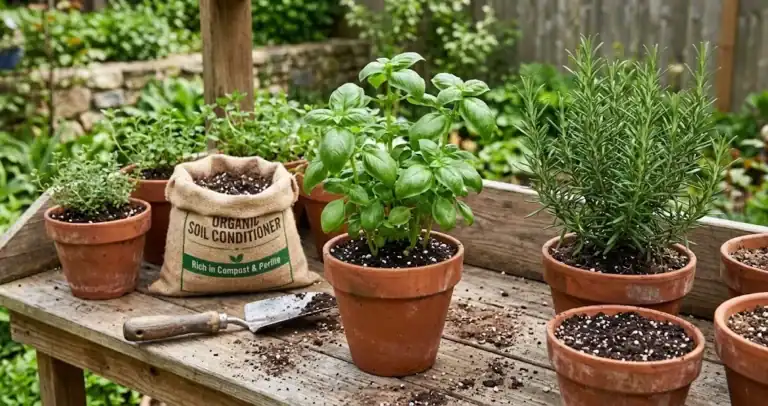
- Herbs in pots: Never fill containers with heavy garden soil, which compacts into an impenetrable block inside a pot. Instead, use a lightweight, peat- or coco-coir-based potting mix amended with perlite or pumice for aeration. Check that every pot has open drainage holes so excess irrigation runs off freely.
Reviewing the practical guidelines for getting the soil right before you plant helps you balance porosity and nutrition so young roots establish rapidly without rot.
Water needs and feeding without overdoing it
Overwatering kills far more herbs than drought. Rather than watering on a fixed calendar schedule, check the soil with your fingers before adding moisture.
Push your finger two inches into the potting mix. If the soil feels dry, give the plant a deep, slow soak until liquid runs out the bottom drainage holes. If the soil feels damp and cool, wait another day. Mediterranean perennials prefer the top two inches of soil to dry out between waterings. Leafy annuals like basil prefer the soil to remain consistently moist, though never soaking wet.
Feeding herbs requires a light, disciplined touch. Heavy feeding with synthetic, high-nitrogen fertilizers stimulates rapid, watery foliage growth that dilutes the plant aromatic oils, leaving you with bland leaves. A light top-dressing of compost once a season, or a monthly watering with diluted organic seaweed extract during the peak growing season, provides all the nourishment herbs require.

Garden beds or herbs in pots: picking the best setup to grow herbs
Culinary herbs adapt readily to various garden layouts. Selecting the right setup depends on your available space and lifestyle:
- Directly in the ground: Planting in a traditional garden border gives roots room to spread wide and deep, which provides natural drought resistance. Sprawling perennials like creeping thyme also double as an attractive, fragrant ground cover along garden paths.
- Raised beds: A raised garden bed provides outstanding soil drainage, warms quickly in early spring, and prevents heavy foot traffic from compacting the root zone. Raised beds also allow you to create customized soil blends tailored to diverse herb families.
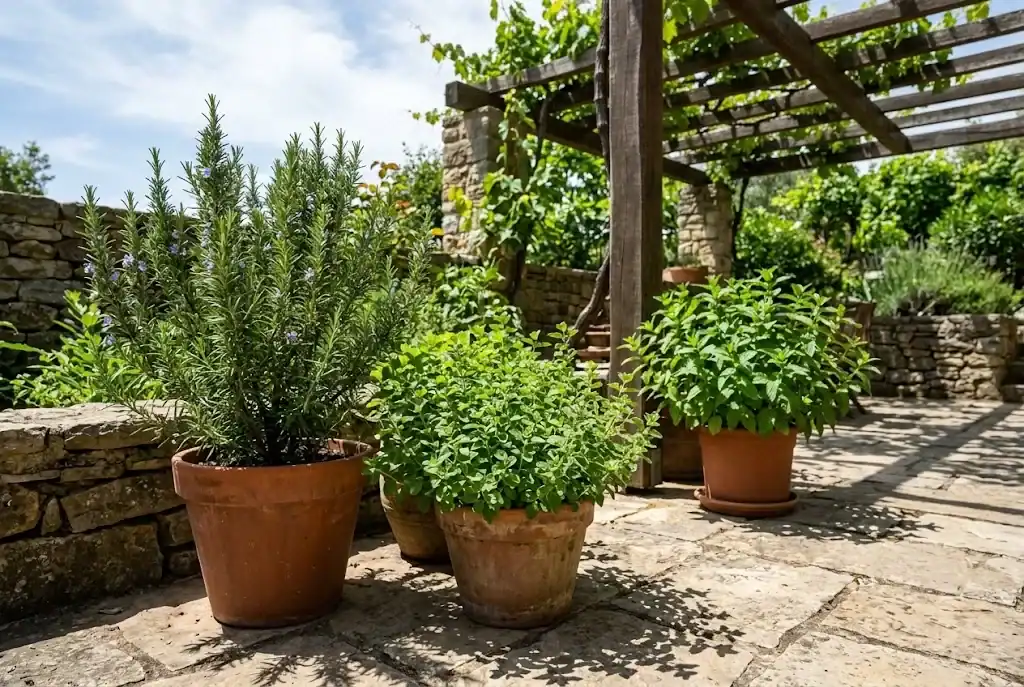
- Herbs in pots: Growing herbs in containers offers practical versatility. You can move containers to follow seasonal sunlight, keep pest pressure low, and place your favorite herbs right beside the kitchen grill or patio table.
Potted cultivation is especially critical when you grow mint. Because mint spreads relentlessly through vigorous underground rhizomes, planting it directly in a shared vegetable garden or raised bed will quickly choke out neighboring crops. Keeping mint isolated in its own sturdy container preserves your garden harmony while keeping refreshing leaves within easy reach.
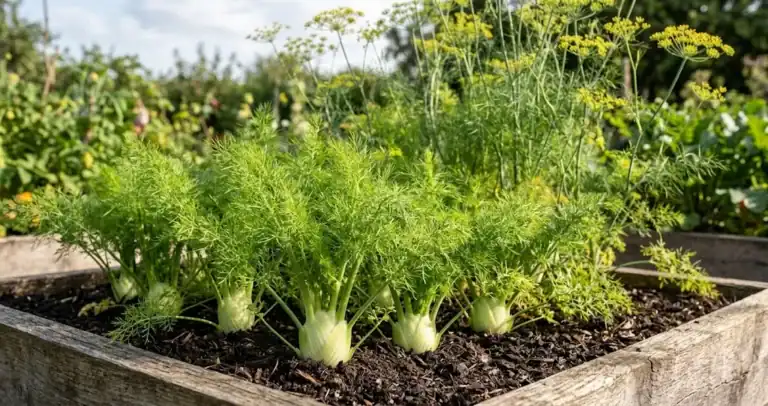
Incorporating flowering herbs like dill, fennel, chives, and borage into your beds creates another huge benefit: their nectar-rich blossoms attract pollinators such as honeybees, bumblebees, and beneficial predatory insects that naturally suppress common garden pest problems.

How to harvest herbs to stimulate bushier new growth
Beginner gardeners often hesitate to cut their herbs, worrying they will hurt the plant. But frequent, proper harvesting is actually the best thing you can do to keep herbs healthy, vigorous, and productive.
Trimming the top portion of an herb stem interrupts apical dominance. When you snip just above a pair of leaves or a branch node, the plant redirects its energy into dormant buds on either side, producing two bushy new branches instead of one single, leggy stem.
Use these reliable growing tips to encourage bumper harvests:
- Harvest in the early morning: Gather leaves after dew has evaporated but before hot midday sun causes volatile oils to dissipate.
- Follow the one-third rule: Never remove more than one-third of the plant total foliage at one time, so the herb maintains enough green leaves to photosynthesize and recover quickly.
- Pinch off flowering buds: On leafy herbs like basil and cilantro, remove emerging flower buds immediately. Flowering triggers the plant to stop producing tender foliage, making the remaining leaves bitter and leathery. Regular pinching keeps basil leaves sweet and succulent for homemade pesto.
- Prune woody stems with care: When harvesting rosemary, sage, or thyme, trim soft green stems rather than cutting back into bare, hardened stems, which lack dormant buds and cannot easily regenerate new growth.
Frequently asked questions about herb growing basics
Can I grow culinary herbs indoors year-round?
Yes, but light is the deciding factor. While shade-tolerant herbs like mint and chives can survive on a bright, sunny windowsill, Mediterranean herbs like rosemary and basil struggle without intense light. Supplementing with a simple LED grow light for twelve to fourteen hours daily ensures healthy indoor growth throughout the winter months.
What are the easiest herbs to grow for a beginner?
The best herbs for beginners include mint, chives, basil, and rosemary. Mint and chives are hardy perennials that withstand neglect, basil provides quick gratification from seed in warm weather, and rosemary is a resilient perennial shrub that tolerates dry spells once established.
Why are my herb leaves turning yellow?
Yellowing leaves on herbs are almost always caused by overwatering or poor container drainage. When roots sit in waterlogged soil, they suffocate and cannot take up nutrients. Ensure your pots have drainage holes, let the surface soil dry between waterings, and empty saucers after watering.
Is it better to plant herbs from seed or nursery starts?
It depends on the herb. Quick-sprouting annuals like basil and cilantro are easy and economical to start from seed directly in the ground or in pots. Slow-growing shrubby perennials like rosemary, lavender, and thyme take months to grow from seed, making nursery-grown transplants or rooted cuttings the faster, more dependable choice for home gardeners.
References and gardening resources
- Penn State Extension: Fundamentals of Home Herb Gardening and Plant Care
- Clemson Cooperative Extension Home and Garden Information Center: Herbs in the Home Garden