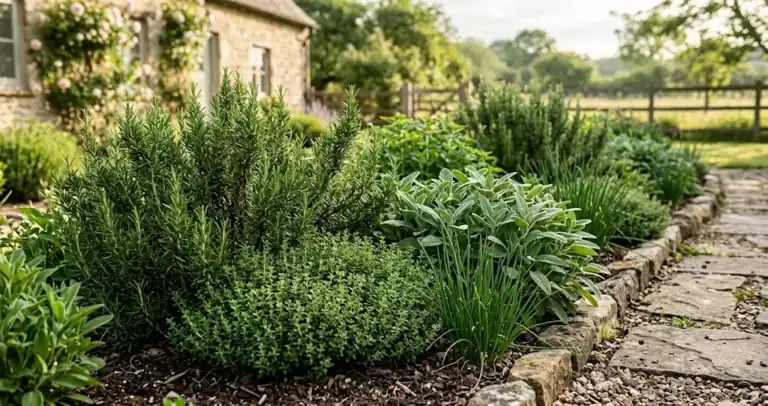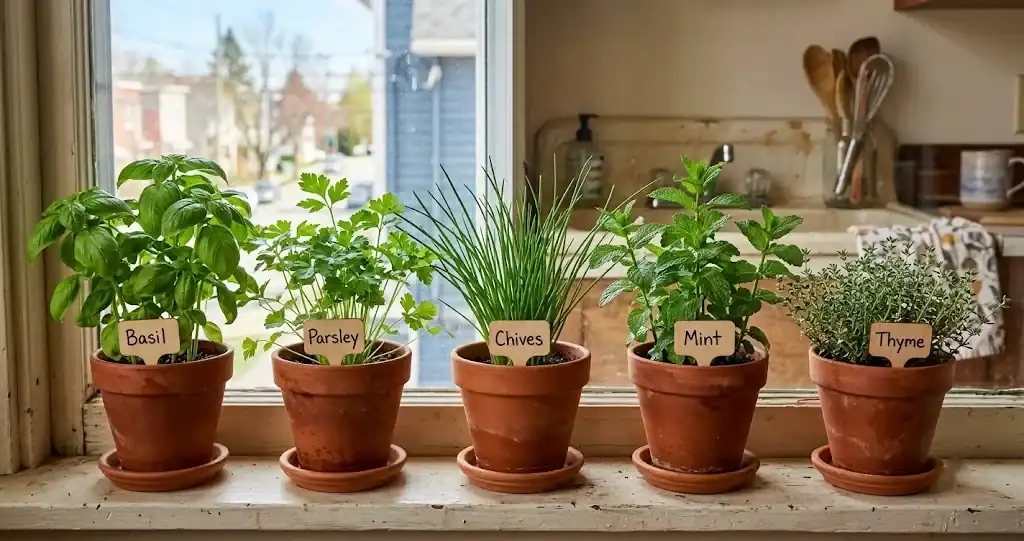
Most apartments already have what a small herb garden wants. A window that catches a few hours of natural light, a kitchen counter or shelf, and a willingness to water when the soil feels dry. Add a few containers, a bag of fresh soil, and a packet of basil seed, and within a month you can snip fresh leaves for pasta, eggs, and soup without stepping outside the building. For anyone who lives in an apartment, this is one of the simplest and most rewarding ways to add flavor to the kitchen. Growing herbs in an apartment is a useful follow-up for the practical side of keeping plants alive inside once you have the first harvest in hand.
This page covers what a small herb garden actually does for you, the small setup that makes it work, the herbs that thrive in a small space, and the mistakes that take new growers out. If you want a single, clear reason to start, it is this: a windowsill garden is one of the few home improvements that pays you back in something you can eat, every week, for very little money. Growing herbs at home also adds life to the living space and gives a small sense of accomplishment at the end of each day.
What you really get from a small-space herb garden
Fresh flavor on demand is the obvious payoff, but the benefits stack up further than the kitchen. A pot of leafy green herbs by the window gives you a leaf or two whenever a recipe calls for it, so cooking at home becomes easier and cheaper. The same plant you would have paid three dollars for a small clamshell of at the grocery store keeps producing for months. Across a year, the savings on a handful of staple herbs can cover the cost of the containers, the soil, and a packet of seed.
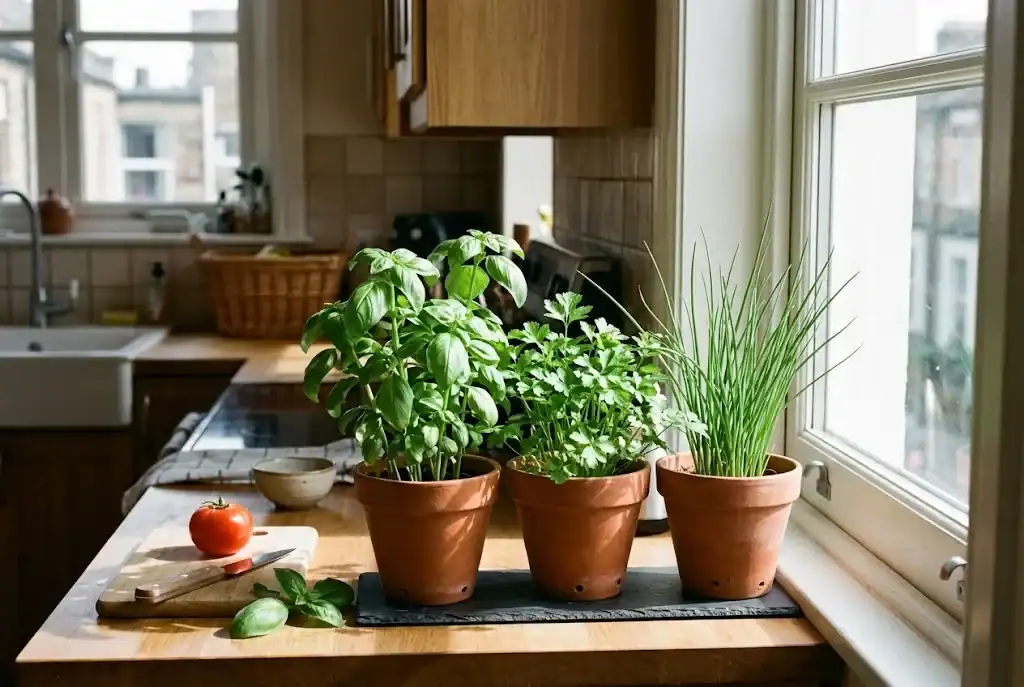
Living plants change how a room feels. A small herb arrangement on a kitchen shelf softens a room and gives you something tangible to tend. A few containers by the window can make a small space feel more lived-in.
There is also the food side. Leafy herbs like parsley do not travel well once cut, so by the time a clamshell reaches the fridge, the leaves have already started to yellow. A container on the counter keeps the plant alive until the moment you pick what you need, which means stronger flavor, less waste, and fewer trips to the store for greens you will use a fraction of before they spoil. The same is true for any cut-leaf herb, which is why a pot on the kitchen counter is one of the most reliable ways to keep flavor on hand. A productive container can give you repeated small harvests, which helps reduce the waste of buying a clamshell that yellows in the fridge.
If you want a broader look at why keeping herbs at home is worth the effort, the case for an herb garden at home goes through the same benefits from a slightly different angle.
What you need to get started
Getting started is simpler than most people think. Four things, and only four: light, a container with drain holes, a fresh bagged mix, and the plants. Once you have those, you have a working garden.
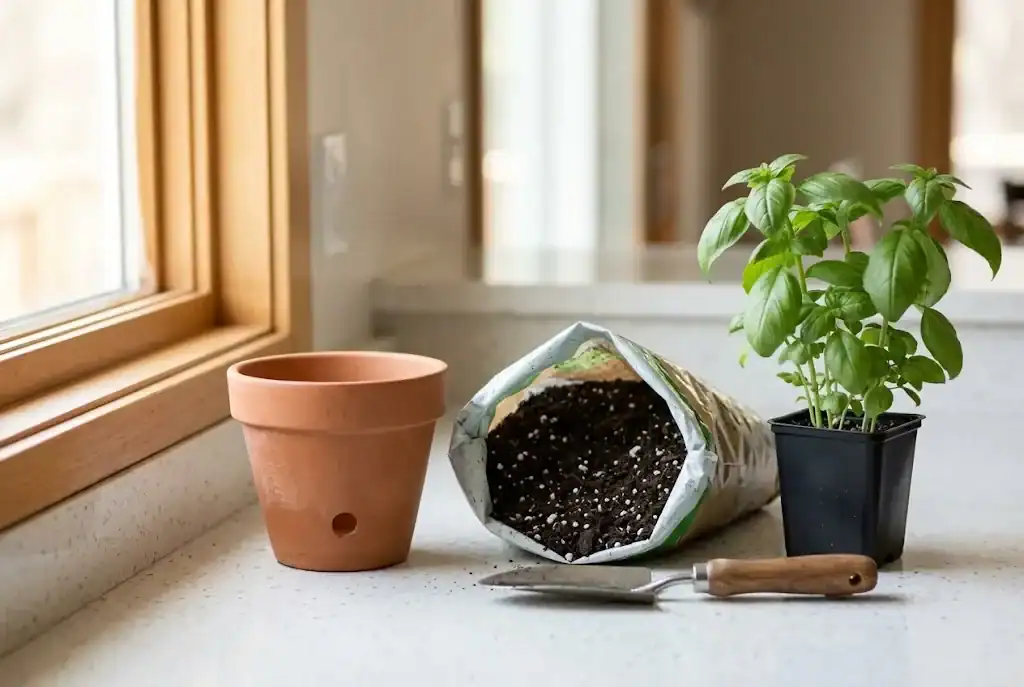
- Light. Most culinary herbs want at least four to six hours of direct sun. Direct light from a south-facing or west-facing window is the cheapest source and the easiest place in most apartments. If your windows face north or are shaded by another building, a small grow light on a timer fills the gap. A basic full-spectrum LED panel or LED grow lights sized for a kitchen ledge run quietly and use little electricity.
- Container. Pick one with drain holes. Anything from a four-inch herb container to a long balcony planter works, as long as water can run out the bottom. The single most common reason herbs die inside is soggy roots, and containers without drainage holes are how that happens.
- Soil mix. Use a fresh bag of potting soil, not garden soil. The mix is light, holds moisture evenly, and drains well. Most herbs like a pH in the neutral to slightly alkaline range, which a standard mix gives you without any adjustment. Organic herbs grow well in the same mix, and you can buy a small bag of organic-certified mix at most nurseries.
- Plants or seed. For a first garden, starter plants from a local nursery or grocery store are the easiest path. You can sow cilantro and dill from seed at the same time, and starting an herb from seed is also a way to grow basil and chives for a few dollars, but seed adds two to three weeks before the first useful harvest.
If you are starting from a blank apartment and want a single recommendation, set a six-inch container of basil on the brightest window you have, water it when the top inch of soil is dry, and pinch the top leaves once the plant reaches six inches tall to keep it bushy. That is a complete herb garden for one recipe at a time, and it costs less than a takeout dinner. Most herb plants reward the small effort, and basil in particular is the most productive herb for a small kitchen because it grows fast and is forgiving of small mistakes.
The herbs that do best in an apartment
Some herbs adapt to life inside better than others. The easy ones tolerate the dry air, the variable light, and the occasional missed watering. The harder ones want outdoor sun, cooler nights, or more root room than a small container can give them. Most herbs do well in a sunny window; the list below separates the easy choices from those that need more consistent light or root room.

Easy herbs for a small space:
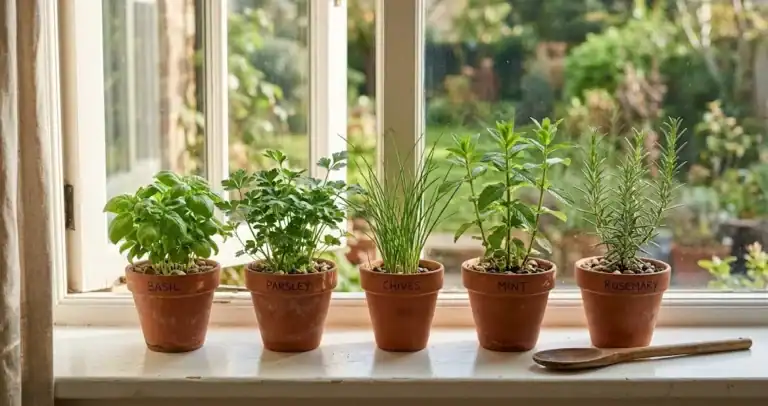
- Basil. Fast-growing, productive for months, and the leaves taste best picked minutes before they hit the pan. Pinch off flower buds as they form to keep the harvest coming.
- Mint. Hardy, forgiving, and grows well in a container on its own. Spreads aggressively in a garden, which is exactly why a container is the right home for it.
- Parsley. Slow to start from seed but reliable once established. Both flat-leaf and curly parsley do well in a sunny window.
- Chives. A small chive clump gives a steady harvest through the season and comes back year after year. Snip the leaves from the outside and the plant keeps producing.
- Thyme and oregano. Both prefer a drier container and a sunny spot. Water less often than you would basil and they will reward you with a steady supply.
Herbs that need more than most apartments can offer:
- Rosemary. Wants cool nights, strong sun, and drier soil than a container usually provides. It can be done, but it is not the herb to start with.
- Cilantro. Bolts quickly in warm indoor air, which sends the leaves bitter. Sow a fresh container every few weeks for a continuous supply rather than fighting one long-lived plant.
- Dill. Tall, fast, and prone to falling over once it is established. A single container of dill will give you one good harvest, then it is done.
The best first choice for someone new to growing inside is usually basil, because it forgives the small mistakes and grows fast enough that you can see the result of watering, pinching, and light changes within a week. Mint is the second easiest, and a small container of it is a great way to round out the easy-to-grow set of herbs like basil and mint that any apartment gardener can keep productive throughout the growing season.
Common pitfalls in a small space
Apartment herb gardens fail for a few predictable reasons. Most of them are easy to fix once you see them.
Overwatering. The number one cause of an indoor herb garden collapsing. A container sitting in a saucer of standing water, or a container without proper drainage, will rot the roots within a week. Lift the container, feel the weight, and only water when the top inch of soil is dry to the touch.

Not enough light. A leggy plant, with long gaps between leaves and a stem that flops over, is asking for more sun or a panel. Move the container to a brighter window, or add a small light a few inches above the leaves for twelve hours a day.
One large planter for everything. A mixed planter is harder to manage because different herbs can need different watering schedules. A single mixed planter is harder to manage than three small containers grouped together. Three small containers also let you rotate them toward the sun as the season changes. A vertical garden on the wall is another option once you have a few weeks of practice.
Picking too much, too early. A new plant needs leaves to feed its roots. Take no more than a third of the foliage at any one cut, and let the plant recover for a week before the next harvest. With basil, pinch the top set of leaves just above a leaf joint and two new stems will branch from the cut.
Forgetting to feed. A fresh bagged mix only carries enough nutrition for a few weeks. Once a month, fertilize lightly with a diluted liquid fertilizer at half the label strength. A small amount of compost worked into the top of the container works too. That is enough to keep the leaves producing without driving the plant into soft, watery growth.
Most of these problems take one adjustment to fix. None of them are reasons to give up on the garden; they are the normal learning curve of growing fresh herbs in a small space. Setting up an herb garden in an apartment is well within reach, even if you have never grown a vegetable garden before.
Putting the garden together
You do not need a balcony, a spare room, or a lot of free time. A bright window, three small containers, a bag of fresh mix, and a packet of seed is enough to start. Set the containers where you will see them every day, water when the soil feels dry, and pinch the tops once the plants are six inches tall. Within a month, you will have fresh basil for pasta and chives for the eggs.
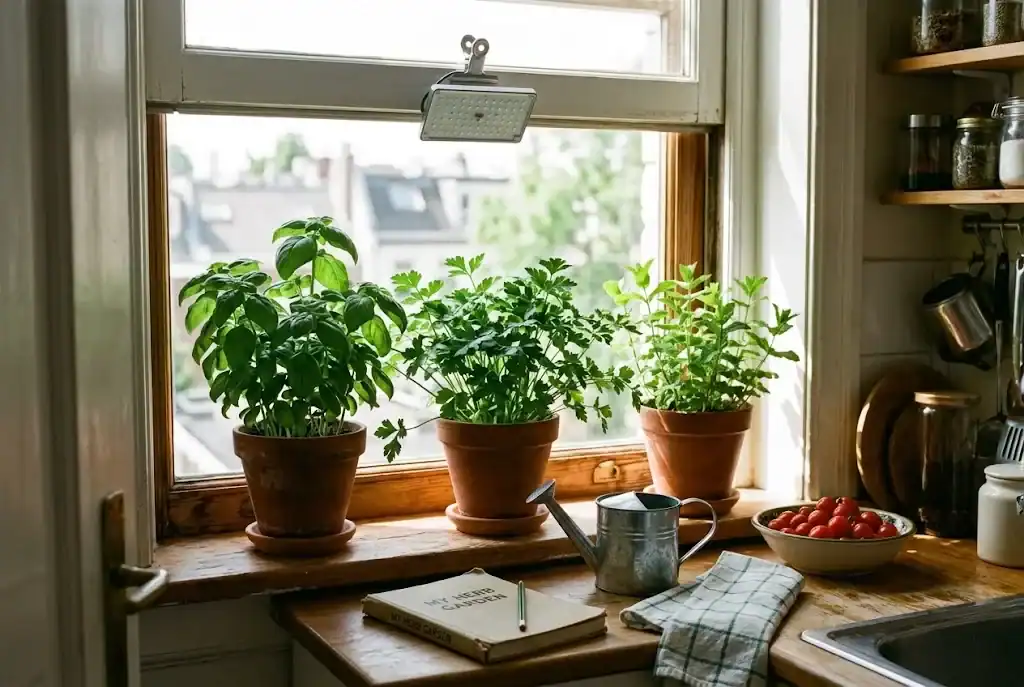
From there, the apartment garden can grow with you. Add a panel for the darker months, set up a rail planter for summer, or try a second round of cilantro in a separate container so the first does not bolt. A balcony herb garden in the warm months doubles the growing space without taking up any of your indoor room, and the same containers move back to the kitchen in winter. The setup is small, the cost is low, and the harvest is a regular part of cooking at home.
For the full picture of what an indoor setup looks like over a season, the wider basics of growing an apartment herb garden walks through light, water, and feeding in more detail.
Frequently asked questions
Can I grow herbs in my apartment?
Yes. Most culinary herbs grow well inside if they get four to six hours of direct sun, a container with drain holes, and water when the top inch of soil is dry. If you live in an apartment, a kitchen window, a balcony, or a small supplemental lamp covers the basic needs of the easy herbs like parsley and chives.
What are the best herbs to grow in an apartment?
Basil, chives, thyme, and oregano are reliable inside. They tolerate the dry air, recover from the occasional missed watering, and produce a steady harvest for several months. Rosemary, cilantro, and dill can also be grown but want more specific conditions and are better as a second or third herb than a first.
Is it better to grow herbs indoors?
For most home cooks, growing herbs inside is a useful supplement, not a replacement for outdoor growing. Indoor containers give you fresh leaves through the winter, in apartments without a yard, and for the herbs you only use a few leaves of at a time. Outdoor beds produce more per plant, but indoor containers are the more convenient source of fresh flavor for everyday cooking. Growing herbs at home fits apartment living well, especially if the alternative is buying a clamshell that goes yellow in the fridge.
Is it worth it to grow your own herbs?
For the herbs you use regularly, yes. A single basil plant can produce leaves for several months, which more than covers the cost of the container, the soil, and the seed. The flavor is better, the waste is lower, and the convenience of a container on the kitchen counter is hard to beat. For herbs you use only once a year, the grocery store is still the right source.