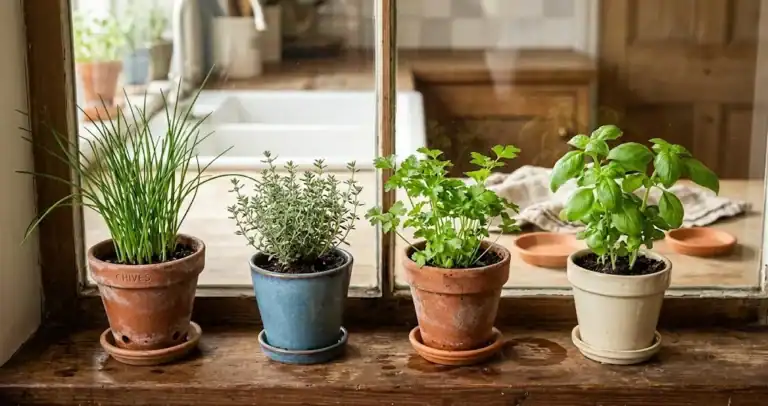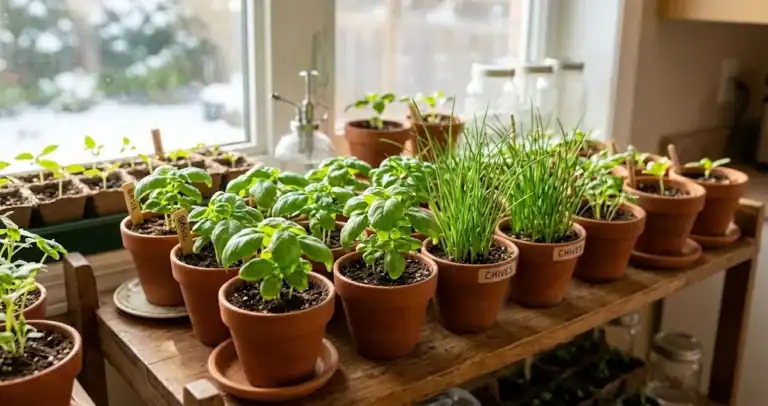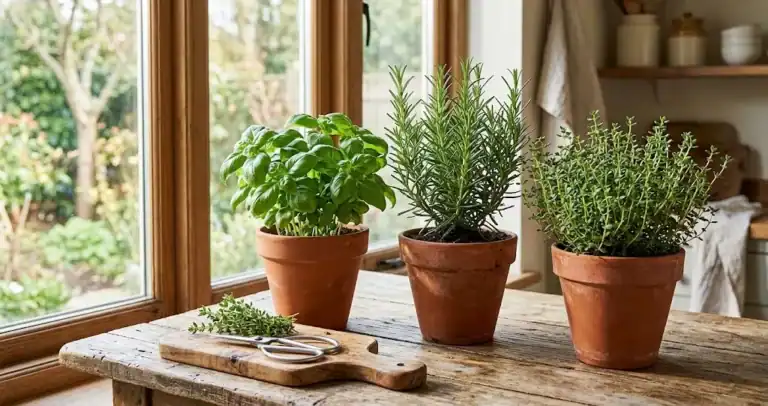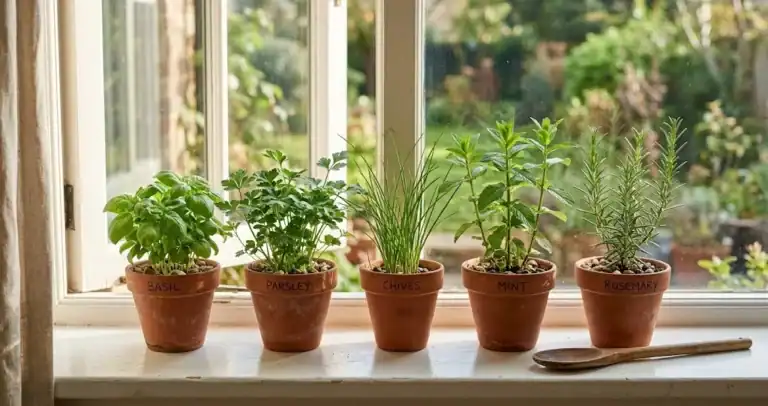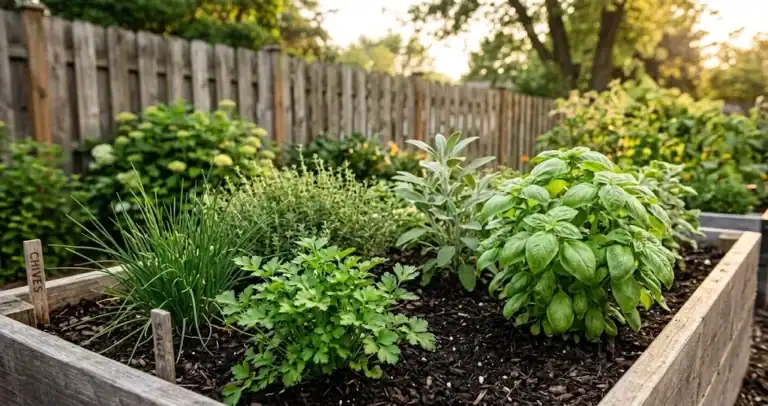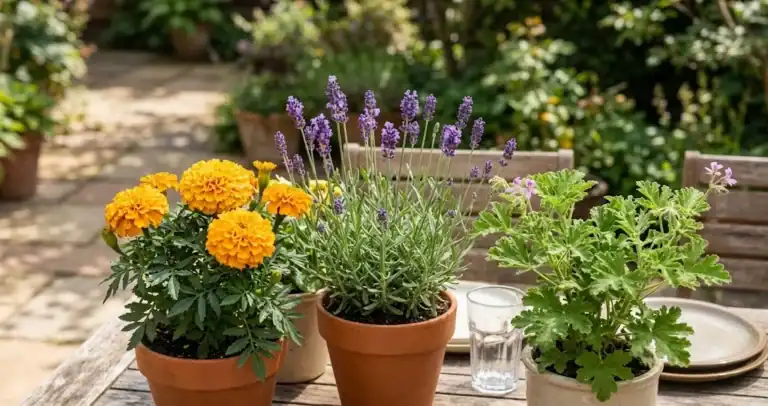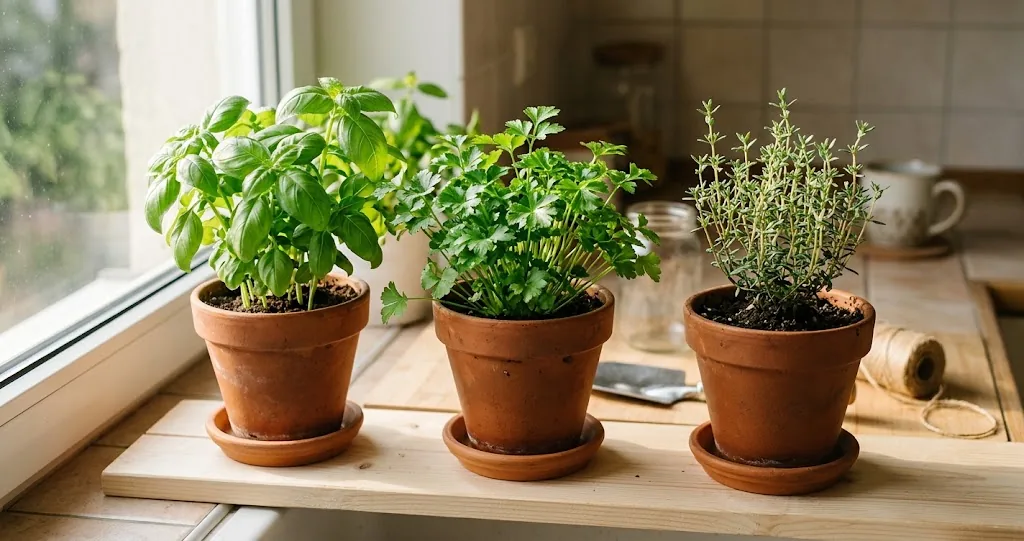
Fresh herbs within arm’s reach of the stove change the way you cook. Snip a few leaves for pasta, cut chives into scrambled eggs, pull a sprig of rosemary for roasted potatoes, and dinner tastes better without a special trip to the store. Growing herbs indoors is one of the most rewarding ways to start an indoor herb garden, even if all you have is a sunny ledge and a few small containers.
If you have ever killed a pot on the kitchen counter, this guide is for you. Most indoor failures come from a few predictable problems: not enough light, the wrong container, or watering on a calendar instead of by feel. Set those three things right, choose plants that thrive indoors, and you can grow herbs successfully for fresh leaves. With a little indoor growing know-how, even a beginner can keep a kitchen shelf productive.
Pick herbs that grow well indoors
The easiest plants come from Mediterranean climates where the sun is strong, the soil drains fast, and the air is dry. Sweet basil, parsley, chives, mint, oregano, thyme, sage, and rosemary all adapt well to containers on a sunny kitchen shelf or windowsill, and most double as culinary options you already cook with. Lemon balm and dill also work if you give them a little more attention. Avoid fussier choices like cilantro until you have one successful harvest behind you, because cilantro bolts fast and frustrates beginners.
Start small. Three or four different herbs in individual containers cover most weeknight cooking and let you learn how each herb plant behaves before you expand. A mix of one leafy herb (basil or parsley), one sturdy perennial (thyme, oregano, or sage), and one quick grower (chives or mint) gives you variety without crowding your counter. You will get to know which herbs like your conditions and which you want to grow herbs from next season. Treat the setup as a small experiment rather than a finished display.
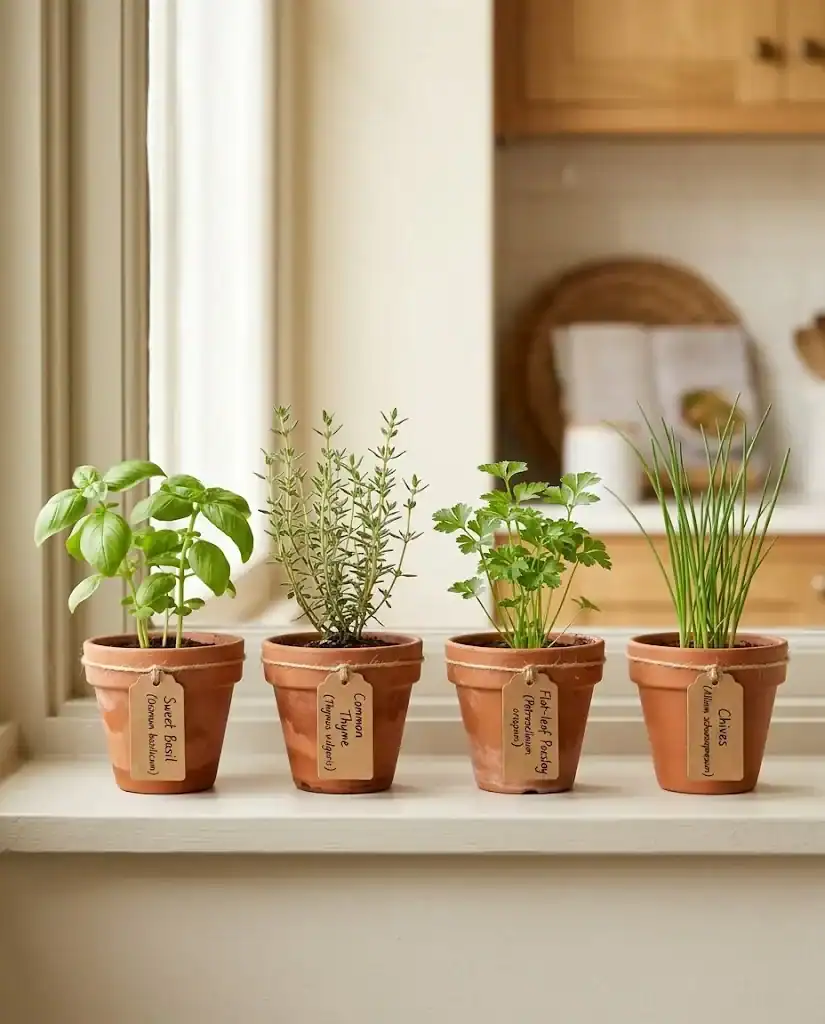
If you want the fuller picture of how herb gardens come together in your garden layout, our beginner’s guide to growing an herb garden walks through the wider layout, kitchen garden planning, and what to plant where. Indoor growers who plan a few pots by season often find they use more fresh herbs than they ever did from the store.
Give indoor herbs enough light
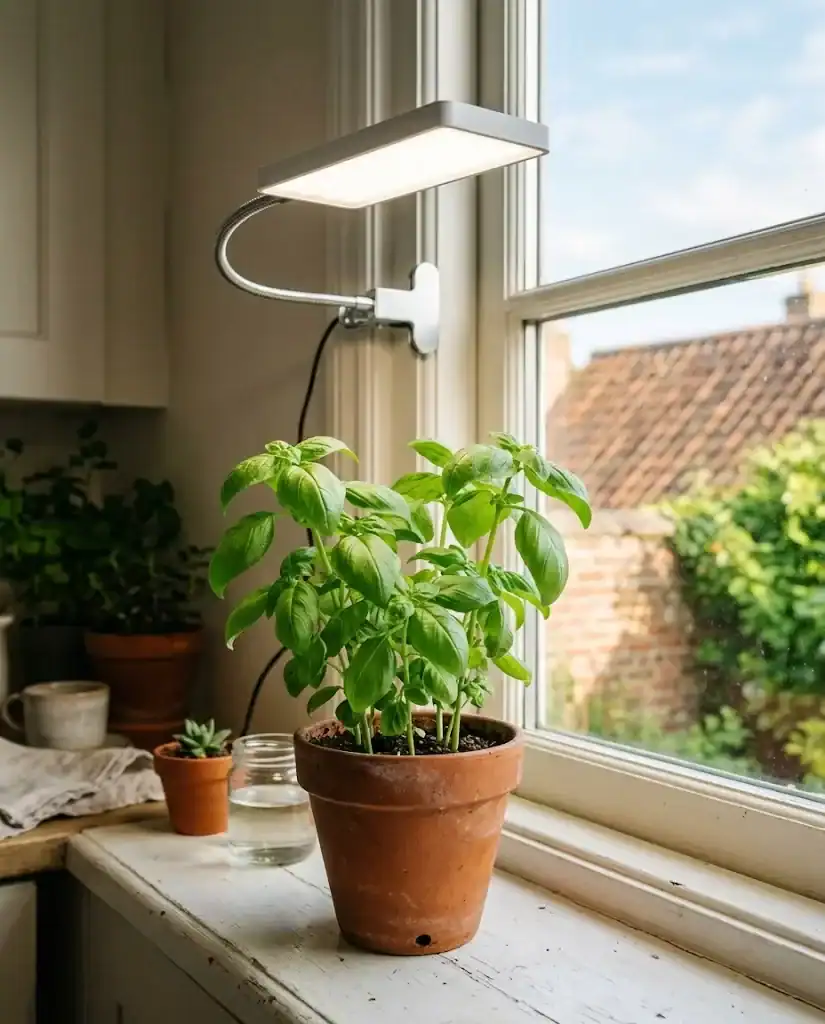
Light is the single biggest reason these plants fail. Most culinary varieties need at least six hours of direct sunlight each day. A south-facing window is the best spot in the northern hemisphere. East- and west-facing windows work for tender leafy types like parsley and chives. A north-facing window usually does not give enough light on its own, so plan to add a grow light if that is the only space you have.
A simple full-spectrum LED on a timer solves the low-light problem cheaply. Set it about 15 to 30 cm above the tops of the foliage, run it for 12 to 14 hours a day, and your herbs will keep growing through winter when natural light drops. Rotate containers often so each side gets even sun and you do not end up with lopsided, leaning stems. Many indoor growers rely on this setup year-round.
Choose pots that drain
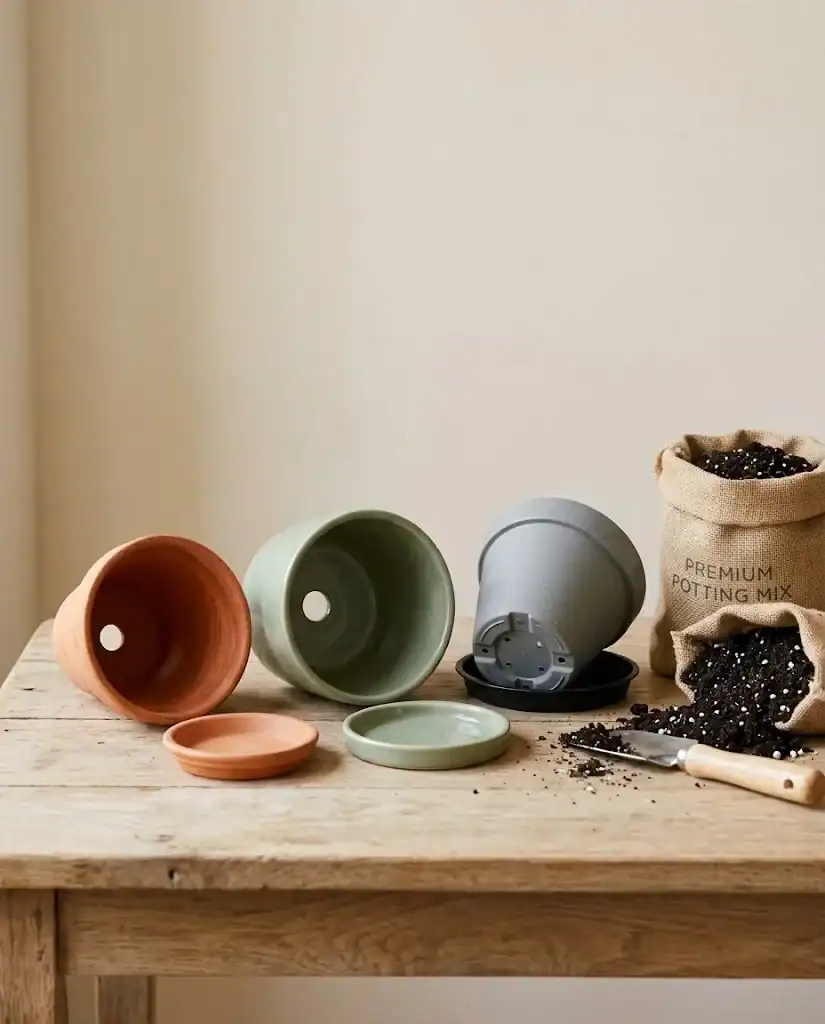
Herbs hate wet feet. The fastest way to lose a plant is to leave it sitting in a saucer of liquid after watering, because the roots rot and the foliage collapses within days. Always use containers with a drainage hole, and let excess moisture run out the bottom each time. Standing water in the saucer is the most common beginner mistake.
Most herbs do best in individual containers rather than shared ones. Basil and mint in particular want their own space, because their root systems grow quickly and they each have different moisture needs. A 15 to 20 cm pot is a good starting size for one plant. Unglazed terracotta helps because the sides breathe and the soil dries more evenly, but any container with good drainage works.
For a step-by-step on choosing pots that match each plant’s needs, see our guide on setting up an indoor herb garden the right way.
Use the right potting mix
Garden soil is too dense for containers. It compacts, holds too much moisture, and brings outdoor pests inside with it. Use a quality indoor potting mix instead, ideally one blended for herbs or vegetables. These mixes contain peat, coco coir, or compost plus perlite for the air pockets that roots need.
If you want to mix your own, combine two parts potting soil, one part perlite, and one part compost. The perlite keeps the mix light and the compost feeds the plant slowly over the growing season. Most herbs prefer a slightly dry, well-drained soil rather than a rich, moisture-holding one, so resist the urge to add extra compost.
Water when the soil asks, not on a schedule
Overwatering kills more indoor herbs than underwatering. Stick a finger into the top 2 cm of soil. If it feels dry, soak thoroughly until you see liquid run out the drainage hole. If it still feels damp, wait another day and check again. Drain the saucer after each drink so the pot is not sitting in liquid.
How often you water depends on the container, the room, and the season. In a bright, warm kitchen in summer, containers may need moisture every day or two. In a cooler room in winter, the same pot may only need a soak once a week. Pay attention to the plant rather than the calendar, and you will get the rhythm right quickly. Herbs also require more frequent drinks during their active growing season.
Feed lightly through the growing season
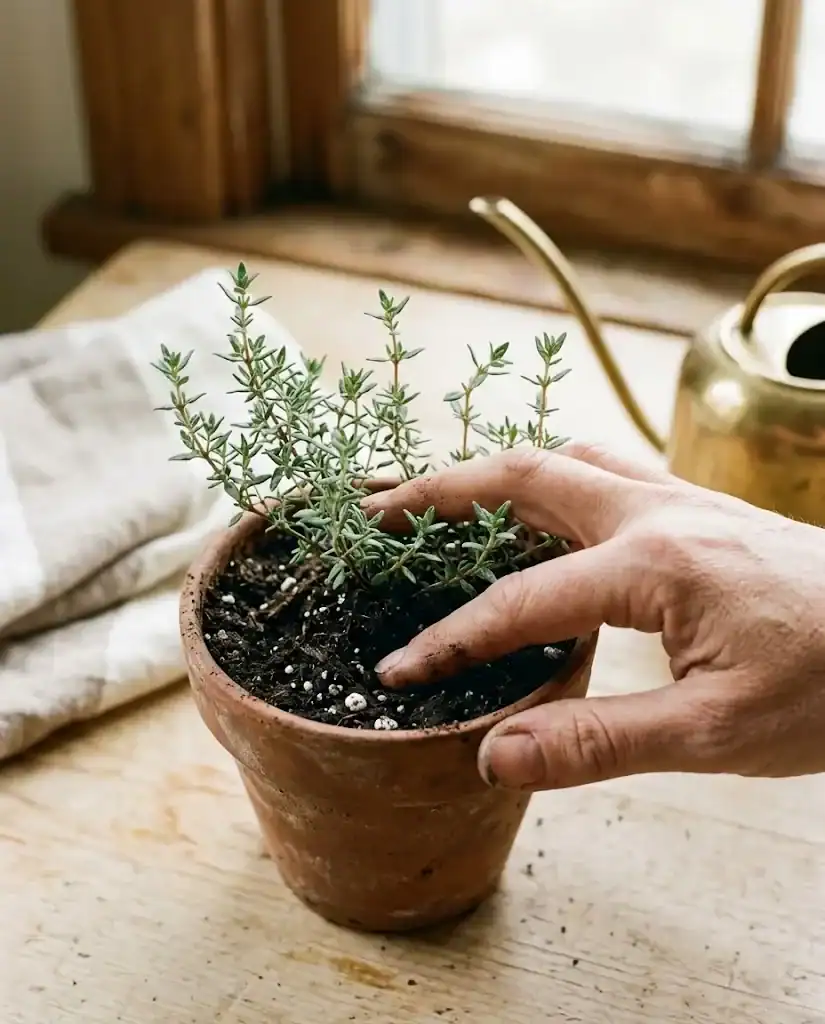
Indoor herbs do not need much fertilizer, but a light feed during the active season keeps leaves coming. Use a diluted liquid seaweed or fish emulsion every two to four weeks from spring through early fall. Cut back to once a month or stop entirely in winter, when most herbs slow their growth and extra nutrients just build up in the soil.
Skip heavy nitrogen feeds. They push fast, leafy growth with weak flavor and leave the plant more attractive to pests. A weak, balanced feed is plenty.
Keep the air moving
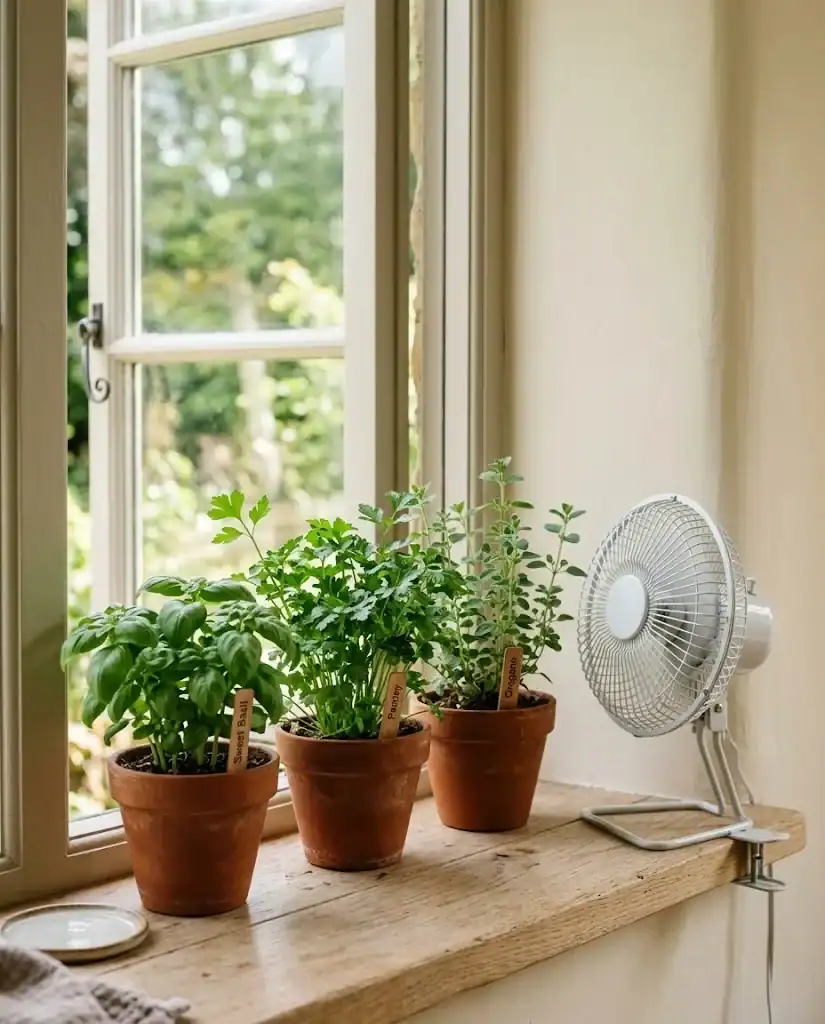
Good air circulation helps these plants resist fungal problems like powdery mildew and damping off. If your kitchen is stuffy or you group many pots together, run a small fan nearby for a few hours a day. Open a window when the weather is mild. Stagnant, humid air is the enemy of tender herbs, especially basil. Grouping indoor plants of similar needs together also lets you rotate pots easily and keep an eye on watering.
Aim for a steady room temperature between 18 and 24°C. Most herbs dislike cold drafts from single-pane windows in winter, so move them back from the glass on freezing nights.
Harvest without killing the plant
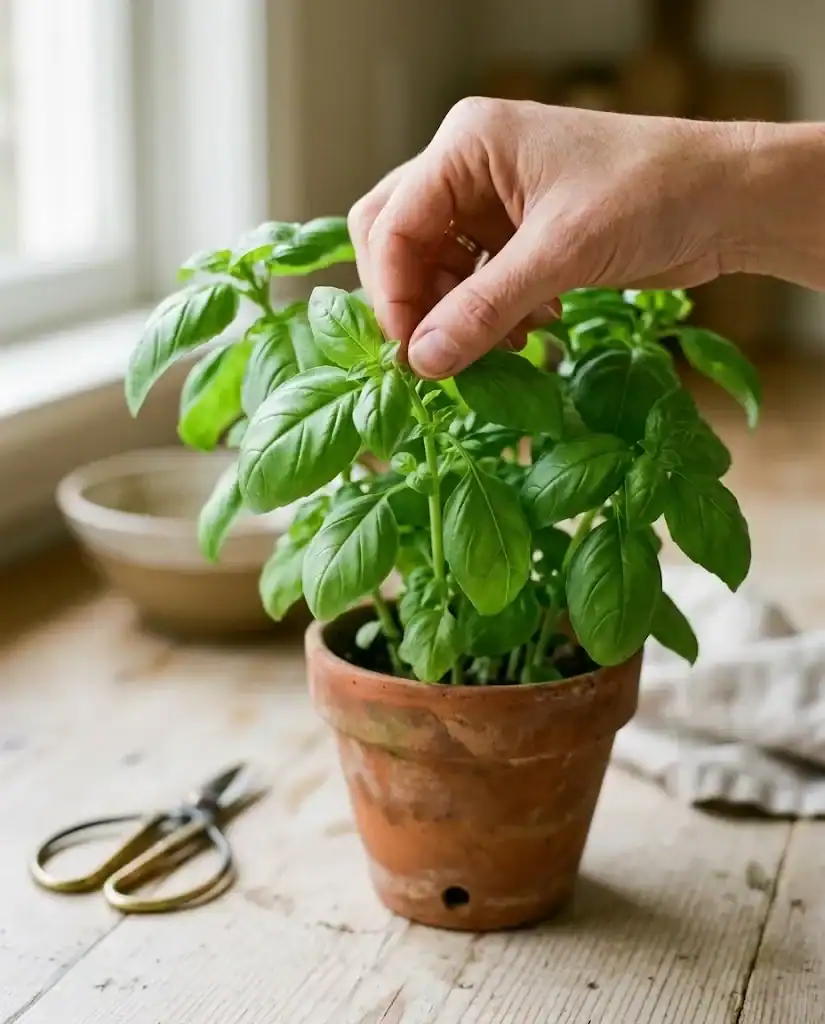
Regular harvesting actually keeps herbs productive. Pinch or snip the growing tips above a leaf pair, and the plant branches out into a fuller, bushier shape instead of getting tall and leggy. Always leave at least two-thirds of the foliage on the plant so it can keep feeding itself and regrow. Many herbs grow back quickly when you harvest this way.
For leafy types, harvest little and often rather than cutting one big bunch. For woody herbs like thyme, oregano, and sage, cut whole stems just above a leaf node. Use your herbs at your fingertips the same day, or dry the extras for later. You can also hang sprigs in a warm, dry kitchen corner to cure.
If you want to start herbs from seed rather than nursery plants, our guide on growing herbs indoors from seeds covers sowing, light, and transplanting in detail.
Common indoor herb problems
Yellow leaves usually mean overwatering. Let the soil dry out and check that excess is leaving the pot. If the stem is brown and mushy at the base, the plant is likely beyond saving, and it is time to start over with fresh soil and a new container.
Leggy, stretching growth with pale leaves means not enough light. Move the container closer to a sunny window or add a grow light. Pinch back the long stems to encourage bushier regrowth.
White powder on the leaves is usually powdery mildew, caused by stagnant, humid air. Improve air circulation, water at the soil level rather than over the foliage, and remove the worst affected leaves.
FAQs about growing indoor herbs
What is the easiest herb to grow indoors?
Chives are almost impossible to kill for beginners. They tolerate lower light than basil, recover from missed waterings, and come back year after year from the same pot. Mint is a close second, though you may want to keep it in its own container because it spreads quickly through the soil. Both are perfect for beginners.
Do indoor herbs need fertilizer?
Yes, but only lightly. A half-strength liquid feed every two to four weeks during spring and summer keeps herbs producing. Skip feeding in winter, when growth naturally slows. Even a casual gardener can stay on top of it with a single monthly reminder.
Can I grow multiple herbs in one pot?
You can, but only if they have similar water and light needs. Chives and parsley share conditions and grow together well. Rosemary prefers drier soil and does better on its own. Mint is best in its own container because it takes over. Indoor conditions vary by room, so group plants that suit the same spot.
How much light do indoor herbs really need?
Most culinary herbs need at least six hours of direct sunlight a day. A south-facing window provides that. In darker rooms, an LED panel on a 12 to 14 hour timer covers the gap and keeps herbs producing all year. Many indoor growers rotate pots often to give every plant even light.
Bringing it together
An indoor garden of herbs is one of the easiest ways to start growing food at home. Pick three or four different herbs you actually cook with, set them in front of your sunniest window in pots with drainage, water when the soil dries out, and rotate the containers every few days. Within a few weeks you will have fresh leaves for pasta, eggs, and potatoes at your fingertips, and you will wonder how you ever cooked without them.