Choosing herb seed is mostly about three things: which flavors you cook with, the climate you actually garden in, and a seed source that ships fresh seed from a recently tested lot. Match those three and most of the choices get easier. The packets on the rack can look interchangeable, but the labels tell you a lot once you know what to read.
For a fuller walk through setting up a kitchen plot that grows into productive plants, see the beginner’s guide to growing an herb garden.
Match the seeds to how you actually cook
Start with the kitchen, not the seed catalog. A cook who reaches for thyme and marjoram every week will lean toward Mediterranean perennials. Someone who stocks the leafy soft-stemmed annuals for weeknight cooking needs quick-growers from seed. Tea drinkers who steep mint and lemon balm will want a mix of soft-stemmed types and a few hardy perennials.
Buying a culinary herbs collection sounds useful until you check which ten packets are inside. If half of them will sit in a drawer for two seasons, the pack is wasted money.
Pick varieties that suit your climate and space
A short growing season or a cool summer calls for cilantro selected to resist bolting, plus leafy annuals that tolerate lower night temperatures. A hot, humid climate pushes gardeners toward heat-tolerant Mediterranean selections where humidity-tolerant rosemary and oregano resist rot rather than collapse in the same low light. Match the growing conditions on the packet to what your plot actually offers, not to the warmest week in July.
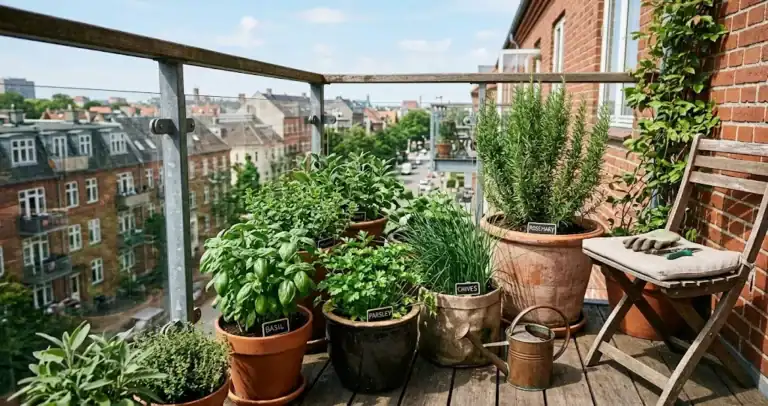
Container growers and small-space gardeners should focus on compact cultivars: the globe basil form, plus dwarf sage, small-leaved thyme, chives, and parsley bred for a tidy shape. A packet of full-size rosemary will sulk in a four-inch container and rarely get past a single season.
Open-pollinated, hybrid, or heirloom: what the labels mean
Open-pollinated seeds come from plants that pollinate naturally and breed true to type, so the seed you save at season end grows the same plant next year. Hybrid seeds, marked F1, are first-generation crosses bred for specific traits like uniform sprouting or disease resistance; saved seed from an F1 plant will not run true. Heirloom is a flavor of open-pollinated: a long-cultivated variety with a documented record. Many popular heirloom and open-pollinated seed varieties are also labeled organic herb seed or non-gmo heirloom, which speaks to how the parent plants were grown rather than to the seed itself.
For most home gardeners, open-pollinated or heirloom is the simpler path, because saved seed works and heirloom varieties stay consistent year to year. Most mail-order seed houses publish a printed seed catalog or full-color variety pack leaflet that lists regional adaptation, days to maturity, and a recent test date; treating a single variety pack as a sampler is often the cheapest way to find what your kitchen actually uses.
A hybrid makes sense when a single trait, such as uniform sprouting in cool soil, a named disease resistance, or heat tolerance, solves a real problem in your garden. Treat the choice the same way you would treat any seed purchase: read the back of the packet, check the lot date, and buy only what you can sow within the season.
Read the packet for what you actually need
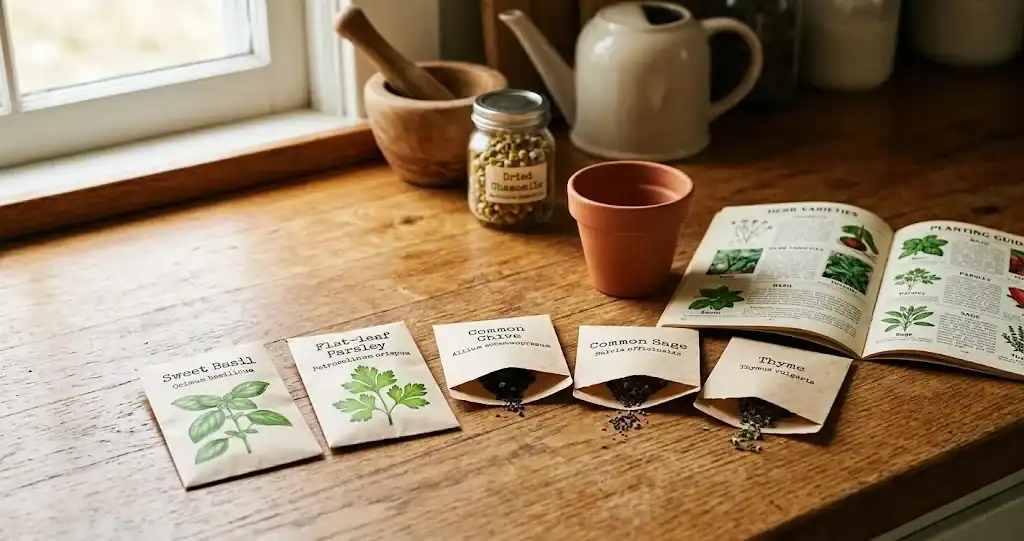
Pretty art on the front of a seed packet sells seed. The information you actually need lives on the back in small print. Read for four numbers: the year the seed was tested, the germination rate as a percentage, the count or weight inside, and the days to maturity. The first two tell you whether the lot will germinate reliably; the last two tell you whether what germinates will be ready in your growing season.
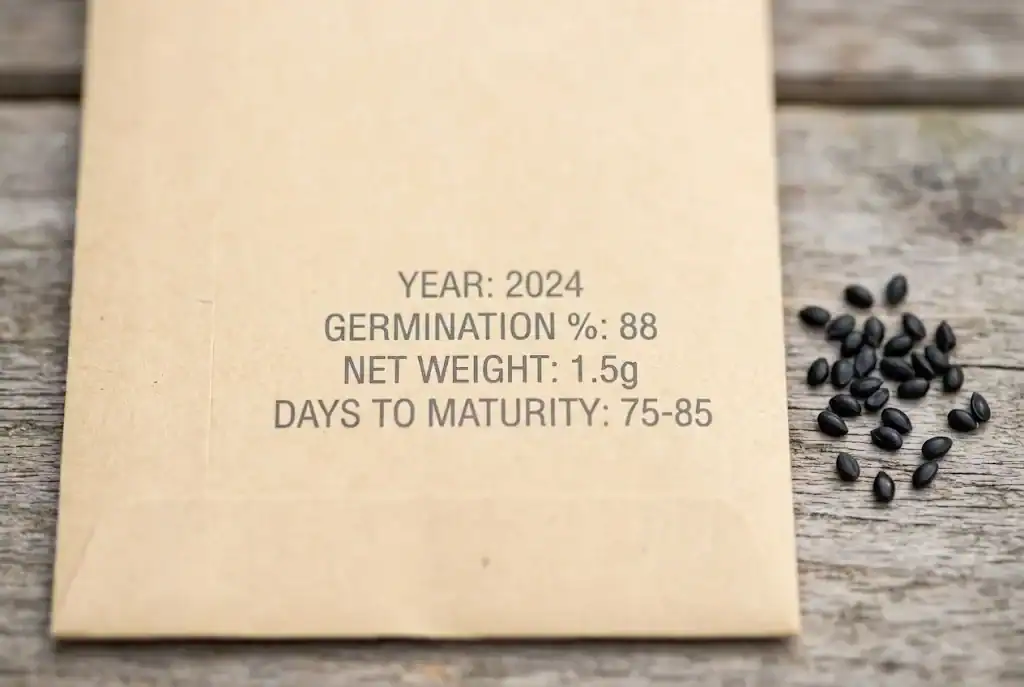
Fresh seed tested in the current or previous calendar year is a strong signal the lot will sprout well. A germination rate under seventy percent suggests older lots; use the seed promptly, sow a little thicker than the packet suggests, and treat anything that does not germinate as a hint about the lot rather than your skill. A quick paper-towel test on ten seeds before you commit a tray tells you the same thing without losing a sowing window.
How many seeds you actually need
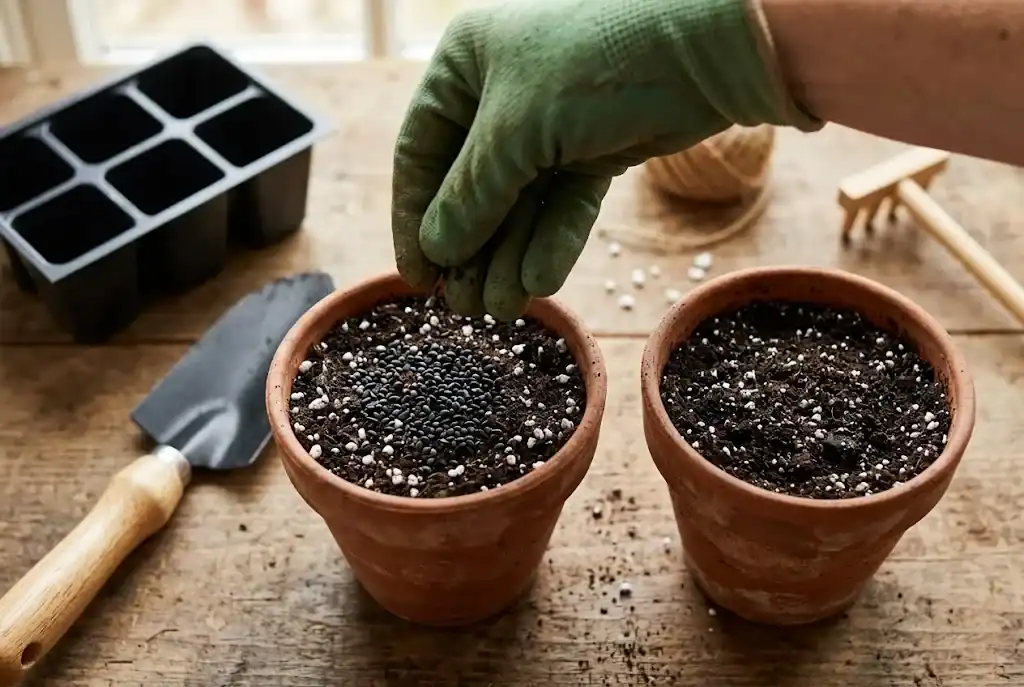
One packet holds anywhere from fifty to several hundred seeds, which sounds generous until you start sowing with a pinch and use up most of a packet in a single pass. Read the back for the suggested spacing and the recommended seeding rate per cell, then plant what fits without over-stuffing. The same logic holds whether you are sowing a single kitchen pot or a raised bed of chives for the whole block.
For a small kitchen garden, three to five packets are usually enough for a season, with one or two long-sprouting herbs like parsley or thyme added as backups for late summer replacements. Buying more packets than you will plant in two seasons wastes money and undercuts the freshness test above; older seed loses viability in roughly the order of the herb’s natural storage life. Seeds for planting sold loose at a hardware store, or in bulk garden seeds bins, can be a fair test, but they rarely carry the same lot date and test rate the good mail-order houses publish. Plant seeds sold by count (rather than weight) are easier to budget, and most home gardeners overestimate how many seeds they really need.
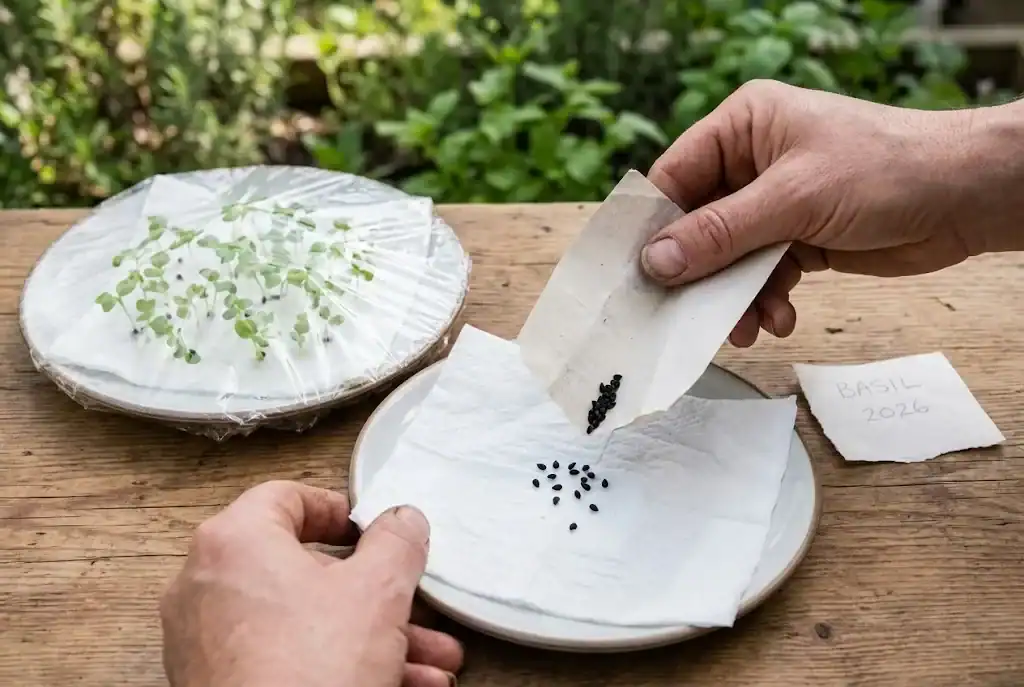
When you want to compare different ways of growing herbs from seed, the step-by-step guide on growing herbs from seed covers container choice, soil, and timing.
Buy from a source you trust
Local independent garden centers stock varieties suited to your region and turn over stock quickly, so the packets on the rack are usually fresh. Mail-order seed companies with good reputations publish lot dates and germination test results, and many list regional adaptation notes on each variety. Some also publish non-gmo heirloom and organic herb lines as separate SKUs. Seed libraries and community swaps are a low-cost way to try unusual herbs, although the lot date and test rate may not be on the envelope.
Beware of unmarked bulk bins, roadside seed packets with no lot date or company contact, and online listings with no germination test data. A reliable source prints the four numbers above and answers questions when you reach out, and a printed seed catalog with regional notes is a stronger guide than a glossy front-of-packet illustration. For those starting herbs from seed in a small herb garden or on a sunny windowsill, a curated garden kit or a single well-chosen selection of herb seeds for planting is usually a better start than a dozen mismatched packets.
Starter herbs by ease from seed
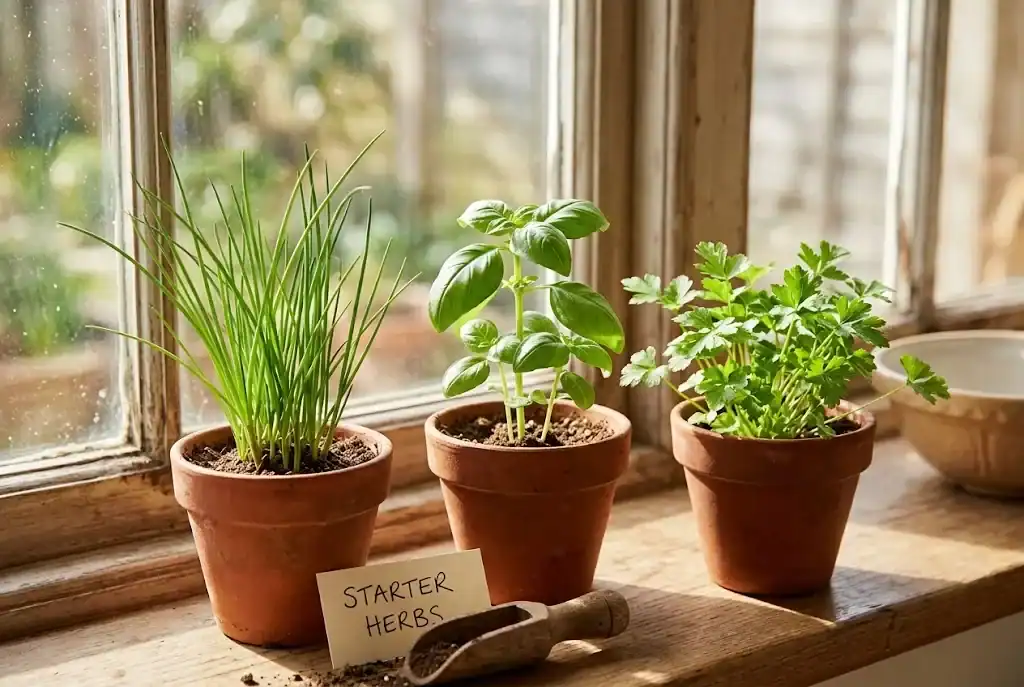
A few herbs are particularly forgiving for a first sowing. A small packet of basil seeds germinates in five to ten days at room temperature and grows fast in any sunny spot. Parsley is slower (about three weeks) but produces all season once it starts. Cilantro bolts quickly in heat, so a sequence of small sowings every few weeks beats a single large one. Chives and oregano both come up reliably from fresh seed and return year after year. A single chive clump multiplies quickly, so one packet is enough for years of snipping. The seedling stage is the riskiest for most annuals; keep pots in steady warmth and direct sun until the first true leaves open.
Mint is easier as an established herb plant or a division, because mint seed is slow and unreliable. The woody evergreens are notoriously slow from seed and are usually bought as small potted plants from a nursery. Sage is moderate, germinating in about two to three weeks if the seed is fresh, and a single packet is more than enough for a household. Borage and chamomile both germinate freely from spring sowings; the latter earns its place as a medicinal herb and an evening-tea flower. As direct-sow candidates, dill beats most other herbs because it dislikes transplanting and finishes its life cycle in a single growing season.
Storage for leftover seed
Keep unused seed packets in a sealed jar with a small sachet of silica gel or a tablespoon of dry rice, in a cool, dark, dry place. A refrigerator door works for short-term storage, provided the seed is fully dry before it goes in; humidity and warmth shorten storage life faster than cool alone. Label every jar with the herb and year, and use the oldest lot first when spring sowing comes around.
For indoor herb garden pots through a year of seed starting, container choice, light from grow lights or a sunny windowsill, soil (a sterile potting soil holds moisture without crusting), and timing all matter. The guide to starting herbs indoors from seed walks through each.
Bringing it together
Choosing herb seed for the kitchen is mostly about three layers: match the variety to the climate and the cook, find a source that prints the lot date and test result, and plan enough seed for one or two seasons of planting without overspending. Home-grown herbs repay even a single well-chosen packet; the rest of the catalog can wait.
Quick answers
How long do herb seeds stay good? Most culinary seeds stay viable for two to four years if kept cool, dark, and dry. Decline rates vary; dill and the leafy types stay usable longer than most. A quick sprouting test on ten seeds between damp paper towels tells you what is still alive before spring sowing.
Do organic or heirloom seeds grow herbs better? Organic certification is about the seed-production system rather than the end product. Heirloom simply means an older variety with a record of saved seed. With fresh seed and the right timing, either grows herbs on equal terms.
Can I save seed from my own plants? Yes for open-pollinated herbs. Let one plant of dill or cilantro flower and set seed at season end, collect the dry seed heads, label them with variety and year, and store them with the same rules as purchased seed. F1 hybrids will not run true.
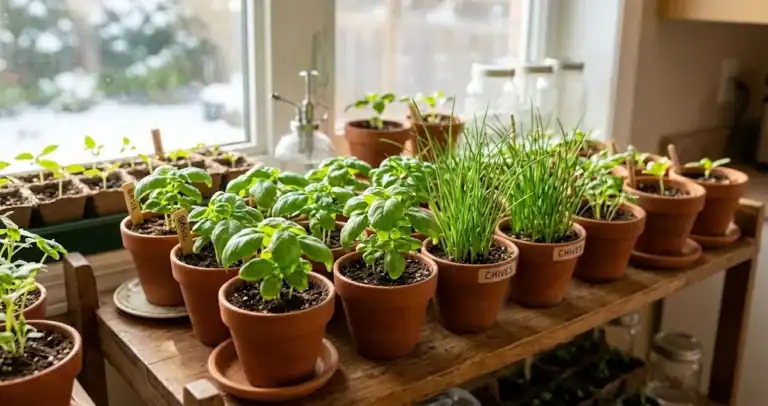
Where should a beginner start? Three containers on a sunny windowsill: basil and chives. Both grow quickly from a fresh packet and forgive a missed watering, and a small pot of chives gives almost instant kitchen payoff.