
Upright clusters of small pods give this Chinese pepper its memorable name. The common name facing heaven pepper describes Chao Tian Jiao, a type of chili pepper grown in China and valued for a direct burn and aroma in dried-chili cooking. The name also appears on packets and retail bags for more than one selection. The label can cover more than one cultivar selection, so flavor, pod size, and pungency are not identical in every packet or bag.
For a wider look at pepper shapes and flavors before choosing one, see our guide to comparing chili varieties. This profile covers the group, its Scoville estimate, warm-season care, and cooking uses. Learn how to grow it and handle ripe fruit safely.
Origin and the name
North Carolina State Extension describes it as Capsicum annuum and notes its use in food preparation. The species is native to Central America, while this pepper group is grown in Sichuan province of China. Its fruit points upwards rather than hanging from the branches. The Chinese name is commonly rendered as Chao Tian Jiao and translated as “toward the sky,” a reference to the upright habit.
It is safest to read Facing Heaven as a familiar group or market name, not a guarantee of one uniform cultivar. Extension places it in the C. annuum Conioides group, while growers and sellers may offer named selections with their own characteristics. Look for the botanical name and selection on a packet. Do not assume that every upward-fruiting Chinese pepper is the same variety.
The pods are associated with Chinese cuisine, including regional stir-fries and hot pot, but they are one of several peppers used there.
Are Facing Heaven peppers hot?
Appearance, flavor, and Scoville estimate
Plants have an upright habit, with tapered fruit held above the foliage. Pod length varies by selection. One pepper reference gives dried examples as 1.5 to 2.5 inches long, but a seller’s measurement should not be applied to every line sold under this name. Mature fruit is commonly sold dried and red; photographs of attached fruit are more useful for identification than a bag of mixed dried pods.

A widely repeated estimate is 30,000 to 50,000 Scoville heat units (SHU). PepperScale reports that range. It is a broad guide, not a promise about the Scoville reading of an individual pod or retail bag. Start with a small amount until you know the batch.
Descriptions often call the flavor fruity, citrusy, or floral. Those are tasting notes, not fixed botanical traits, and can shift with the selection, freshness, and cooking method. Gentle toasting can bring out a warm aroma; scorched pods turn bitter quickly.
How to grow this pepper
Give the plant warmth, sun, fertile soil, and good drainage. North Carolina State Extension lists sunlight, fertile well-drained soil, and air circulation among its needs. In a temperate climate, Iowa State Extension advises waiting until frost danger has passed and planting in full sun before setting transplants outside. Pennsylvania State Extension recommends waiting until soil three inches deep reaches at least 60°F.
Start with the packet and your local season
Choose a packet from a supplier that names the species and, when possible, the selection. Follow its sowing instructions because germination speed depends on seed condition and temperature. Where the outdoor season is short, raising transplants indoors gives the crop a head start. Harden young plants gradually and move them outdoors only when nights and soil are warm enough.

Pick a sunny bed with fertile, well-drained soil, or use a container with drainage holes and fresh potting mix. University of Maryland Extension recommends at least a five-gallon container for one pepper. A larger volume can buffer quick drying on a warm or windy patio. Keep enough space around the foliage for air to move through.
Keep moisture steady and diagnose problems
How often should you water? Check the root zone before watering. Containers usually lose moisture faster than garden soil, and weather changes the interval, so a fixed weekday schedule is unreliable. Water deeply when the surface begins to dry, then let excess drain away. Persistent saturation can stress roots.
Cold conditions may slow growth after transplanting. UMN Extension reports that peppers may shed blossoms around 90°F; keep moisture even and wait for milder weather rather than forcing the crop with extra fertilizer. Base feeding on a soil test and the label. A short growing season can limit ripening, so use local climate and the supplier’s growing notes instead of borrowing maturity figures from a different selection. Gardeners comparing a different species can read the 7 Pot profile.
Harvest and safe handling
Pick fruit when it reaches the mature color described for your selection. Use clean snips to cut the stem and avoid tugging on branches. If frost is forecast, bring in mature pods before the freeze.
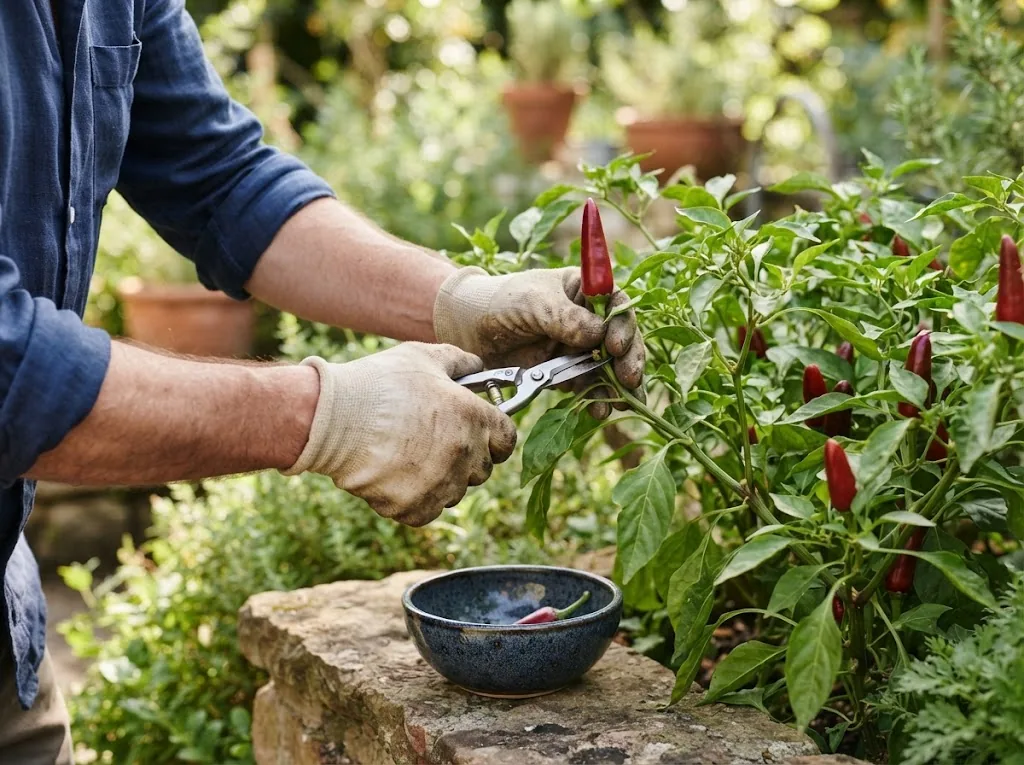
Wear gloves while cutting or processing spicy fruit, and keep your hands away from your eyes. Poison Control recommends gloves and handwashing after handling peppers. If juice reaches an eye, rinse promptly with plenty of clean water; Poison Control advises irrigation for 15 minutes. Contact Poison Control or a medical professional if discomfort is severe or does not improve, or if breathing is affected.
Store, dehydrate, or freeze the harvest
Use fresh pods soon after picking or refrigerate them unwashed in a breathable container. For longer storage, freeze clean whole fruit in a labeled container. Thawed peppers soften but remain useful in cooked dishes.
For dried storage, use sound fruit and a dehydrator or another method that provides dependable airflow and temperature. Utah State University Extension recommends drying chile pods until brittle. Let the pods cool completely before sealing them in an airtight jar kept away from light and moisture. Discard any that soften or show mold.
Make infused cooking liquid in small batches for prompt use unless you are following a tested preservation recipe. Do not treat homemade ingredients submerged in warm fat as shelf-stable. The National Center for Home Food Preservation explains that garlic preserved in fat can support botulism at room temperature; refrigerate promptly and follow its storage limits, or freeze the batch.
How to cook with Chao Tian Jiao
Whole dried pods can perfume a pan while remaining easy to remove before serving. One retailer recommends whole dried pods for stir-fries and dry pot dishes. Warm a few briefly in a small amount of oil, then add the other ingredients before the skins darken. Wear gloves when crushing them, and taste before increasing the amount. For a sauce or noodle recipe, start with one pod, let it flavor the dish, then decide whether to add more.
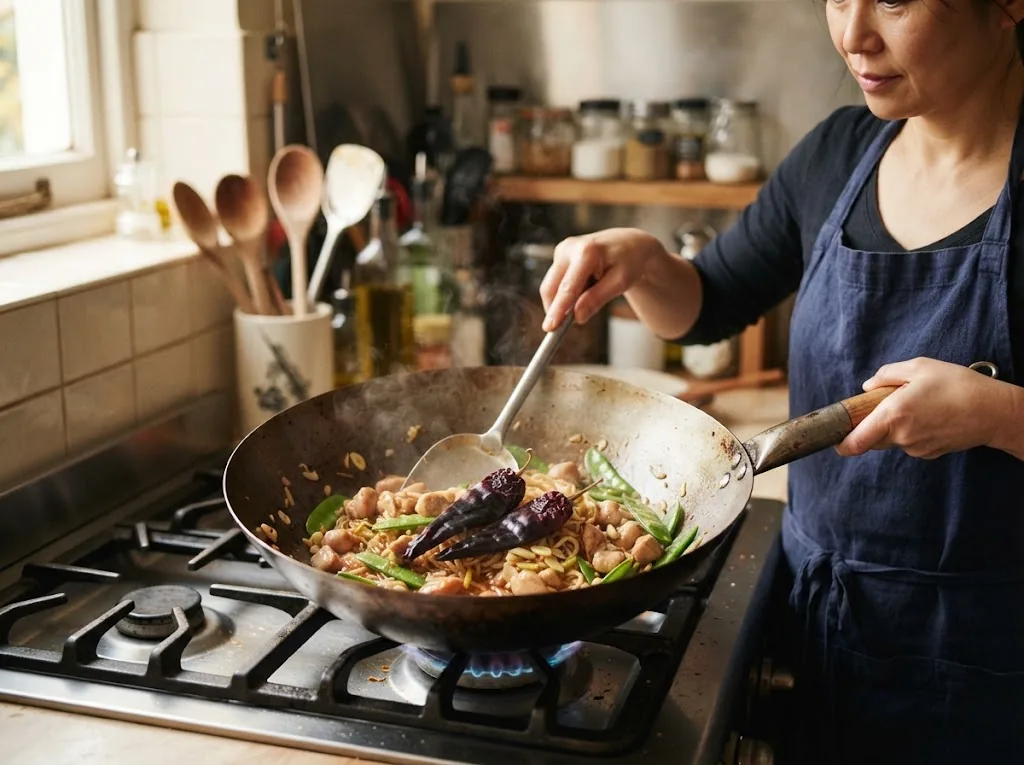
- Stir-fries: Infuse the cooking fat briefly, then add vegetables, tofu, or meat before the pods scorch.
- Chili oil: Pour warm fat over crushed dried fruit in a heat-safe bowl, using a tested recipe for proportions and safe storage.
- Broth: Simmer whole pods in a spicy broth for aroma, then leave them aside if you do not want to bite into one.
- Noodles and beans: Crumble in a little at a time and taste between additions.
This pepper is not the same as a Chinese peppercorn. The pod gives a spicy flavor, while the peppercorn has its own tingling sensation. Add both only when a recipe calls for them.
Where to shop for a packet or dried pods
When you shop, check that a seed packet names C. annuum and gives a selection name or growing description. Specialty Asian grocery stores and online spice sellers may carry dried Chao Tian Jiao. The Mala Market lists Zi Dan Tou chilies, a facing heaven cultivar grown in Guizhou Province, sun-dried and then low-temperature dried, and lab-tested for microbes and heavy metals. Dried goods should be whole, clean, and free of moisture or mold. Tien Tsin and Er Jing Tiao may appear nearby in shop listings, but the names can identify different peppers. Compare the seller’s description rather than treating them as interchangeable.
If you need a substitute, try a dried red C. annuum with a similar size and stated pungency, then adjust to taste. A retailer’s listing is a product description, not a botanical guarantee; check the source and ask whether the name refers to a particular selection. It will not reproduce the same aroma, but can serve a similar role. Gardeners considering a peach-colored superhot can compare its different growing and handling profile in our peach ghost pepper guide. Check a seller’s product description before substituting, since similar market names do not guarantee the same fruit.
