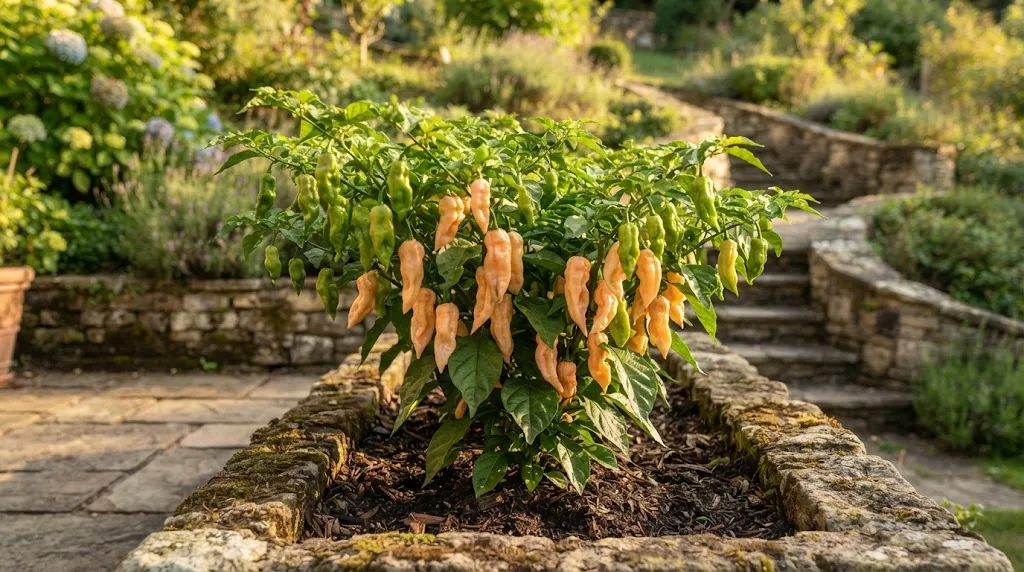
The soft color of a ghost pepper can look inviting, but it does not soften the burn. The name also covers more than one seed line, so compare listings before ordering pepper seeds or relying on a seller’s heat and harvest estimates. Here is what the named forms share, where their descriptions differ, and how to grow and use them with care.
What is a peach ghost pepper?
The common name covers ghost-type Capsicum chinense forms that ripen to a pale color, not one universally standardized cultivar. Catalog names can overlap with the specifically named Scorpion line, so compare the full listing and the seller’s description when you buy.
Jay’s Peach Ghost Scorpion has a more specific history: the PepperFriends variety record describes it as a Pennsylvania-developed cross between Bhut Jolokia and Trinidad Scorpion. That source notes that seed lines circulated before every trait was stable, which helps explain why plants sold under similar names may differ. This history belongs to that named line, not all ghost-type peppers.
For context on how pepper names and groups relate, explore our guide to different types of chili peppers.

Plant, fruit, and ripening
Catalog descriptions show a warm-season plant with dark green leaves and white flowers. The fruit is elongated, wrinkled, and tapered, often with a lantern-like outline. One catalog describes fruit about 2½ inches long and 1 inch wide; another lists an average length of 3 inches. Those figures describe particular offerings rather than a fixed size for all seed lines.
Fruit begins green and ripens to pale peach or salmon. Allow it to color fully on the plant for the appearance and ripe flavor associated with this type. Seed listings describe the taste as fruity or floral, but flavor varies with the line and growing conditions. A pale color is not a sign of mild heat.
How hot is it?
Published estimates put these superhots near one million Scoville Heat Units (SHU), but the number depends on which named line a source describes. Reimer Seeds lists 1,000,000 SHU for its Peach Bhut Jolokia; Baker Creek gives the same approximate figure for Jay’s Peach Bhut Jolokia. PepperFriends gives Jay’s Peach Ghost Scorpion a range of 800,000 to 1,100,000 SHU. Treat those as seller and grower descriptions, not a guaranteed measurement for every fruit. There is no dependable single “hottest ghost pepper” ranking when names and seed lines overlap, and the heat level in a ripe fruit can vary.
Expect severe heat. Wear gloves, keep your hands away from your eyes, and work with fresh air when cutting or cooking. Poison Control’s capsaicin guidance recommends gloves and ventilation; if juice reaches an eye, rinse with plenty of warm water for 15 minutes.
Growing from seed to harvest

Start indoors in warmth
Begin indoors well before your last frost so the slow-growing plant has a long warm season. Utah State University Extension recommends germinating pepper seed near 80°F, then raising seedlings at 65°F to 75°F. Minnesota Extension suggests 80°F to 90°F until emergence. Keep the mix moist but not soggy and give new sprouts bright overhead light. Germination can take longer in cool mix, and packet estimates vary by line.
Transplant after the soil warms
Harden seedlings off gradually before moving them outside. Transplant after frost danger has passed and soil is at least 60°F, the threshold Utah State Extension recommends for peppers. Choose a full-sun site with fertile, well-drained soil. A container also works if it has drainage and enough room for a bushy plant. Support branches if a heavy crop makes them droop.
Keep moisture reasonably even, checking the soil rather than following a fixed watering calendar. Containers dry more quickly than beds. Avoid waterlogged soil, and base fertilizer on a soil test or label directions. Utah State’s pepper-growing guide covers general planting, watering, and harvest care. A catalog’s days-to-maturity figure applies to its own line and conditions, so use it as a rough planning estimate.
Pick when fully colored
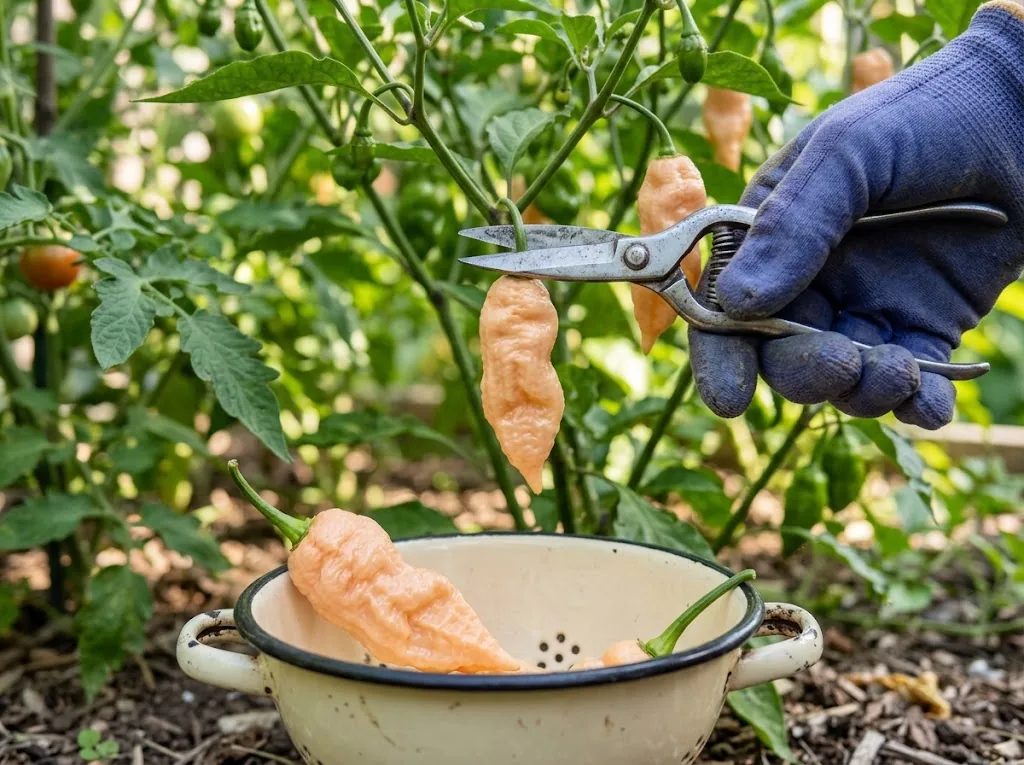
Harvest when fruit reaches its mature peach or salmon color and feels firm. Cut the pod from the branch with clean snips instead of pulling, which can break a stem. If fruit stays green, it is not yet displaying the mature color sold as the hallmark of this type.
Kitchen uses and safe storage
A small piece can season a large pot of chili, beans, or salsa. Add a little at a time and taste carefully. The flavor can suit hot sauce, but the heat is intense enough that a whole fruit may overwhelm a small recipe. For a milder garden comparison, see our profile of Mucho Nacho jalapeños.

Refrigerate fresh fruit and use it while firm. Utah State Extension gives two to three weeks as a general refrigerator window for chiles. Freeze extra peppers whole or chopped in a freezer-safe package. You can also dry ripe fruit in a dehydrator until brittle, then store it airtight in a cool, dry place. Avoid breathing dust when grinding flakes or powder.
Do not improvise a pantry-stable pickle or sauce. Use a tested canning recipe and follow its ingredient proportions and processing directions exactly. The National Center for Home Food Preservation provides a tested pickled hot peppers recipe. For a much milder pepper often served pickled, compare our pepperoncini guide.
Quick answers
Is it the same as a habanero?
No. A ghost type is a superhot, while a peach Habanero is a separate named pepper. Color alone does not identify a cultivar, so use the seed packet’s full name.
Can it grow in a pot?
Yes. Use a roomy container with drainage, strong sun, and warmth. Check soil moisture often because a pot can dry faster than a garden bed.
When is it ripe?
Wait until green fruit has fully colored to pale peach or salmon and is firm. Exact shade and shape can vary by line.
