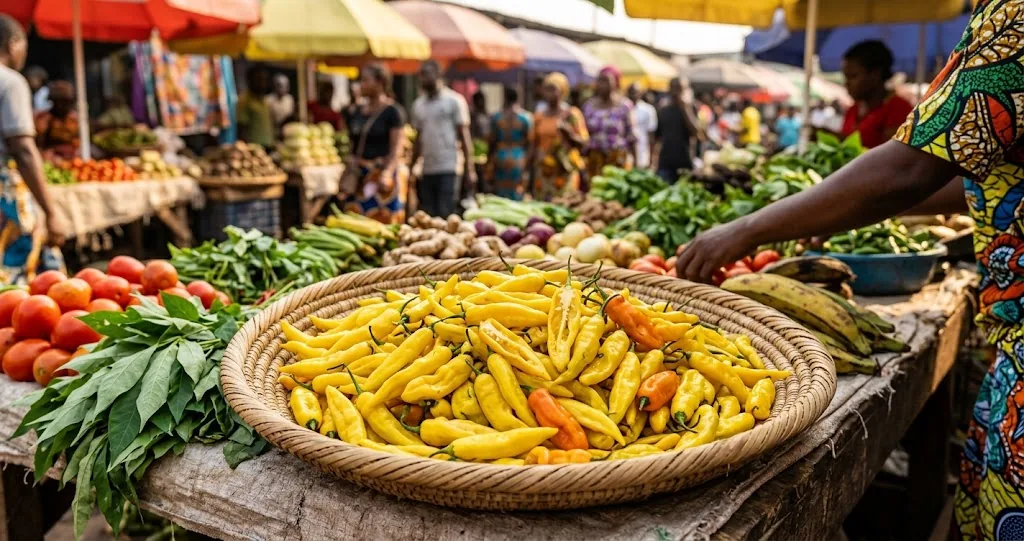
Fatalii peppers combine fierce heat with a striking lemon-like flavor. A ripe Fatalii pepper can brighten a fruit salsa or a cooked sauce, but a little goes a long way. This pepper is meant for cooks who enjoy intense heat as well as flavor. If you are growing them, plan for a warm season and start seeds indoors well before the last frost.
Origin and history
Fatalii is an African variety of a pepper species whose ancestors came from the Americas. Its citrus aroma and African selection history make it distinctive. Truelove Seeds describes it as developed in southern or central Africa and often attributed to the Central African Republic. Available seed descriptions do not establish a breeder or a date.
For a wider view of domesticated species, see Herbatorium’s guide to types of chili peppers.
Botany and appearance
Botanically, this is a distinct cultivated variety in the same species as the habanero and Scotch bonnet. It is not another name for every yellow member of that group. Its flowers are pale, and the fruit hangs from a bushy plant.
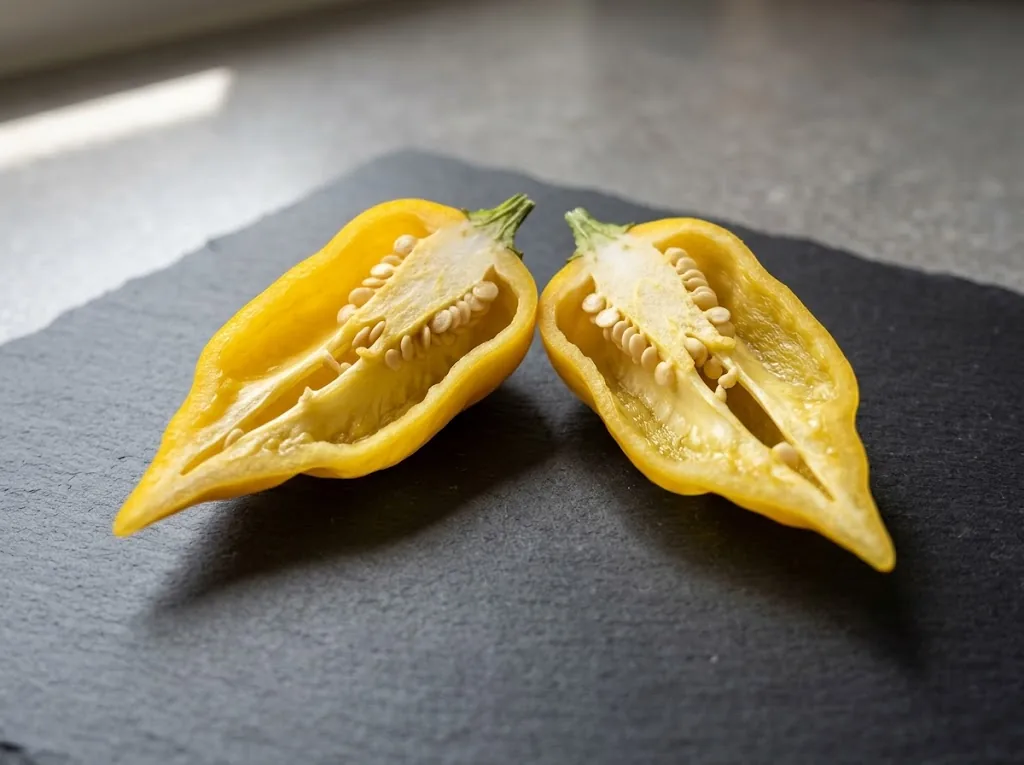
The classic yellow form has slender, slightly curved fruit with a pointed end and thin, lightly wrinkled skin. Seed supplier Truelove Seeds describes fruit roughly 2 to 3 inches long. It begins green and ripens to bright yellow. Red, orange, and pale lines are also sold, so check the description of the seed line you buy.
A typical yellow relative is usually broader and lantern-shaped. For a closer look at that relative, see the habanero peppers profile.
Heat and flavor
Pepper Joe’s lists Fatalii at about 125,000 to 325,000 Scoville heat units (SHU). That range overlaps with published habanero ratings. Scoville figures vary between seed lines and growing conditions, so treat the range as a guide rather than a promise about a single harvest.
The first impression is often citrusy, with tropical fruit notes followed quickly by strong heat. The pale inner tissue of the pod carries much of the capsaicin. Removing it can tame the bite, though the flesh remains hot. Wear gloves when cutting the fruit, and taste a tiny amount before adding more to a dish.
Our ranking of the hottest chili peppers puts this heat in context. Fatalii is a useful reference point for comparing a very hot pepper with record-setting varieties. It is a very hot kitchen pepper, even though record-holding varieties reach much higher ratings.
Starting seeds and growing the plant
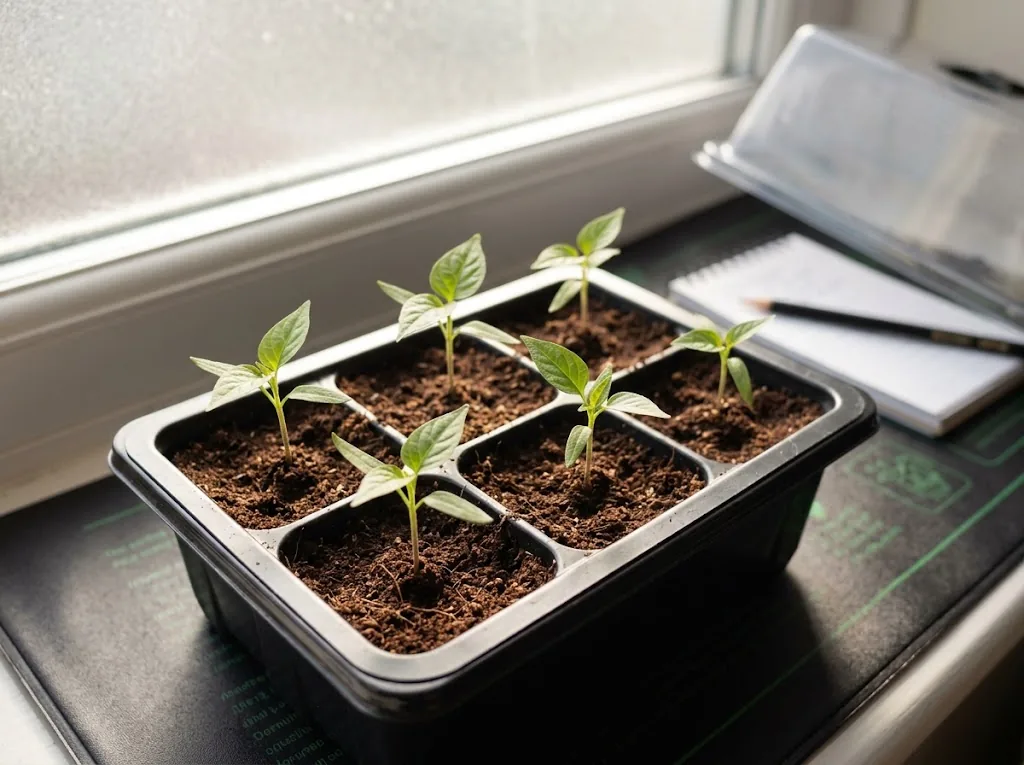
Start seeds indoors about eight to ten weeks before the last expected frost. Sow them roughly one-quarter inch (6 mm) deep in seed-starting mix. University of Minnesota Extension recommends a heat mat at 80 to 90 °F (27 to 32 °C) until seedlings emerge. Check the mix daily and keep it moist rather than soggy. Seeds may take one to three weeks to germinate.
Give new seedlings bright overhead light. After true leaves appear, thin or transplant them so roots have room. If roots fill the starter cells, move the plants into larger containers. Before planting outdoors, gradually expose them to sun and wind over a week or two. Bring them in on cold nights.
Transplant after frost danger has passed and nighttime temperatures stay above 50 °F (10 °C). Space plants about 18 inches (45 cm) apart in a sunny bed. On a balcony, a five-gallon container with drainage holes gives roots room and dries more slowly than a small pot. Use a well-drained growing mix and water deeply when the surface begins to dry.
This is a long-season crop. The pepper grows best where warmth lasts long enough for flowers to set and fruit to color. SeedStore lists about 90 days to maturity for its stock, but weather and transplant size can shift the first harvest. In short-season areas, keep a container where you can move it under cover before frost. A grower in a cool region may need to choose a sheltered position and start earlier than someone with a long, warm summer.
Flowers can drop during heat stress, and uneven moisture can contribute to blossom-end rot. Keep watering regular, mulch the soil surface, and provide afternoon shade in extreme heat. University of Minnesota Extension notes that blossom-end rot is not necessarily caused by too little calcium in the soil. Adding crushed eggshells is not a reliable fix.
Harvesting and handling
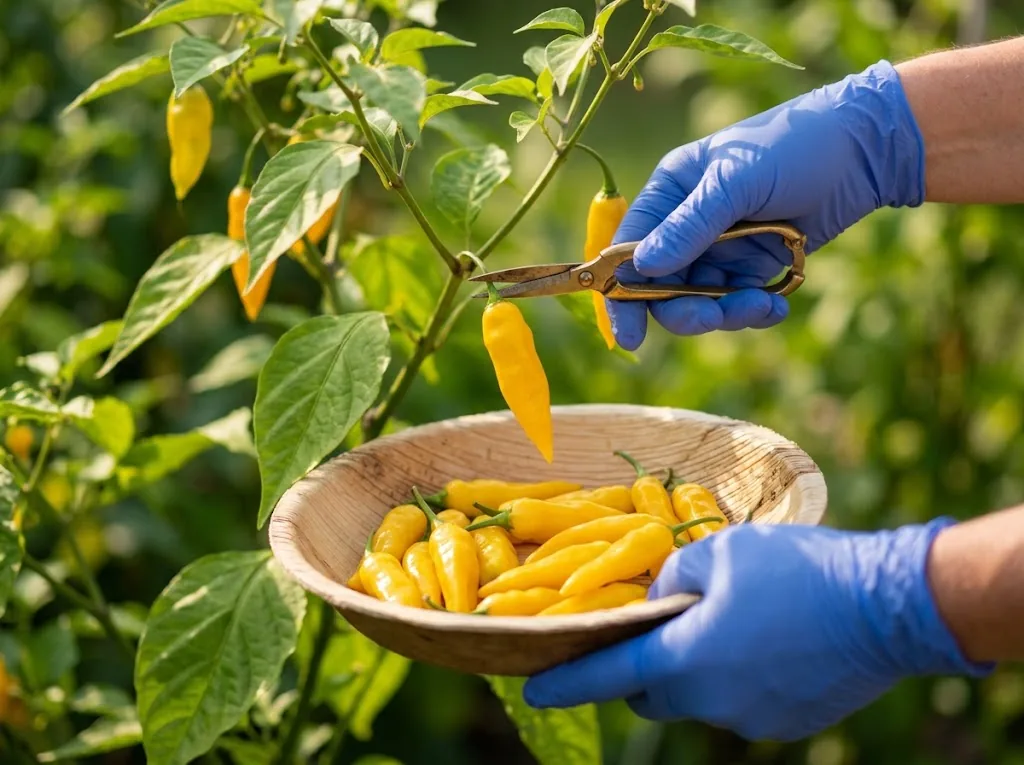
For the yellow form, harvest when the fruit is bright yellow rather than green at the shoulders. A ripe pepper should feel firm and look evenly colored. Use clean snips to cut the stem without tearing the branch. Put on nitrile gloves before picking, slicing, or scraping out the inner tissue. Keep your hands away from your eyes and wash tools and cutting boards with warm, soapy water afterward.
Before frost, collect the remaining fruit and protect or bring in a container plant if you want to extend the season. For seed saving, choose fully ripe fruit from healthy plants. Peppers can self-pollinate; crossing with another compatible variety may affect the next generation. Bag flowers before they open or grow one variety if you need consistent saved seed. See University of Minnesota Extension’s seed-saving guide.
Storing, drying, and preserving
Keep fresh fruit dry and refrigerated, checking it for soft spots. For longer storage, freeze whole washed and dried fruit, or dehydrate slices until brittle. Drying time varies with thickness, humidity, and the machine. Put fully dried pieces in an airtight jar away from light and moisture. They make a vivid spice for stews and marinades. Grind one dried pod at a time, then taste before adding more.
For a quick refrigerator pickle, cover sliced fruit with a vinegar brine, refrigerate promptly, and keep the jar refrigerated. Add only a little chili at first because the brine will carry its heat. This is not a shelf-stable canning recipe. To store pickled hot peppers in a pantry, follow the National Center for Home Food Preservation’s tested recipe, including its vinegar strength, ingredient amounts, jar size, and processing time.
Frozen fruit works well in a fresh table sauce. Thaw only what you need, then keep the finished mixture refrigerated unless you use a tested preservation method.
Cooking ideas and common questions
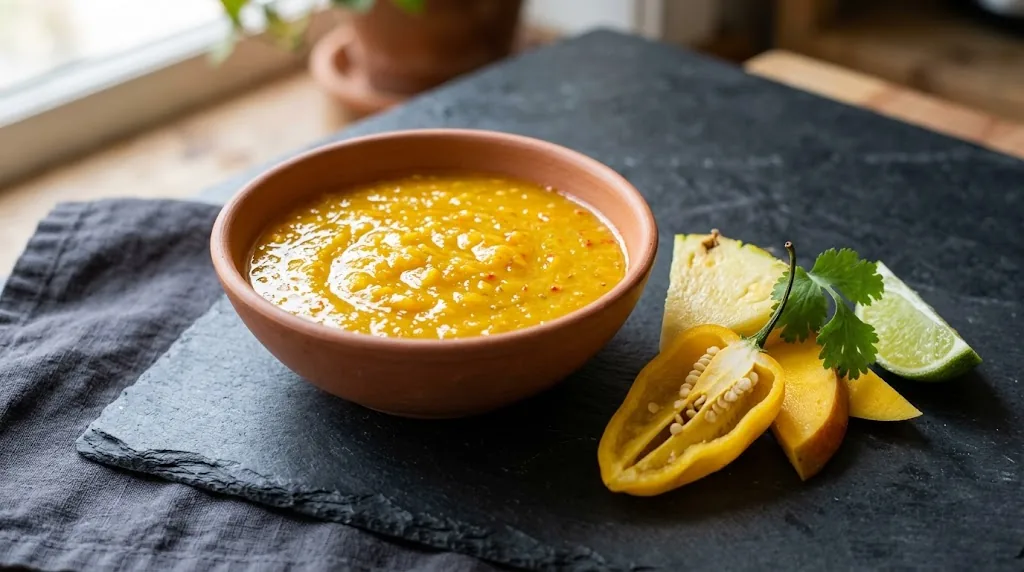
For a citrus-led hot sauce, blend one ripe yellow fruit with pineapple or mango, a clove of garlic, lime juice, a pinch of salt, and enough vinegar to loosen the mixture. Taste cautiously and add more fruit only if everyone at the table wants more heat. Serve promptly and refrigerate leftovers.
For salsa, begin with a small piece per cup of finished salsa. This pepper pairs especially well with mango, pineapple, tomato, and lime. A few thin slices can also lift a stir-fry or a fish marinade. In a four-serving stew, simmer a small piece, taste, and remove it when the heat is where you want it. This is a better approach than assuming every harvest has the same strength.
A quick chutney offers another use. Simmer a small diced piece with one grated apple, a tablespoon of ginger, lime juice, a quarter cup of vinegar, and two tablespoons of brown sugar until thickened, about 15 minutes. Refrigerate it promptly and use it within a few days, or freeze it.
Can I eat it raw? Yes. Use a tiny piece at first, wear gloves while cutting, and avoid touching your face.
Is it the same as a yellow habanero? No. They belong to the same species, but this fruit is usually slimmer and more tapered, with a pronounced citrus note.
Will it cross with other peppers? Crossing is possible and matters most when you save seed. Bagging flowers or separating varieties helps keep the next generation consistent.
