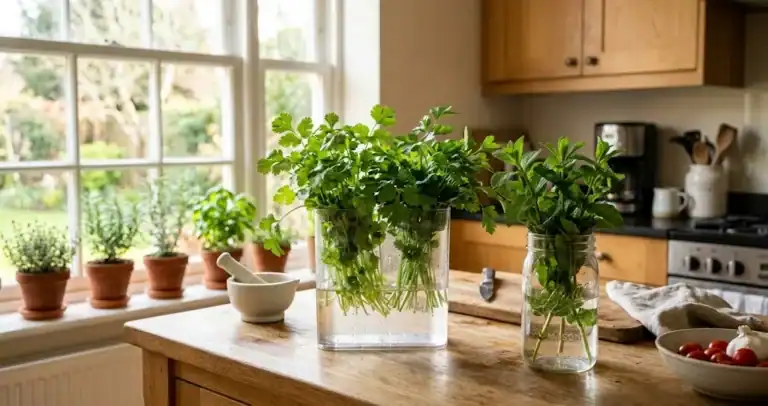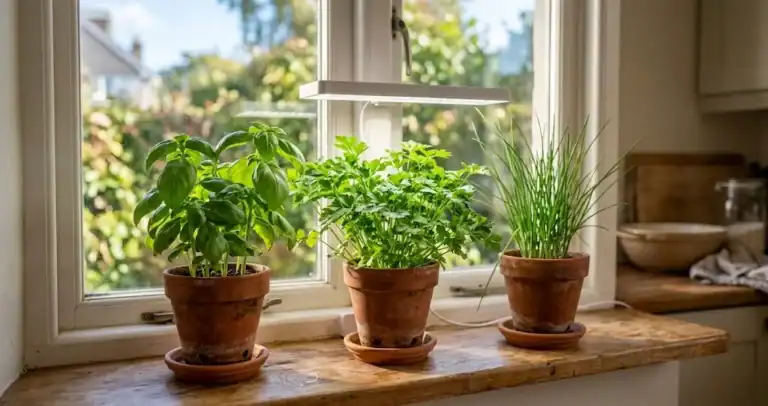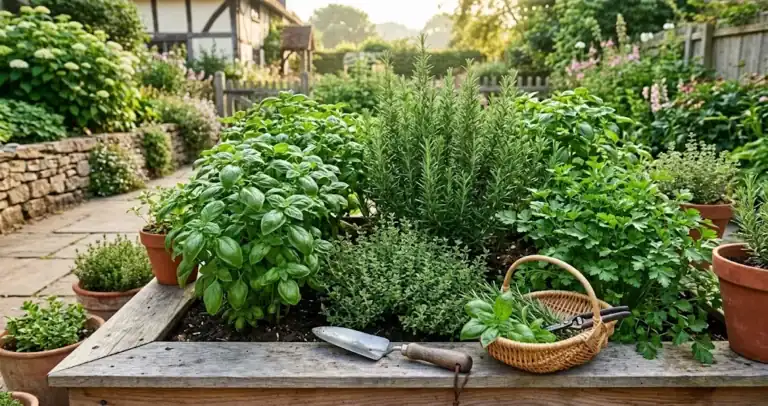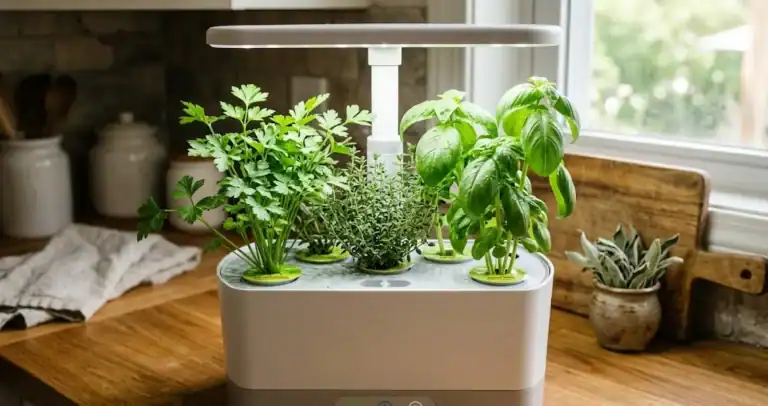
Growing herbs in water is an easy, clean, and space-saving way to enjoy fresh herbs all year without messing with bags of potting soil or garden dirt. Whether you snip fresh stems from your garden or use leftover store-bought herbs from the grocery store, many culinary herb plants readily develop healthy root systems in a simple glass of water placed on a sunny windowsill.
If you are looking for the wider basics of growing an herb garden, water propagation provides one of the fastest entry points for beginners. In this practical guide, you will learn how to grow herbs in water, which herbs root and grow best in water, and how to maintain water clarity to keep your indoor herb garden thriving for months.
Why growing plants in water works so well indoors
Propagating and growing plants in water, often called simple water culture or passive hydroponic propagation, offers several distinct advantages for home cooks and indoor gardeners:
- No soil mess: Cultivating each culinary herb in plain water eliminates soil spills, heavy pots, and common indoor pests like fungus gnats.
- Quick root development: Softwood cuttings from tender stems produce visible roots within a few days to a couple of weeks.
- Convenient kitchen access: Keeping a small water garden on a kitchen windowsill gives you immediate access to fresh leaves while preparing meals.
- Cost-effective home harvest: You can multiply bought herbs or garden clippings into dozens of new productive plants without buying expensive rooting hormone.
Best containers and water to use for your water garden
Before you place the containers on your windowsill, selecting the right vessels and water quality ensures long-term growth and keeps stems healthy.
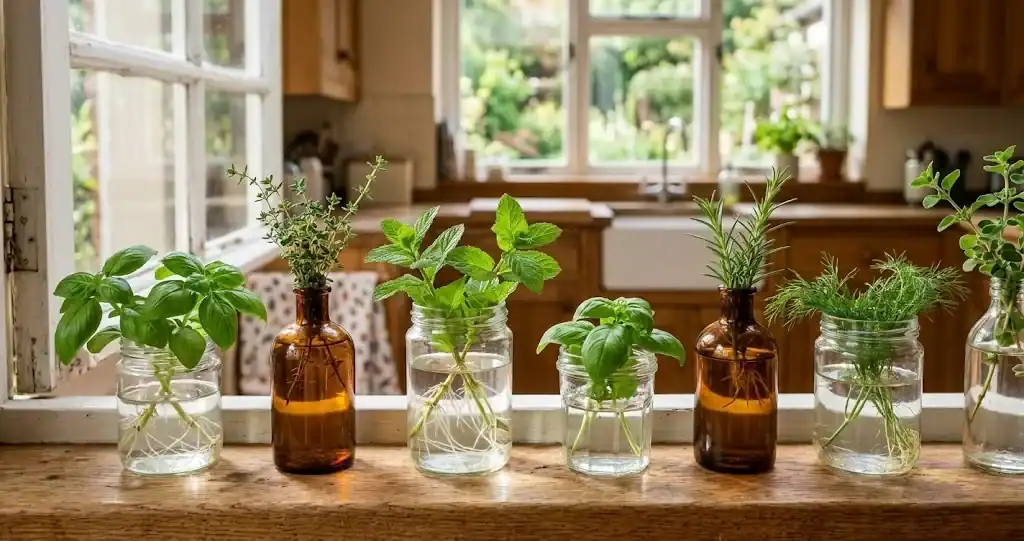
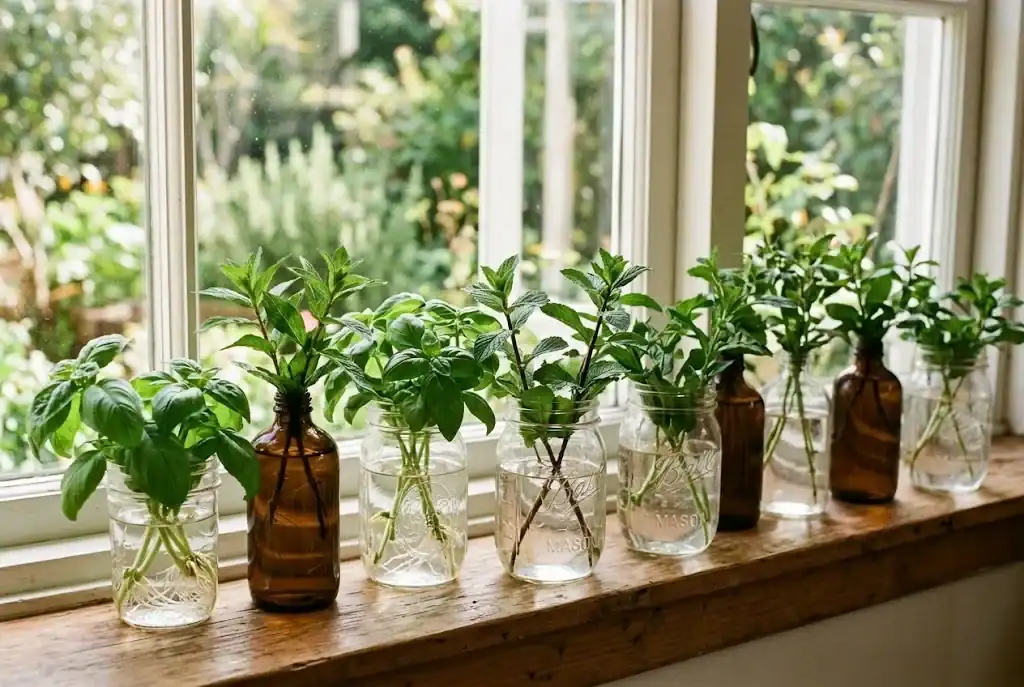
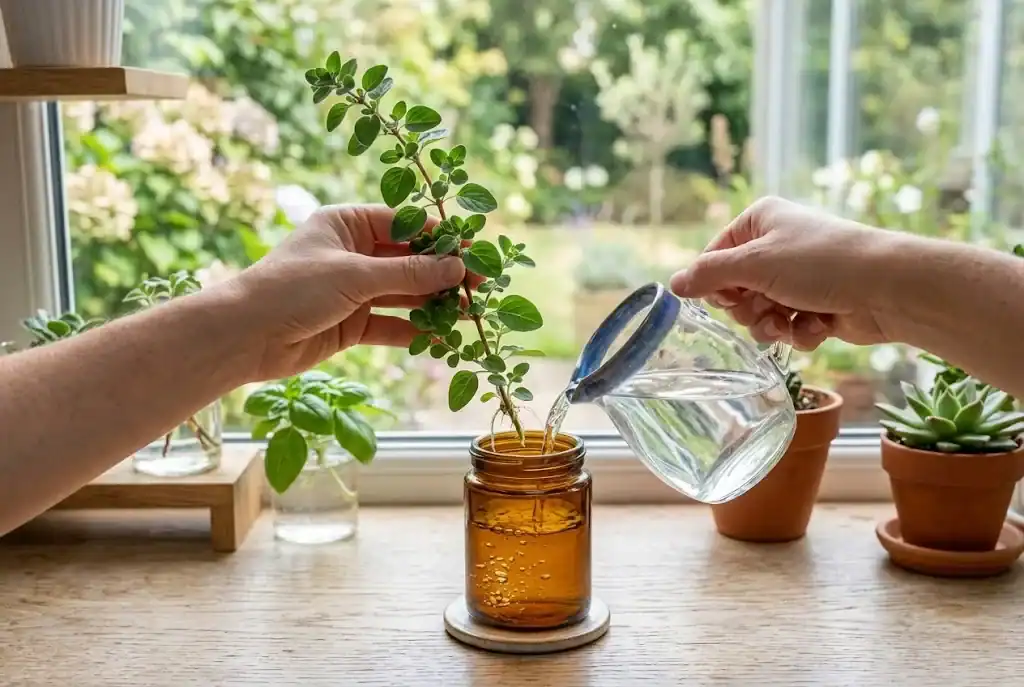
Clear glass jars, repurposed bottles, and classic mason jars are popular because they let you watch roots form and monitor water clarity. However, when clear glass sits in bright light, microscopic alga cells can multiply on the glass and around submerged roots. Using amber glass jars, dark-tinted bottles, or opaque ceramic vessels helps block excess direct sunlight and prevents green film from competing with your cuttings for oxygen.
Narrow-mouthed bottles work well because the neck supports the upper stems above the waterline while keeping lower nodes fully submerged. If you use wide-mouthed glassware, you can place a simple wire mesh or grid across the top to keep cuttings upright and prevent foliage from sliding down into the liquid.
When considering the right container for your herbs, vessel stability matters as root mass expands. As for water quality, standard tap water works well in most homes. If your municipal supply contains heavy chlorine, let the liquid sit uncovered in an open pitcher for twenty-four hours to dechlorinate before use. You can also use filtered water or clean spring water. Avoid distilled water for prolonged cultivation unless you add dilute liquid nutrients, because plain distilled water lacks essential trace minerals.
Best culinary herbs that root and grow in water
Not all herb varieties behave identically when grown in water. Some tender-stemmed species root vigorously in plain water within days, while woody perennials take longer to establish roots.
Sweet basil and lemon basil
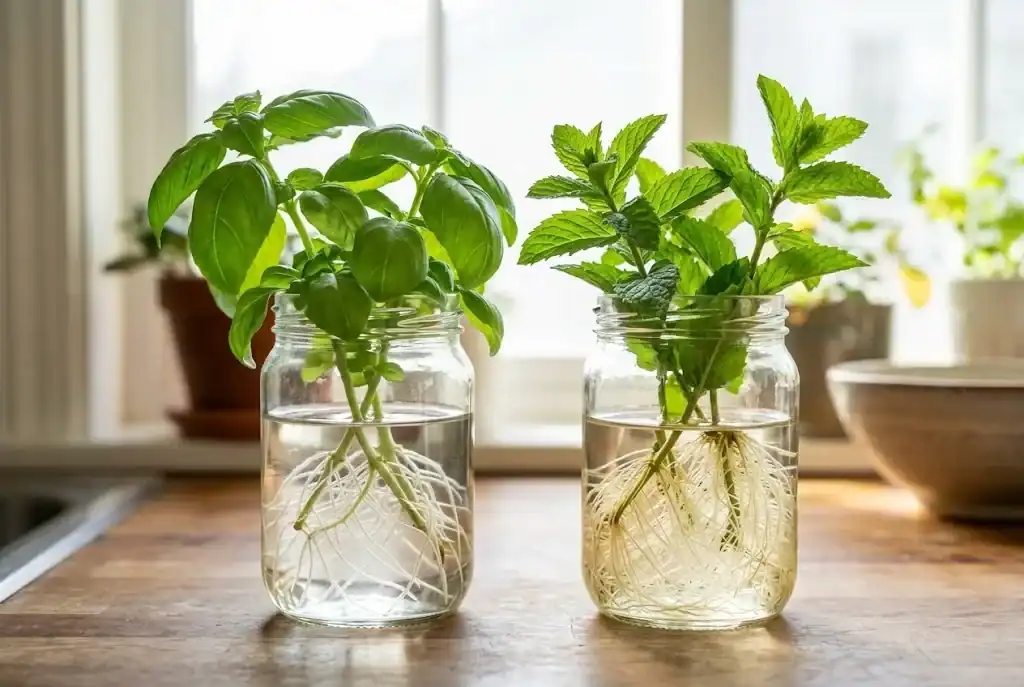
Sweet basil (Ocimum basilicum), including Genovese types, Thai varieties, and lemon cultivars, is perhaps the easiest herb to grow in water. Softwood cuttings snip cleanly and root in water within a few days. The plant loves warmth and bright indirect light on a sunny windowsill, producing lush fresh leaves continuously.
Mint and spearmint
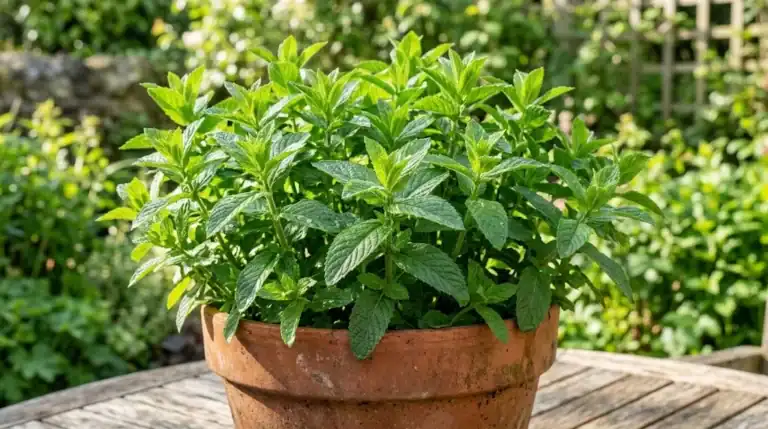
Peppermint (Mentha x piperita) and spearmint (Mentha spicata) are exceptionally fast rooters. When you place fresh mint stems in water, roots emerge along the leaf node within three to five days. Mint can live in water for months, making it one of the most reliable herbs grown in water indoors.
Oregano and sweet marjoram
Both Greek oregano (Origanum vulgare) and sweet marjoram develop sturdy root systems from young, non-woody tip cuttings. Once established, this fragrant herb produces aromatic foliage that you can snip regularly for Italian and Mediterranean dishes.
Garden thyme and lemon thyme
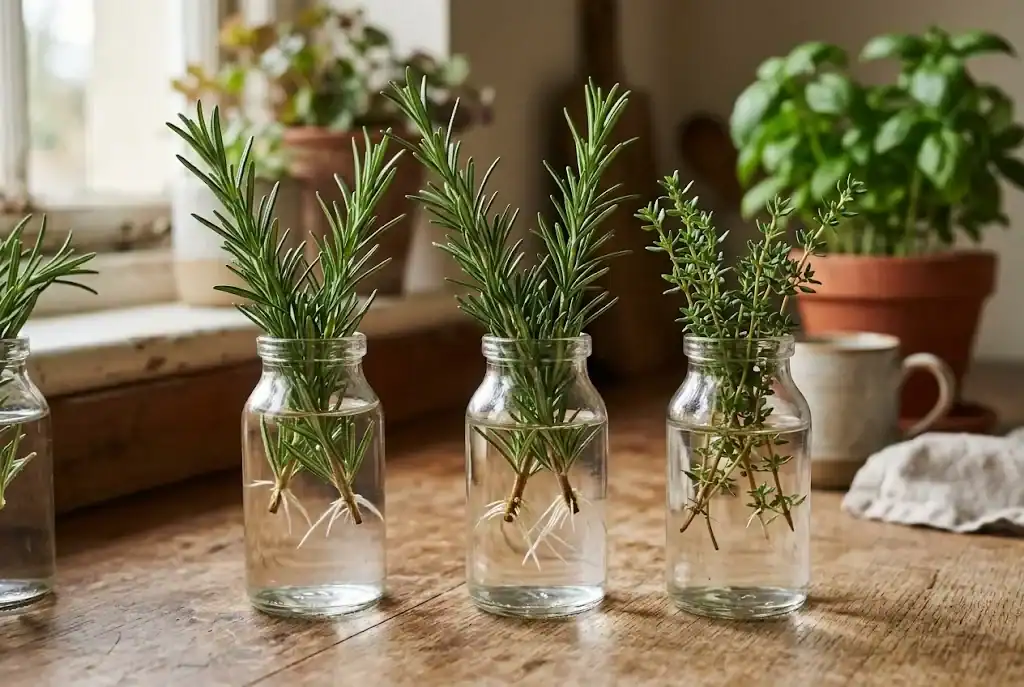
Garden thyme (Thymus vulgaris) and citrusy lemon thyme have slender stems that root reliably when taken from fresh spring growth. Avoid old, brittle woody branches; instead, choose green, pliable softwood tips to encourage rooting.
Rosemary and garden sage
Woody perennial selections like rosemary (Salvia rosmarinus) and garden sage (Salvia officinalis) take longer to establish than soft herbs. A rosemary cutting or sage stem may take 3-4 weeks to form substantial roots in water. Keep them in warm, indirect light and be patient while new roots sprout from the lower nodes.
Lemon balm and French tarragon
Lemon balm (Melissa officinalis) roots rapidly in water, offering a bright citrus aroma for teas and dressings. French tarragon (Artemisia dracunculus) can also be propagated in water from tender spring shoots, though it prefers moderate temperatures and gentle morning sun.
Herbs that do not grow well in water
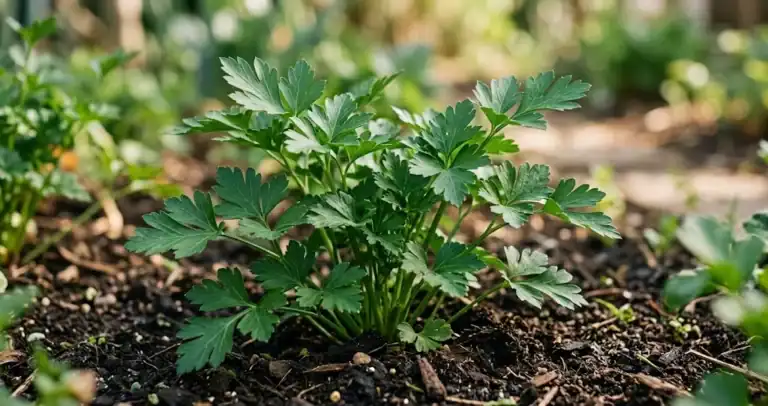
Certain herbs with deep taproots or crown-forming growth habits, such as cilantro (Coriandrum sativum) and dill, do not produce viable roots from stem cuttings. While you can keep freshly harvested cilantro stems fresh in a glass of water like cut flowers for a week in the refrigerator, you cannot grow them long-term in water. These varieties grow best when started from seed in potting mix.
How to take stem cuttings and start plants in water
Taking healthy cuttings is the most critical step in starting your windowsill water garden. Follow these straightforward steps:
- Select healthy stems: Choose vigorous, pest-free stems with vibrant green leaves. Look for fresh softwood growth rather than hard, woody bases.
- Snip below a node: Using clean, sharp shears or a razor, make a clean 45-degree cut about 4 to 6 inches long, just below a leaf node where root cells are concentrated.
- Remove the lower leaves: Gently strip the bottom leaves from the lower 2 to 3 inches of the stem. It is essential to remove lower leaves so no foliage sits submerged in the water, which would quickly decay and foul the glassware.
- Place stems in water: Put the prepared cutting into your glass jar filled with fresh, room-temperature water. Ensure at least two bare nodes remain submerged while the top leaves stay dry above the rim.
- Position in bright indirect light: Place the vessel in a warm spot that receives plenty of bright indirect light. Avoid harsh, scorching direct sunlight, which can heat the standing water and damage fragile new roots.
Synthetic rooting hormone is unnecessary when starting culinary herbs in clean water, as fresh softwood stems develop roots readily on their own.

Daily care, water hygiene, and preventing algae
Maintaining herbs in water requires minimal daily effort, but consistent water hygiene is vital:
- Refresh the jar regularly: You need to change the water every few days, ideally every 5 to 7 days, to replenish dissolved oxygen and prevent bacterial buildup. Fresh water keeps root systems healthy and active.
- Maintain water levels: Top off the vessel with fresh room-temperature water between full flushes to keep root zones submerged as water evaporates.
- Manage light exposure: When setting up herbs on a windowsill, ensure plants receive enough light without baking the vessels. If your windowsill receives intense midday sun, sheer curtains or moving containers a few inches back provides ideal filtered lighting.
- Rinse containers when cloudy: If green residue appears on the glass or the liquid turns cloudy, remove the stems, gently rinse the roots under lukewarm water, wash the glassware with mild soap, and refill with fresh water.
Transitioning rooted cuttings into soil or long-term hydroponics
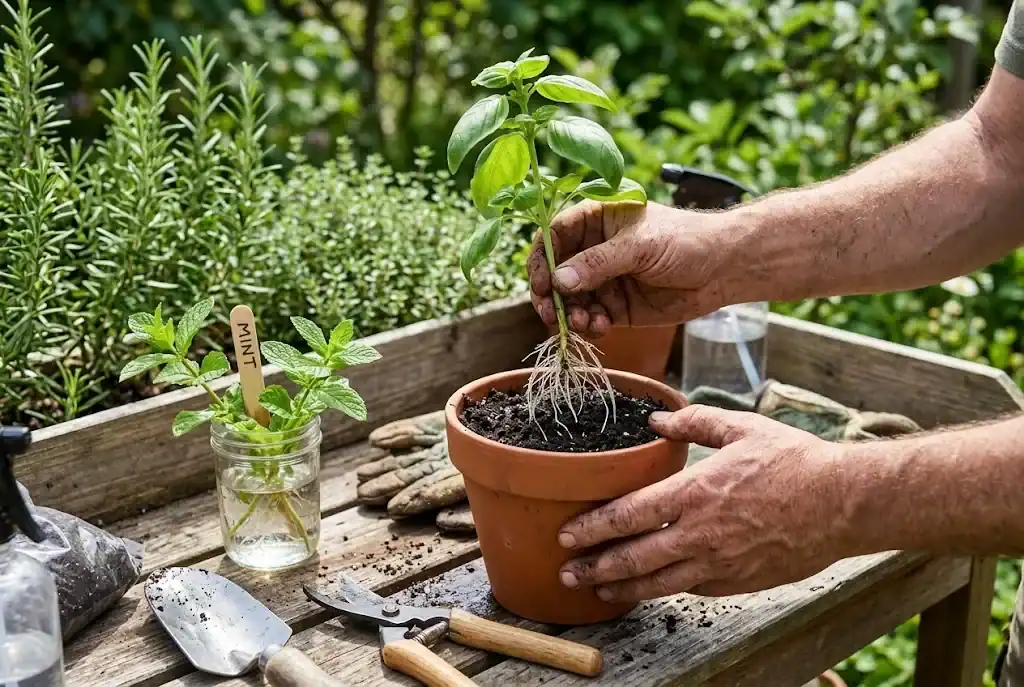
Once your cuttings develop a robust root system measuring 2 to 3 inches long (usually within 2 to 4 weeks), you have two practical choices:
1. Move into potting soil: Water roots are tender and adapted to liquid. If you transplant them into soil, use a light, well-draining potting mix, keep the soil evenly moist for the first week to help roots adjust, and provide gentle shade before transitioning back to full sun.
2. Keep them growing in water long-term: Many herbs will grow in water for months. To sustain vegetative growth and prevent nutrient deficiencies, apply a balanced, water-soluble organic hydroponic fertilizer according to the manufacturer’s product-label instructions rather than guessing a dose. Snip top leaves regularly to stimulate bushier side branching.
Common mistakes to avoid with water-grown herbs
Avoid these frequent pitfalls to keep your indoor plants vibrant:
- Leaving submerged foliage: Any leaf left under the water line will rot, clouding the liquid and killing emerging roots.
- Infrequent water changes: Stagnant water quickly loses dissolved oxygen, causing root rot and foul odors.
- Using woody, flowering stems: Stems that have already flowered divert energy toward seeds rather than root formation. Always snip vegetative non-flowering shoots.
- Overheating the water: Small glass containers sitting in scorching direct sun can cook tender roots. Protect glass jars from extreme heat.
Frequently asked questions about water-grown herbs
What herbs grow best in water?
Herbs that grow best in water include sweet basil, spearmint, peppermint, oregano, lemon balm, thyme, and rosemary. Soft-stemmed herbs root fastest, while woody herbs take a few extra weeks.
How often do you need to replace the liquid?
You should swap out the liquid every 5 to 7 days, or sooner if the liquid becomes cloudy or shows green residue. Regular water flushes replenish essential oxygen for root respiration.
Can herbs live in water forever?
An herb can live in water for many months with regular water maintenance and occasional dilute hydroponic nutrients. However, because plain water lacks macronutrients and micronutrients found in soil, plants eventually benefit from potting soil or dedicated hydroponic feeding for multi-year vigor.
Can you root store-bought herbs in water?
Yes, fresh store-bought herbs packaged in plastic clamshells can often be rooted in water, provided the stems are still green, firm, and hydrated. Trim the stem base at a 45-degree angle below a node, strip bottom leaves, and place in clean water immediately.