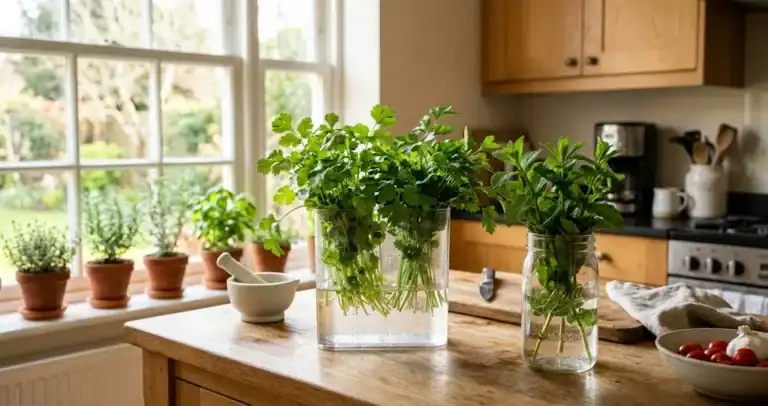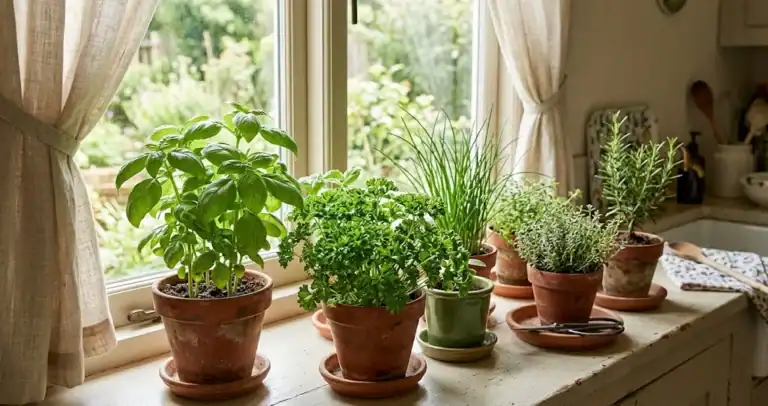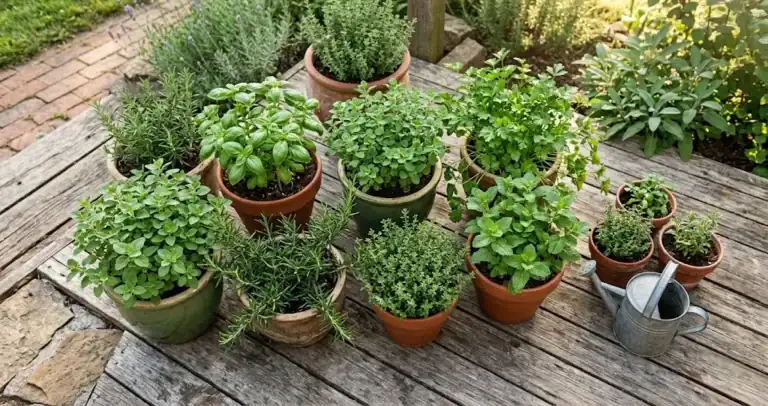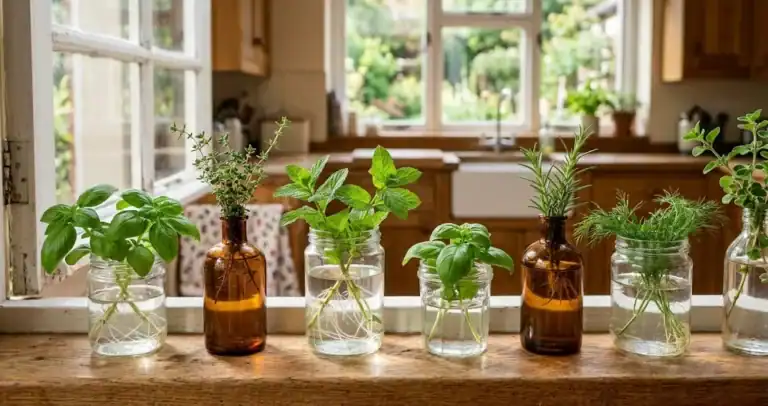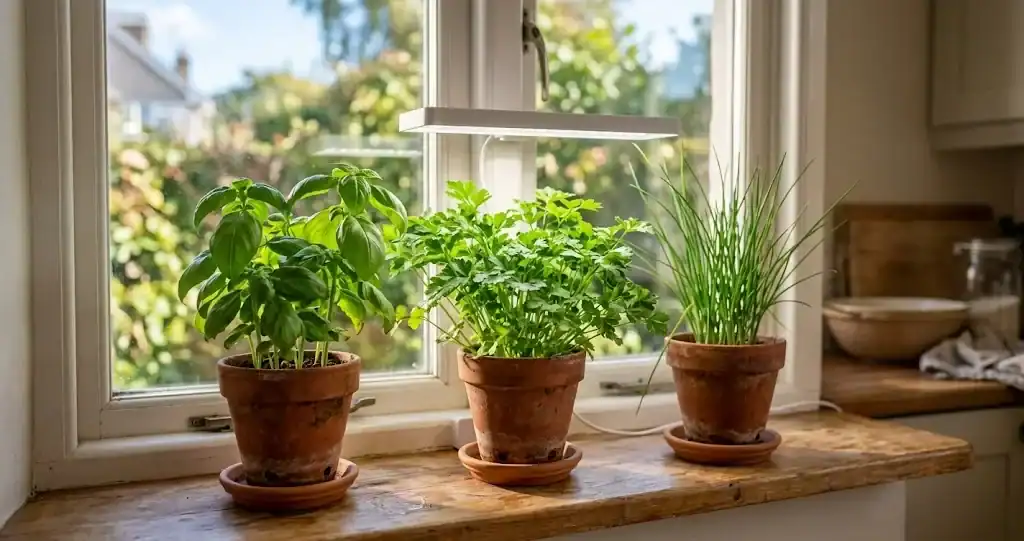
A sunny kitchen windowsill is one of the easiest places to keep fresh herbs within reach of the stove. With the right container, a little attention to light, and steady watering, an indoor herb garden will keep producing leaves through every season, so you can grow herbs at home and enjoy fresh kitchen herbs all winter long, even when the outdoor bed is buried in snow. This guide covers what you need, how to set it up, the easiest herbs to start with, and how to keep them productive.
Why a windowsill works for growing herbs
Most culinary herbs come from Mediterranean climates where they get strong sun and fast-draining soil. A bright window in a typical home mimics those conditions well enough that several common varieties settle in and produce leaves you can snip year round. An indoor garden needs very little extra equipment to begin. Growing herbs indoors also gives you tighter control over water and temperature than an outdoor bed, so it is a forgiving place to start.
If you want a broader primer on setting up an herb bed before you commit to specifics, the beginner’s guide to growing an herb garden covers the basics of soil, spacing, and light that apply to any setup.
What you need to start
You do not need much. A few containers, a bag of quality potting soil, and starter plants are enough to begin.
- Containers with holes in the bottom. One herb per pot, sized to the plant. Seedlings do well in 4 to 6 inch pots; a mature plant wants 8 inches or more. Drainage holes in the bottom are not optional. Herbs sulk in waterlogged soil.
- A tray or saucer under each container to catch runoff and protect the windowsill.
- Fresh potting mix designed for containers. Garden soil compacts and stays too wet. A standard mix with perlite or vermiculite gives the airy conditions an herb plant needs.
- Healthy seedlings or small starter plants from a nursery or garden center. A first windowsill garden is easier with plants than starting herbs from seed.
- A window with at least 6 hours of direct sunlight a day. Winter light runs shorter, so add a grow light to make up the hours of sunlight a day your herbs are missing.
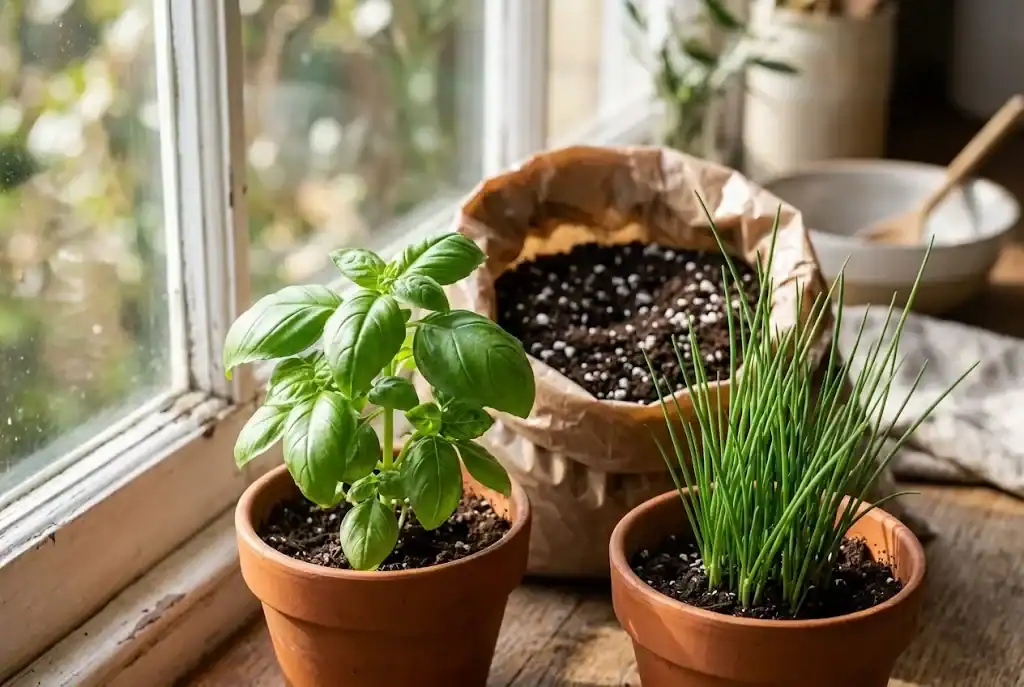
Container choice matters more than most beginners expect. If you are still picking pots, the guide to choosing the right herb containers walks through material, size, and drainage in plain language.
How much light do windowsill herbs need?
Six to eight hours of full sun each day is the sweet spot. A south-facing window is ideal because it gets the most consistent light through the day. An east-facing window catches the gentler morning sun and works well for parsley and chive, herbs that prefer cooler conditions. A west-facing window works in summer but runs hot in late afternoon. Rosemary and thyme tolerate it, but leafy herbs may bolt in the heat.
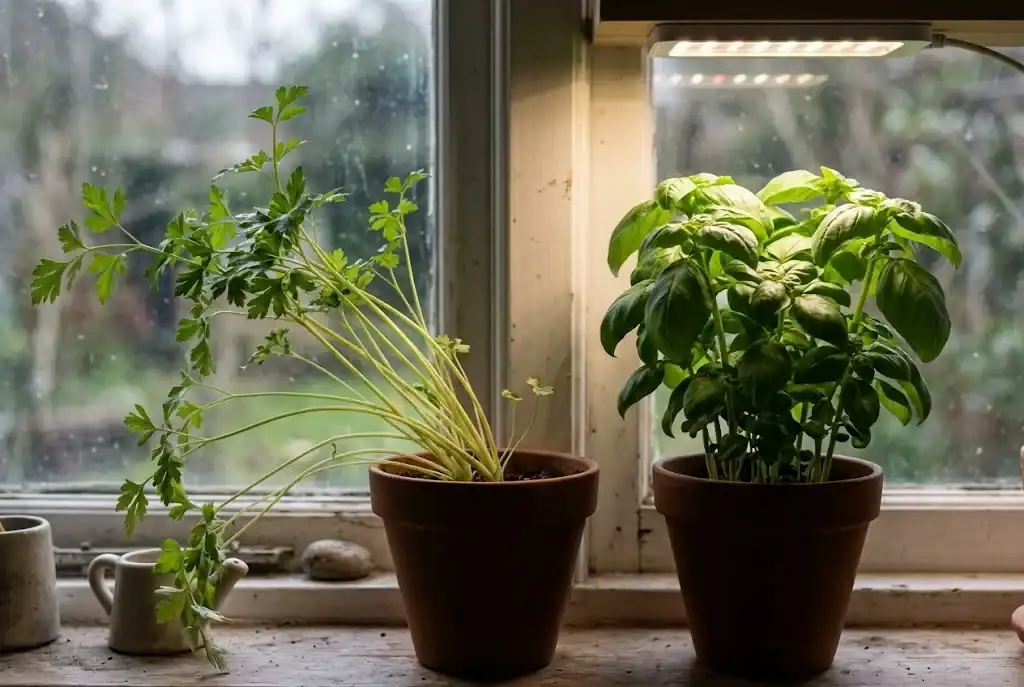
If your best window only delivers 4 hours of direct sun, supplement with a simple grow light on a timer. A basic full-spectrum LED panel set 6 to 12 inches above the foliage for 12 to 14 hours of sunlight a day is enough to keep herbs productive even on a dim northern window. Keep leaves from touching the bulb and rotate pots a quarter turn each week so the plants grow evenly instead of leaning toward the glass. A lack of sunlight is the most common reason a windowsill herb fails indoors. If you have to choose between windows, pick the sunniest one and add supplemental lighting to get enough light each day.
The best herbs to grow on a windowsill
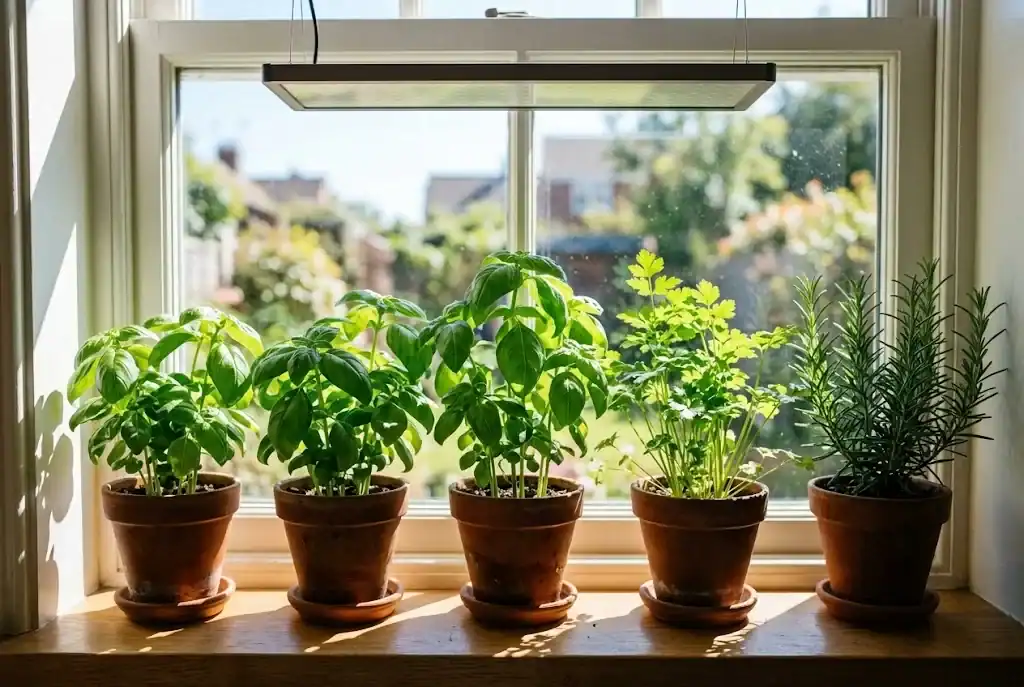
Some herbs adapt to life indoors far better than others. Start with two or three that match how you cook and that handle the conditions you can offer. Many herbs grow indoors with basic care and quickly repay the small effort with steady harvests. If you have only one sunny window to spare, herbs like basil and chive will start producing in a few weeks, and growing your own windowsill herb is a satisfying way to keep fresh flavor close to the stove. Most herbs on your windowsill will adapt once you find a bright, draft-free spot and stick to a simple watering rhythm.
- Basil. The most rewarding pick if you have steady warmth and a bright window. Pinch the top leaves weekly and the plant branches into a small bush. Pinch off flower buds to keep leaves coming.
- Parsley. Tolerates a slightly cooler window and grows well from a starter plant. Cut the outer stems and let the center keep producing.
- Chive. One of the easiest herbs to grow in a small windowsill garden. A container of chives will give you a steady sprinkle of mild onion flavor year round.
- Thyme. Likes the brightest, driest spot in the window. Water sparingly and let the soil dry out between waterings. Thyme grows well in pots that are grown on the dry side.
- Rosemary. A single plant on a bright windowsill is one of the easiest ways to keep fresh sprigs for roasted vegetables and winter roasts. Rosemary prefers cooler indoor air and tolerates a drier container.
- Mint. Vigorous and forgiving, but it spreads quickly through rhizomes and should never share a container with other herbs.
- Cilantro and dill. Both adapt to a bright window but tend to bolt in warm rooms. Sow in small batches every few weeks.
Most culinary herbs are perennials, but basil is an annual that finishes its life cycle in one season. Plan to replace annual herbs every few months rather than expecting them to come back the next year.
Planting your windowsill herbs step by step
- Choose your containers. One herb per pot is the rule. Spreading herbs should never share a container with neighbors.
- Cover the holes with a small piece of mesh or a coffee filter so the soil does not wash out.
- Fill each pot with soil to about an inch below the rim. Leave a thin layer of soil at the top so watering does not overflow.
- Plant the seedling at the same depth it sat in its nursery pot. Firm the soil gently around the roots.
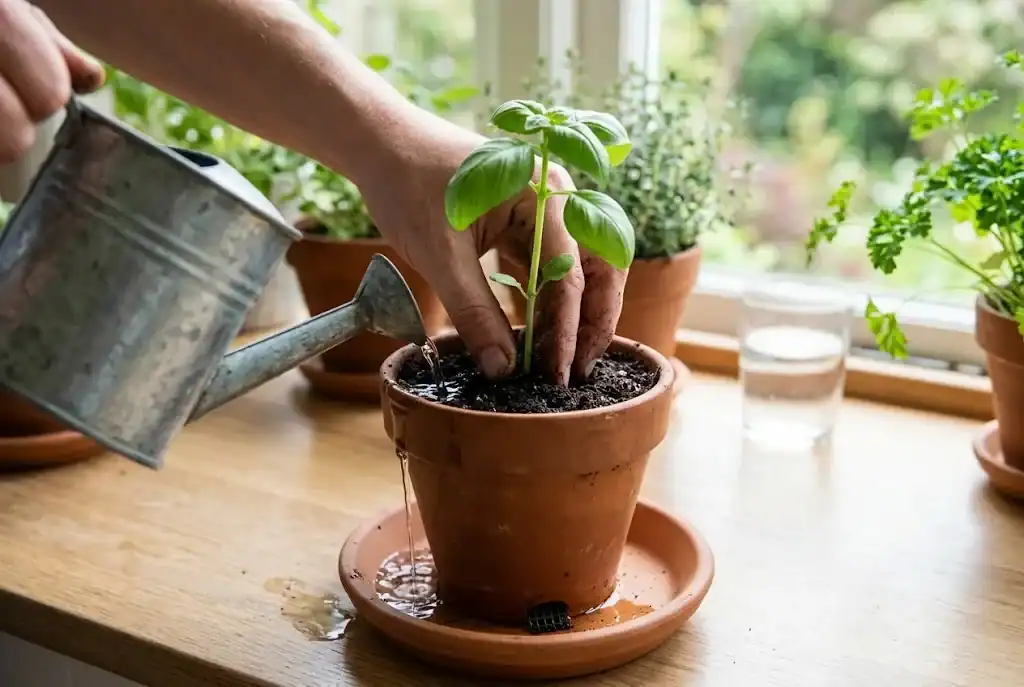
- Water thoroughly until you see runoff in the saucer. Drain the saucer after 15 minutes so the pot is not sitting in water.
- Place the pot in your sunniest window and rotate it a quarter turn each week so growth stays even.
If you start from seed instead of seedlings, the process is similar but slower. Sow in a moist medium, cover lightly, and keep the container covered with a clear lid or plastic wrap until the seeds sprout. Move to the bright window once the seedling has two sets of true leaves. Herbs grown from seed often catch up to nursery starts within a few weeks, and many herbs on a windowsill can easily grow from a single packet.
Watering, feeding, and everyday care
The most common problem with herbs grown this way is overwatering. These plants prefer soil that dries slightly between waterings. Stick your finger into the top inch. If it feels dry, water thoroughly. If it still feels damp, wait another day. Letting the soil dry before watering keeps plants healthy and prevents the soggy conditions that invite root rot. Containers in a sunny window dry out faster than containers in a shaded spot, so check the moisture level daily in summer.
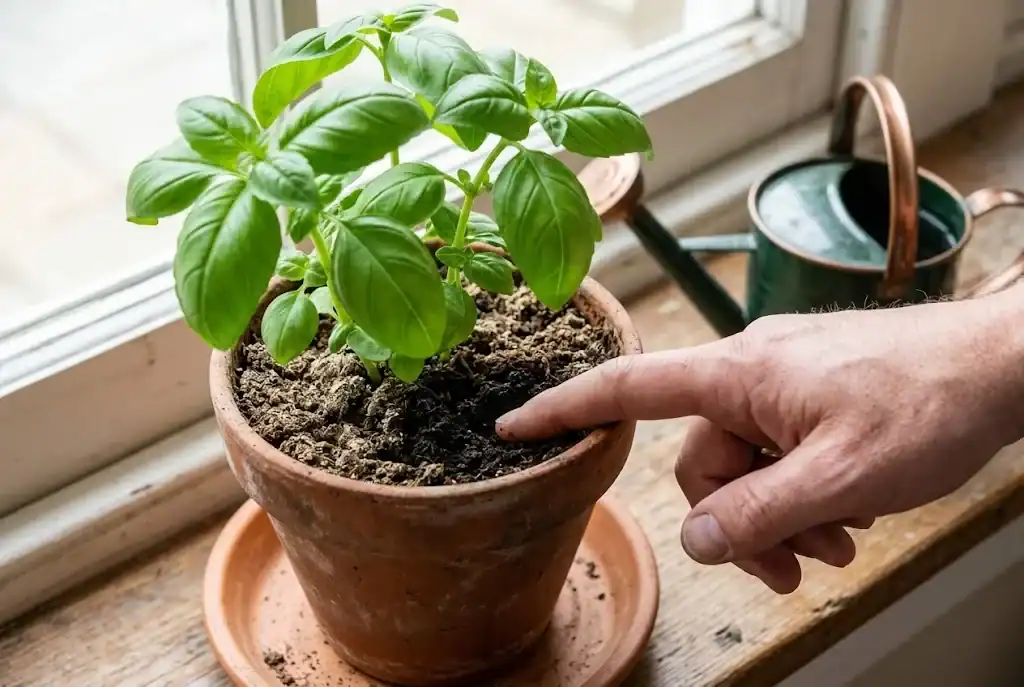
Empty the saucer after each watering. Containers sitting in standing water develop root rot quickly and the plant rarely recovers. Good drainage is the safety net here, so choose containers with working holes.
Herbs grown in containers need very little fertilizer. Each herb needs only a half strength liquid feed once a month during spring and summer. Skip feeding in winter when growth slows.
The air inside is drier than outdoor air, especially in winter. Group pots on the tray so humidity stays a touch higher, or set the tray on a layer of pebbles with a little water in the bottom for steady humidity without waterlogging the roots. Misting is optional and helps only briefly.
As the season changes, repot herbs into a slightly larger container once roots start circling the bottom of the pot or pushing out of the holes. Potted herbs usually need repotting every 12 to 18 months. Use fresh soil and water thoroughly after the move to keep the plant healthy and encourage new growth.
Harvesting without killing the plant
Regular harvesting keeps herbs bushy and productive. The rule is to take no more than one-third of the plant at once, and to cut just above a pair of leaves so new branches sprout from that spot. Harvest regularly to encourage the plant to keep producing new growth instead of running to seed, and harvest herbs regularly so they do not bolt.
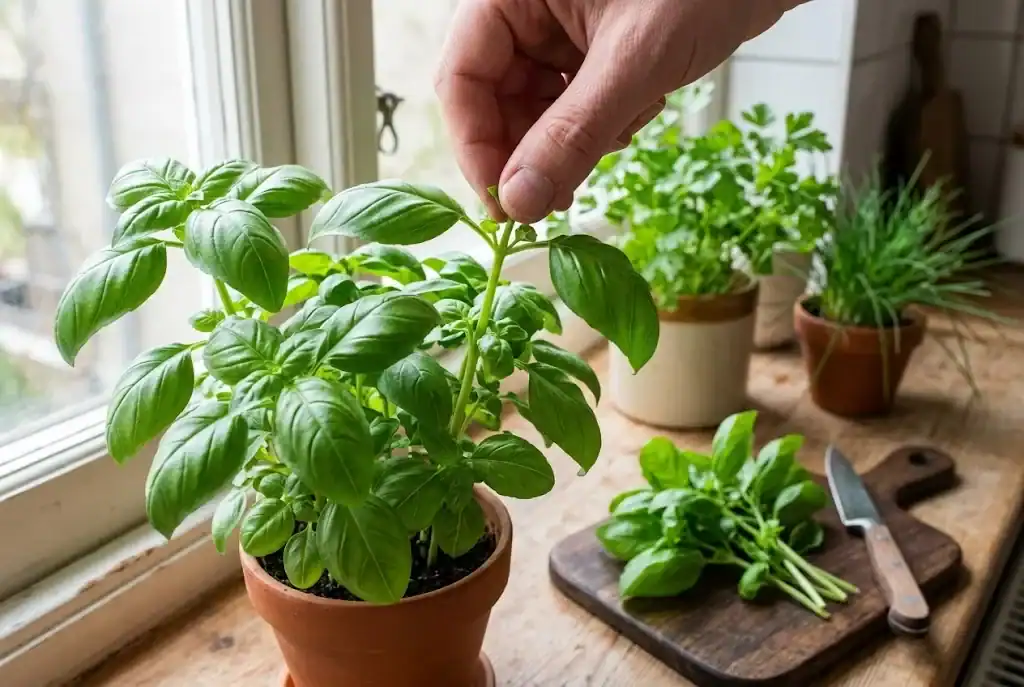
- Basil and parsley: pinch the top inch off each stem above a leaf pair each week.
- Parsley and chives: cut the outer stems at the base and let the center keep growing.
- Thyme, sage, and oregano: snip a few sprigs at a time. New growth comes from the cut tips.
If you want a fuller plant, harvest lightly for the first month after planting so the root system establishes before heavy cutting. Once the plant is mature, regular harvesting is what keeps it productive.
Common windowsill herb problems and quick fixes
- Leggy, pale growth. Not enough light. Move to a sunnier window, or add a grow light for 4 to 6 hours of sun a day of supplemental light.
- Yellowing lower leaves. Usually overwatering. Let the soil dry out and check that it drains freely.
- White fuzzy growth on the soil surface. A harmless saprophytic fungus that shows up in humid conditions. Scrape it off, water less often, and improve airflow around the pots.
- Brown leaf tips. Dry indoor air is the usual culprit. Group pots together or set the tray on a bed of damp pebbles.
- No growth in winter. Normal. Most herbs slow down in low light. Water less, stop feeding, and resume regular care when days lengthen.
A note on safety with herbs around pets and children
Many common culinary herbs are safe in the amounts used in cooking, but a few plants can be irritating to cats, dogs, or small children who nibble. The most commonly grown windowsill herbs are considered non-toxic in normal kitchen use, with the usual cautions about pets eating large amounts of anything unfamiliar. If you have curious pets or toddlers, place pots out of reach and use a sturdy tray to catch spills.
Your kitchen herb garden all year
An indoor garden earns its place by giving you fresh sprigs on demand. Start with two or three herbs you actually cook with, give them sun and water without overdoing it, and harvest regularly. Within a few weeks you will have fresh basil leaves for pasta, parsley for soups, and chives for eggs, all without leaving the kitchen.
For more on growing herbs in a window through the seasons and adjusting care as light changes, the guide to nurturing herbs in windows picks up where this one leaves off.