
The pot smells great, the first spoonful makes your eyes water, and everyone at the table is reaching for water. It happens to good cooks all the time. A cayenne pod turns out hotter than the one you tested last week, or a curry paste is stronger than the jar suggested. The good news is that you can make a dish less spicy after it is cooked, and most of the ways to make it work take five minutes. They all rest on one fact: capsaicin, the molecule that makes chili hot, dissolves in fat and not in water. Anything rich, creamy or oily gives it somewhere to go, and a little sweetness, acid or extra volume does the rest.
If you cook with peppers often, the broader cooking with chilies guide shows how to choose the right form and strength for each meal. This article stays with the rescue: what is happening in the pot, five fixes that work, what to skip, and how to keep it from happening again.
Why a dish comes out too spicy
Most of the heat sits in the pale pith and seeds inside a pod, with much less in the flesh. Once the pod is chopped and cooked, the heat spreads through the sauce and lands on the same nerve receptors that sense real heat. That is why spicy food feels like a burn and not a flavor.
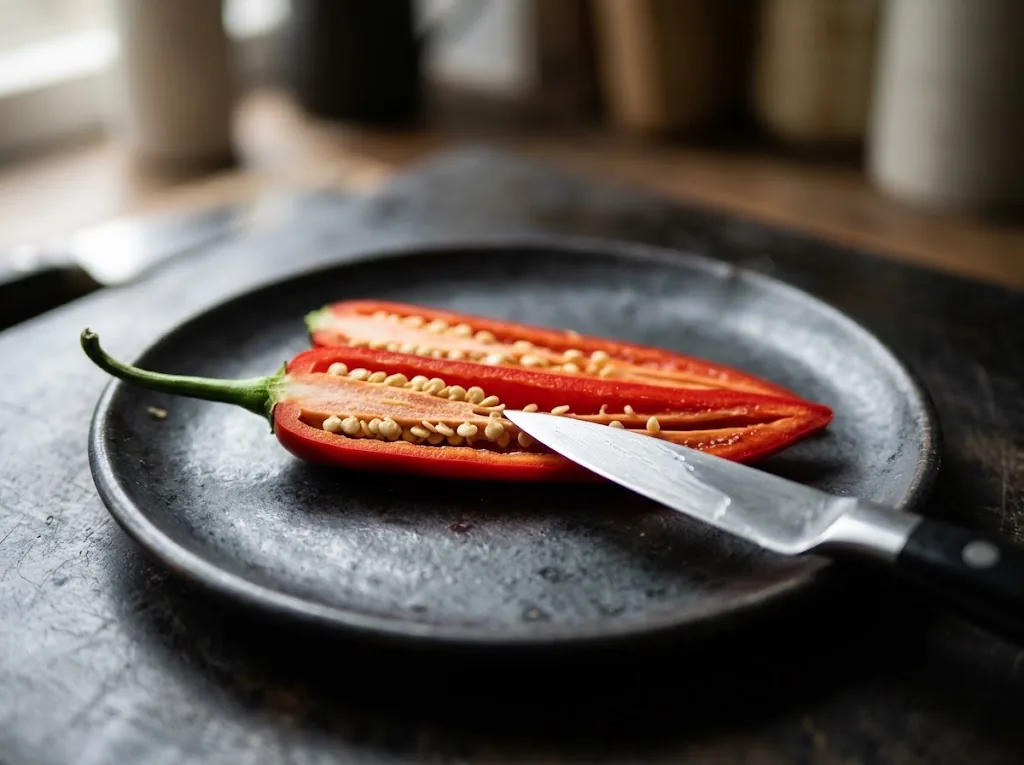
Capsaicin does not dissolve in water, so plain water will not carry it away. Cleveland Clinic makes the same point: rinsing with water gives brief cooling but does little overall. Milk works better, and researchers credit its casein, a milk protein that can break capsaicin down much as dish soap cuts grease. A 2023 study in the Journal of Food Science tested this directly, and you can read the abstract of the effect of milk proteins on oral burn for the details. It also explains why butter, coconut milk and cream calm a dish: fat holds capsaicin molecules in the sauce, so less of them reach your tongue.
Five fixes that work on almost any dish
Each fix below works for a different reason. Pick the one that suits the meal, and pair two if the heat is well past comfortable. Add a little at a time, taste, and repeat.

Stretch the dish
The simplest way to dilute the heat is to make more of everything except the pepper. Stir in extra stock, sauce, tomatoes or cooked vegetables, and the same heat now spreads across more food, so each bite is milder. This is the best fix for soups and stews, and it never changes the flavor profile. Rice or potatoes work well as ingredients to dilute with, because they soak up sauce and carry heat away from the tongue. Cooked starch is a good side for the same reason.
For a curry that came out too hot, add a half cup of coconut milk or unsalted stock and simmer for a few minutes so the flavors meld. For a pot of beans, another can of beans does the job. Skip plain water: it thins the flavor along with the heat.
Add dairy
Dairy is the classic answer, and the science backs it. Whole milk, cream, sour cream and plain yogurt all add both richness and casein protein, so they help on two fronts. Off the heat, stir in a few spoonfuls of plain yogurt at the end of cooking. A dollop of sour cream does the same in a bean soup. On the side, a cool raita of yogurt and grated cucumber is the traditional South Asian answer to a fiery plate.

Take care to add dairy products gently. Milk and cream can curdle if they hit a boiling, acidic sauce, so lower the heat first, or warm the cream with a ladle of the hot liquid before stirring it in. If the dish must be milk free, coconut milk is the easy swap. Plant milks without casein will not match the effect of cow’s milk on the burn, but coconut milk still brings plenty of body.
Add richness
Other rich ingredients work too. Butter, ghee, olive oil and nut butter all carry heat away the way cream does, which is why one tablespoon of butter at the end fixes many pan sauces. A spoon of smooth peanut butter or cashew butter suits peanut sauces, satay-style dishes and some bean stews, where the nutty note fits anyway. Stir it in off the heat, taste, and add more only if the burn is still loud.
Add acid
A squeeze of lime or lemon, a splash of vinegar, or a spoonful of tamarind or tomatoes will not remove the heat, but it does brighten the dish so the heat stops being the loudest note. Acid is the right choice for salsa, dressings and lighter soups where you wanted a sharper finish anyway. A liberal amount of acid can overwhelm a mellow braise, so start with a teaspoon and taste.
Add a little sweetness
Sweetness has some backing too: Cleveland Clinic notes that sucrose reduces the burn of spicy food, though not as well as milk. A teaspoon of sugar or other sweeteners such as honey or maple syrup softens tomato sauces, glazes and sweet-and-sour dishes without changing the flavor as obviously as cream does. Keep it small. Too much turns a rescue into a dessert.
What does not fix a dish that is too spicy
Adding more chili of any kind only makes things worse. Scraping the seeds out after the pod has simmered in the pot removes very little, since the heat has already spread into the liquid. Salt will not counteract the spiciness, and it can push the dish out of balance. Extra hot sauce is the wrong direction entirely. If none of the five fixes suits the meal, the honest answer is to make a fresh, smaller batch and blend the two, which brings us to the last resort below.
Rescues for specific dishes
Most of the time the five fixes are enough, though a few dishes have their own quirks.
For a coconut-based dish that landed too hot, add more coconut milk and a spoon of yogurt at the end. For a tomato-based soup or stew, extra tomatoes, a splash of stock and a small amount of cream calm it down. For a pan sauce, a teaspoon of butter stirred in at the last minute usually does the job. For a salsa or dressing, more lime and a little honey bring the balance back. If a stir-fry crossed the line, a splash of stock or a spoon of hoisin or oyster sauce rounds out the sharpness. For a pot of chili with beans, a second can of beans and a dollop of yogurt on top is often all it needs.
Avoid it next time
Most overly spicy dishes come from adding more heat than the recipe needed. Start with less than you think, taste, and add more only if the dish asks for it. Use a milder pepper for a family meal, and save the hotter ones for dishes where heat is the point. When a recipe asks you to chop or seed a pod, a clear walk-through of how to cut chilies without the burn shows how much of the pith and seeds to keep, since they hold most of the heat. Adding the pepper in two stages, half early and half near the end, also lets you stop before the dish gets away from you.

When the dish is past saving
Sometimes a super spicy result, such as a stew made with ghost pepper or habanero, is beyond the five fixes. The last resort is to set aside part of the too-hot dish and stir it into a much larger batch of the same recipe made without any pepper. If that is not possible, portion off a small amount of the hot dish and serve it as a condiment over plain rice or bread, and make something mild alongside it.
Mouth burn is a separate problem, and it does not improve by eating more of the dish. If the burn on the lips, tongue or throat is severe, or a child has eaten something much hotter than planned, take a look at how to calm chili burn in your mouth, which covers what actually helps and when to seek medical care.
Tips and tricks for the cook who keeps getting burned
Three small habits make a real difference over time. First, taste a tiny sliver of the raw pepper before it goes in. That tells you whether you are holding a mild jalapeño or something much hotter, and it lets you set the spice level before the pot is committed. Second, taste as you cook, not only at the end. A sip at the ten-minute mark catches a stew heading too hot while there is still time to fix it. Third, keep a finishing condiment ready at the table, like yogurt or a lime wedge, so each person can tone their own plate to taste. When you are cooking for someone whose tolerance is unknown, a small spoonful tested on a side plate is kinder than a bite from the main pot.
Frequently asked questions
Does sugar really make a dish less spicy? A little, yes. Research reported by Cleveland Clinic found that sucrose reduces the burn of spicy food, though milk works better. A teaspoon of sugar, honey or maple syrup stirred in at the end is usually enough, and more than that starts to taste sweet.
Can I just add more of the non-spicy ingredients? Yes, and for soups, stews and curries it is often the cleanest fix. More stock, more beans, more rice or more coconut milk spreads the same heat across more food, and the dish keeps its original flavor.
Will milk curdle if I add it to a hot dish? It can, which is why milk or cream goes in off the heat or at the lowest setting. Plain yogurt stirred in gently at the end adds richness and takes the edge off the burn. If the sauce is still very hot, warm the cream first with a small ladle of the liquid, then stir it back in.
Is it easier to fix a soup or a sauce? A soup is usually easier, because it has liquid to absorb the dilution. A sauce is usually fixable with a tablespoon of butter or cream. Dry dishes like a stir-fry are the hardest, and the safest move is often a fresh small batch to blend in.
