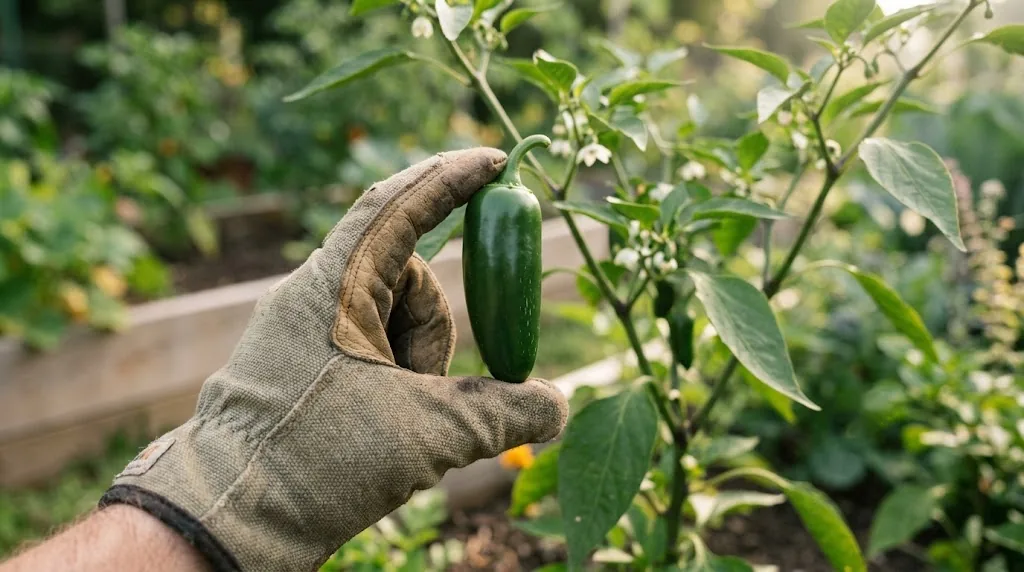
A pepper can go from garden harvest to dinner in minutes, but pepper oil can move from your fingers to your eyes just as quickly. To handle hot peppers safely, set up the work area first. Cover your hands, keep them away from your face, and clean tools and surfaces before you put them away.
Capsaicin, the compound that gives chili peppers their heat, can irritate skin, eyes, and airways. Poison Control recommends gloves, fresh air, and avoiding face and eye contact while you prepare peppers. Poison Control’s capsaicin guidance is a useful reference to keep nearby.
Safe handling starts before you cut
For a small amount of jalapeño or serrano, disposable nitrile, latex, or rubber gloves provide a practical barrier. Choose a material you can wear safely, and skip latex if you have a latex allergy. For a large batch or very hot peppers, gloves matter even more. If you do not have gloves, avoid touching the cut surfaces and wash your hands carefully afterward, pepper oil can remain on skin and beneath your nails.

Capsaicinoids form in glands on the placenta, the tissue that joins a pepper’s seeds to its fruit. Seeds do not produce capsaicinoids, but they can pick them up through contact. Iowa State University Extension explains the pepper’s anatomy; keep your gloves on while removing the core and cleaning up.
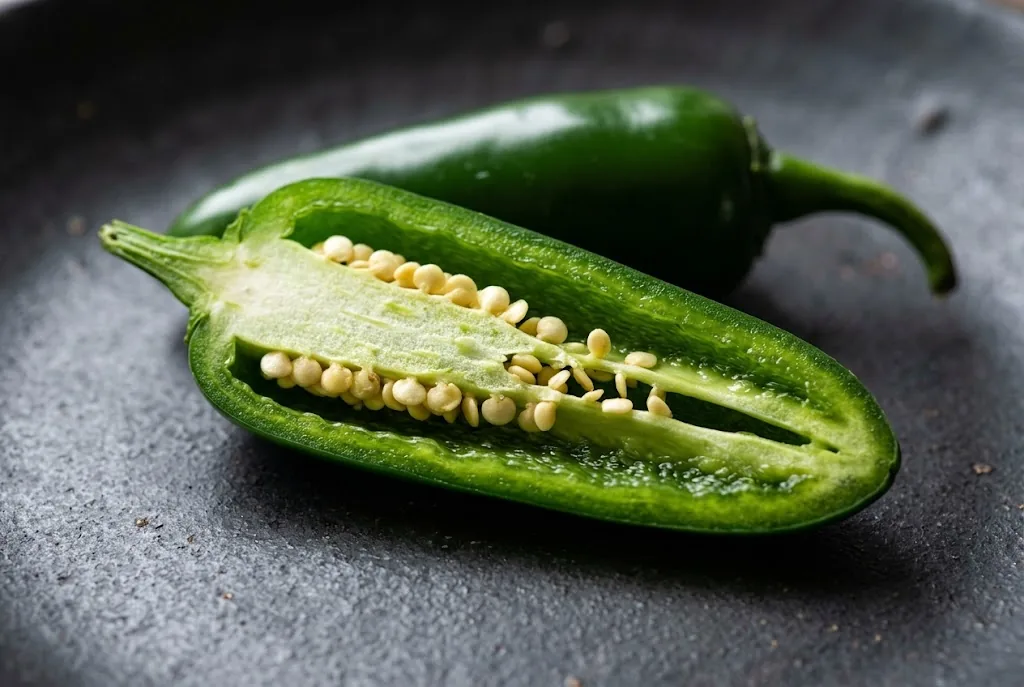
Set out a stable cutting board, a sharp knife, and a bowl for scraps before starting. Keep a clean towel aside for ordinary spills, and do not use it on your face or hands during prep. Keep children and pets away from the work area, and rinse peppers under cool running water before cutting. Do not use soap on fresh produce.
For a large harvest, very spicy varieties, or dried-pepper grinding, add protection suited to the task. Work in fresh air, and wear eye protection and a face mask when grinding dried peppers because particles can become airborne. If fumes bother you, stop, move to fresh air, and let the room clear before continuing.
Keep pepper oils off your face
The same precautions apply in the garden. Wear gloves while picking or pruning hot pepper plants, and keep your hands away from your face until you have removed your gloves and cleaned your hands with soap and water. If you are sensitive to pepper oils, ask someone else to handle a large harvest.
While cutting, keep gloved hands below your shoulders and away from your eyes, nose, mouth, contact lenses, and any irritated or broken skin. Do not adjust glasses or touch a phone with contaminated gloves. If you need to pause, remove the gloves first, then scrub your hands with soap and water before touching anything else.
Use a steady cutting board and keep fingertips curled back from the knife. A sharp knife and a stable pepper are easier to control than a slippery pepper held in your palm. If you want a step-by-step guide to slicing and seeding, see how to cut and seed chili peppers.
Clean tools and surfaces after prep
When you finish, discard disposable gloves without touching their outside, then scrub your hands thoroughly with soap and water. Wash the board, knife, bowl, and counter with hot, soapy water. Pay attention to handles and faucet taps you may have touched during prep. Michigan State University Extension advises wearing gloves and cleaning hands with soap and water after pepper work because the residue can irritate skin and eyes.

Before putting away a board or knife, check that no pepper residue remains. Launder reusable cloths and towels that touched cut peppers before using them for another task. Do not assume that a quick rinse has removed the oily residue.
If pepper gets on your skin or in your eyes
If juice gets on your skin, pause food prep and avoid touching your face. Rinse the area with warm water. Poison Control notes that vegetable oil, diluted vinegar soaks, or a liquid antacid may help with skin exposure, but follow its guidance rather than experimenting with harsh cleaners. If the pain is severe, blistering develops, or symptoms do not settle, contact a poison center or seek medical advice.
If you accidentally eat a bite that feels too hot, small sips of milk or water may help with the burning sensation. If pepper gets into an eye, do not rub it. Start flushing the open eye with plenty of warm water for 15 minutes. Call Poison Control at 1-800-222-1222 for case-specific advice. Trouble breathing or chest discomfort needs emergency help.

For persistent hand or skin discomfort, use the dedicated guide to what to do for chili burn on hands. The brief version is to stop the exposure, avoid spreading residue, and get expert help for a serious reaction.
A safer way to work with hot peppers
Good handling means gloves, clean tools, fresh air, and a no-touch rule for your face. Those habits leave you free to focus on the pepper’s flavor instead of a spicy surprise. After you clean up, the guide to how the Scoville scale works can help you compare pepper heat before choosing what to grow or cook next.
